ch5 epithelial Tissues
 Call Kai
 Learn
Learn Practice Test
 Spaced Repetition
 Match
Match Flashcards
 Knowt Play
1/45

There's no tags or description
Looks like no tags are added yet.
Name | Mastery | Learn | Test | Matching | Spaced | Call with Kai | Chat |
|---|
No analytics yet
Send a link to your students to track their progress
46 Terms
Epithelial tissue
Covers body surfaces
Little to no EC matrix
Lines body cavities + organs
Forms glands

epithelial tissue characteristics
Cellularity - tightly packed cells, minimal space b/w
Regenerative - barrier quickly restored when damaged
Avascularity - pathogens separated from blood
Attached - basement membrane, stable barrier over underlying tissues
Polar - Apical surface: Exposed to external environment.
Basal surface: Anchored to underlying connective tissue.
epithelial functions
physical protection (resist dehydration, abrasion, destruction)
selective permeability (kidneys)
absorption (SI)
secretion (goblet cells)
sensation

Tight junctions
bands of fused membranes, encircle entire cell, near surface
seal space b/w adjacent cells, selective permeability
block liquids, ions, and pathogens from passing between them

Adherens junctions
deep to TJ, encircle entire cell
structural stability - anchoring cell membranes to internal microfilament networks

Desmosomes
Act like spot welds or rivets to anchor neighboring cells together, preventing the tissue from tearing under mechanical stress

gap junctions
small pores allows smalll molec pass
comprised of connexons
Simple epithelium
single layer cells attached to basement membrane.
absorption, secretion, filtration because substances can easily pass across a thin single layer
alveoli of lungs (rapid gas exchange), capillaries (nutrient exchange), small intestine (nutrient absorption)

Stratified Epithelium
two or more stacked layers of cells.
protection against physical wear, chemical abrasion, and infection
skin, mouth, and esophagus

Simple Squamous epithelium
Single layer of flat, irregular cells
diffusion, filtration, secretion
(air sacs of lungs, endothelium)


squamous cell

Nucleus squamous cell
Simple Cuboidal epithelium
Single layer of cube cells
absorb, secretion
kidney tubules, glands,


Simple Cuboidal epithelium

Cuboidal epithelial cell

Cuboidal epithelial cell

nucleus Cuboidal epithelial cell
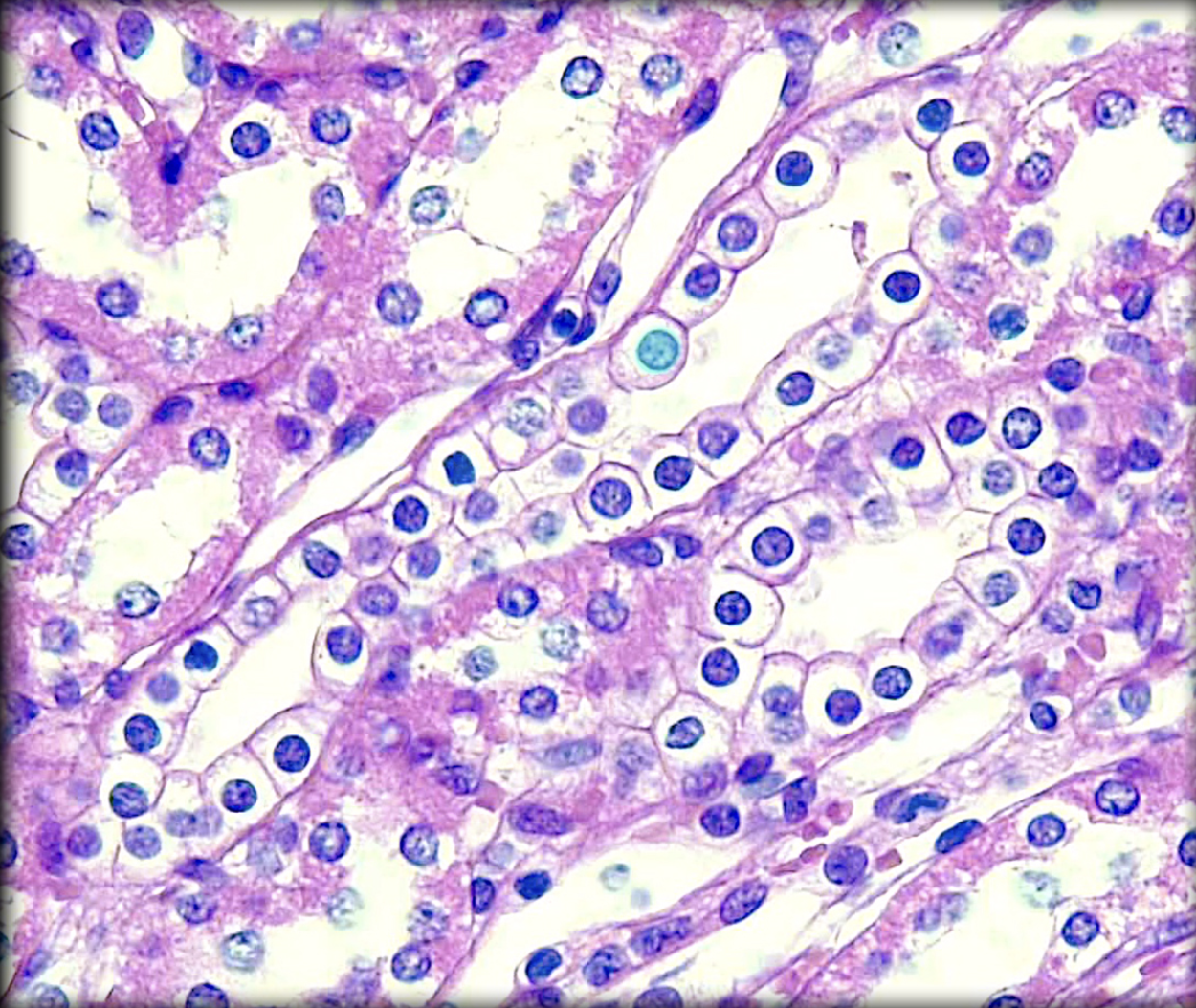
nucleus Cuboidal epithelial cell

lumen collecting duct (kidney)
receives tubular fluid

nonciliated Simple Columnar epithelium
Single layer of tall cells
absorption, secretion
digestive tract
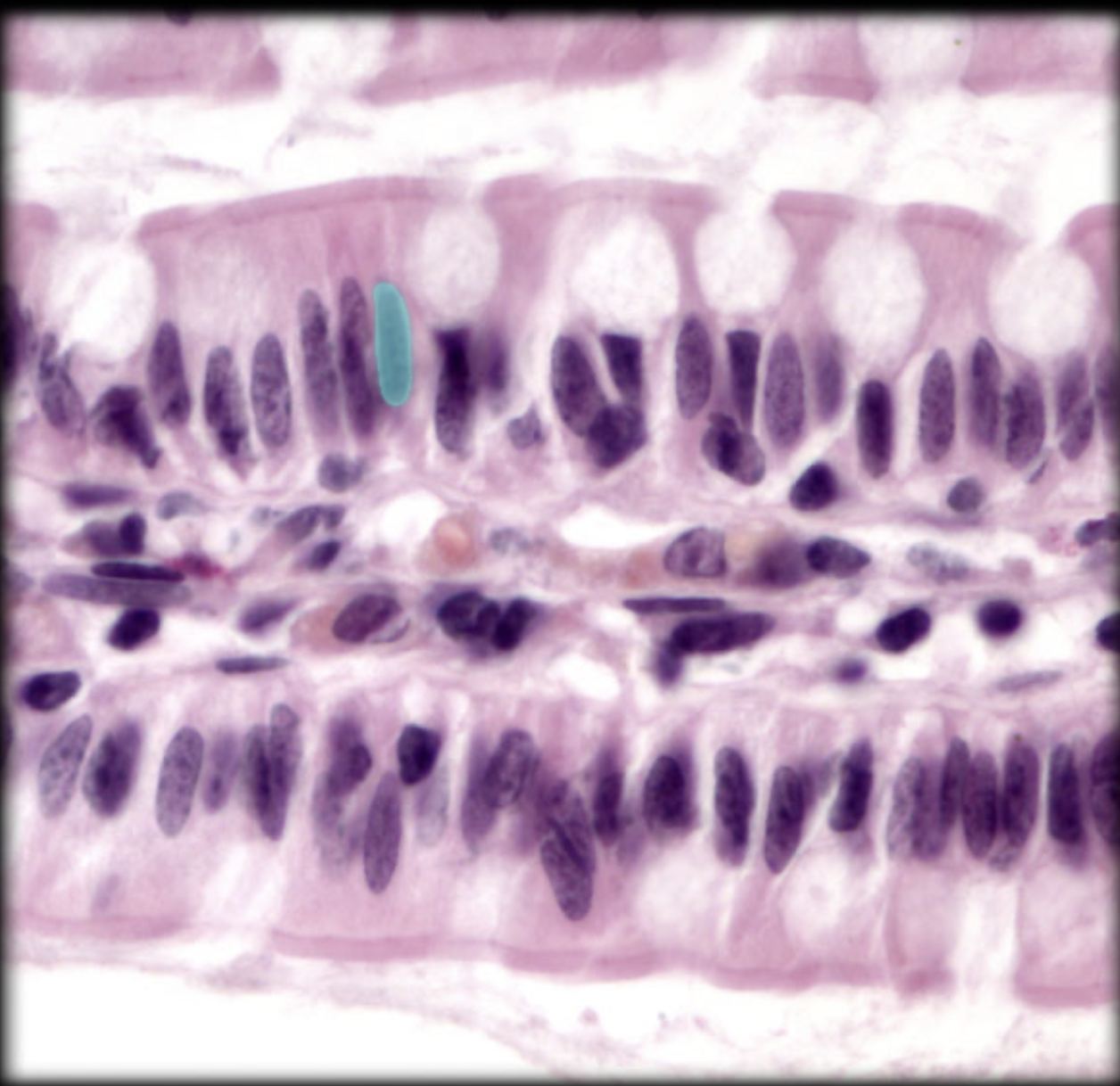
nonciliated Columnar epithelium nucleus

nonciliated Columnar epithelium cell

microvilli (brush border)
increase cell surface area
transport/absorb
SI, kidney

jejunum lumen
receives secretions from goblet cell, partially digested material from duodenum

basement membrane Simple Columnar epithelium
b/w epithelium and underlying connective tissue
basal and reticular lamina
anchors epithelium, physical support, molecular filter

Goblet cell nonciliated Simple Columnar epithelium
jejunum
• Secretes protective mucus into lumen jejunum
hypertonic
water moves out - SHRINK
hypotonic
water into cell - SWELL

Pseudostratified columnar epithelium (ciliated)
respiratory/urinary tract, lines glands
single layer cells, only some reach apical
protection + secretion

Basal cell nucleus (pseudostratified columnar epithelial cell)

trachea lumen
conducts air to and from lungs

Goblet cell (pseudostratified columnar epithelium)

columnar epithelial cell
TALL

Cilia (pseudostratified columnar epithelium)
sweep mucus and trapped particles away

Stratified squamous epithelium (keratinized)
skin epidermis
apical cells NO nuclei
protects underlying tissue

squamous cell w/o nucleus

epidermis
avascular

Stratified squamous epithelium (nonkeratinized)
oral cavity, esophagus, reproductive/urinary
apical cells HAVE nuclei
protects underlying tissue

squamous cell with nucleus

squamous cell nucleus
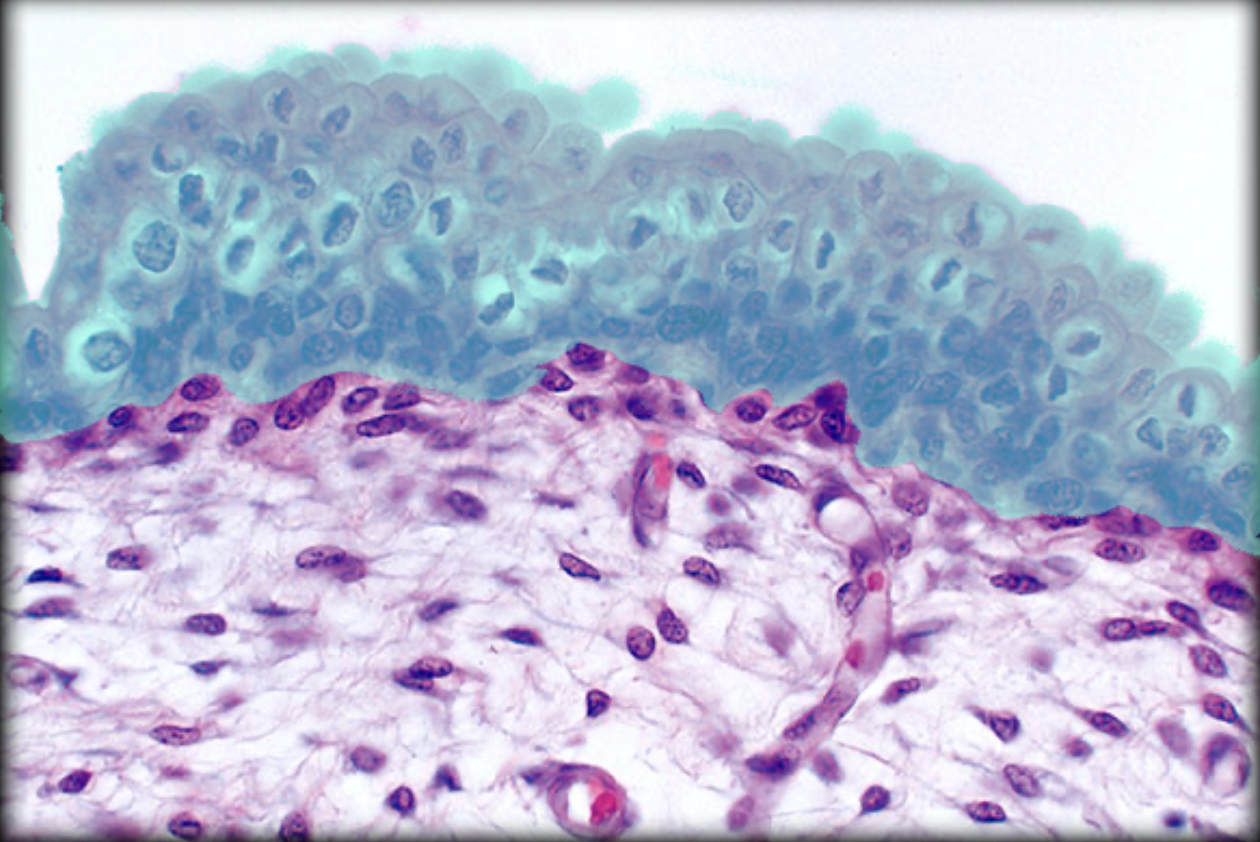
Transitional epithelium
multiple layer cells
relaxed = apical cells dome shape/cuboidal
distention = flat/squamous
lining urinary

loose connective tissue
more ground substance and fewer cells and protein fibers than dense connective tissue
subcue tissue, around organs
Support epithelia
Protects organs
Surrounds blood + lymphatic vessels + nerves
environment diffusion materials ( gases, electrolytes, nutrients, and cellular waste products)

Dome-shaped luminal cells transitional epithelium
epithelial tissue: ___ relationship Permeability vs. Protection
Inverse
maximize mechanical or chemical protection restrict the movement of molecules
rapid diffusion or nutrient absorption leave the tissue physically vulnerable
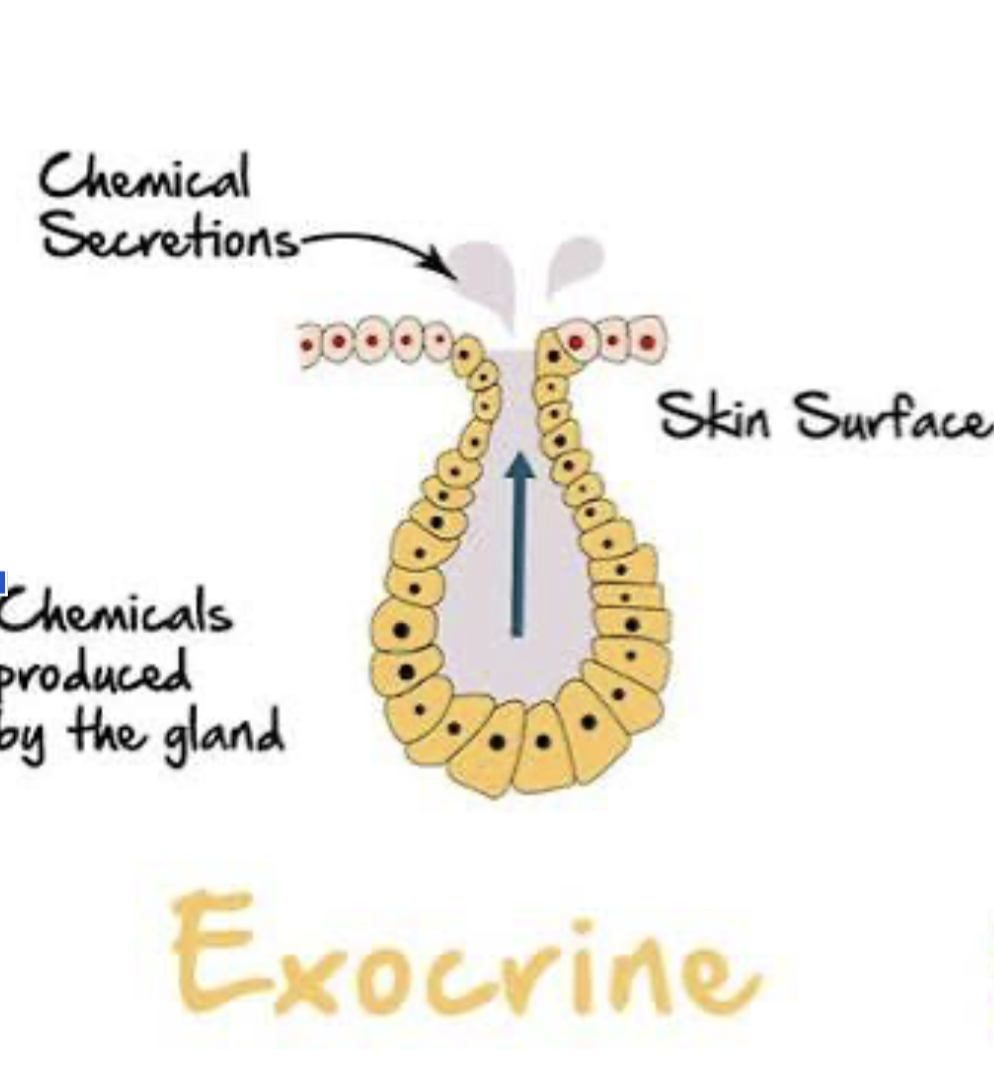
Exocrine Glands
Retain a duct
Secretes products onto an internal or external body surface
Sweat glands
Endocrine Glands
Ductless glands
Produce and release hormones directly into the interstitial fluid and bloodstream
Thyroid gland