Neuromuscular disorders
 Call Kai
 Learn
 Practice Test
 Spaced Repetition
 Match
 Flashcards
 Knowt Play
1/60

There's no tags or description
Looks like no tags are added yet.
61 Terms
Where can neuromuscular diseases be localised to?
Peripheral nerve/ neuropathy
N-M junction/ junctionopathy
Muscle/ myopathy
How do you identify a neuromuscular problem? What caveat should you be aware of?
The LMN reflexes are decreased
Caveats: multiple lesions, spinal shock
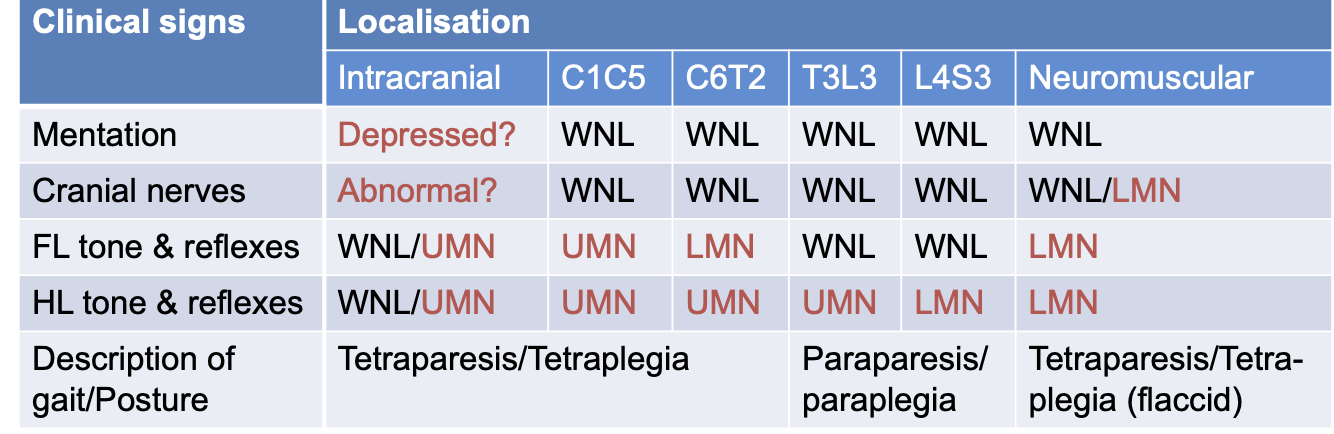
What are the non-specific signs of generalised neuromuscular disease?
Tetraparesis and exercise intolerance/collapse
Stiff-stilted gait with reduced stride length, bunny hopping, may fatigue
Narrow based-stance
Tremors/fasciculations
Regurgitation or altered oesophageal motility
Myalgia
Dysphonia
Reduced reflexes and tone
Muscle atrophy
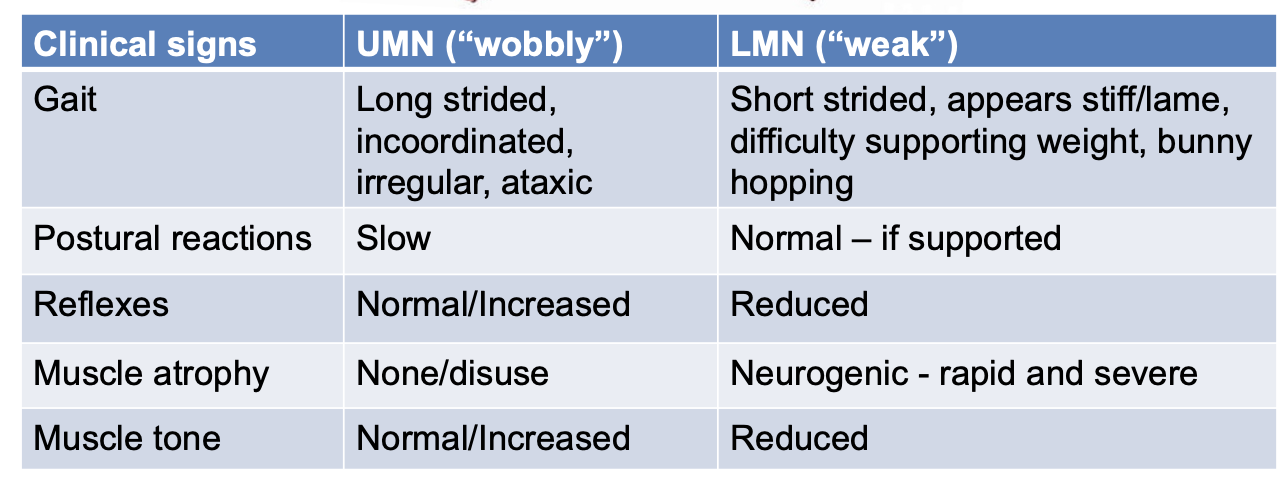
What are the hallmarks of a lower motorneuron problem?
'RAT'
Reduced/ absent reflexes
Muscle atrophy
Reduced tone
What does a typical neuromuscular gait look like?
Short strided
Appears stiff/lame
Difficulty supporting weight
Bunny hopping
Sensation/proprioception is usually normal
What signs can help you differentiate between neuropathy, junctionapathy and myopathy?
Junctionopathy or myopathy are motor whereas
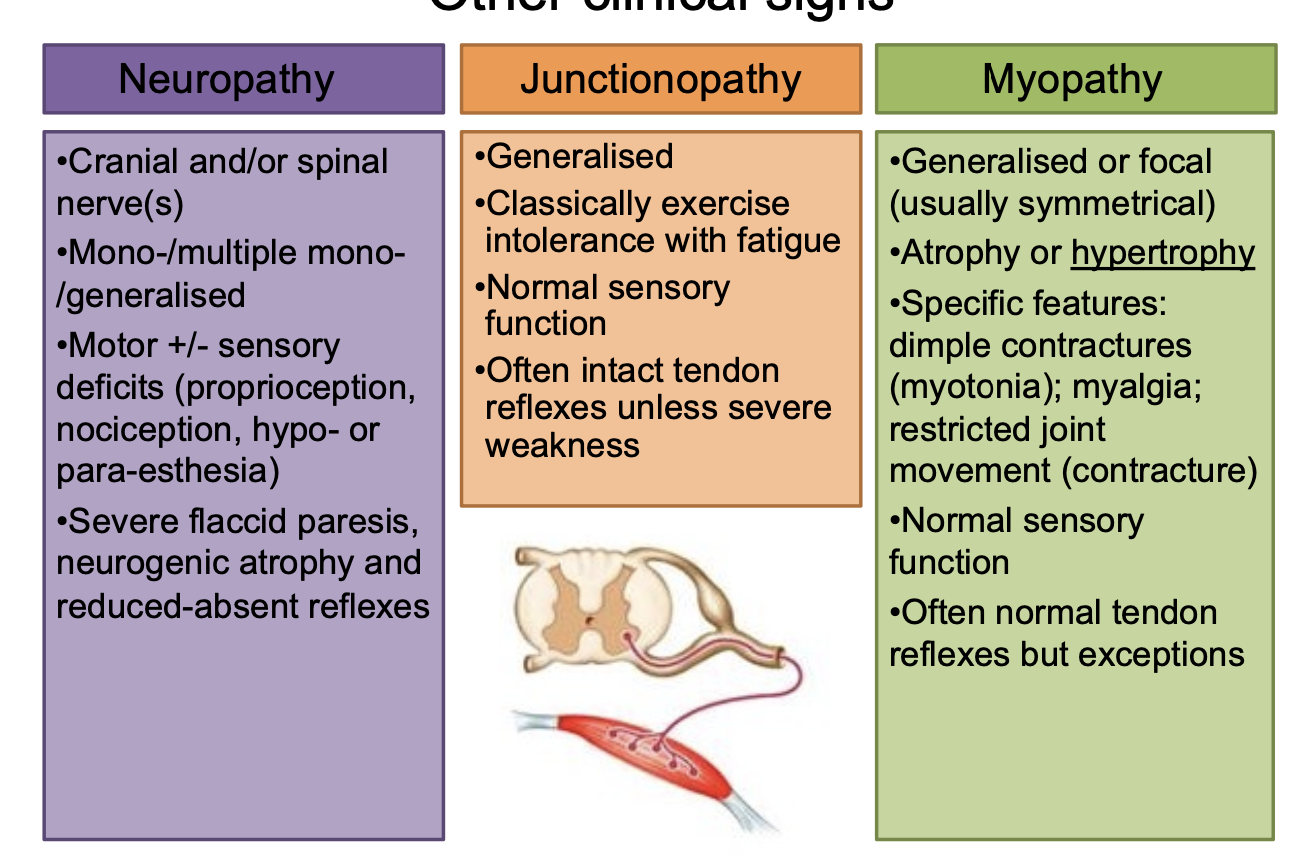
Compare how gait, postural reactions, reflexes, muscle atrophy and muscle tone differ between UMN and LMN dysfunction
What are your differentials for acute onset generalised neuromucsular problems?
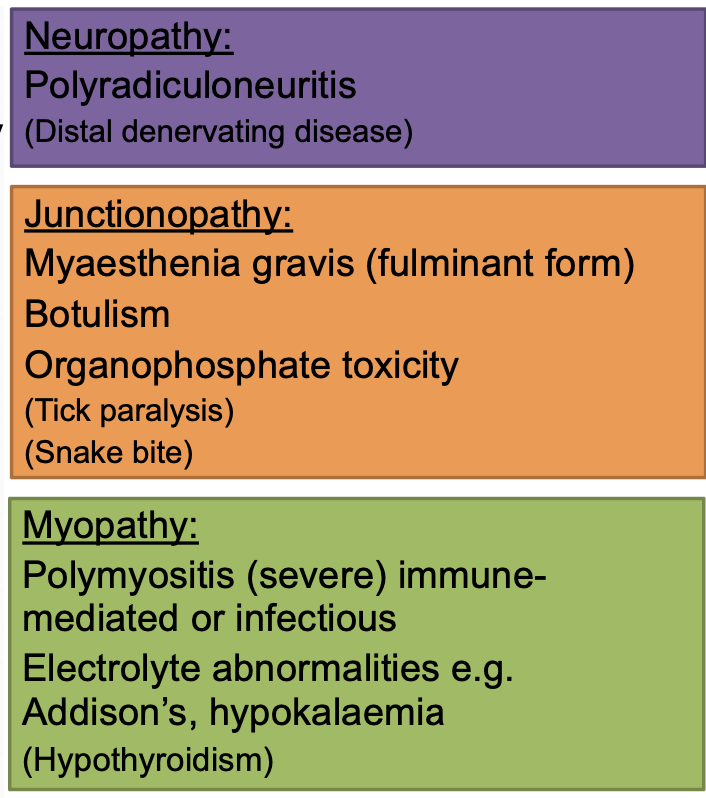
What are your differentials for chronic progressive neuromucsular problems?
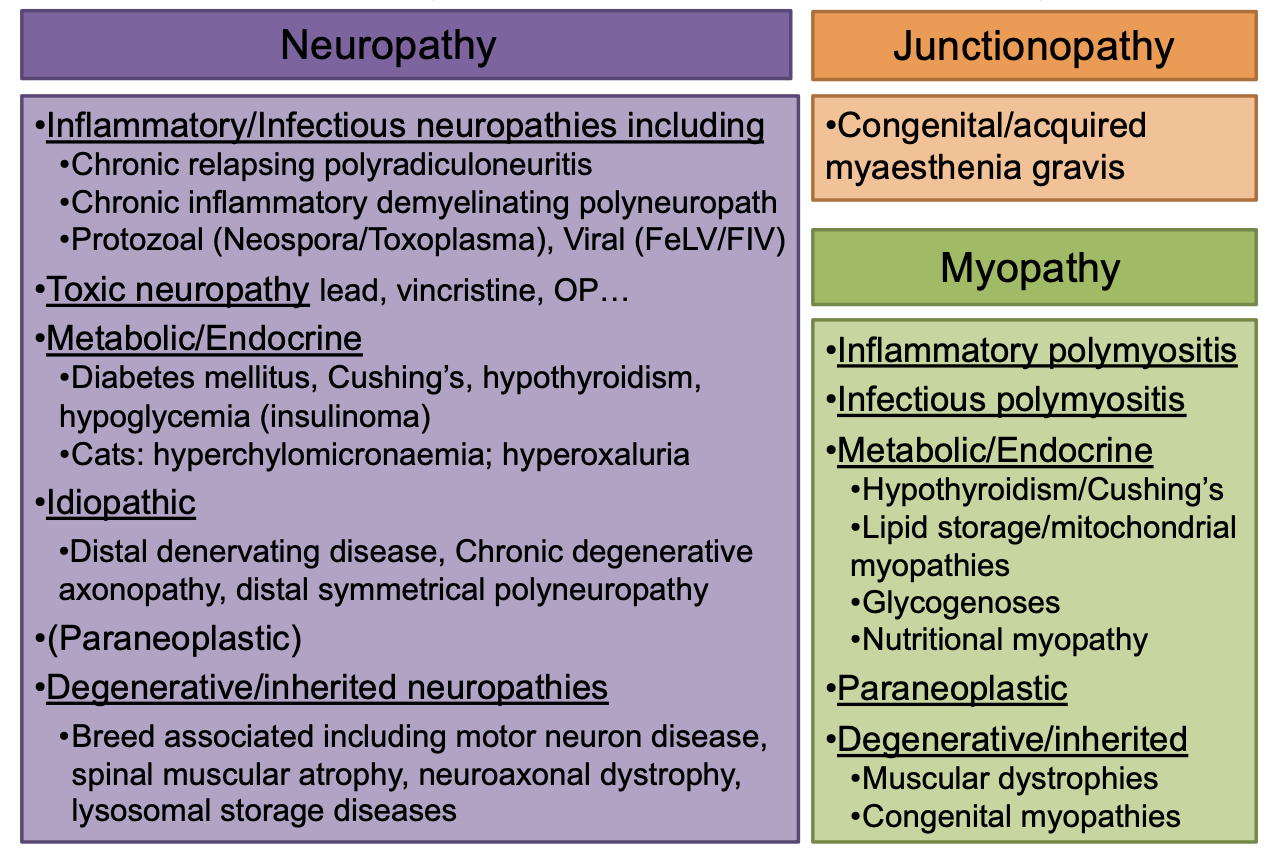
What are your differentials for localised neuromucsular problems?
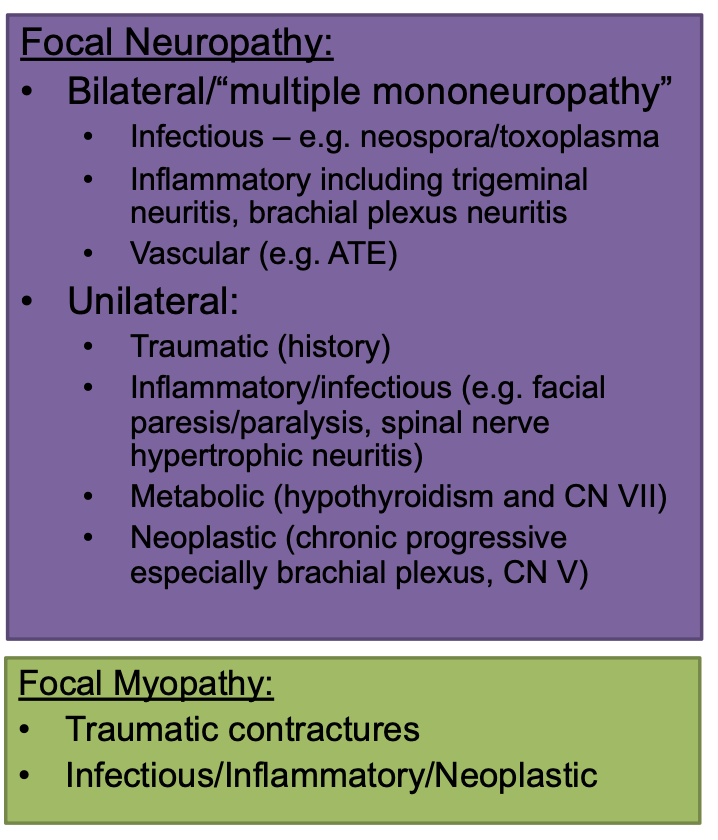
What initial testing would you do for a neuromuscular patient?
Haematology
Biochem
Electrolytes
Glucose
Cholsterol
CK (inc= muscle damage)
Urinalysis
Myoglobinuria= muscle damage
Check Rx (conscious)
Megaoesophagus
Aspiration pneumonia
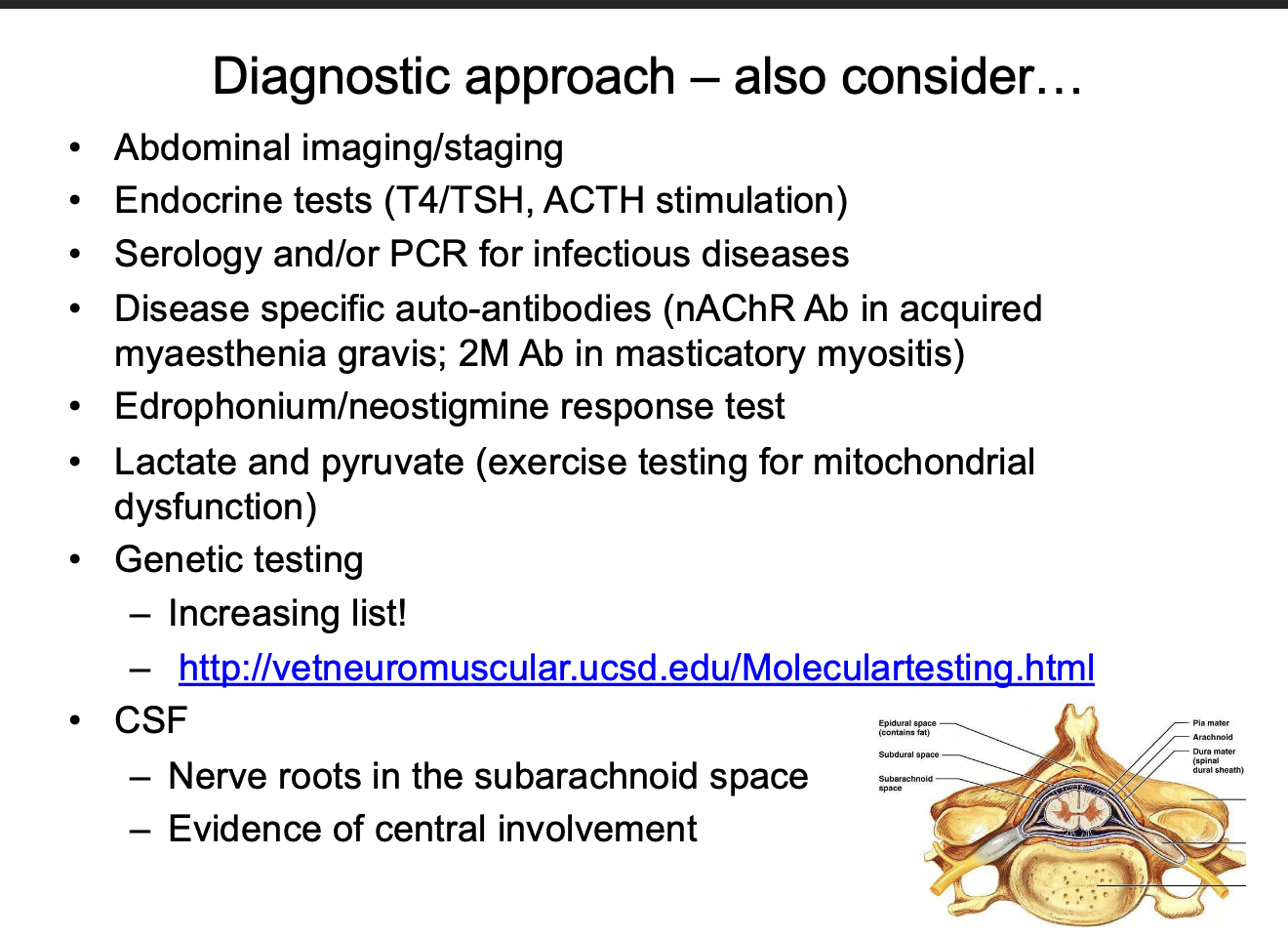
What is the purpose of electrodiagnostic testing?
Definitive evidence of dysfunction
Localisation (nerve/muscle, proximal/distal) prior to biopsy
Extent and severity
Prognosis/Treatment monitoring
What electrodiagnostic tests can you perform?
Electromyography (normal muscle silent under GA)
Nerve conduction studies
How do you process a muscle/ nerve biopsy?
Formalin fixed
Preferably also submit fresh samples for cryosection
Which muscle and location should you biopsy?
Affected (EMG or imaging can help)
Area where fibres in single direction
Distant from tendons and aponeuroses
Disease requirements (e.g.- congenital MG biopsy motor point)
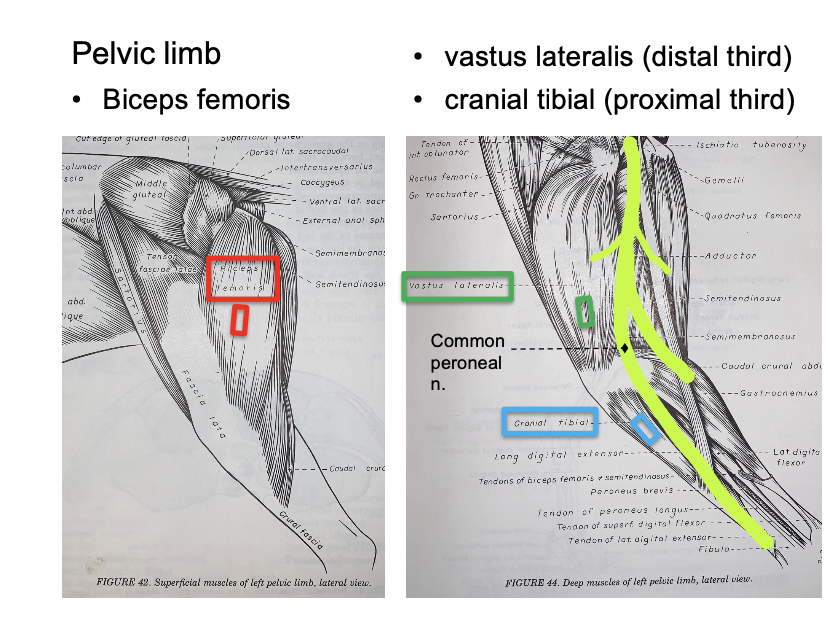
What are some common muscle biopsy locations in the limbs?
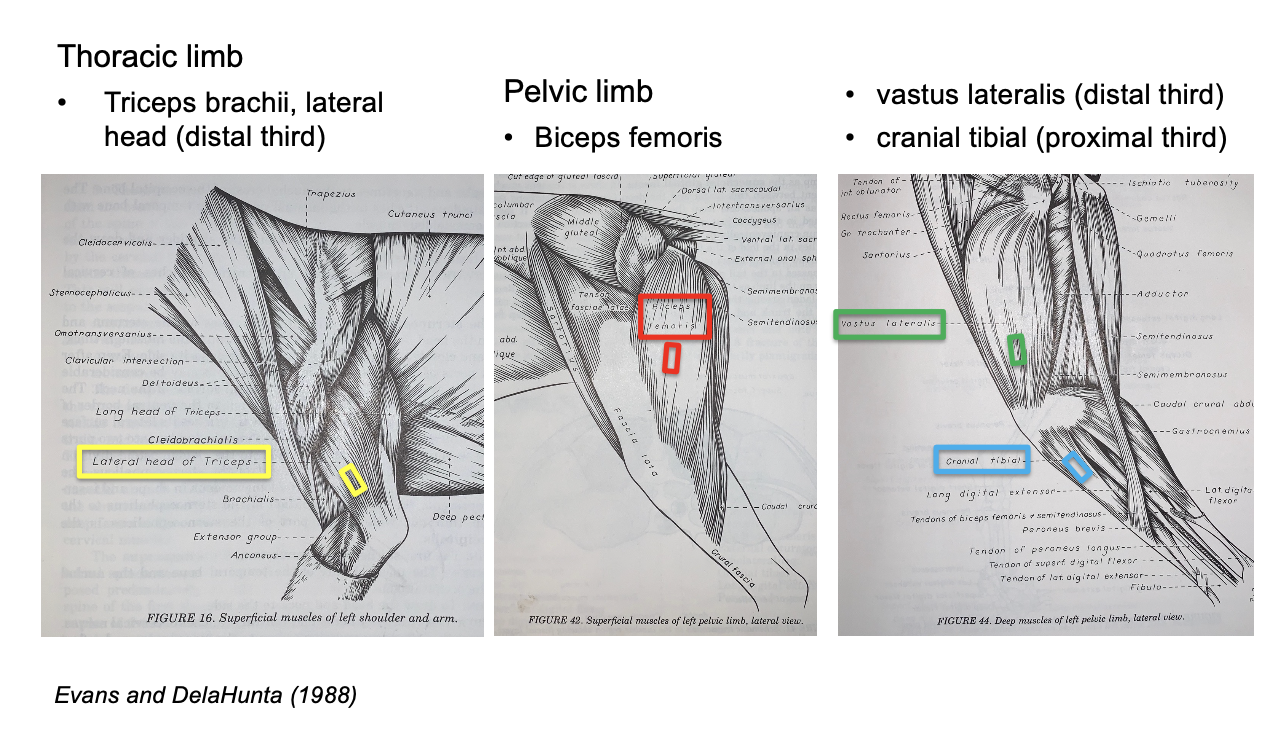
What is a common location for nerve biopsy?
Common peroneal nerve
How do you perform a masticatory muscle biopsy?
Identify temporal muscle dorsal to zygomatic arch
Has a white and shiny aponeurosis
Frontalis muscle very thin and temporalis thick normally
If severe atrophy of temporalis ID can be challenging so make sure get down to bone
What are the different ways you can biopsy nerve?
Can get answers from muscle biopsy
Fascicular nerve biopsy
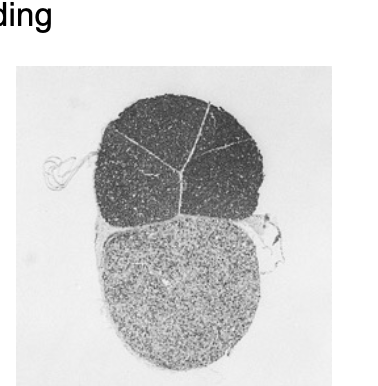
What is polyradiculoneuritis? What are the causes?
Inflammation of nerves and roots
Idiopathic/ vaccine (rabies) / contact with racoons
Campylobacter and raw feeding
Predisp bengal cats
Demyelination in severe forms
What is the most common. location of polyradiculoneuritis?
Ventral spinal roots
Usually pure motor deficits
What are the signs of polyradiculoneuritis?
CN unaffected other than mild facial paresis
No megaoesophagus
No sensory deficitis
Acute onset (rapidly progressing)
Tetra/paresis -> non ambulatory tetraparesis/ plegia
Flaccid, markedly reduced motor function (inc absent reflexes)
Can affect resp muscles
How is polyradiculoneuritis diagnosed?
C/S and history
Electrophysiology and CSF analysis
What is the natural disease progression of polyradiculoneuritis?
Inflammation of shortduration
Recovery depends on severity of damage
Remyelination over days-weeks
More prolonged if axonal damage
How do you treat polyradiculonerutis?
Mainly supportive
Recumbency care
Physio
May have to consider ventilatory support
What causes MG? What forms exist?
Acquired: immune-mediated
Antibodies target nACh receptors on postsynaptic membrane
-> receptor blockade +/- endplate destruction
Some cases seronegative
Can be paraneoplastic
Generalised (most common), focal and acute fulminating forms
What tumours causes paraneoplastic myastehnia gravis in cats?
Thymoma
How do the different forms of MG present in dogs?
Generalised (most common)
Fulminant: acute onset, rapidly progressive)
Focal (~40%): facial, pharyngeal, laryngeal, megaoesophagus
NB- Megaoesophagus in ~90% of cases
What breeds are predisposed to MG in cats?
Abyssinians
How do the different forms of MG present in cats?
Generalised in 90%
Mega oesophagus less likely than dog (15%)
Cranial mediastinal mass (thymoma)
Can be due to thiourylene medication for hyperthyroidism
How is MG diagnosed?
CS
nAChR Ab test is gold standard
Response to cholinesterase inhibitor (edrophonium or neostigmine)
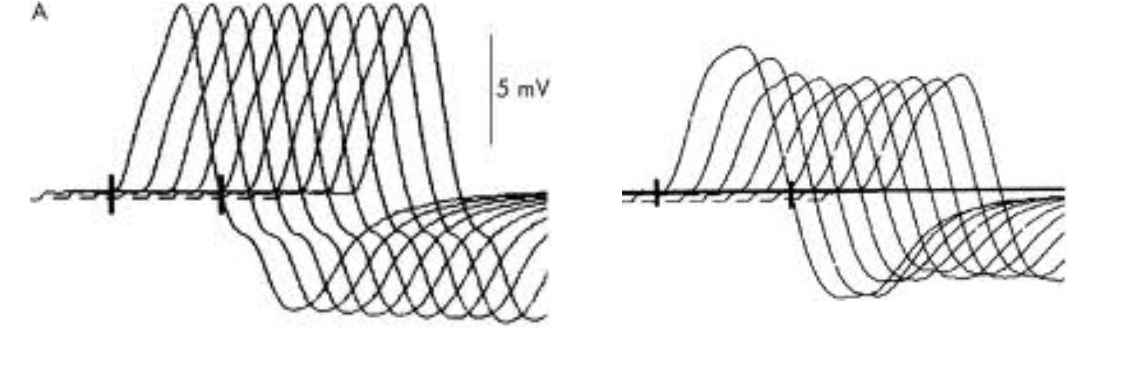
Electrodiagnostic tests (repetitive nerve stimualtion)- decrement
What is the risk with response to cholinesterase inhibitor tests?
Cholinergic crisis:
Bradycardia
Salivation
Miosis
Dyspnoea
Tremors (esp in cats have atropine on stand-by!)
How is MG treated?
Anticholinesterase
Pyridostigmine or neostigmine
Immunosuppression
Pros and cons
Thmectomy in case of thymoma
Supportive- postural feeding for megaoesophagus
What are the clinical signs of botulism?
(Rare in dogs and cats)
Junctionopathy
Acute onset rapid preogressive tetraparesis
Cranial nerves (jaw tone, facial paralysis, gag reflex, megaoesophagus)
Resp muscles
Dysautonomia
Urinary dysfunction
GI dysmotility
Mydriasis
Red tear prod
How is botulism diagnosed?
C/S
Electrophysiology
Demonstrate exposure toxin (feed/ faeces) or serology
How is botulism treated?
Supportive care
Bladder management
Recumbency care
Megaoesphagus management
Physiotherapy
(anti-toxin available but usually too late)
What are the different types of myositis?
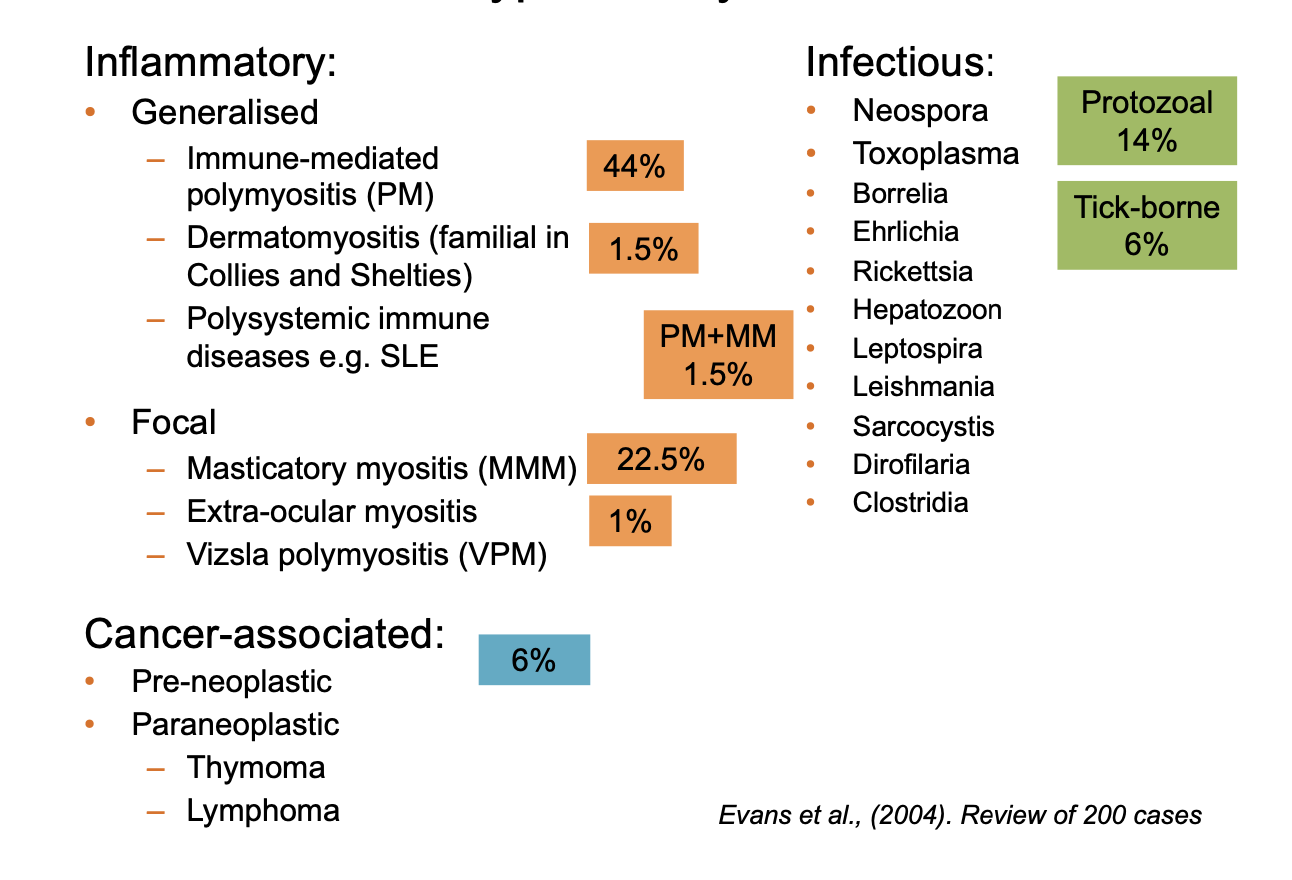
What is immune mediated polymyositis?
Autoimmune condition usually idiopathic, may be associated with other immune diseases or neoplasia
More common in dogs than cats, particularly large breeds – Newfoundland, Boxer, GSD, Labrador, Golden retriever
What are the clinical signs of immune mediated polymyositis?
Variable- acute or chronic onset
Pyrexia, stiffness, non-ambulatory tetraparesis, reluctance to move, lowered head carriage, myalgia, muscle swelling
Generalised weakness, muscle atrophy, exercise intolerance, fatigue
+/- oesophageal involvement – regurgitation
“Overlap syndrome” – IM polymyositis and MMM
How is IM polymyositis diagnosed?
H+B: Inflammatory leucogram, elevated
CK/AST (acute typically +++)
Electrodiagnostics: marked EMG abnormalities, normal MNCV
Muscle biopsy for diagnosis
Rule out infectious diseases and tumours
How is IM polymyositis treated?
Prednisolone
Monitor
What can cause infectious myositis?
Neospora caninum/ Toxoplasma gondii
What are the clinical signs of neosporosis in puppies?
Radiculoneuritis and polymyositis
Pelvic limb hyperextension (usually starts in one limb and progresses to other)
Ascending paralysis of pelvic limbs with muscle contracture and arthrogryposis
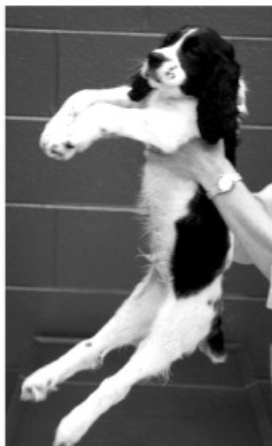
How is neosporosis diagnosed?
Clinical signs, CK/AST, EMG, biopsy
SEROLOGY
PCR on CSF, blood
How is neosporosis treated?
Clindamycin/TMPS + pyrimethamine
What causes masticatory myositis (only dogs)?
Antibodies to 2M myosin isoform
Juvenile form in CKCS
What are the clinical signs of masticatory myositis?
Can be acute/chronic
Swollen/painful MM, exophthalmos
Trismus (pain/fibrosis), MM atrophy
How is masticatory myostitis diagnosed?
Imaging (muscles + TMJ)
CK (may be normal or slightly elevated)
2M antibodies
EMG
Biopsy temporal muscles
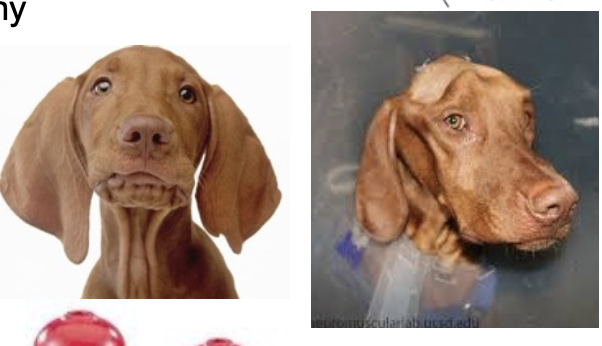
How is masticatory myositis treated?
Prednisolone +/- other IM drugs
Physiotherapy
What is trigeminal neuritis? (Dogs >> cats)
Inflammation throughout trigeminal nerves including ganglia bilaterally
Demyelination>axon degeneration
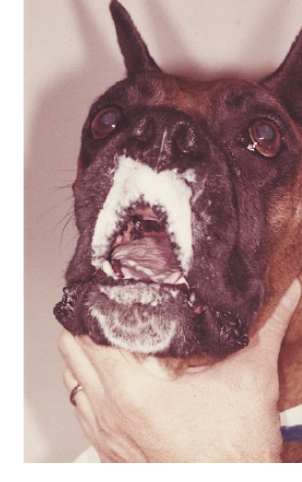
What are the clinical signs of trigeminal neuritis?
Acute onset paresis/plegia of masticatory muscles dropped jaw
Normal gag and tongue tone and movements
(Horner’s or facial paresis can be seen)
Sensory deficits in ~30% of cases
Masticatory muscle atrophy
How is trigeminal neuritis diagnosed and treated?
MRI: swollen, inflamed nerves
CSF
Treatment
Resolves usually within 3 weeks
Supportive care
What can cause unilateral temporal muscle atrophy?
Trigeminal nerve sheath tumour
Other neoplasia
Other possibilites
What are the clinical signs of unilateral temporal muscle atrophy?
Neurogenic atrophy of masticatory muscles, otherwise may be normal at onset
May be abnormal sensation (face rubbing, absent palpebral and corneal reflexes)
Progression to involve other cranial nerve and brainstem functions if neoplastic
How is unilateral temporal muscle atrophy diagnosed and treated?
Dx= MRI
Tx= TNST -RT predisolone (palliative)
What are the different classes of traumatic neuropathies?
Neuropraxia: temporary nerve damage but no disurption of the nerve or myelin sheath. Prognosis GOOD, recovery fast
Axonotmesis: Disruption of axon but intact basal lamina and myelin sheath. Prognosis is variable- recovery slow.
Neurotmesis: Partial or complete trasection of nerve- Prognosis= poor
Give some examples of traumatic neuropathies?
Brachial plexus avulsion
Cradial/ caudal/ complete
Brachial plexus tumour
Tail pull injury
What are the signs of brachial plexus avulsion?
Monoparesis
Cutaneous trunci absent ipsilaterally
Horner’s syndrome
What are the features and signs of brachial plexus tumours?
Most intrinsic
Peripheral nerve sheath tumour
Chronic progressive thoracic limb lameness, pain, muscle atrophy
Neuro deficites
Partial/complete plexus involvement
Monoparesis-plegia
Progression to myelopathy
Palpable mass
How are brachial plexus tumours diagnosed?
Electrodiagnostics
Imaging
Rx, US, CT
MRI= modality of choice
What are the signs of feline tail pull injury?
Tail motor and sensory function abnormalities
Paraparesis (resolves)
Urinary retention