Appearance and Anatomy
0.0(0)
Studied by 3 people Call Kai
 Learn
 Practice Test
 Spaced Repetition
 Match
 Flashcards
 Knowt Play
Card Sorting
1/34

Earn XP
Description and Tags
35 Terms
1
New cards
vertebrate
a line of bones that form the spine of fish, amphibians, reptiles, birds, and mammals.
2
New cards
All vertebrates have
skull and backbone
3
New cards
shape and proportion of bones tell us
a lot about what kind of vertebrate we're looking at, and its adaptations
4
New cards
skull
composed of many bones, and reflects adaptations for feeding and senses
5
New cards
orbits
opening for eyes
6
New cards
nares
opening for nose
7
New cards
fenestrae
other openings/pores in skull
8
New cards
brain case
where brain is housed w openings for nerves that send messages to rest of body
9
New cards
Vertebrae
the small bones that make up the backbone
10
New cards
cervical
neck vertebrae
11
New cards
dorsal
back vertebrae
12
New cards
sacral
hip vertebrae
13
New cards
caudal
tail vertebrae
14
New cards
shapes of vertebrae represent
adaptations for flexibility and posture.
15
New cards
scapula
shoulder blade, where shoulder socket is located
16
New cards
shoulder girdle(EDIT)
what connects arms
17
New cards
hip girdle (EDIT)
18
New cards
Acetabulum
hip socket
19
New cards
Dinosaur Arm
humerus
radius
ulna
metacarpals
radius
ulna
metacarpals
20
New cards
Dinosaur Leg
Femur
Tibia
Fibula
Tibia
Fibula
21
New cards
two main type of dinosaurs
saurischian- lizard hipped dino
ornithischian- bird hipped dino (made/ evolved from saurischian)
ornithischian- bird hipped dino (made/ evolved from saurischian)
22
New cards
ilium, ischium, pubis
fuse to form the coxal bone
ilium- largest bone in body
ischium- smaller bone beneath ilium, attaches+orients muscles
pubis- supporting weight of dinosaur, varies between saurischian and ornthiscia
ilium- largest bone in body
ischium- smaller bone beneath ilium, attaches+orients muscles
pubis- supporting weight of dinosaur, varies between saurischian and ornthiscia
23
New cards
The saurischians are divided into what two classes?
sauropods(long-neck): largest land animal to ever live
-walked on all fours
-had peg-like teeth
theropods- veryyyy diverse
-all walked on hind legs
- 1-3 fingers (?)
-walked on all fours
-had peg-like teeth
theropods- veryyyy diverse
-all walked on hind legs
- 1-3 fingers (?)
24
New cards
the shorter lived type of saurischian?
Prosauropods: shorter-lived and less diverse
-plant eaters, and much smaller than sauropods
-small heads and long necks
-had ability to stand on hind feet
-grasping ability in hands
-plant eaters, and much smaller than sauropods
-small heads and long necks
-had ability to stand on hind feet
-grasping ability in hands
25
New cards
what makes ornthiscians different from saurischians?
-backawards pubic bone
-predentary bone: special bone in lower jaw, no other animals have once, helped them slice off plants stems, back teeth for grinding and chewing
-all ornthiscians are herbivores
-predentary bone: special bone in lower jaw, no other animals have once, helped them slice off plants stems, back teeth for grinding and chewing
-all ornthiscians are herbivores
26
New cards
5 main groups of ornthiscians
hadrosaur
ceratopsians
pachycephalosaurs
stegosaurus
ankylosaurs
ceratopsians
pachycephalosaurs
stegosaurus
ankylosaurs
27
New cards
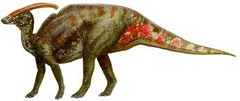
Hadrosaur
hadrosaur- duck billed 4 legged dino
- broad beak
- flat or crest headed
- broad beak
- flat or crest headed
28
New cards
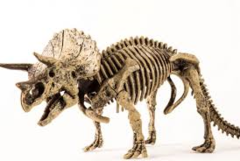
Ceratopsians
4 legged narrow skull
-most have frills, and they use this to recognize each other
-most have frills, and they use this to recognize each other
29
New cards
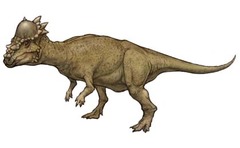
Pachycephalosaurs
dome-headed, helps them recognize each other, most likely used in fights
- quite primitive
- two-legged
- quite primitive
- two-legged
30
New cards
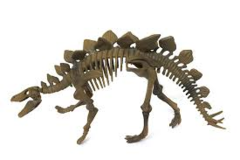
Stegosaurus
small, long n' low skull, 4 legged
-shorter front legs
-lead-shaped teeth
-plates on back
-shorter front legs
-lead-shaped teeth
-plates on back
31
New cards
Osteoderms
Bones that forms from the skin, makes plates on back
32
New cards
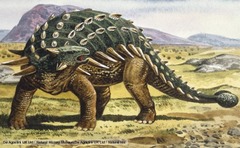
Anklyosaurs
blocked skulls, 4 legged
-covered in osteoderms of many sizes and shapes
- some, not all, formed tali club on tailed end (made up of osteoderms)
-covered in osteoderms of many sizes and shapes
- some, not all, formed tali club on tailed end (made up of osteoderms)
33
New cards
keratin
forms claws, beaks, hair, and feathers.
-harder than flesh, still decomposes faster than bone
-harder than flesh, still decomposes faster than bone
34
New cards
Integumentary structure
in dinosaurs, when we do find these structures, it reveals an adaptation for dinosaurs we wouldn't be able to find.
- makes up osteoderms, scales, bristles, feathers.
- makes up osteoderms, scales, bristles, feathers.
35
New cards
osteoderm functions
-storing calcium
-gathering heat from sun
-protection
-to look good
-gathering heat from sun
-protection
-to look good