BIO 204 Lab
 Call Kai
 Learn
Learn Practice Test
 Spaced Repetition
 Match
Match Flashcards
 Knowt Play
1/134

There's no tags or description
Looks like no tags are added yet.
Name | Mastery | Learn | Test | Matching | Spaced | Call with Kai | Chat |
|---|
No analytics yet
Send a link to your students to track their progress
135 Terms
Chapter 1 - Scientific Method, Graphing, and Natural Selection
What are the four basic components/steps of the scientific method?
Objective observation
Hypothesis formulation
Hypothesis testing by experimentation
Analysis and conclusions
What is the null hypothesis?
the hypothesis that suggests no effect
eg. X will have no effect on Y
What is the independent variable vs. the dependent variable?
Independent - the thing you change; the thing you are wondering if it has an effect
Dependent - the thing you are measuring
Finding out if blue light makes plants grow faster.
Independent variable: blue light
Dependent variable: plant growth
In most graphs, which axis does the independent variable go on? The dependent variable?
Independent variable - x-axis
Dependent variable - y-axis
What type of data are bar graphs good for?
comparing two or more groups
When should you use and XY scatterplot/line graph?
comparing data over time (including over generations)
Evolution
the change in the genetic make-up of a population over time
What are conspecifics?
members of the same species
What is a population?
a group of conspecifics that live in the same area and interbreed
What is the main driver of evolution? Define it.
natural selection
members of a population with certain traits having a higher survival and reproductions rate in their environment due to the presence of such traits
What are adaptations?
new genetic mutations that cause a trait that is advantageous for the survival and reproduction of an organism in their environment
What are traits controlled by?
genes
How do variations in traits arise?
random mutations
What is speciation?
when populations of the same species are reproductively isolated for a long time and evolve separately to the point that they can no longer produce viable offspring
Chapter 2 - Biomolecules
What does organic mean in biology and chemistry?
molecules that are based on chains or rings of carbon atoms
What is the process of creating a covalent bond between monomers called?
Dehydration or Condensation
What is the reverse of dehydration (dehydration being the removal of a water molecule to create a covalent bond between molecules)?
hydrolysis
What three elements do carbohydrates have? What is the ratio?
carbon, hydrogen, oxygen
1:2:1
Why are carbohydrates polar? What does this mean for their relationship with water?
oxygen is decently more electronegative than hydrogen and carbon, so the bonds between these molecules and oxygen are polar
the electrons spend slightly more time around the oxygen atom than the hydrogen and carbon atoms, creating a partial charge
carbs are hydrphillic (they are water-loving and dissolve in water)
What are the monomer, dimer, and polymer names for carbs?
monosaccharide
disaccharide
polysaccharide
What is the process in which energy is extracted from carbs to fuel cellular processes?
cellular respiration
What is the main purpose of monosaccharides?
for quick energy from simple sugars for cellular processes
What are the two main purposes of polysaccharides?
Give two examples of molecules for each purpose
Storage
Starch (in plants)
Glycogen (in animals)
Structure
Cellulose (in plants)
Chitin (in fungi)
What is the polarity and affinity for water in lipids? Why is this?
non-polar, hydrophobic
lipids are made mostly out of bonds between carbon and hydrogen, which always form non-polar bonds
the amount of bonds between carbon and hydrogen outnumber any polar bonds to point that lipids are still always polar
What are the “monomers” of lipids? Why do most organic chemists not think of them exactly as monomers?
fatty acids
they must be attached to a glycerol (3 fatty acids + 1 glycerol)
What is the main function of lipids?
What cellular structure are lipids the main component of?
energy storage
the cell membrane
What is a phospholipid?
a lipid that has a polar head made of phosphates and then two non-polar fatty acid tails, one being saturated and the other being unsaturated (bent)

Describe the structure of the cell membrane and the lipids that make it up.
it is two layers of phospholipids (the phospholipid bilayer)
the polar heads are on the outsides of the membrane (one layer faces directly into the cell and the other faces directly outside of the cell)
all of the tails are on the inside of the bilayer, as they want to stay away from the aqueous environment in the cell.
What is the role of cholesterol in the cell membrane? What type of biomolecule is it?
it controls the fluidity in the membrane; it is another type of lipid
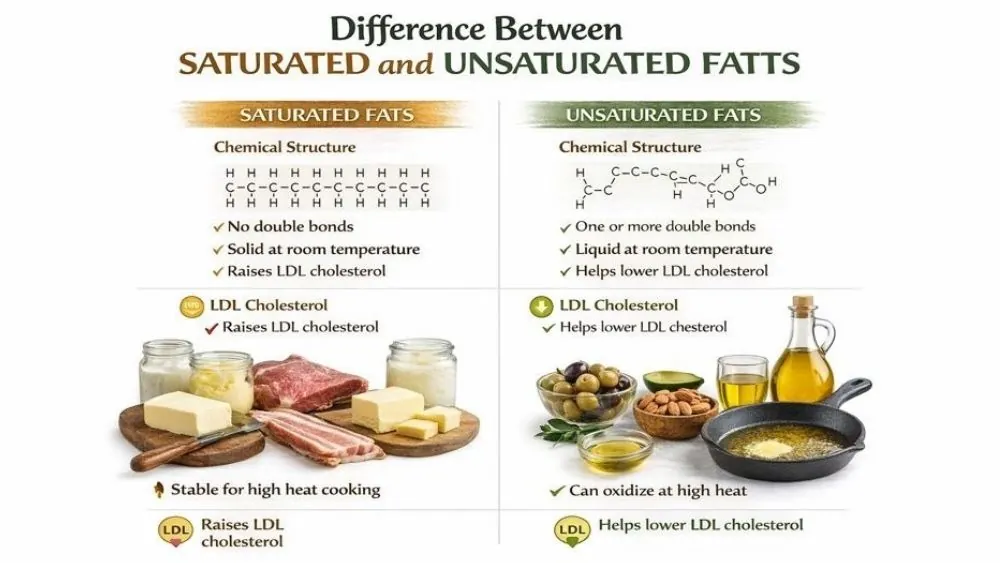
What is a saturated fat? What is an unsaturated fat? Describe the consistency of both at room temperature.
Saturated
only has single bonds between the chain of carbons and hydrogens
solid at room temperature (like butter or lard, unhealthy)
Unsaturated
has at least one double bond in the hydrocarbon chain of a lipid, causing a bend in the fatty acid
liquid at room temperature (like olive oil, more healthy)
What is the backbone that a protein is characterized by?
the carbon-carbon-nitrogen backbone
C-C-N or N-C-C (doesn’t matter apparently)
What part of a protein is the diversity of protein types and functions attributed to?
the diversity of amino acids
What is the monomer of proteins?
amino acids
What is the r-group on an amino acid?
also known as the side group or side chain, it is the part of the amino acid that differs between amino acids

What is a covalent bond between amino acids called? Thus, what is the polymer of amino acids called? (hint: it is not a protein quite yet)
peptide bond
polypeptide
Amino acids joined together are still not quite proteins, they are polypeptides. What needs to happen for an actual protein to form?
the polypeptide chain must spontaneously fold over itself to create a 3-dimensional shape
What term refers to to the unique, 3-dimensional shape of protein?
that is the protein’s conformation
What are the amino acids needed to synthesize proteins that are body cannot produce called?
essential amino acids
What are catalytic proteins called? What is their function?
enzymes
proteins that speed up a reaction/make it happen
What are the 6 different functions for proteins?
speed up reactions
providing structural support
defending organisms (being antibodies)
transporting materials within a cell
signaling between cells
movement in animals (muscle contraction)
What is a positive and negative control?
Positive control - a group/sample that is known to test positive for whatever test you are running
Negative control - a group/sample that is known to test negative for whatever test you are running
What reagent tests for small sugars (monosaccharides and SOME disaccharides)?
What color is the liquid, what color is a negative result, and what color is a positive result?
Benedict’s test
Color: blue
Negative: stays blue
Positive: green, yellow, orange, red
(green is less positive, red is most positive)
What reagent is used to detect starch (a polysaccharide)?
What color is the liquid, what color is a negative result, and what color is a positive result?
Lugol’s Iodine Test
Color: yellow/brown
Negative: stays the same
Positive: changes to violet, blue, or black
What reagent is used to detect lipids?
What color is a negative result, and what color and reaction is a positive result?
Sudan IV
Negative: no change
Positive: pink and the Sudan IV rises above the water
What reagent tests for proteins?
What color is the liquid, what color is a negative result, and what color is a positive result?
Biuret
Color: indigo blue
Negative: remains blue
Positive: violet color
What tool measures color intensity in a sample? Why would it be important to test color intensity when testing for biomolecules, etc?
spectrophotometer
look at how positive a test is, for example how much protein it in a sample
What solution is used as a positive control for protein?
BSA solution
What is the negative control for the Biuret test or any other biomolecule reagent test?
water PLUS the reagent
What is a standard curve?
kind of like a trend line
a line that shows the direct relationship between the concentration of a sample (independent variable) and its absorbance of light (dependent variable)
What is Beer’s law?
A=ec
Absorbance = (slope of the line in the standard curve) x (concentration of the sample)
used to represent the relationship between concentration and light absorbance (which is directly correlated)
How would you use a Biuret reagent and Beer’s law to determine the concentration of protein in a sample?
calculate the light absorbance of other known concentrations
mix Biuret reagent with unknown sample
find light absorbance using spectrophotometer
use the slope of the standard curve in Beer’s law equation to determine the unknown concentration

For light absorbance, how many significant figures (sig figs) are used?
2
for example 27.22% → 27%
Chapter 3: Diffusion and Osmosis
Liquids and gas are constantly what?
in motion
Do liquids or gases exhibit more constrained movement? Why?
liquids because they are more densely packed in their container (which could be the atmosphere or anything)
What is diffusion?
The spontaneous movement of molecules from an area of higher concentration to an area of lower concentration
What is reached once diffusion ensure that molecules an ions are evenly spread around?
concentration equilibrium
What is a solute? What is a solvent?
solute - the substance that dissolves
solvent - the thing the solute dissolves in (usually water)
When equilibrium is reached, what are molecules doing?
they are still moving; there is just no net change in concentration from one area to another
What is a concentration gradient? How do molecules move in terms of this gradient?
when there is a higher concentration of molecules in one area/side than another
molecules move down the concentration gradient towards the side with a lower concentration
How much energy does diffusion require?
none
What is the most important quality of the cell membrane in terms of its function as a barrier?
it is selectively permeable; only certain things (small sugars, ions, carbon dioxide) can pass through it, and other molecules cannot
What is the term to describe the diffusion of solutes across a cell membrane?
passive transport; no energy
What is the term to describe when larger molecules pass through the cell membrane in a manner that does not require energy usage? What in the cell membrane allows this to happen?
facilitated diffusion; transport protein
What are the proteins that allow water to diffuse across the cell membrane called?
aquaporins
What is the term for moving molecules across the cell membrane against the concentration gradient? What two things are required to do this?
active transport; requires a transport protein and ATP
What are four factors that will affect the rate of diffusion of solutes across the cell membrane over time?
solute size - smaller molecules go faster, like hydrogen
temperature - heat speeds up diffusion because it increases the overall speed of molecules
concentration gradient - if the concentration gradient is greater, diffusion will happen faster
charge/polarity - ions and charged molecules have a harder time diffusing than non-polar molecules
What is osmosis? How is it unique?
the diffusion of water molecules across a semipermeable membrane
the solvent (water) diffuses to reach concentration equilibrium instead of the solute (molecules)

What is osmolarity?
the total concentration of dissolved particles in a solution
Why do we say ‘solute particle’ concentration instead of the concentration of a particular solute?
some solutes dissolve into particles and aren’t necessarily the same solute
eg. salt dissolves into sodium and calcium ions when put in water
also it counts all of the particles, not just the molecules of one type of solute
eg. if there is both fructose and salt in a solution, using ‘solute particle’ measures all of the particles of everything instead of how much fructose and how much salt
What is the difference between tonicity and osmolarity? How is a hyper-osmotic solution different from a hypertonic solution?
Osmolarity
just about the concentration of particles in a solution
nothing to do with a membrane
hyper-osmotic solution simply has a higher solute concentration than another solution
Tonicity
only relates to solutes that can’t pass the membrane
it is the ability of those solutes to attract water towards them
hypertonic solution specifically has a higher concentration of non-penetrating particles than inside the cell, causing water to flow out of the cell, towards the solution
If you were to put 1 mol of sodium in a liter of water, what would the molarity be? What would the osmolarity be? Why?
What about glucose?
Molarity - 1 mol/liter
Osmolarity - 2 osmol/liter
Salt dissolves into Na and Cl ions, so it becomes two free particles *called dissociating)
Molarity - 1 mol/liter
Osmolarity - 1 mol/liter
Glucose and like molecules don’t dissociate
What is hypotonic, isotonic, and hypertonic? For each, where will water move?
Hypotonic solution - less solute concentration outside of the cell than inside of the cell
water moves into the cell
Isotonic solution - equal concentration levels between solution and intraceullar fluid
water is always moving, but the net movement of water is zero
Hypertonic solution - higher solute concentration in the solution outside of the cell than the intracellular fluid
water moves out of the cell
Which cells have a cell wall? What does this protect them from?
plant cells
protects them from bursting
What is the ideal tonicity environment for animal cells? For plant cells?
Animal - isotonic
Plant - hypotonic
What is turgor pressure?
the pressure of a plant cell’s cell membrane pushing up against the cell wall because it is full of water
What is it called when a plant cell is firm; the healthiest state for a cell? When they are limp?
turgid
flaccid
How is turgor pressure an adaptive advantage for cells?
plant cells push firmly against each other, allow stems to stand upright and face closer to the sun
What is the shrinkage of a cell as a result of water flowing out of it through osmosis?
plasmolysis

In plant cells, what eventually stops the net inward flow of water?
the high turgor pressure
What is the key difference between diffusion and osmosis?
diffusion - solute particles move down the concentration gradient
osmosis - water moves instead of the solute particles
What are 3 mechanical/physical differences between diffusion and osmosis?
Diffusion
no membrane
fast
over long distances
Osmosis
membrane required
slow
over small distances
What is the sodium chloride concentration of a living cell?
0.9%
Between diffusion, osmosis, and tonicity, which one is always relative to a living cell?
tonicity
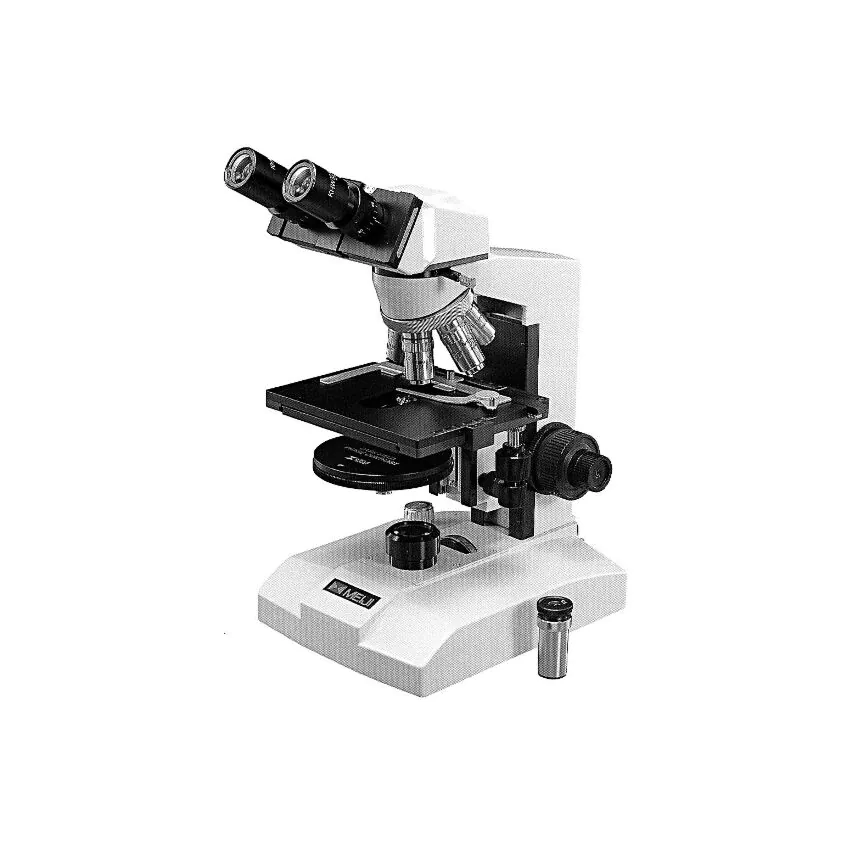
Label the parts of this microscope.

When glucose and starch are in a solution in a dialysis tube, which penetrates the membrane? Why?
glucose, it is smaller
When a dialysis tube is placed in a hypotonic solution, what could be the explanation behind an initial rapid increase, but a slower increase or stop to weight gain over time?
turgor pressure
What are the ocular lenses? By how much do they magnify images?
the eyepieces you look through, 10x
What are the 4 levels of objective lenses, by how much does each of them magnify a specimen?
scanning - 4x
low power - 10x
high power - 40x
oil immersion - 100x
How do you determine total magnification? What would the total magnification be if you had the objective lenses set to the scanning lens.
multiply the magnification of the ocular lens (10x) by the magnification of the objective lens that is selected.
ocular (10x) x scanning (4x) = 40x total magnification
What is the field of view on a microscope?
the bright white circle containing the specimen
What is the depth of field?
the percentage of distance between the specimen and the lens that is in focus

If a plant cell is in a 0.5% saline solution, what will happen? What about a 0.9% tonicity saline solution and a 1.2% tonicity saline solution?
0.5% - hypotonic solution, turgid (ideal)
0.9% - isotonic solution, stays normal
1.2% - hypertonic, plasmolysis, membrane pulls away from wall

If an animal cell is in a 0.5% saline solution what will happen? What about a 0.9% tonicity saline solution and a 1.2% tonicity saline solution?
0.5% - hypotonic solution, lyse
0.9% - isotonic solution, stays normal
1.2% - hypertonic, shrivels
Chapter 4 - Enzymes
What is a catalyst? What are the two different classes of catalysts (explain them)?
a chemical agent that speeds up a reaction and is not consumed by the reaction
enzyme (basically all catalysts)
proteins
ribozymes
RNA
How would cells fair without catalysts?
the wouldn’t survive
How do catalysts speed up a reaction?
by lowering the activation energy (EA)
they gather substrates and put them in the same place
they “hug” them close together by induced fit
the charged amino acids on the enzyme also work to bring the reaction forward