Coronary Circulation + Coronary Artery Disease/MI
 Call Kai
 Learn
 Practice Test
 Spaced Repetition
 Match
 Flashcards
 Knowt Play
1/11

There's no tags or description
Looks like no tags are added yet.
12 Terms
The Coronary Circulation
Blood vessels that supply and drain the heart
Coronary Arteries deliver oxygenated blood to the coronary capillary beds and
Coronary Veins drain deoxygenated blood from the capillaries
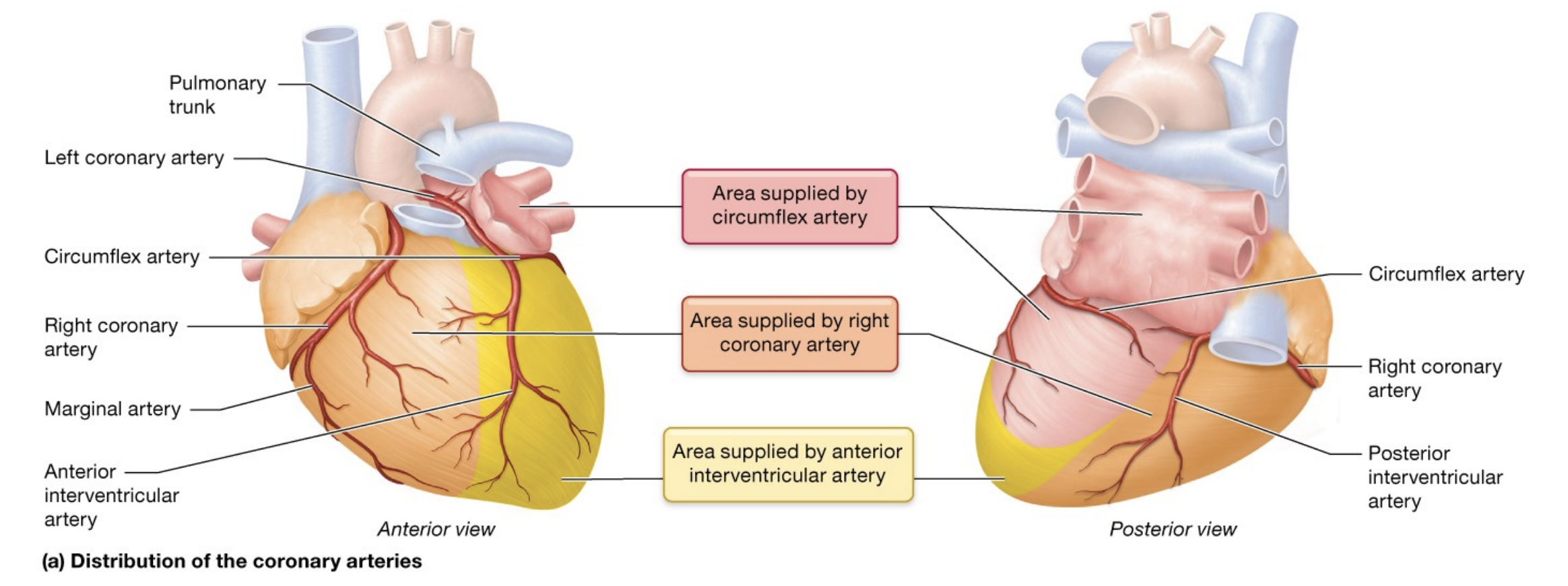
Right and Left Coronary Arteries
branch from the ascending aorta and travel in the right and left atrioventricular sulci, respectively

Right Coronary Artery
Branches and supplies the right atrium and ventricle with the Marginal Artery and the Posterior Interventricular Artery
Left Coronary Artery
Branches into Anterior Interventricular Artery (Left Anterior Descending Artery, or LAD) that supplies the interventricular septum, most of the anterior left ventricle, and some of the posterior left ventricle
Circumflex Artery that supplies the left atrium and parts of the left ventricle
In some people, it replaces the right coronary artery in supplying the branch that becomes the posterior interventricular artery
Percutaneous Coronary Angiography
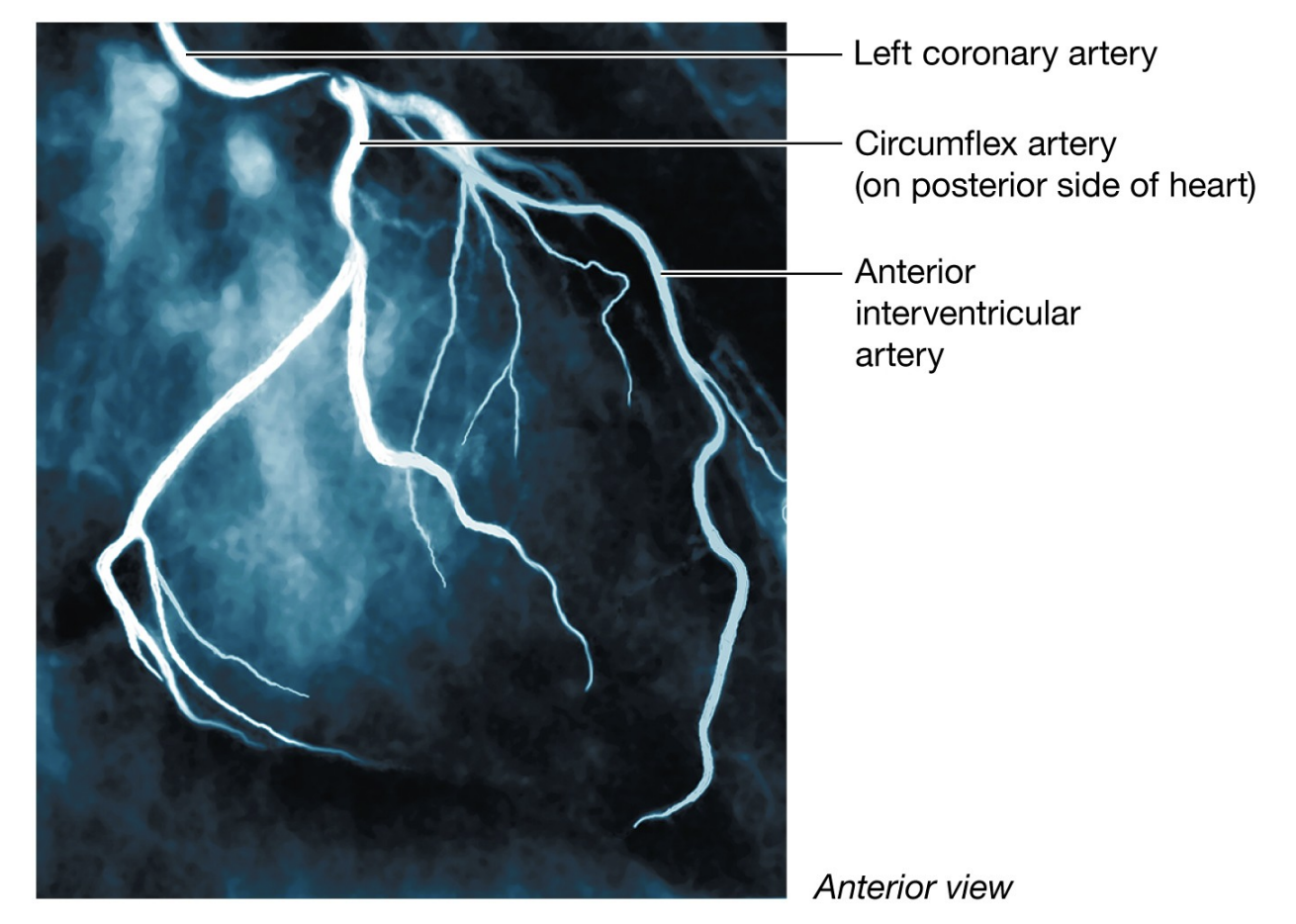
Arteries can be imaged with Percutaneous Coronary Angiography
A small tube is fed through the systemic circuit and a dye is injected producing an image
Coronary (Cardiac) Veins
coronary sinus, great cardiac vein, small cardiac vein, middle cardiac vein
Coronary Sinus
A large venous structure on the posterior heart that drains into the right atrium
Receives blood from:
Great Cardiac Vein which drains the left atrium and much of both ventricles
Small Cardiac Vein which drains the right atrium and parts of the right ventricle
Middle Cardiac Vein which drains mostly the posterior left ventricle

Anastomoses
Systems of channels formed between blood vessels
may form between coronary arteries or with arteries outside the coronary circulation
In arteries, may form to provide Collateral Circulation, or alternate routes of blood flow, if blood flow to the myocardium is insufficient
Coronary Artery Disease (CAD)
leading cause of death worldwide
Results from a buildup of fatty Plaques in the coronary arteries that decrease blood flow to the myocardium, leading to Myocardial Ischemia, or decreased oxygenation
Symptoms often include Angina Pectoris, or chest pain
Myocardial Infarction (MI)
Myocardial Infarction (MI), or Heart Attack results if plaques rupture and a clot forms that obstructs blood flow resulting in death of the myocardium
Symptoms and Risk Factors of MI
Symptoms of an MI include radiating chest pains along the dermatomes to the left arm or left side of the neck, shortness of breath, sweating, anxiety, nausea and/or vomiting
women may not present with chest pain
Survival depends on the extent of damage as cardiac muscle cells do not undergo mitosis
Risk factors include smoking, high blood pressure, poorly controlled diabetes, high levels of certain lipids in the blood, obesity, age over 40 for males and over 50 for females, genetics, and male sex
Treatment of Coronary Artery Disease
Initial treatments involve lifestyle modifications and appropriate medications
Coronary Angioplasty—A balloon is inflated in the blocked artery and a wire-mesh tubing called a Stent is inserted to keep the artery open.
Coronary Artery Bypass Grafting—Other vessels are grafted onto the diseased coronary artery to bypass the blockage and provide an alternate route for blood flow.