Unit 45A: Engine Lathe - Parts of Lathe
 Call Kai
 Learn
 Practice Test
 Spaced Repetition
 Match
 Flashcards
 Knowt Play
1/17

Earn XP
Description and Tags
First application was potter's wheel Rotating the clay enabled it to be formed into cylindrical shape
18 Terms

Headstock
provides drive through gears to work-holding devices, transmission gears inside

Speed Change Box
Sets spindle RPM. Includes feed reverse lever of feed rod and lead screw.
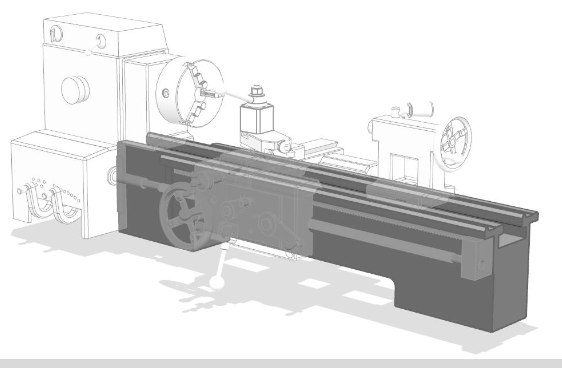
Bed
Supports working part of lathe. Guides and aligns parts

Quick Change Gearbox
Provides feed rod and lead-screw with various speeds for turning and threading operations.
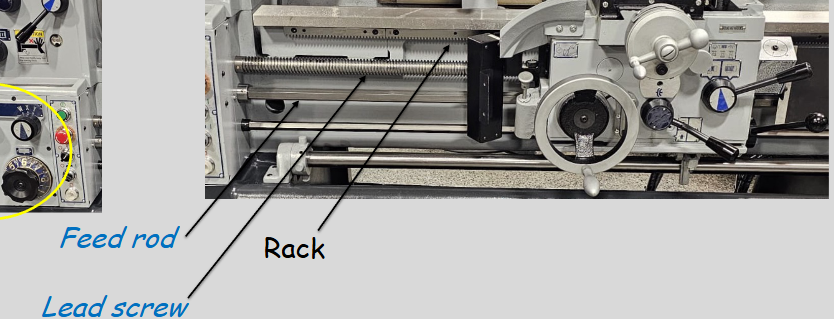
Feed Rod
advance carriage or cross-slide when automatic feed lever engaged

Lead Screw
advances the carriage for thread-cutting operations when split-nut lever engaged.

Carriage
Moves cutting tool along lathe bed (Z-axis).
Three main parts Saddle, cross-slide, apron
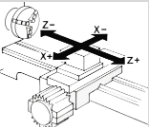
Saddle
H-shaped casting mounted on top of lathe ways, mounts cross-slide and apron

Cross-Slide
Mounted on saddle. Provides manual or automatic cross movement (X-axis)

Compound rest
Fitted on top of cross-slide. Supports tool post. Can swivel to any angle for taper-turning. Direction of cut matches angle of compound rest.
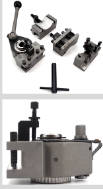
Quick Change Tool Post
Allows for rapid, indexable, high-precision, and stable tool changes of multiple tool holders.
Individual tools can be clamped, aligned and centered in their own tool holder ready to be switched out.
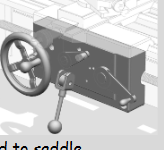
Apron
Prevents engaging split-nut lever and automatic feed lever at same time. Wheel can be turned manually.


Tailstock
Clamp locks tailstock in any position along bed of lathe.
Spindle has internal taper to receive center, drill chuck.
Provides support for right-hand end of work.
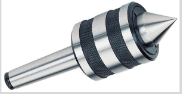
Live centre
A tailstock accessory; Maintains concentricity by keeping the workpiece’s axis aligned with the lathe’s spindle
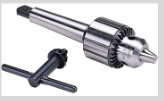
Keyed drill chuck
securely grips the shank of a drill bit, reamer, end mill, or similar cutting tool, allowing the workpiece to rotate while the tool is held steady
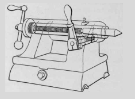
Spindle has internal taper
onical interface at the spindle nose that securely and precisely holds chucks, faceplates, and other workholding devices, enabling accurate, stable, and safe turning operations

Centre Drilling
the process of creating a small, precisely located conical hole (centre hole) at the start of a workpiece to provide a stable reference point for accurate turning, milling, grinding, or other machining operations

Supporting
means using accessories, fixtures, or tail support to hold long, heavy, or delicate workpieces steady, preventing deflection, chatter, and inaccuracies during cutting