bicd 100 midterm 2
 Call Kai
 Learn
 Practice Test
 Spaced Repetition
 Match
 Flashcards
 Knowt Play
1/49

There's no tags or description
Looks like no tags are added yet.
50 Terms
if you follow a cross for a gene on the X chromosome where the mother is homozygous wild type and the father is hemizygous mutant, and all XX offspring have the mutant phenotype and the XY offspring have the wildtype phenotype what conclusions can we draw
the mutant gene is dominant, since the XX offspring will be heterozygous
what does VNTR stand for
variable number tandem repeats
how to name VNTRs
alleles of VNTRs vary in repeat number and so they also vary in number of nucleotides
for example GACGACGAC would be allele 3 and GACGAC would be allele 2
where in the genome can VNTRs appear
anywhere
what method can you use to make copies of VNTRs
PCR, and then you can run them on a gel(Southern blot)
the PCR amplifies the DNA so that there is enough copies so that it can be seen on the gel
the gel lets you see how long the pieces of DNA are, so for example allele 80 of a VNTR would be higher up on the gel than allele 12
is it possible for a cell to exist without an X chromosome
no, there are vital genes in it that code for things such as blood clotting and muscle function
what significant gene is on the Y chromosome and what does it do
SRY gene
turns on certain transcription factors that activate genes that turn on other genes that cause development of the testes at about 6 wks from conception
what happens to a fetus if there is no SRY gene present
there are no testes development genes present, so the genes for female gonad development turn on
what process involving the SRY gene could cause development of ovaries in a XY individual and development of testes in an XX individual
translocation of the SRY gene
since it turns on a network of genes that are already there, its translocation and presence is able to start development of the testes, vice versa if it is absent then those genes are not turned on so ovaries develop
do XX individuals express more or less of X linked genes than XY individuals
they express the same amount, in other words they have the same dosage of the X-linked genes
only 1 X chromosome is expressed in XX individuals because the other one is silenced
X inactivation and what happens to gene expression as a result
keeps XX individuals healthy by allowing them to have the correct dosage of X-linked genes
an X chromosome in each cell is randomly inactivated around 3 weeks from conception
so XX mammals are mosaics for X-linked gene expression(this is not somatic mosaicism)
what happens to PAR regions during X inactivation
they are not affected by X inactivation and are instead expressed the autosomal genes (think, pseudoautosomal genes)
how does X inactivation happen
XIST gene
it is an RNA gene product that binds to/coats the same chromosome that it was expressed from, therefore inactivating it
what could cause some X-linked recessive phenotypes to show up in heterozygous individuals
skewed X inactivation instead of the typical 50-50 inactivation
happens in about 25% of XX individuals
XO genotype
Turner syndrome
only viable monosomy
XXY genotype
Klinefelter syndrome
these individuals still experience X inactivation but their symptoms are a result of extra genes in the PAR region
Down syndrome has what genotype
trisomy 21, 2n+21
what happens to XXX individuals
they still express normal amounts of X-linked genes but experience symptoms because they express 3 copies of the PAR genes
what can phenotypic ratios be used to infer
the outcomes of crosses can be used to infer mode of inheritance and number of genes
what are the results for the F2 generation of a dihybrid cross
F2 generation has an expected 9:3:3:1 ratio
what does this notation mean Y/_,R/_
the blank could either be filled in with a dominant or recessive allele because both options will result in the same phenotype
the slash is a homologous chromosome
dihybrid cross
lays out the possible gametes for each parent, so each parent has 4 and there are 16 possibilities
other method for finding phenotype/genotype ratio thats not the dihybrid cross
if you want to find the frequency of a and b phenotype occurring do normal punnett squares for each and then multiply the probabilities together “forked line method“
if given parent genotypes but no phenotypes assume what
inbred phenotype
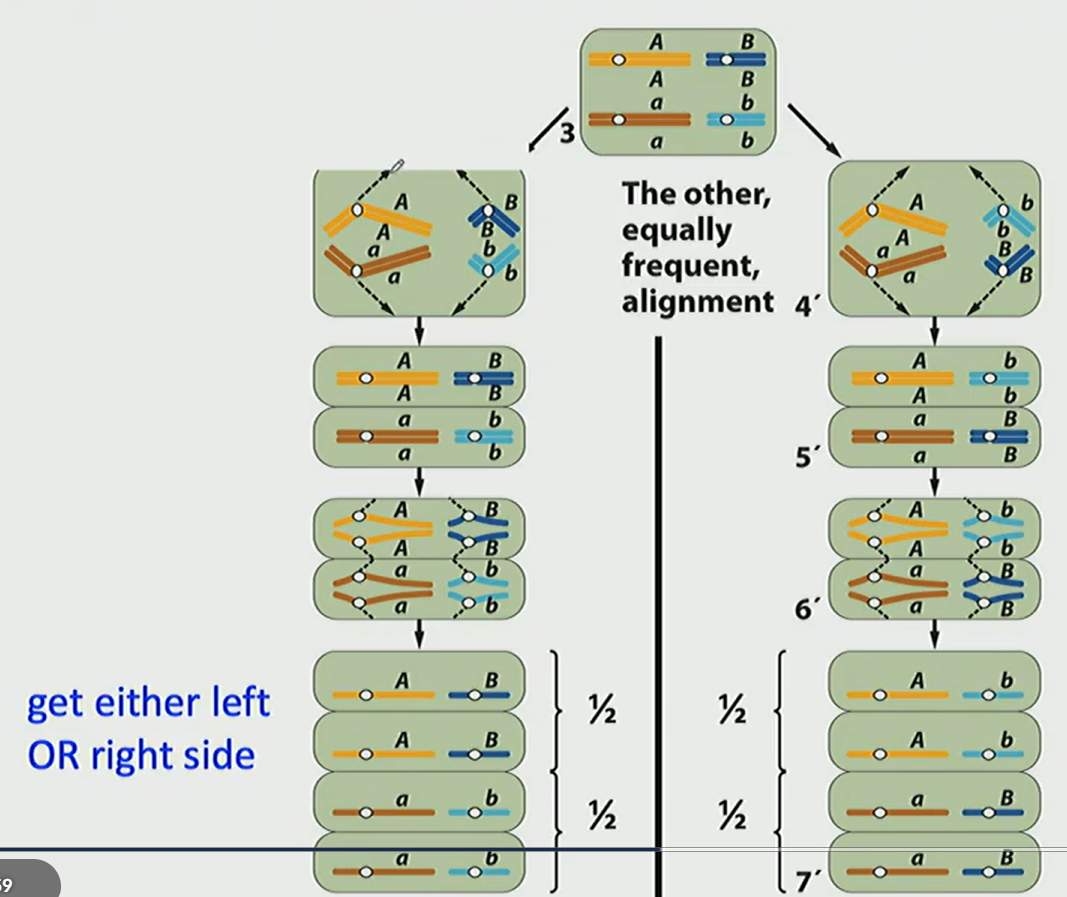
if you are following a cross of 2 genes that are on different chromosomes then what will affect the outcome of meiosis
how the genes line up (rule of independent assortment)
and if multiple cells are all undergoing meiosis then all of the gametes are made in equal proportions
what do you use the chi square test for
to see if the observed values are close enough to the expected values
chi square test formula and how to tell if something is statistically significant
change the chi square value into a p value
p value less than 0.05, there is a significant difference, reject null hypothesis
p value more than 0.05, there is no significant difference, cannot reject null hypothesis

how to find degrees of freedom
number of outcomes - 1 (example is number of phenotypes)
how to use the chi square chart
find degrees of freedom and chi square value on the chart and match w p value on top
epistasis
when one gene affects another one
for example gene a makes a product that activates gene 2
complementation tests
crosses to determine if individuals with the same phenotype carry mutations in the same or different genes
results can be used to determine the number of genes involved in a particular trait
recessive epistasis
if one gene is mutated then it masks the effect of another gene
gene a is epistatic to gene b means
gene a is masking gene b
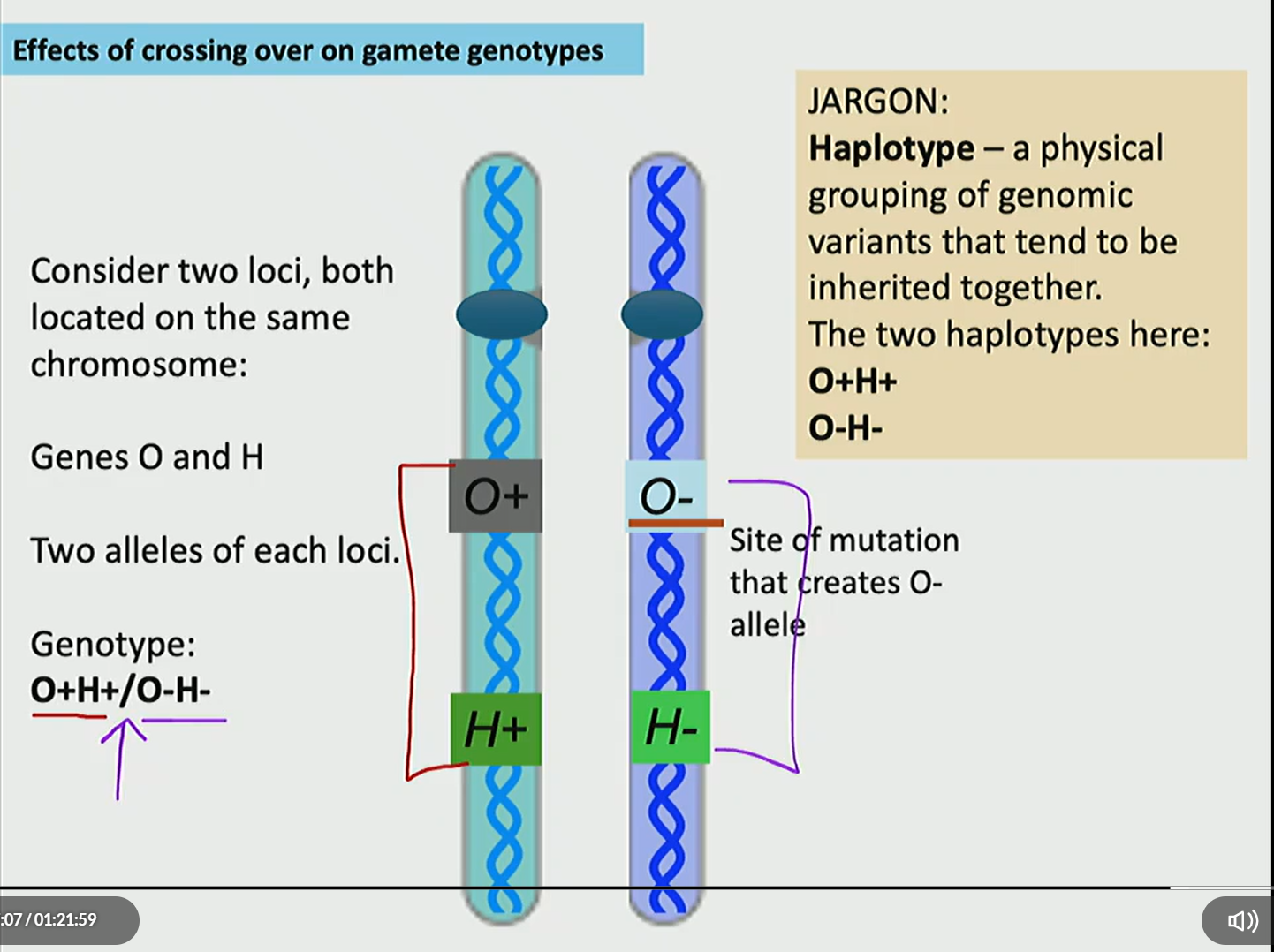
haplotype
which alleles are together on a chromosome in the parent
how to calculate map distance
add together recombinant percentages
this gives you the map distance (x centimorgans/map units)
if two loci are closer to each other what happens to the chance of crossing over between them
closer loci, less crossing over
physically linked genes, genetically linked genes
physically linked: genes are on the same chromosome
genetically linked: genes are physically close enough to each other that they don’t segregate independently during meiosis due to decreased crossing over between the loci (so less than 50% recombination)
in coupling(in cis)/in repulsion(in trans)
in coupling (in cis): dominant alleles on same chromosome, recessive alleles on same chromosome
in repulsion(in trans): dominant and recessive alleles mixed on same chromosome
how to tell which offspring are recombinant
whatever combo of traits that you dont see in the parents is the recombinant offspring
for example the parents are light eyes, dark hair and dark eyes light hair
so the recombinant offspring would be light eyes, light hair and dark eyes, dark hair
also in general the recombinant offspring will be lesser in number
can you tell if youre looking at cis couping or trans repulsion in a heterozygous individual
not without looking at the chromosomes


what is an SNP
single nucleotide polymorphism (difference)
if this occurs in less than 1% of the population then its not an SNP anymore and just a rare point mutation
causal vs non-causal SNPs
causal: the SNP is causing/contributing to the phenotype
non-causal: the SNP could be linked to some other mutation that is somewhere else in the genome
what do you need to know to use an SNP as a molecular marker
know that the SNP exists at a particular location
know which SNP alleles are found in a population
associations between SNP genotypes and phenotypes being tracked could include:
SNP genotypes can be used to estimate risk
known SNP locations can be used to ID loci that control/influence genotype
what do QTLs measure
quantitative trait loci, a location in the genome
quantitative traits. complex and continuous traits like height, pigmentation levels, etc that are influenced by many genes
what model organisms do QTL studies use
true breeding model organisms
LOD scores
logarithm of odds score
used to determine if a result for QTL study is significant
LOD>3 is sufficient evidence of linkage
LOD scores <3 from multiple QTLs can be added together to get a cumulative LOD score that is >3
any negative LOD scores indicate that linkage is probably not happening
GWAS study
genome wide association study
uses SNPs that are linked to a gene(or sometimes causative) to identify genes contributed to a complex trait
true breeding model organisms not needed
compare 2 extremes of a certain genotype, example tall and short people and then use the study to identify loci/genes that influence particular traits
asks which SNP allele occurs more FREQUENTLY in a population compared to the other
lec 14