Digital Divide Lecture 2
 Call Kai
 Learn
 Practice Test
 Spaced Repetition
 Match
 Flashcards
 Knowt Play
1/27

Earn XP
Description and Tags
Theoretical Frameworks (INTENSE)
28 Terms
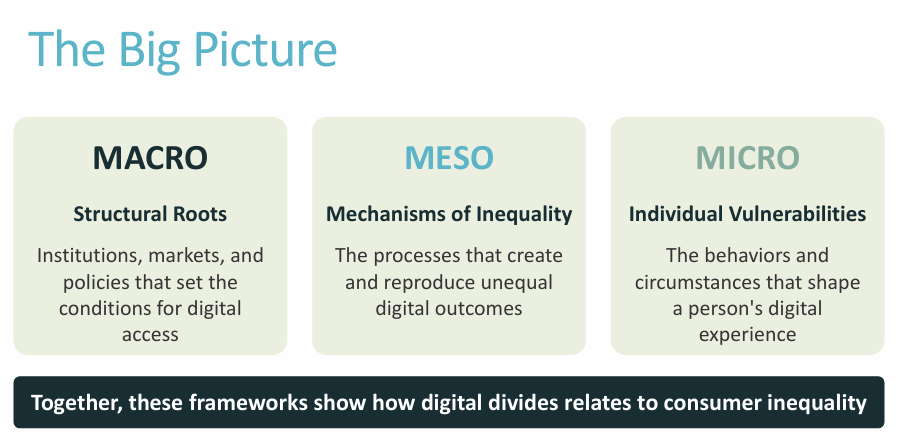
What is the “Big picture” behind the relation of digital divide and consumer inequality?
Macro: structural roots (institutions, markets, policies set the conditions for digital access)
Meso: mechanisms of inequality (processes that create/reproduce unequal digital outcomes)
Micro: individual vulnerabilities (behaviours/circumstances that shape a person’s digital experience)
What is the main question behind the four models of future inequalities in digital societies?
As technology evolves, what happens to the gap between advantaged and disadvantaged?
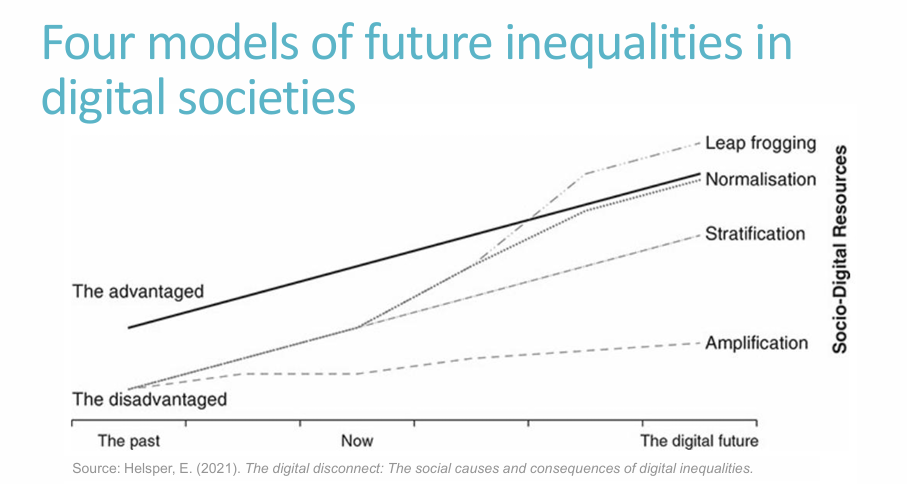
Explain the normalisation and the stratification models!
Normalisation: optimistic, only minimal difference
Stratification: both disadvantaged and disadvantaged benefitted from the technologies. same gap but more socio-digital resources
Explain the leap-frogging and the amplification models!
Leap-frogging: disadvantaged benefitted (had a leapway, leg up), higher resources than advantaged
Amplification: least ideal, gap is becoming wider and wider (people who don’t use smartphones also won’t use AI at all)
Name some structural & economic foundations!
Consumer economic theory, structuration theory, capital theory
What is the consumer economic theory about?
consumers adopt + use technology based on a expected benefit/cost (affordability) calculation
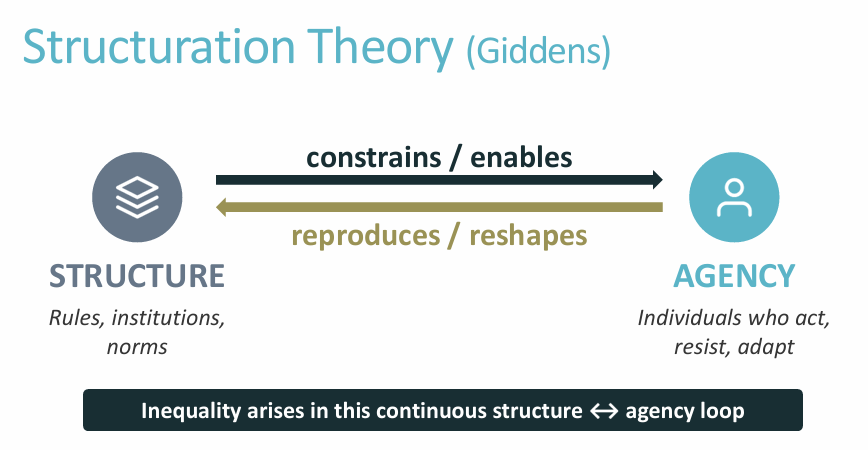
What is the structuration theory about?
e.g. laws regarding YouTube content that is allowed to be uploaded change -> individuals are constrained + can act, resist or adapt
Who was the founder of the capital theory and what it is it about?
Pierre Bourdieu: digital inequality is about technological + social inequality (affects digital participation)
4 forms of capital: economic, cultural, symbolic, social
Explain the 4 forms of capital!
economic: financial/material resources (money, property, income)
cultural: knowledge, skills, education (language)
social: networks of relationships with support/access to resources (e.g. internship at parents’ lawfirm or grandma lives in Jeju + therefore I have access to tangerines)
symbolic: prestige, honor, recognition (degree from SKKU > honor)
What is digital capital?
ability to use, adapt, benefit from digital technologies (can be transformed into economic, cultural, social capital)
Is digital capital completely separate from other forms of capital?
mirrors + increases existing social inequalities, inequality comes from uneven capital distribution
capital-increasing activities (research, networking) are more common for already-advantaged groups
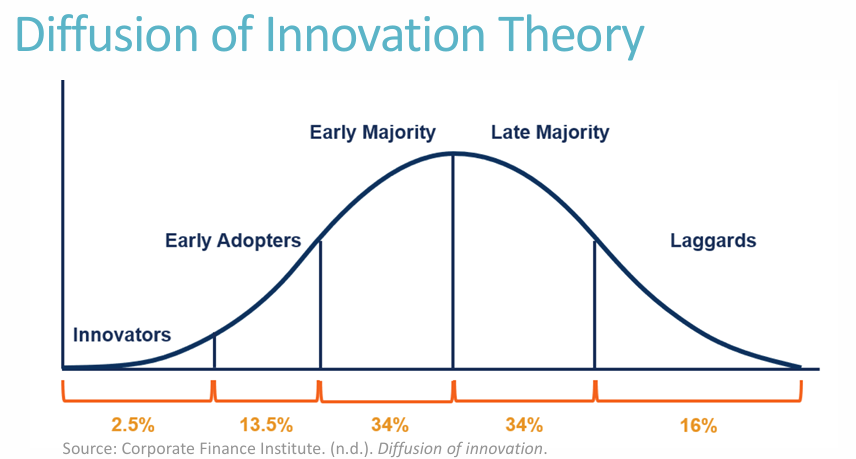
What is the diffusion of innovation theory about?
how early people partake in trends/buying products
very simplified, e.g. if you don’t have the money to afford a foldable phone, you can never take part in it
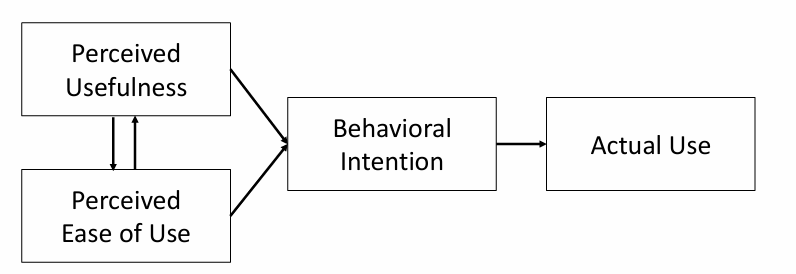
What is the technology acceptance model about?
=technology is socially shaped, adopted + negotiated (and integrated into routines, workplaces + households)

What is the domestication theory about?
it has 4 stages:
normal/desirable use depends on social + cultural norms + context
What is the “behavioral economics approach”?
people make IRRATIONAL choices (opposite of Homo Oeconomicus)
CORE IDEA: people don’t optimize, they SATISFICE
What do people operate with according to the behavioral economics approach?

What is a nudge?
choices are presented in a way that they predictably shape behavior (no options removed/banned so still freedom of choice)
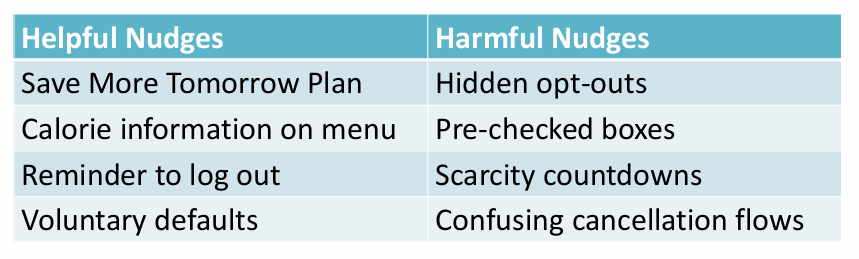
What are some helpful vs. harmful nudges?
digital environments are often designed like that through order of options (first item gets the most attention), some things are shown/hidden and number of steps to cancel/compare
What are “dark patterns”?
UI designs that trick users (forced continuity (free trials > paid), confirmshaming (“Are you sure you want to miss this deal?”), hidden costs at checkout
What is algorithmic persuasion?
algorithms adapt to each user according to consumer behavior
How do vulnerable consumers experience the internet?
vulnerable consumers have less protection + more exposure and therefore face compounded disadvantages in digital markets
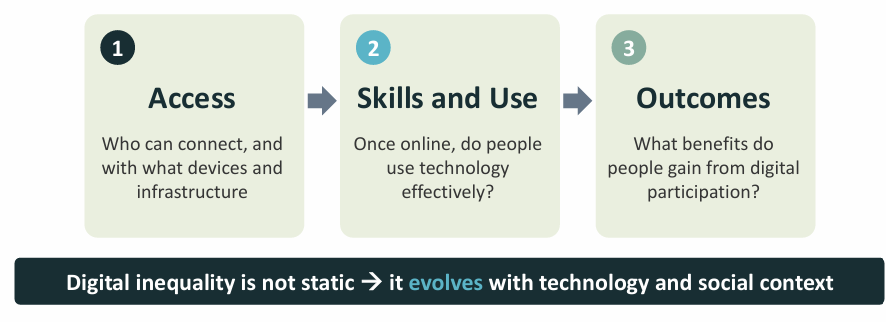
What are the levels of the three-level-divide?
access: access + opportunities to use digital devices + systems, requires participation
skills and use: digital skills + literacy
outcomes and benefits: what people gain/don’t gain from digital engagement (educational achievements, health improvements, economic benefits) (outcome gaps reinforce existing offline inequalities)
What are digital skills about?
practical/task-oriented abilities to operate digital devices + services (navigating websites, apps, productivity tools)
è taught through technical training, measurable via performance-based assessments
What is digital literacy about?
understanding of digital environments (critical thinking, ethical use, awareness of own’s digital footprint)
>developed through education, media, lived experience
digital tools are used in different contexts, but being online =/ inclusion: usage should lead to meaningful engagement and personal/social development
What is attention inequality + time poverty?
attention = value, but not everyone can be on social media that long (mostly people with more time, better tech skills + cultural capital are better off than others)
low-attention consumers (low engagement) > passive, easily manipulated
What are competency based models?

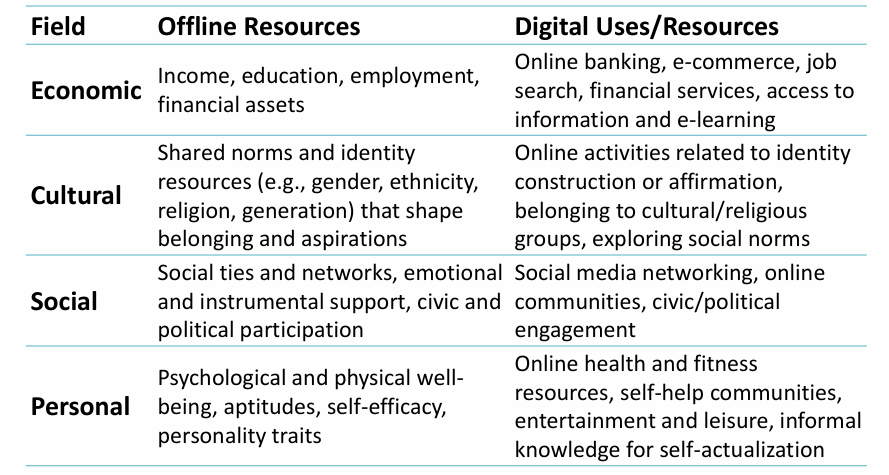
What is the corresponding fields model?

Compare online with offline fields (corresponding fields model)!
= digital inequality reflects offline inequalities, people with more offline resource would rather engage in capital-enhancing digital activities