lec 7 - climate change in northeastern us
 Call Kai
 Learn
 Practice Test
 Spaced Repetition
 Match
 Flashcards
 Knowt Play
1/17

There's no tags or description
Looks like no tags are added yet.
18 Terms
using pollen to examine change in species composition w/ past climate change
pollen released each spring by plants
pollen falls into nearby lakes and settles in sediment at lake bottom
scientists examine pollen laid down over time by taking sediment cores

why sample lake for pollen?
receding glaciers → trees can move
lakes relatively stable
//FACT CHECK THIS
tree migration irt glaciers
trees can move north (in nh) when the glaciers retreat to north
blue lines represents earliest presence of each plant genus x1000yrs ago

global/regional/local changes
air temps + precipitation have been increasing, spring thaw dates are earlier and winter freeze dates are later in MA
HOT AND WET

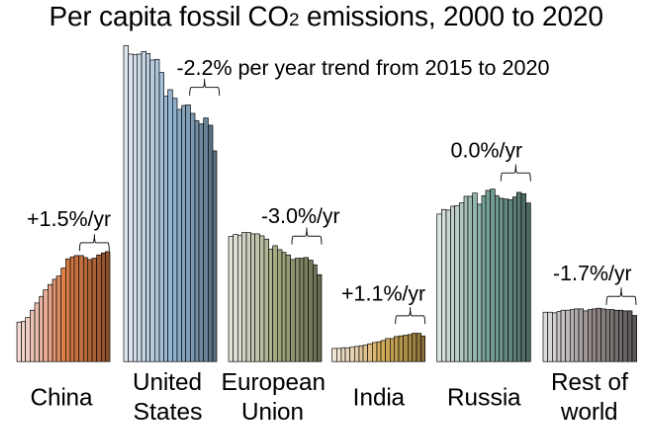
greenhouse gas emissions
highest total - china (highest population)
highest per capita - united states
rcp/representative concentration pathways
even low emissions scenario predicts climate change - greenhouse gases take a while to drain (bath analogy - the water doesnt just disappear)
8.5W/m² - watts per m² of radiative forcing expected by year 2100

increasing with higher emission scenario
annual average temperature
summer days above 100F
# of extreme heat days positively correlated with hospital visits
observed/projected winter precipitation
total winter precipitation expected to increase
total summer precipitation not expected to change BUT extreme rain events will increase
essentially - increased temps → greater evap → more droughts in summer
soil moisture decreases (direct in summer, winter soil cant take advantage of the water so it slides off)

droughts
even if precipitation increases annually, decreases during growing season could have significant impact on agriculture and natural ecosystems
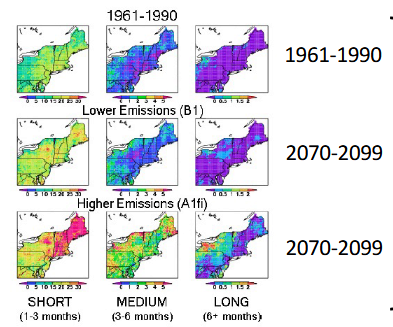
winter temps in ne US over next 100yrs
4-4.5C warmer
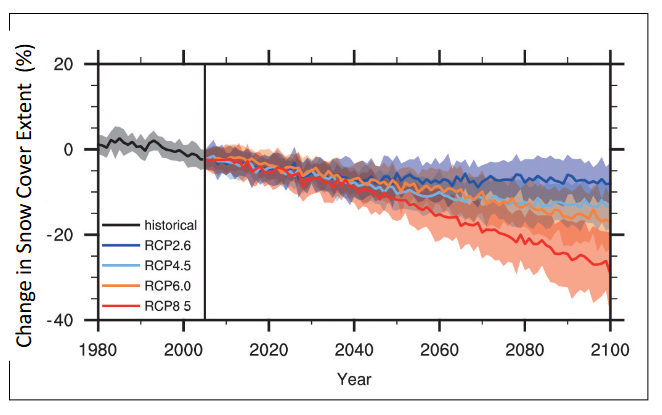
reduced winter snowpack

decline in max snow cover in northern hemisphere
snow cover decline
summary expected climate change for NE US
increased annual temps
increased winter precipitation (rain)
decrease in snow-covered days
no change in summer precip, but increased extreme rain events
increased frequency of summer droughts
plants moving north
american beech, sugar maple

marine species moving north
atlantic cod - not moving but decreasing biomass
american lobster - increasing biomass in the north while decreasing in the south
black sea bass - increasing biomass as species move north

snow removal hubbard brook + harvard forest
reduced snow pack → increased soil frost
increased depth and duration of soil frost
decreased root growth and nutrient uptake by trees
decreased water and carbon uptake by trees
decreased abundance and diversity of soil arthropods
CCASE (climate change across seasons experiment)
combined effects of colder soils in winter + warmer soils in growing season?
14 × 11 m² plots
2 plots - reference
2 plots - soils warmed 5C in growing season
2 plots - soils warmed 5C in growing season + snow removed in winter to induce soil freeze/thaw cycles
litterfall baskets (4 per plot)
dendrometer bands on all trees >10cm diameter (measures micro changes in tree diameter)
21-24 trees/plot, mixed hardwood stand
CCASE results
increased cumulative carbon in aboveground woody biomass
growing season warming increases C sequestration
growing season warming increases aboveground tree growth !!
warmer → more photosynthesis → easier access to nutrients
winter soil freeze/thaw cycles offset this increase
½ of the warming effect is offset by smaller snowpack in winter

ways to reduce greenhouse gas emissions
blabla