Psychology Schacter Chapter 3 (Neuroscience and Behavior)
 Call Kai
 Learn
 Practice Test
 Spaced Repetition
 Match
 Flashcards
 Knowt Play
1/97

There's no tags or description
Looks like no tags are added yet.
98 Terms
Neurons
in the nervous system that communicate with one another to perform information-processing tasks.

Intensity
expressed through number of neurons firing and frequency of firing
Cell body (soma)
The largest part of a neuron that coordinates information-processing tasks and keeps the cell alive.
Functions include protein sythesis, energy production, and metablolism. Houses a nucleus with chromosomes that have DNA

Dendrite
The part of a neuron that receives information from other neurons (nuerotransmitters) and relays it to the cell body. Looks like bushes

Axon
The part of a neuron that transmits information to other neurons, muscles, or glands.
Insulated by Myelin Sheath

Myelin Sheath
An insulating layer of fatty material made up of glial cells. Insulutes Axon .

Glial Cells
Support cells found in the nervous system
support, nourish, and protect neurons and can make MORE EFFICENT TRANSPORT to other nuerons or musles. Make up Myelin Sheath

Demyelinating Disease
(loss of myelin) causes a decrease in conduction speed and a weaker signal, slowing transmission of one nueron to another. Leads to loss of feeling, blindness, ect
ie:
Multiple sclerosis
Synapse
The junction or region between the axon of one neuron and the dendrites or cell body of another.

inhibitory
decrease membrane permeability, decrease chance for threshold to be achieved (sarotonin , Gaba)
excitatory
Stimulates chance for threshold to be achieved (sometimes Dopapminen)
reuptake
a neurotransmitter's reabsorption by the sending neuron
means of recycling neurotransmitters
Sensory Neurons
Neurons that receive information from the external world and convey this information to the brain via the spinal cord.

Motor Neurons
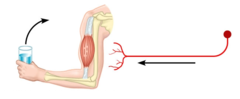
Neurons that carry signals from the spinal cord to the muscles to produce movement. Often have long axons that reach to our extremtities.
Interneurons
Neurons that connect sensory neurons, motor neurons, or other interneurons. Composes most of the nervous syste,
-Work togethr to do simple and compilcated tasks such as identiifying location of sensory nueron or reconizing a face.

Purkinje Cells
found in the cortex of the cerebellum. Dense and bushy
Pyramidal Cells
have a triangular cell body and a single long dendrite with many smaller dendrites
Bipolar Cells
pass on the impulses from rods and cones.
Single axon and single dentrite

Conduction
Movment of electrical signal within Nuerons. From dentrite to cell body then through axons
Transmission
Movement of signals between Nuerons through Synapse

Resting Potential
The difference in electric charge between the inside and outside of a neuron's cell membrane. Tested first through squid. During, Inside of cell membrane is negativtly charged compared to the outswide
-The stable, negative charge of an inactive neuron
-chemicals known as pump in the cell membrane keep the charges different and seperated so it builds up and when relased, it can bild an electrical impuslse in little time

Action Potential
An electric signal that is conducted along a neuron's axon to a synapse.
Must Reach a THRESHOLD
ALL OR NOTHING

Refractory Period
The time following an action potential during which a new action potential cannot be initiated. Na positive ion inactivate themselves and block more from coming in. K positives stream out and return to negative. (idk if need to know)

Terminal Buttons
knoblike structures that branch out from an axon and secrete nuerotransmitters.

Neurotransmitters
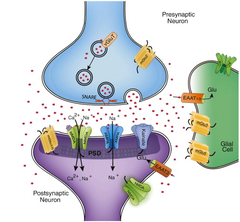
Chemicals that transmit information across the synapse to a receiving neurons dendrites.

Receptors
Parts of the cell membrane that receive the neurotransmitter and initiate or prevent a new electric current.
-Lock and key system with nuerotransmitter

Acetylcholine (ACh)
A neurotransmitter involved in a number of functions, including voluntary motor control.
- Alzehmirs desiese associated with decrease in these

Dopamine
A neurotransmitter that regulates motor behavior, motivation, pleasure, and emotional arousal. DRUGS
high levals = skitophrenia
low levals = parkinsons

Glutamate
A major excitatory neurotransmitter involved in information transmission throughout the brain . Too much causes seasures.
GABA (gamma-aminobutyric acid)
The primary inhibitory neurotransmitter in the brain. Stops firing a nuerons . Too little causes sesures.

Norepinephrine
A neurotransmitter that influences mood and arousal.
used in fight or flight situations; associated with adrenaline
abnormal activity is linked to panic disorder and depression

Serotonin
A neurotransmitter that is involved in the regulation of sleep and wakefulness, eating, and aggressive behavior.

Endorphins
Chemicals that act within the pain pathways and emotion centers of the brain.
-decrease pain perception.
-increase happiness (like after run)

Agonists
Drugs that increase the action of neurotransmitter.
Ie: L Dopa acts as an agonist for dopamine to reduce symtoms of parkensons

Antagonists
Drugs that block the function of neurotransmitter
influence the chemical precursors of a transmitter substance
• prevent the storage of the transmitter substance in vesicles
• inhibit or stimulate the release of the transmitter substance
• block postsynaptic receptors
• block reuptake of free-floating transmitter substance

Nervous System
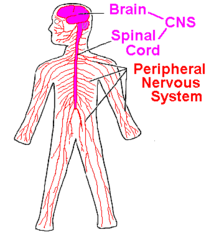
An interacting netwrok of neurons that conveys electrochemical information throughout the body
Central Nervous System (CNS)
The part of the nervous system that is composed of the brain and spinal cord.
receives and process info. and regulates all bodily activity. Sends motor signals

Peripheral Nervous System (PNS)
The part of the nervous system that connects the central nervous system to the body's organs and muscles. Somatic and Automatic

Somatic Nervous System
A set of nerves that conveys information into and out of the central nervous system. Consiounous actions. (ie: picking up a coffee)

Autonomic Nervous System (ANS)
Unconsious actions
A set of nerves that carries involuntary and automatic commands that control blood vessels, body body organs, and glands. Sympathetic and Parasympthetic
Sympathetic Nervous System
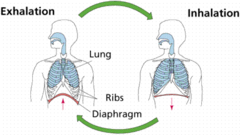
A set of nerves that prepares the body for action in threatening situations. AROUSING

Parasympathetic Nervous System
A set of nerves that helps the body return to a normal resting state. CALMING

Spinal Reflexes
Simple pathways in the nervous system that rapidly generate muscle contractions
ie: Moving hand away from hot stove
just goes to spine not brain
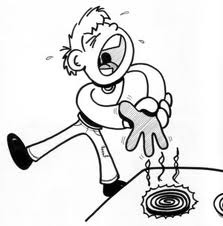
Reflex Arc
A nueral pathway that controls reflex actions

Spinal Cord
Different areas of the spinal cord control different areas. Damage in lower part can inhibit motor fuctions. damage in upper part can cause breathing or controll problems

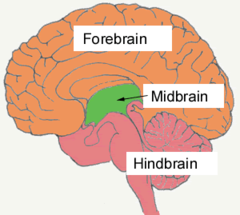
Hindbrain
An area of the brain that coordinates information coming into and out of the spinal cord.
Lowest set of structures in the brain. "Reptilian brain". BASIC Coordinates info. coming into and out of the spinal cord, & controls the basic functioning of life.
medulla, pons, cerebellum

Medulla
An extension of the spinal cord into the skull that coordinates heart rate, circulation, and respiration.

Reticular Formation
A brain structure that regulates sleep, wakefulness, and levels of arousal.
-in experiment, reticular formation of cat stimulated and it immedietly woke and when tampered, it went into coma.
-Reducing activity in this area is how aestheics make pple uncosious

Cerebellum
A large structure of the hindbrain that controls fine motor skills. Doesn't initate, just makes sure runs smoothly
- playing piano, balance, ect
Pons
A brain structure that relays information from the cerebellum to the rest of the brain

Tectum
A part of the midbrain that orients an organism in the environment

Tegmentum
A part of the midbrain that is involved in movement and arousal.

Cerebral Cortex
The outermost layer of the brain, visible to the naked eye and divided into two hemispheres. Within the Forebrain.
Highest Mental Capacities

Areas of Brain
Get more unessisary and unbasic as you move higher. Can survive probably without Forebrain.
Thalamus
A Subcortical structure that relays and filters information from the senses and transmits the information to the cerebral cortex.
-Recieves sensory imput from all senses exept smell and blocks imput when sleeping

Hypothalamus
A subcortical structure that regulates body temperature, hunger, thirst, and sexual behavior. Stiumulus may result in intense pleasure as with rat experiment

Limbic System
A group of forebrain structures including the hypothalamus, the amygdala, and the hippocampus, which are involved in motivation, emotion, learning, and memory

Lesion
a region in body that suffers damage
Hippocampus
A structure critical for creating new memories and integrating them into a network of knowledge so that they can be stored indefinitely in other parts of the cerebral cortex
-damage causes ONLY SHORT short term memory loss, not loss of basic habits or drivining a car

Amygdala
A part of the limbic system that plays a central role in many emotional processes, particularly the formation of emotional memories and fearful memories.

Basal Ganglia
A set of subcortical structures that directs intentional movements; plays a role in reward. Has to do with Parkinsons
coordinates voluntary movement in response to emotion
smoothens movements and helps maintain postural stability
-skill learning

Endocrine System
Network of glands that releases Hormones into bloodstrem.
Thyroid- metabolism and body temp
Adrenals- stress response
Pancreas- control digestion
Pineal- secretes melatonin (sleep cycle)
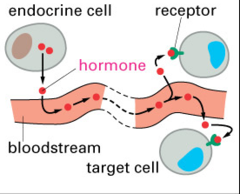
Pituitary Gland
The "master gland" of the body's hormaone-producing system, which releases hormones that direct the functions of many other glands in the body.
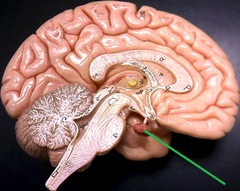
Contralateral Control
Right cerebral hemisphere recieves stimuli and controls movements from the left side of your body.

Corpus Callosum
A thick band of nerve fibers that connects large areas of the cerebral cortex on each side of the brain and supports almost instant communication of information across the hemispheres.

Occipital Lobe
A region of the cerebral cortex that processes visual information

Parietal Lobe
A region of the cerebral cortex whose functions include processing information about touch.

Temporal Lobe
A region of the cerebral cortex responsible for hearing and language, including perception of objects and faces, memory.

Frontal Lobe
A region of the cerebral cortex that has specialized areas for movement, abstract thinking, planning, memory, and judgement. Seperates humans

Association Areas
Nuerons that help provide sense and meaning to info registered in the cortex

Mirror Neurons
Active when an animal preforms a behavior and also activated when another animals observes that behavior

Brain Plasticity
Brain can change with learning
ie: panisists and musicians have better placisity in motor and runners have better plasticity

Electroencephalograph (EEG)
A device used to record electrical activity in the brain

Neuroimaging Techniques
Takes images of brain while pple are doing tasks

Prenatal Development

Epigenetics
Study of environemental influences that influence which and to what extent genes are expressed
Epigenetic Marks
Chem modifactions to DNA that turn Genes on or off
-DNA Methylation
- Histone Modification

Heritability
Variablitlity of behavioral traits that can be attributed to genetic factors

Left Hemisphere
Language and Verbal abilities

Right Hemisphere
Art, Spatial recognition, Math

Midbrain
Bird & amphibian brain (SIMPLE BRAIN), small. Regulates behavior, instinct, some reflexes, important for orientation and movement.

Forebrain
Highest level of brain; what differentiates us from other animals. Critical for complex cognitive, emotional, sensory, and motor functions.
Frontal, Parietal, Occipital, Temporal
Order of Lobes on brain. a.k.a Frank

Somatosensory
Front of parietal lobe, controls sensory perception
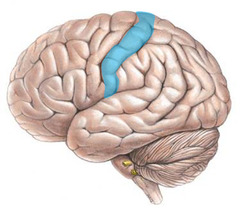
Motor Cortex
back of frontal cortex, controls body movement.

Homonculus
a rendering of the body in which each part is shown in proportion to show how much of the somatosensory cortex is devoted to it.
Structure of a neuron

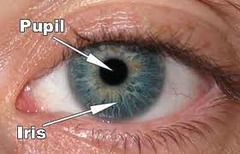
Pupil
The adjustable opening in the center of the eye through which light enters.

Iris
A ring of muscle tissue that forms the colored portion of the eye around the pupil and controls the size of the pupil opening.
lens
The transparent structure behind the pupil that changes shape to help focus images on the retina.

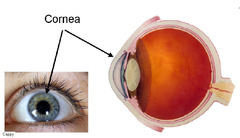
cornea
Clear membrane at the front of the globe covering the iris, pupil, and anterior chamber. Responsible for 60% of the eyes focusing power. Contains 5 layer
retina
Contains sensory receptors that process visual information and sends it to the brain

fovea
"Point of central focus". Spot on the back of the retina that has more cones that anywhere else. Helps us see fine detail

optic nerve
the nerve that carries neural impulses from the eye to the brain

Synaptic Transmission of Neurotransmitters
1. The action potential travels down the axon and
2. Stimulates the release of neurotransmitters from vesicles.
3. The neurotransmitters are released into the synapse, where thy float to bind with receptor sites on a dendrite of a post-synaptic neuron, initiating a new action potential. The neurotransmitters are cleared out by synapse by
4. re-uptake into the sending neuron OR
5. being broken down by enzymes in the synapse OR
6. binding to a autoreceptors on the sending neuron

Broca
Left frontal lobe: associated with expressive language (speech)
-had patient who lost ability to speak but not to understand bc of specific area of brain
Wernicke had Opposite seneratio

Gage (pole through head)
Indicated Frontal Lobe involved in planning AND EMotion bc he lived but his persoanlity changed and became emotional and irrational

Sperry (Corpus Collosum )
PPle with damaged corpus collosum had no change in behavior. Sperry investigated this and found that pple with split brains couldn't just pick up something with left hand behind screen and decribe what it was. Both hemispheres needed to be activated.
