131: Diabetes & Cholesterol Fingerstick Testing pt 2
 Call Kai
 Learn
 Practice Test
 Spaced Repetition
 Match
 Flashcards
 Knowt Play
1/19

There's no tags or description
Looks like no tags are added yet.
20 Terms
Continuous Glucose Monitor (CGM)
A wearable device that measures blood glucose levels over time and provides real- time updates, without fingersticks
help people with diabetes identify trends, reduce hypoglycemia, and guide insulin dosing adjustments
how does CMG work
Sensor: –a small sensor placed under the skin and measures glucose levels 24 hours a day
• Measures glucose in the interstitial fluid, rather than bloodstream
• last 7-15 days, depending on the brand
Transmitter: sends results to a wearable device (insulin pump, smart watch, smart phone)
patient can track changes to their glucose level in real time
Who uses CGMs?
CGMs should be accessible to anyone with diabetes —> ADA
Highly recommended for:
• Hypoglycemia prevention
• Those with T1DM to promote early achievement of glycemic goals
• Older adults with T2DM and on insulin
• Pregnant individuals with T1DM, T2DM, or gestational diabetes
key time to scan CGM
before & after meals or snacks
before& after exercise and sporting events
before sleep and after waking up
when you feel low glucose symptoms
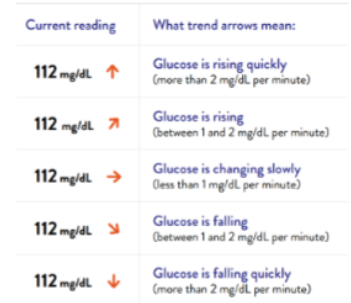
intepret readings
good cholesterol
High-density lipoproteins (HDL)
Bad Cholesterol
• Low-density lipoproteins (LDL)
• Very-low density lipoproteins (VLDL)
Dyslipidemia
abnormal level of cholesterol and/or other lipids in the blood
High LDL and/or total cholesterol (TC)
High triglycerides (TG)
Low HDL
Risk Factors for Dyslipidemia
Poor diet
Obesity
Lack of exercise
Smoking
Pregnancy
Age
Diabetes
Drugs
Genetics
Cholesterol Testing Components
21G Lancet: helps provide a deeper prick
Capillary: collect blood to this black line ((40 microL)
Test Strip & MEMo chip: provide readings for TC, HDL, and glucose (non-fasting labs)
CardioChek
Testing Technique
1. Massage finger from hand to fingertip and allow blood to pool at fingertip prior to prick.
2. Clean site with alcohol swab.
3. Push lancet FIRMLY against fingertip to ensure deep puncture.
4. For cholesterol testing, must wipe away first drop of blood to remove excess tissue fluid.
5. Can have patient lower hand to heart-level to help with blood flow.
6. Hold capillary horizontal to blood droplet and draw up blood using capillary action DO NOT let the capillary touch skin.
If patient begins to clot before enough sample is obtained:
.
a) Wipe finger with cotton ball to break up clot and agitate the area again.
b) Gently apply pressure and massage from hand to finger until a large blood drop forms
what happens when sample doesn’t reach the black mark
do not have enough sample to run a test and will receive an error message
sharps & trash
Sharps: Lancet, Capillary tube, Test strip
Trash: Cotton balls, Paper towels
Total Cholesterol (mg/dL)
< 200 Desirable
200-239 Borderline High
≥ 240 High
LDL (mg/dL)
< 100 Desirable
100-129 Above Desirable
130-159 Borderline High
160-189 High
≥ 190 Very High
HDL (mg/dL)
< 40 (men) Low
< 50 (women) Low
Triglycerides (mg/dL)
< 150 Desirable
150-199 Borderline High
200-499 High
≥ 500 Very High
why you shouldn’t squeeze or apply strong pressure to puncture site
May cause hemolysis
• May increase tissue fluid in blood
should you wipe away the first blood droplet for cholesterol testing
yess