Biology U02
 Call Kai
 Learn
 Practice Test
 Spaced Repetition
 Match
 Flashcards
 Knowt Play
1/30

Earn XP
Description and Tags
Do 100% if you wanna get A!!!
31 Terms

What’s are 4 main types of biomolecules?
Lipids, Carbohydrates, Proteins, and Nucleic Acids are the four main types of biomolecules.

What’s are Carbohydrates’ monomers?
Simple Sugars
What’s are Lipids’ monomers?
Fatty Acids
What’s are Proteins’ monomers?
Amino Acids
What’s are Nucleic Acids’ monomers?
DNA and RNA
Function and structure of Carbohydrates in the Cell
Structure: Carbon, Hydrogen, Oxygen
Function: The energy released from Carbohydrates helps for cell processes
Function and structure of Lipids in the Cell
Structure: Fats, Oils
Function: Fats are big source of energy, needed to build cell membrane.
Function and structure of Proteins in the Cell
Structure: Hydrogen bonds
Function: Proteins act like enzymes to speed up chemical reactions in our organism
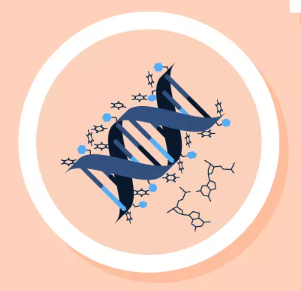
Function and structure of Nucleic Acids in the Cell
Structure: Nucleotides
Function: To store genetic information
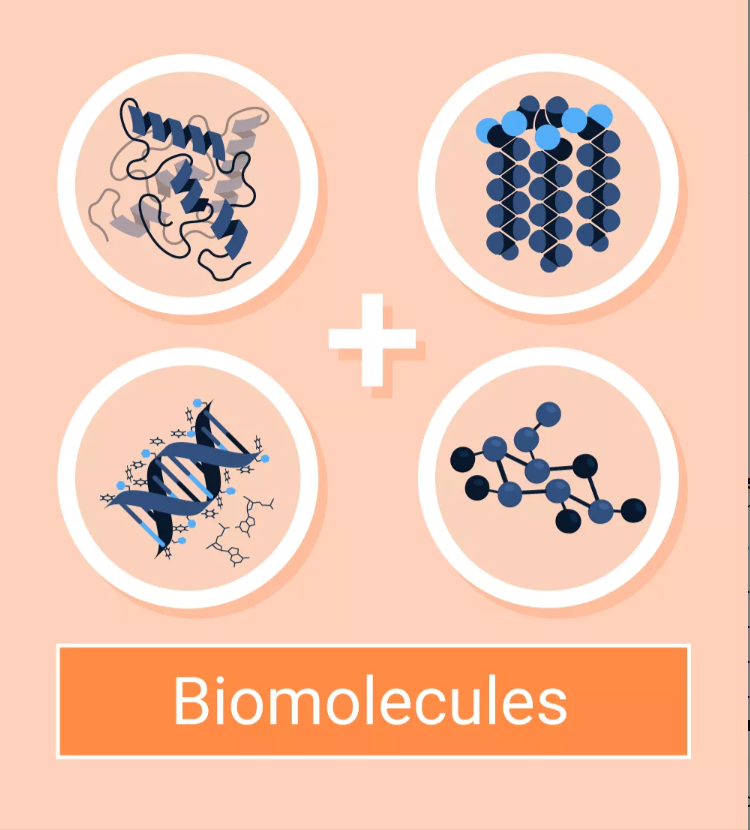
Lipids

Carbohydrates

Proteins

Nucleic Acids

What’s the role of Enzymes in cellular processes
Speed up chemical reactions inside living cells

Describe the process of fermentation
Fermentation is when your body needs to make ATP, but to make ATP it needs oxygen too. Although fermentation doesn’t make ATP itself, but it allows glycolysis to continue. Fermentation removes electrons from NADH and recycles NAD+.
2 Stages of photosynthesis?
Light-dependent reaction and Light-Independent reaction
Where does light dependent reactions take place?
In, thylakoids which are inside chloroplast
Where does light independent reactions take place?
In the stroma, outside of thylakoids.
What is the main job of light dependent reactions?
To capture energy and transfer to thylakoid membrane.
What is the main job of light independent reactions?
To make sugars from energy made from light dependent reactions
Light dependent reaction‘s steps
Energy absorbed from sunlight → Water molecules split → Hydrogen ions transported → Energy absorbed from sunlight → NADPH produced → Hydrogen ion diffusion
Light independent reaction‘s steps
Carbon dioxide added → Three-carbon molecules formed → Three-carbon molecules exit → Three-carbon molecules recycled
2 Stages of Cellular Respiration?
Krebs Cycle and The Electron Transport Chain
Where does Krebs Cycle take place?
Mitochondria, Cytoplasm
Where does The Electron Transport Chain take place?
Thylakoid membrane, Mitochondria membrane, Plasma membrane
Krebs Cycle steps
Pyruvate is broken down → Coenzyme A is added → Citric acid is formed → Citric acid is broken down → Five-carbon molecule is broken down → Four-carbon molecule is rearranged
The Electron Transport Chain steps
Electrons are transferred → Hydrogen ions are transported → ATP is produced → Water is formed
What role do hydrothermal vents play in supporting deep-sea life?
Hydrothermal vents on the deep ocean floor release chemicals like hydrogen sulfide, which support an entire ecosystem of organisms that do not need sunlight to live
What’s the main importance of chemosynthesis?
Its main importance is that it allows entire ecosystems to survive in extreme, pitch-black environments like the deep ocean floor where photosynthesis is completely impossible.
What is the primary functional difference between carbohydrates and lipids regarding energy storage? (optional)
Carbohydrates function as short-term, easily accessible energy. Lipids function as long-term, highly concentrated energy storage.
What are the three parts of an ATP molecule, and where is its usable energy stored? (optional)
ATP consists of adenine, ribose sugar, and three phosphate groups. The usable energy is stored within the unstable, high-energy covalent bonds between the phosphate groups.