Axial skeleton - skull
 Call Kai
 Learn
Learn Practice Test
 Spaced Repetition
 Match
Match Flashcards
 Knowt Play
1/33

There's no tags or description
Looks like no tags are added yet.
Name | Mastery | Learn | Test | Matching | Spaced | Call with Kai | Chat |
|---|
No analytics yet
Send a link to your students to track their progress
34 Terms
Function of the Axial Skeleton
Supports and protects body organs – brain; heart;
lungsProtects special sense organs – eyes; nerves for
smell; auditory and balance structuresAttachment sites for muscles – back muscles;
intercostal muscles for breathing; facial expressive
muscles
Face structure
14 bones in total
All paired except vomer and mandible
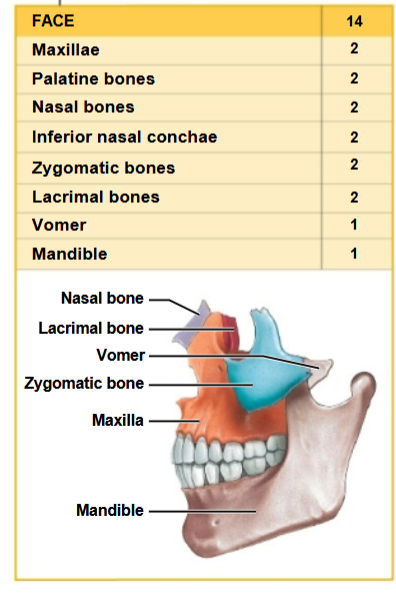
What bones in the face are paired? (2 of each)
Maxillae
Palatine bones
Nasal bones
Inferior nasal conchae
Zygomatic bones
Lacrimal bones
Cranium structure
8 bones in total
Only the parietal and temporal bones are paired
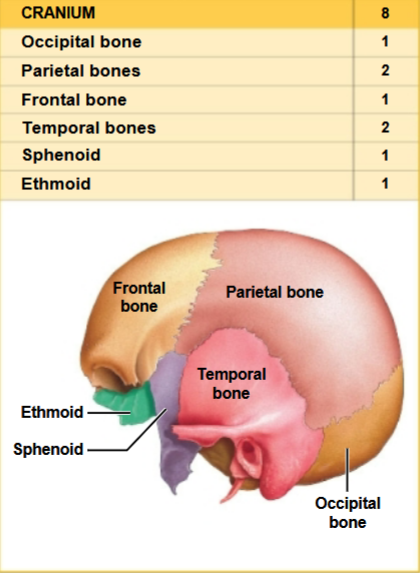
What bones in the cranium are unpaired? (1 only)
Occipital bone
Frontal bone
Sphenoid
Ethmoid
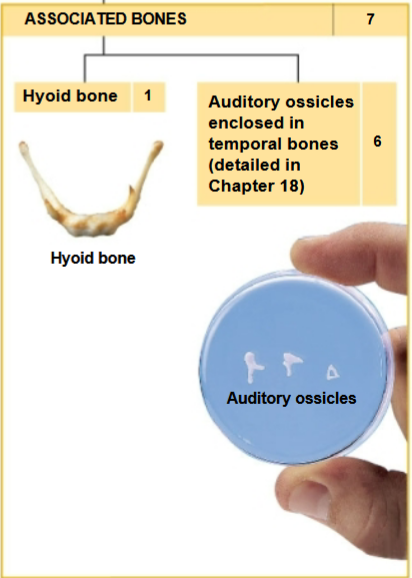
Associated bones
3 pairs of auditory ossicles
Hyoid is unpaired
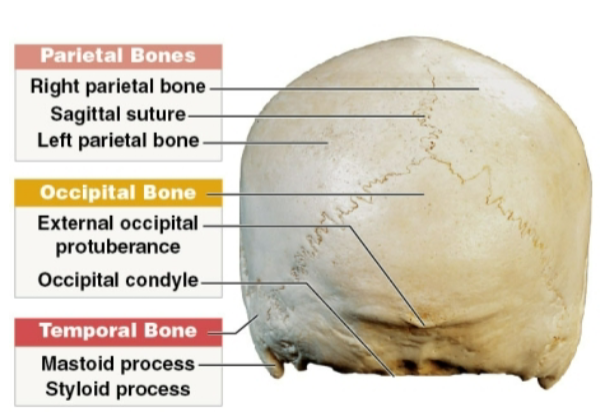
What is this view of the adult skull?
Posterior view
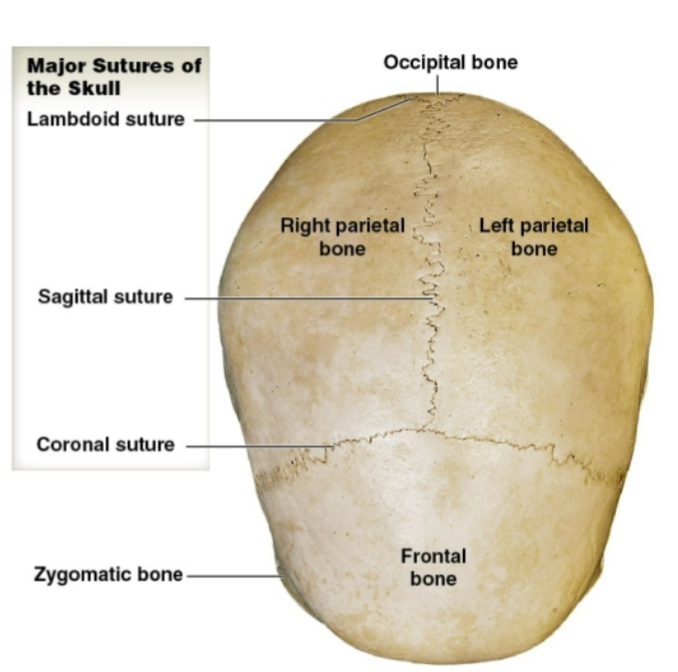
What is this view of the adult skull?
Superior view
What joint category do the skull sutures
fall into? Would there be movement at
these joints?
Synarthrotic joints. No, there is no
movement.
Should you try to memorize every feature on the skull?
No; only the features Rudy talks about or that have boxes around them
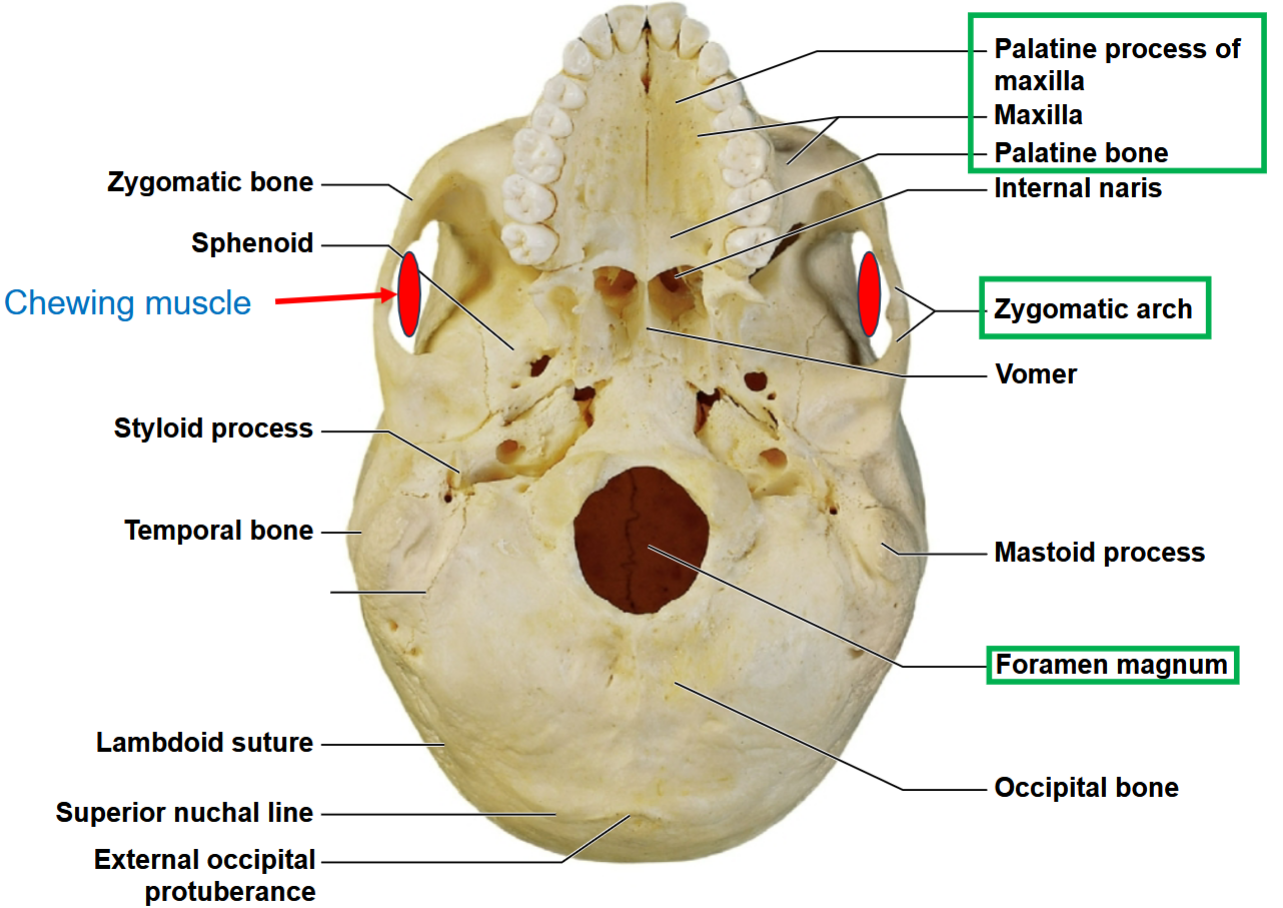
What view of the skull is this, and what features SHOULD YOU KNOW?
Inferior view with mandible removed
Palatine process of Maxilla
Maxilla + Palatine bone
Zygomatic arch
Foramen magnum
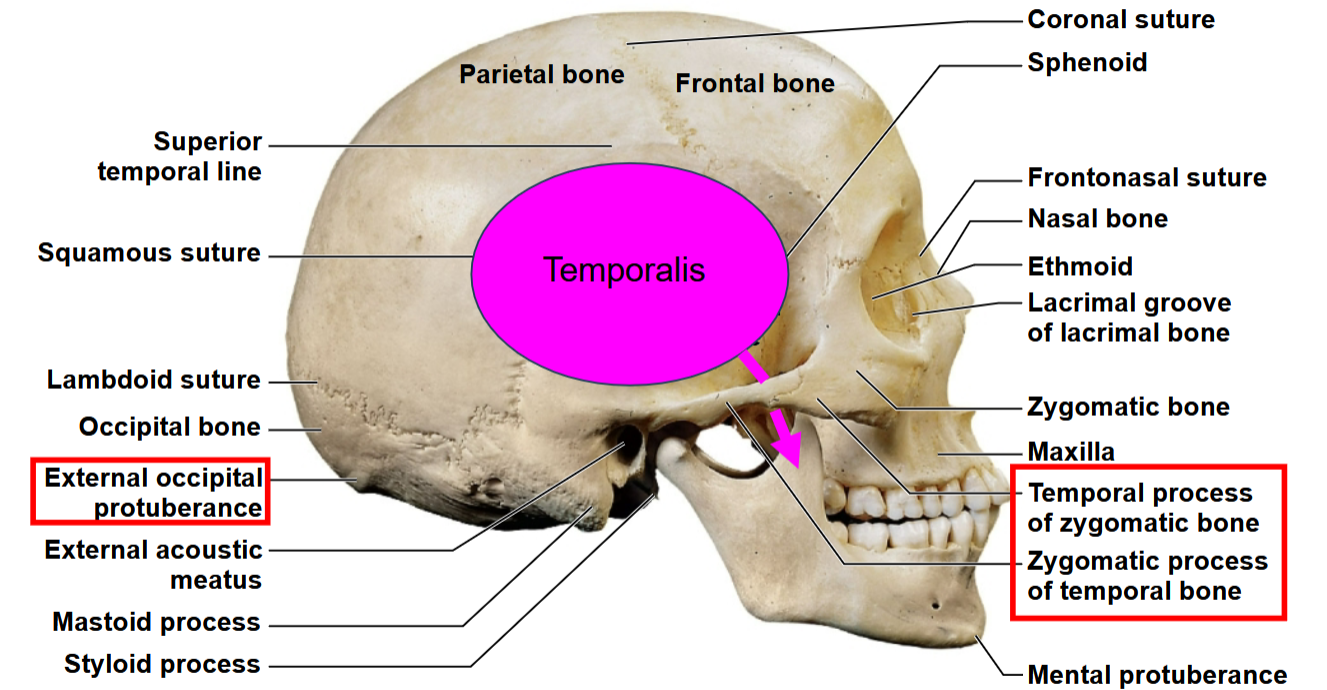
What view of the skull is this, and what features SHOULD YOU KNOW?
Lateral view
External occipital protuberance (bump on back of head)
Temporal process
of zygomatic boneZygomatic process
of temporal bone
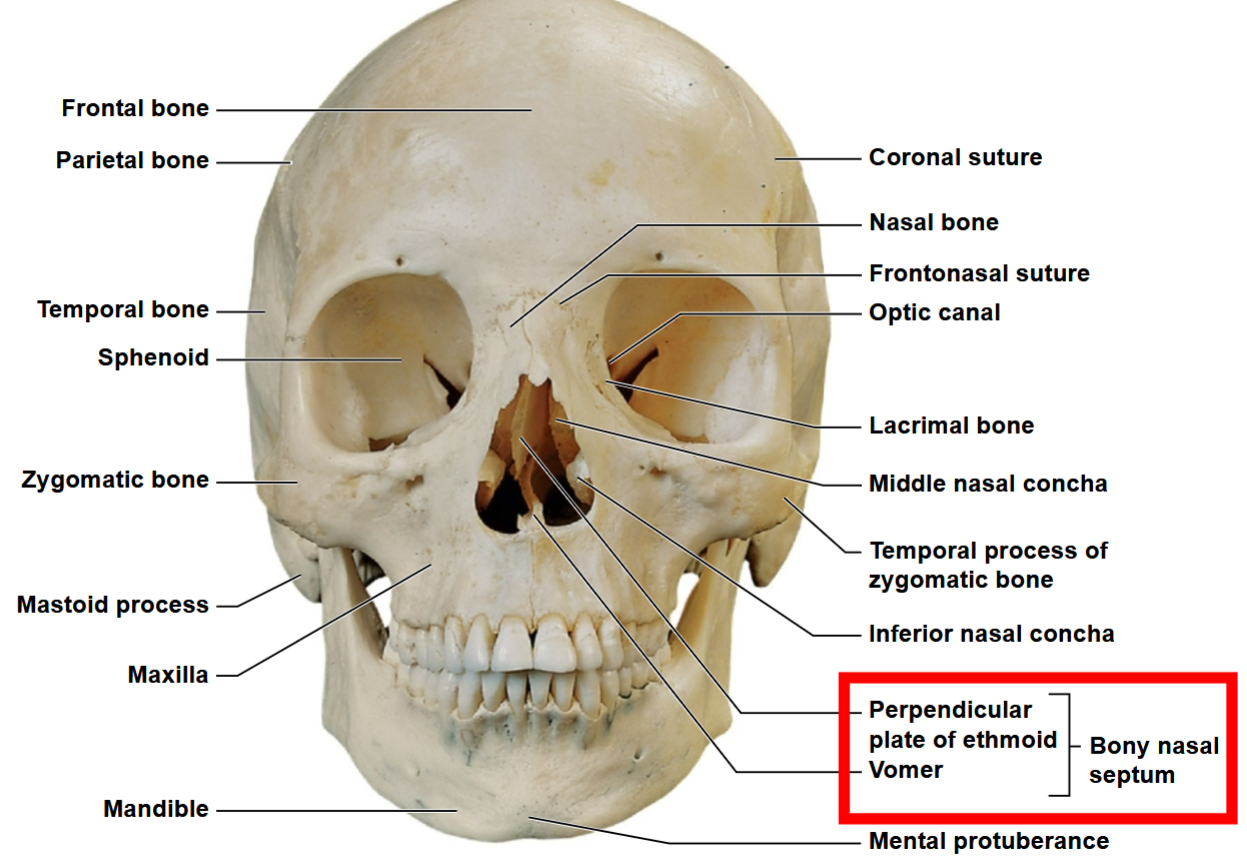
What view of the skull is this, and what features SHOULD YOU KNOW?
Anterior view
Components of bony nasal septum - (Vomer + Perpendicular plate of ethmoid)
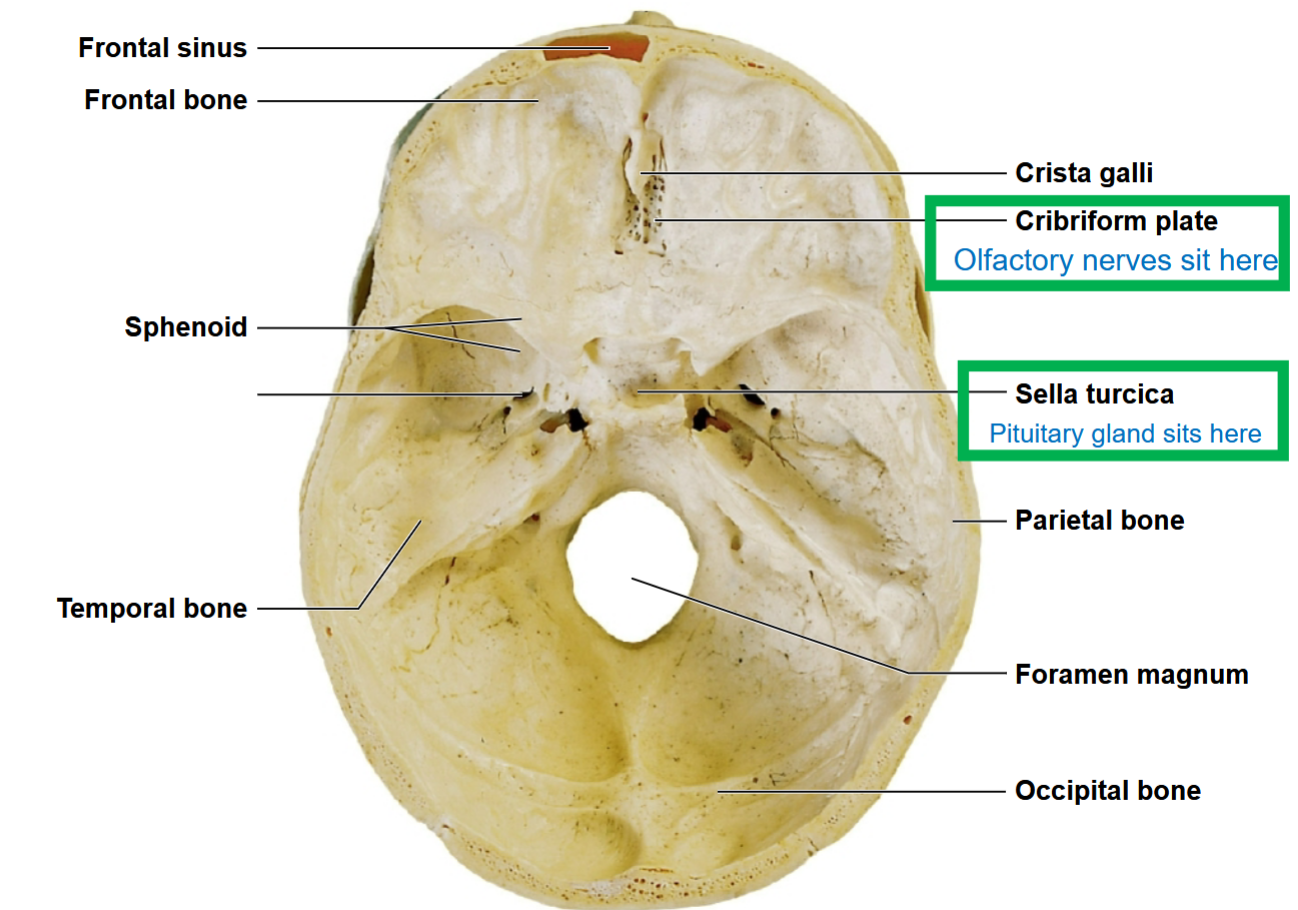
What view of the skull is this, and what features SHOULD YOU KNOW?
Superior view
Cribiform plate (Olifactory nerves sit)
Sella turcica (Pituitary gland sits)
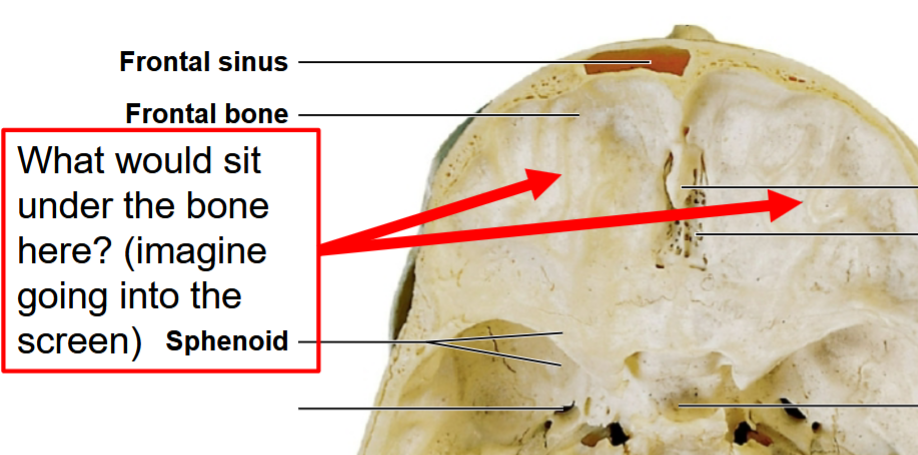
What would sit under the bone here?
Eyeballs + muscles surrounding them
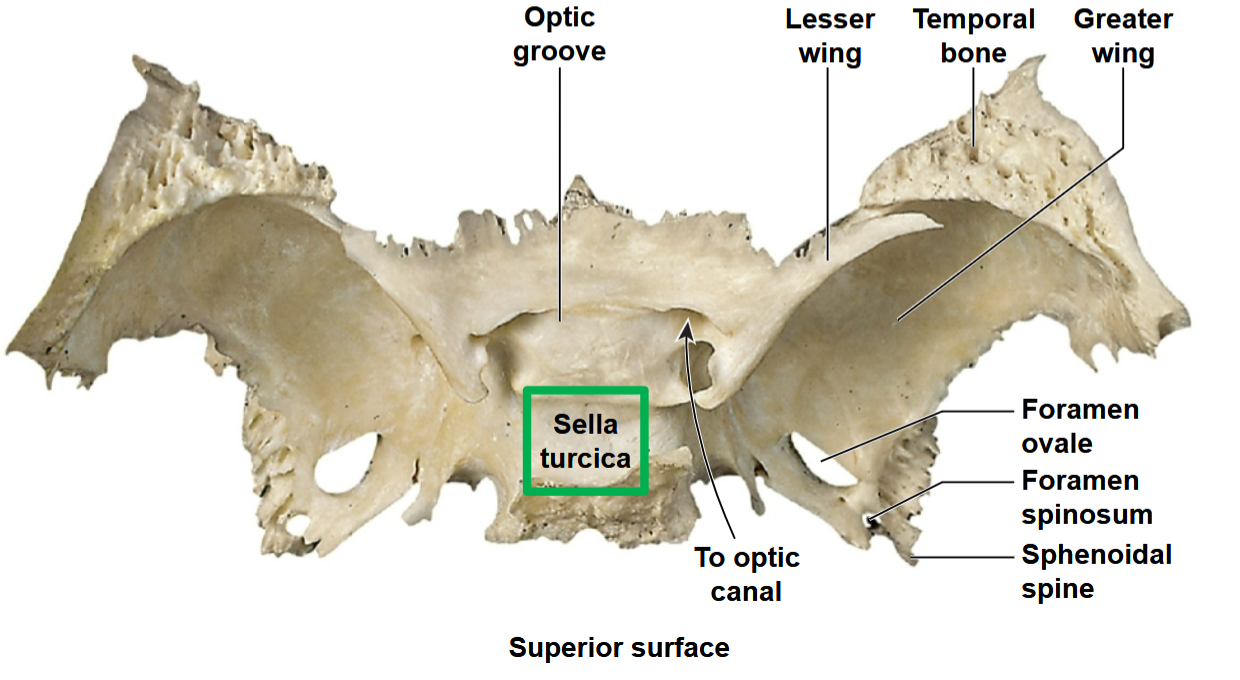
What bone is this?
Sphenoid
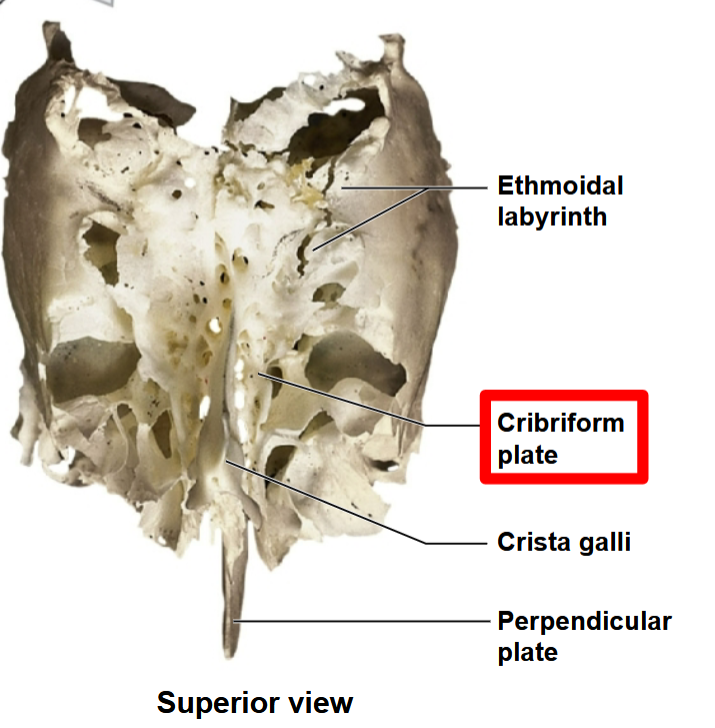
What bone is this?
Ethmoid
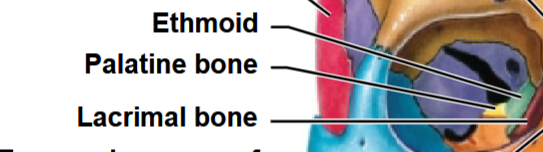
Palatine bones
Two bones making up part of the roof of the mouth
Posterior to the palatine process of the maxilla
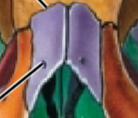
Nasal bones
The two nasal bones articulate with the frontal
bone

Inferior nasal conchae
One on each side of the nasal septum attached to
the lateral wall of the nasal cavity
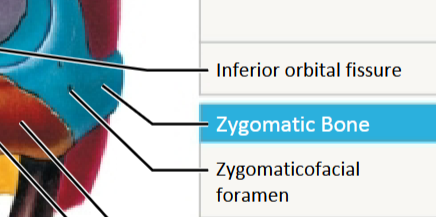
Zygomatic bones
Articulate with the zygomatic process of the
temporal bone.
Form the zygomatic arch
Zygomaticofacial foramen
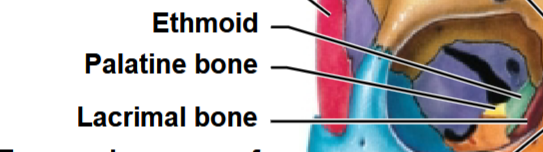
Lacrimal bones
Found in the medial portion of the orbit of the eye
Lacrimal groove leads to the nasolacrimal canal
Vomer
• Forms the inferior portion of the nasal septum
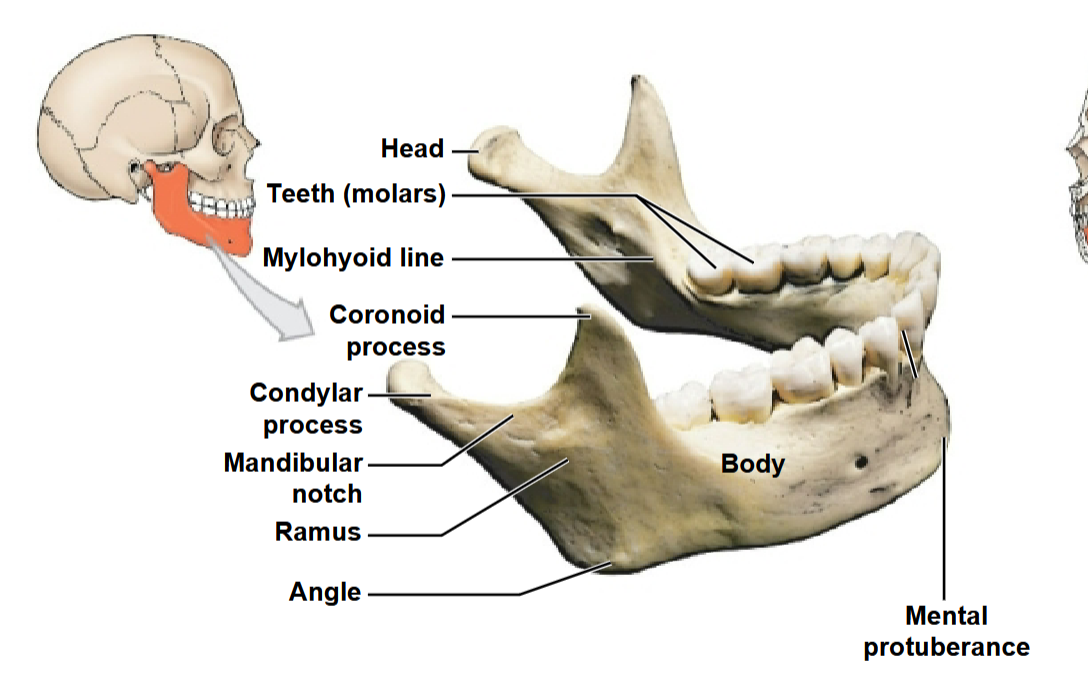
What part of the mandible is this?
Superior + lateral surfaces
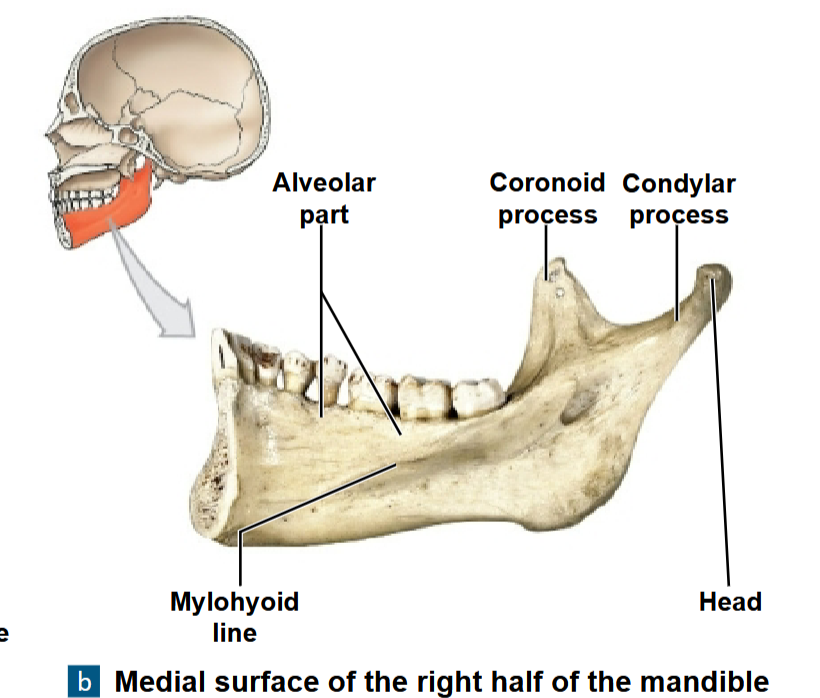
What part of the mandible is this?
Medial surface of the right half
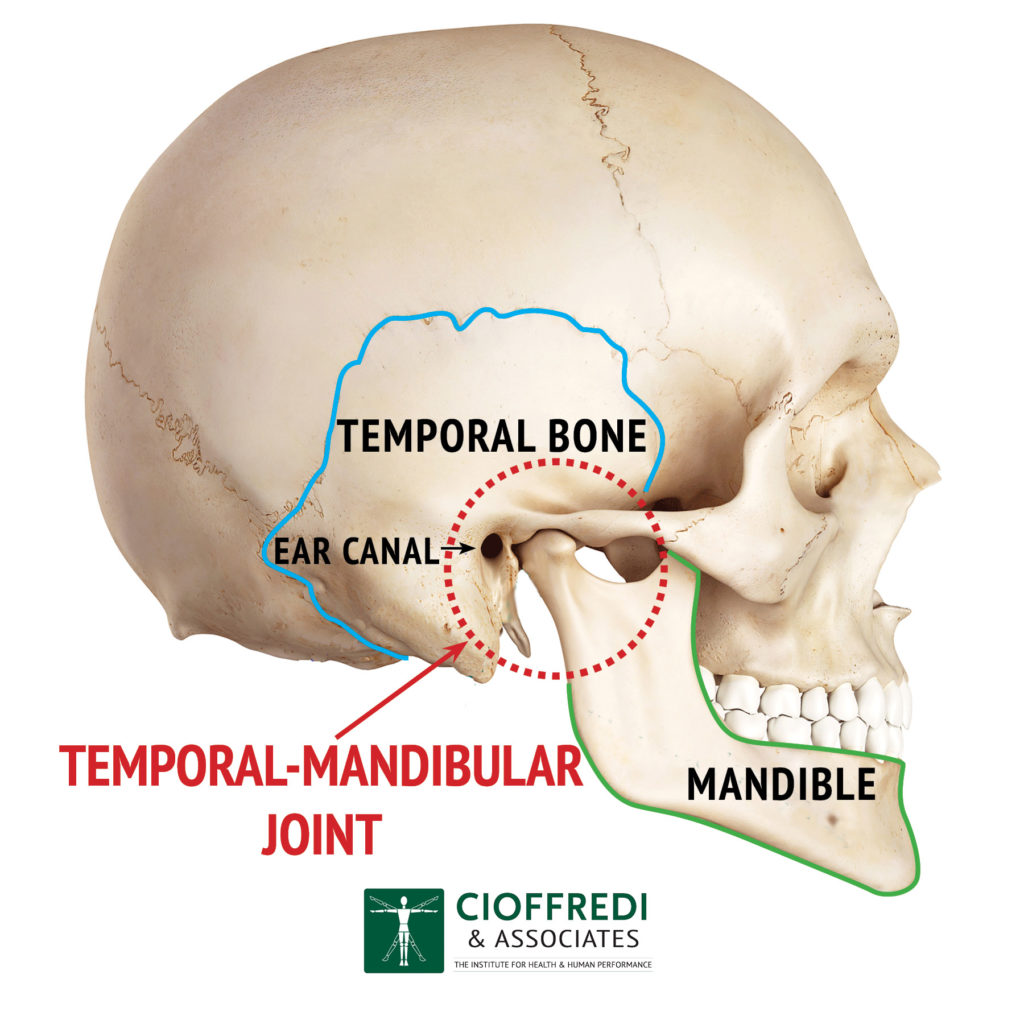
With which bone does the mandible
articulate / join?
Temporal bone (TMJ = temporo-mandibular joint)
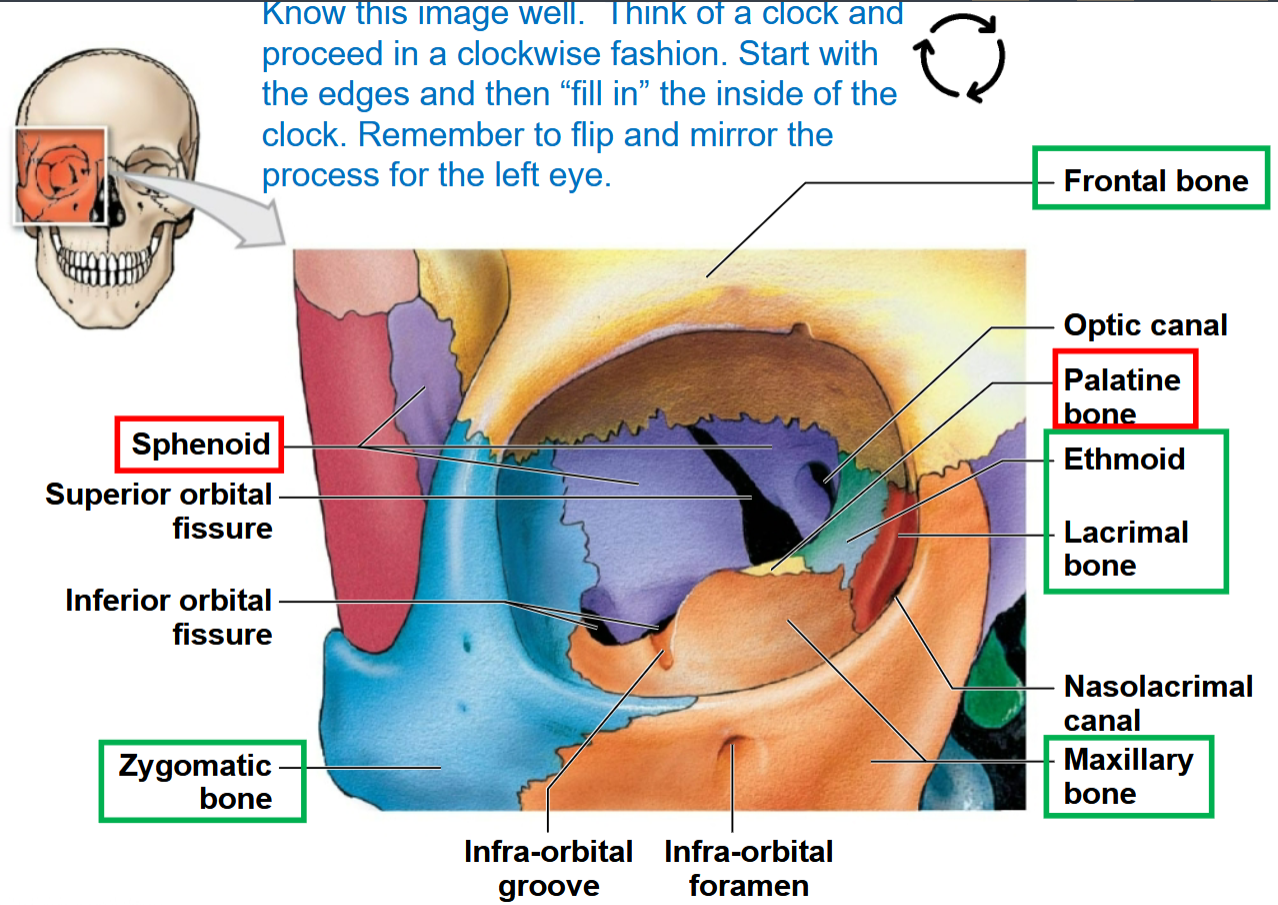
What are the orbits formed from?
Function is to protect eyes
Frontal bone makes the roof of the orbit
Maxilla bone forms the floor of the orbit
Lacrimal and ethmoid form the medial wall of the
orbitSphenoid bone forms the posterior wall of the orbit
Zygomatic bone forms the lateral wall of the orbit
What do the orbits consist of?
Lacrimal gland/adipose tissue/muscles that move
the eye/blood vessels/nerves
Detailed illustration of right eye
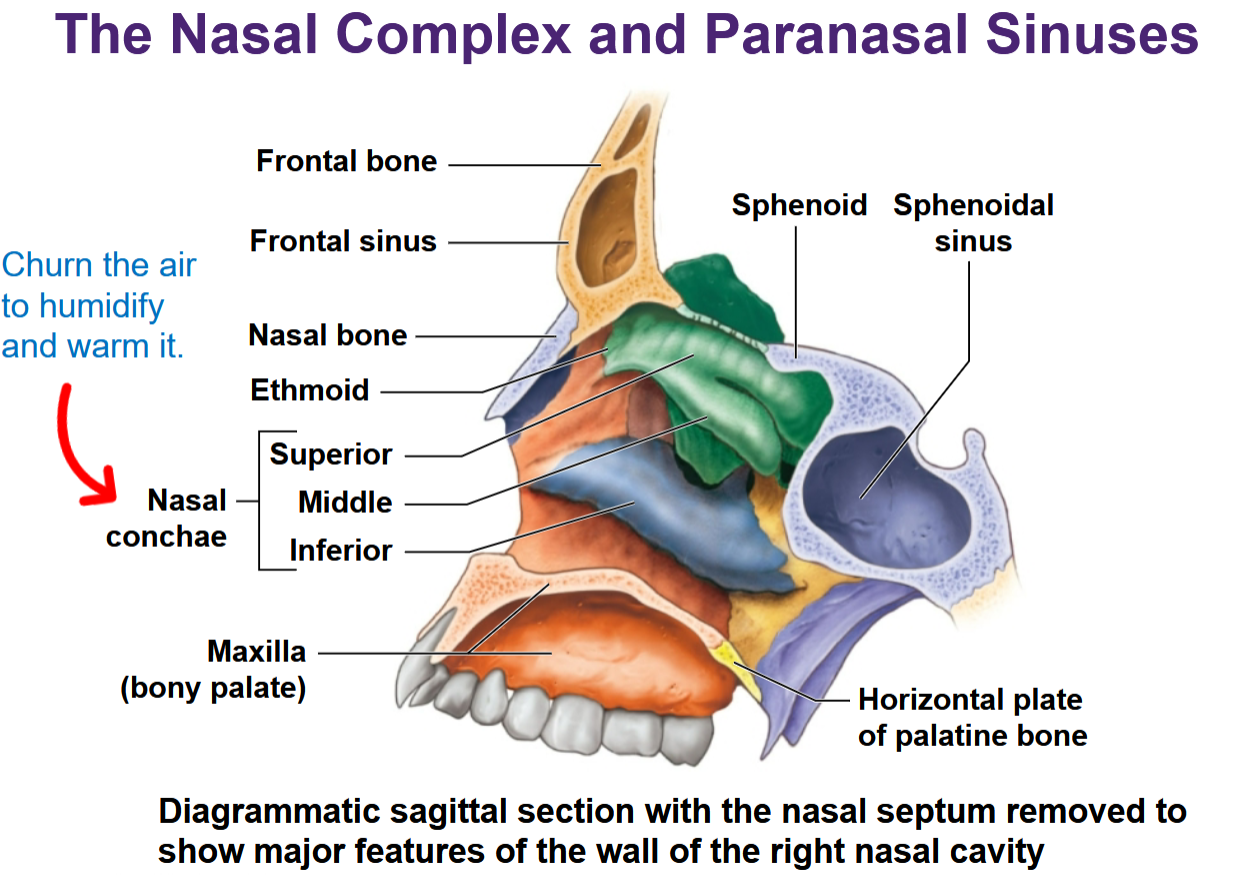
Nasal complex
Anterior nostrils
Posterior nasal apertures
Nasal septum
• Vomer
• Perpendicular plate of the ethmoidNasal wall
• Nasal conchae
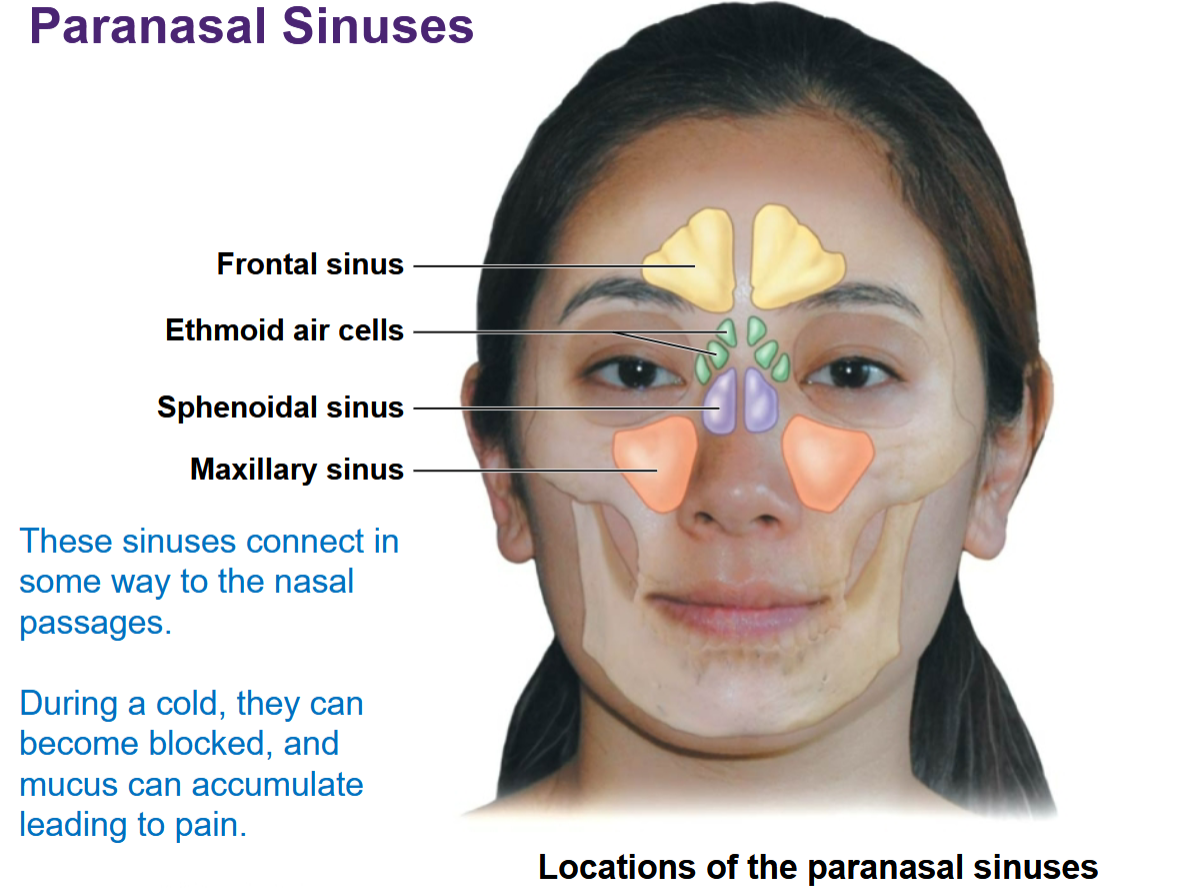
The Paranasal Sinuses
• Air-filled chambers that open into the nasal cavity.
• Frontal sinuses
• Sphenoidal sinuses
• Maxillary sinuses
• Ethmoid air cells
What category of bone do Paranasal sinuses fall into
knowing they have hollow spaces in
them?
Pneumatized bones
Illustration of the paranasal sinuses
Connect to nasal passages
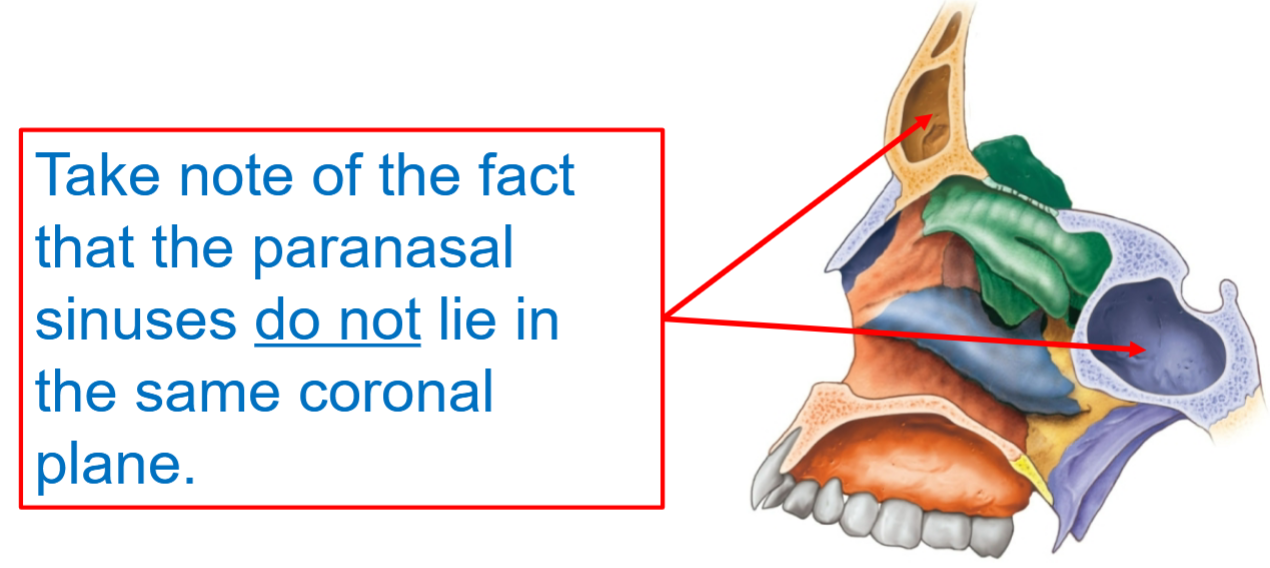
Do the paranasal sinuses lie in the same coronal plane?
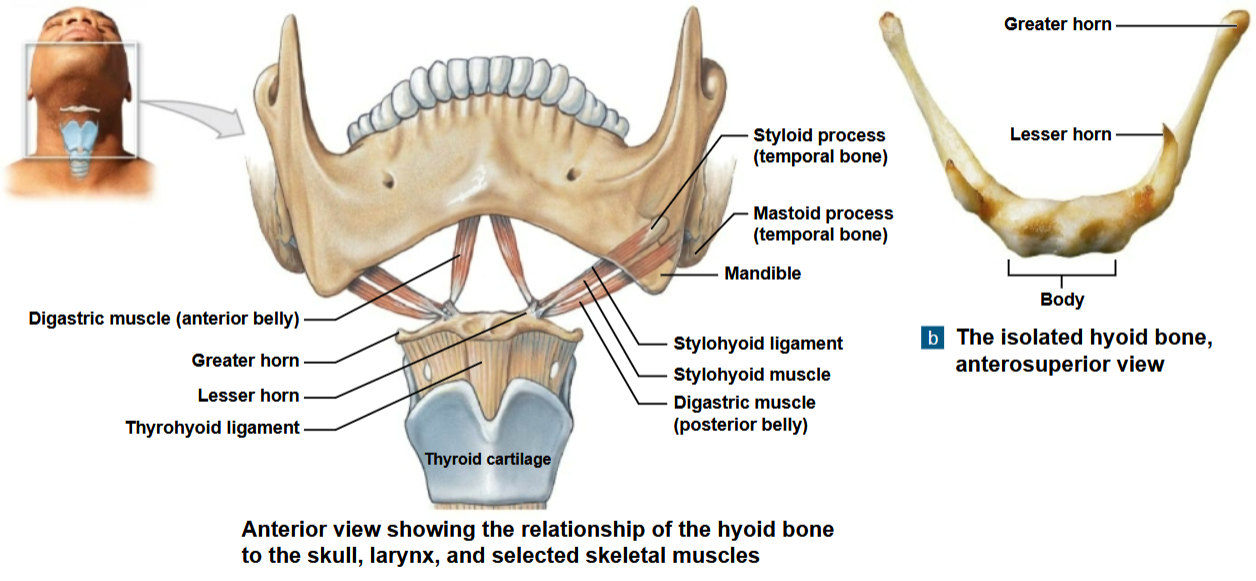
Hyoid bone
Suspended by the stylohyoid ligaments
• Does not articulate with any bones and is
therefore extremely mobile
Consists of:
• Greater and lesser horns
• Serve as points for muscle and ligament
attachments