Unit 4 - Chem 107
 Call Kai
 Learn
 Practice Test
 Spaced Repetition
 Match
 Flashcards
 Knowt Play
1/54

There's no tags or description
Looks like no tags are added yet.
55 Terms
shorter bonds =
higher bond energy
bond energy
energy to break 1 mole of covalent bond in gas phase
breaking a bond
consumes energy
forming a bond
releases energy
deltaH of a reaction
= summation of deltaH of broken bonds - summation of deltaH of bonds formed
pure covalent bond
<0.4
polar covalent
between 0.4 and 1.8
ionic
>1.8
more eectronegative =
the more negative dipole
metals
los electrons to obtain 8 electrons
nonmetals
gain electrons to obtain 8 electrons
octet rule
atoms of the main group elements make bonds by gaining or losing or sharing electrons to achieve eight valence electrons
octet rule exceptions
Hydrogen - 2
Boron - 6
Beryllium - 4
3rd row or lower can have more than 8
resonance structures
two or more lewis structures with the same arrangement of atoms but different arrangement of bonding pairs of electrons
formal charge
(# of valence electrons) - (number of electrons in lone pairs) - 1/2(number of electrons in bonding pairs)
how to tell which structure is more stable
formal change closest to zero for each element
formal charge of negative number on more electronegative element
free radical
odd-electron molecule with an unpaired electron in its lewis structure
very reaction
doesn’t always obey octet rule, but FC works out
what vsepr stands for
valence
shell
electron
pair
repulsion
electron pair geometry
all electrons on central atoms - category name
molecular geometry
arrangement of atoms in molecule - molecular shape name
steric number
= (number of atoms bonded to central atom) + (number of lone pairs on central atom)
bond dipole
separation of electrical charge created when atoms with different EN form a covalent bond
polar molecule
vectors of bond dipoles whose sum > zero
what bond lengths depend on
identity of the atoms
number of bonds between atoms
bond order
the number o bonds between two atoms
1 for single
2 for double
3 for triple
AX2
linear
180 degrees
AX3
trigonal planar
120 degrees
AX2E1
bent
<120
AX4
tetrahedral
109
AX3E1
trigonal pyramid
<109
AX2E2
bent
«109
AX5
trigonal bipyramid
120, 90
AX4E1
seesaw
<120, <90
AX3E2
t-shape
90, 180
AX2E3
linear
180
AX6
octahedral
90
AX5E1
square pyramid
90
AX4E2
square planar
90
AX3E3
T-shape
90
AX2E4
linear
180

linear

trigonal planar

bent

tetrahedral

trigonal pyramid

bent
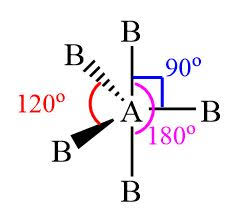
trigonal bypyramid
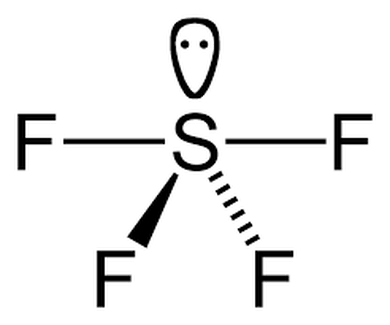
seesaw

t-shape
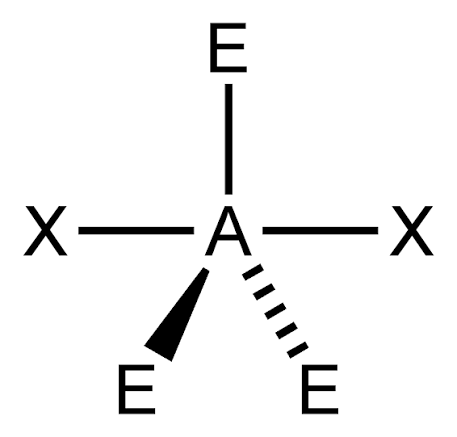
linear
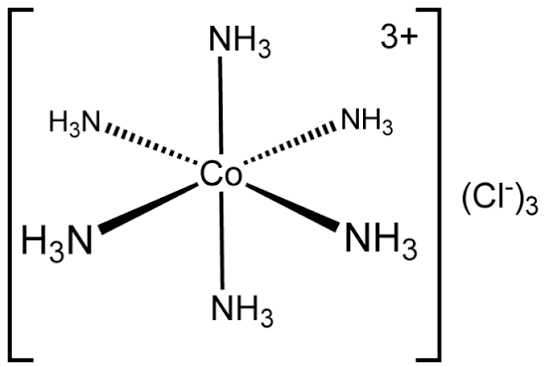
octahedral
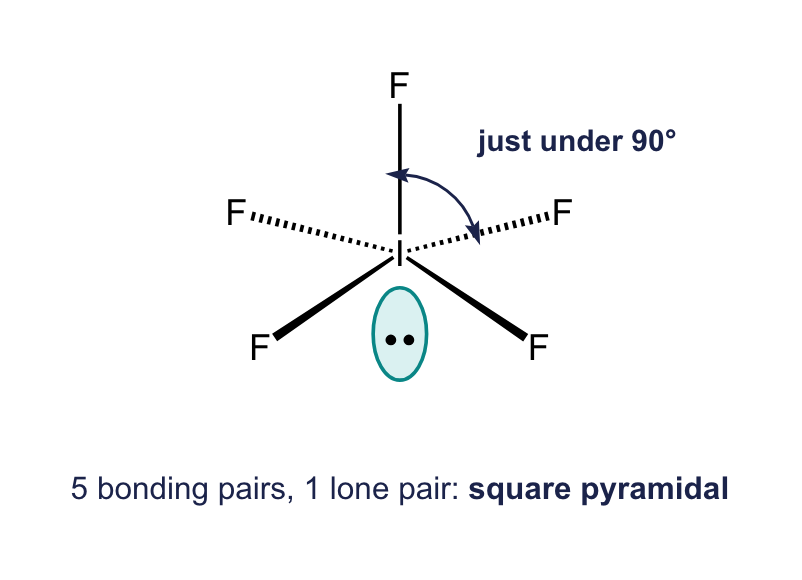
square pyramid

square planar

t-shape

linear