Lab 5 - Ears, Eyes, endocrine, lymphatic
 Call Kai
 Learn
 Practice Test
 Spaced Repetition
 Match
 Flashcards
 Knowt Play
1/46

There's no tags or description
Looks like no tags are added yet.
Name | Mastery | Learn | Test | Matching | Spaced | Call with Kai | Chat |
|---|
No analytics yet
Send a link to your students to track their progress
47 Terms

cornea (the glass clear part)

sclera (eye white)

iris (eye color)

choroid coat (above retina)

retina


lens


macula lutea (the dot-part of the retina)

external acoustic meatus

tympanic membrane - middle

pharyngotympanic tube - middle

semicircular canals - interal

cochlea

thymus (above heart)

spleen (purply part above pancreas)

pancreas

adrenal gland (sits on top of the kidney)
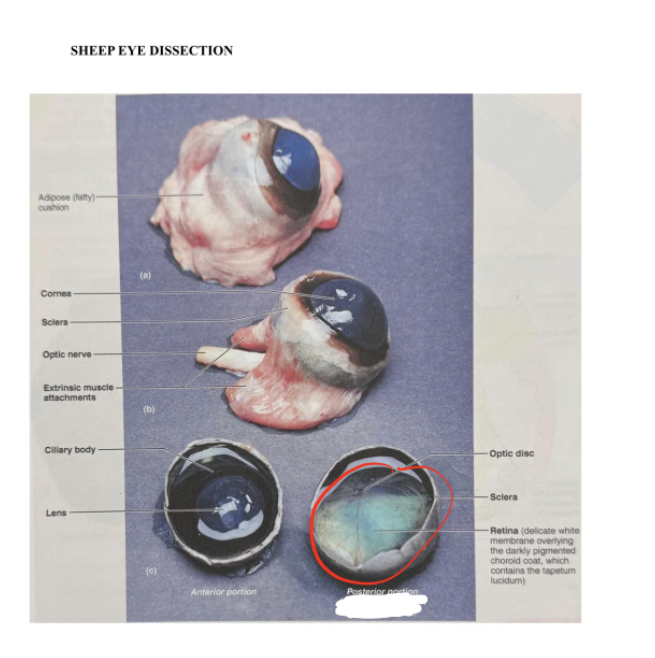
vitreous humor (posterior side - the liquid of the eye)

cornea (black part)

lens (behind the cornea - bell shape)

retina (white flap)

choroid coat

optic nerve

optic disc (head of the optic nerve)
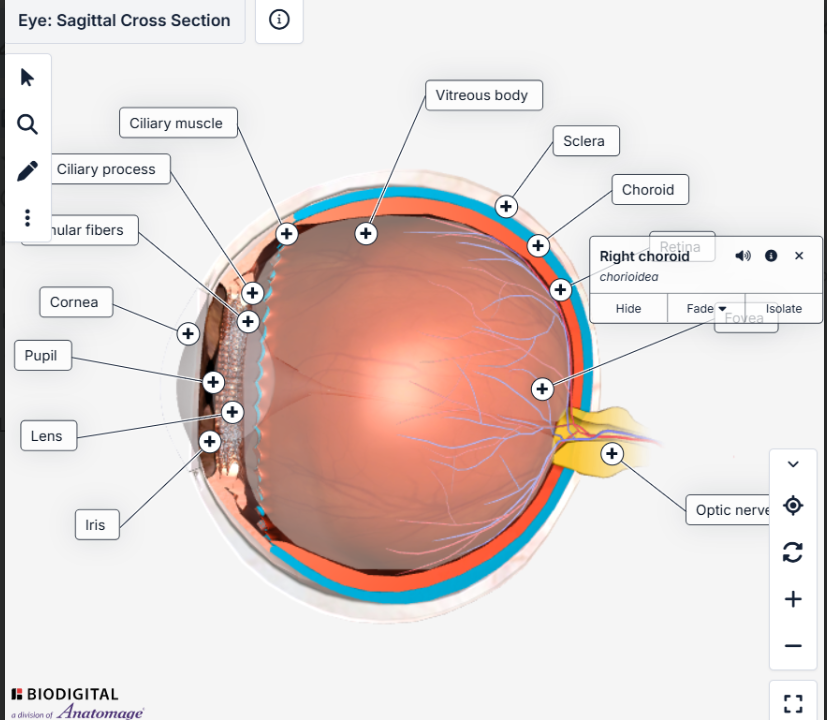
choroid coat

retina
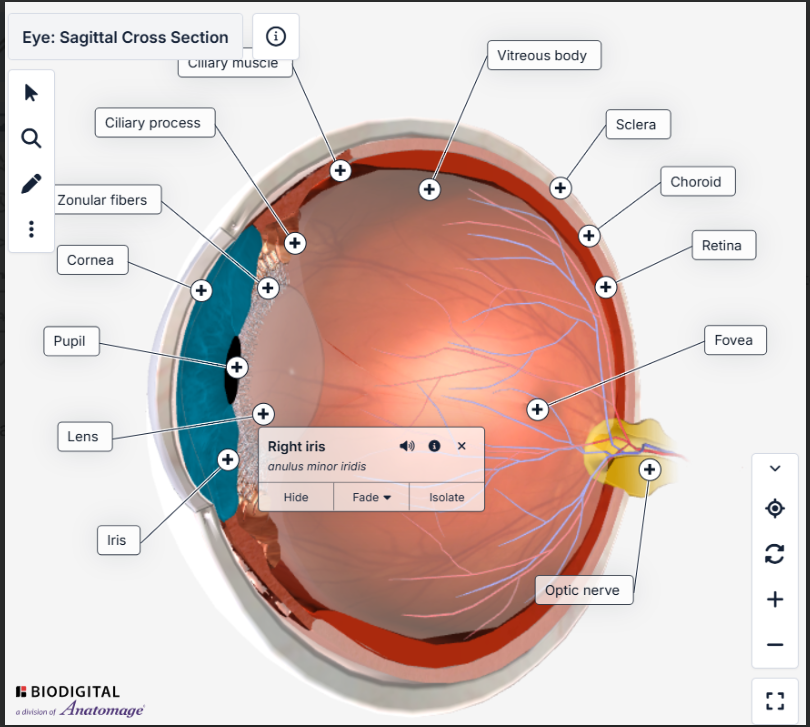
iris (eye color)

pupil (black part - cavity in eye)

lens

ciliary body (behind iris)

cochlea anatomage

vestibular cochlear nerve
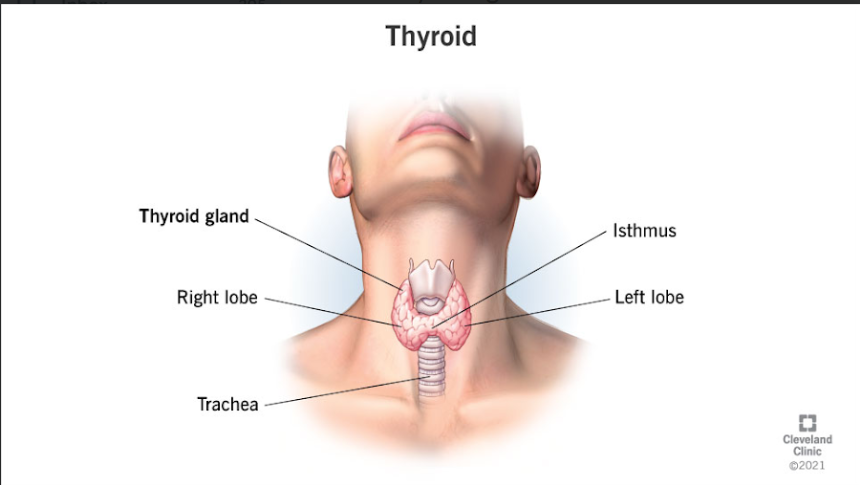
thyroid gland (butterfly shape)

pituitary gland


adrenal gland - sits on top of kidney

pancreas

testis

parathyroid gland - 4 dots

testis - rat
20/20 vision
Normal vision - This means that the test subject sees the same line of letters at 20 feet that a normal person sees at 20 ft
20/40 vision
Myopia/Nearsighted - test subjects sees at 20 feet what a normal person sees at 40 ft (near good, far blurry)
Hyperopia/Farsighted
Test subject can see object at 20 feet (farther) than a regular person can only see at 15 feet (normal person needs to get closer to be able to see farther)
Corrective lens - myopia
concave lens
Corrective lens - hyperopia
convex lens
Tympanic cavity
Area for auditory ossicles
Auditory ossicles
Malleus, Incus, Stapes