Lecture 1b: Organelles
 Call Kai
 Learn
 Practice Test
 Spaced Repetition
 Match
 Flashcards
 Knowt Play
1/57

There's no tags or description
Looks like no tags are added yet.
58 Terms
Leaflets
The two monolayers composing the phospholipid bilayer; inner leaflet faces cytoplasm, outer faces extracellular space
Electron dense
Describes darker TEM regions where the electron beam has a harder time passing through

Nuclear envelope
Selectively permeable double-membrane barrier between the cytoplasm and nucleoplasm

Nuclear pores
Structures small molecules freely transit through; macromolecules need a nuclear localization sequence (NLS)
Lamins
Intermediate filament proteins that form a meshwork supporting the nuclear envelope
Nuclear lamina
Meshwork formed by lamins that supports the inner nuclear membrane, making the envelope rigid
Progeria
Disease of rapid aging, caused by a mutation in the lamin A protein (nucleus)
Nucleolus
rRNA synthesis; electron dense, stains darkly with hematoxylin- Purple- Basophilic

Heterochromatin
Dark-staining, tightly wound, condensed DNA; inaccessible for transcription

Euchromatin
Light-staining, loosely wound, decondensed DNA; accessible to transcription machinery
Nuclear organizer
DNA coding for rRNA (nucleolar component)
Pars fibrosa
rRNA transcripts (nucleolar component)
Pars granulosa
Ribosomal subunit assembly (nucleolar component)
Histone
Protein around which DNA wraps in clusters of 8 to form "beads on a string"

Nucleosome
One bead of DNA wrapped around a cluster of histones

Chromatin
DNA+Histones

Centromere
Central region where matching chromosome copies attach, giving the "X" shape during mitosis

Small subunit (40S)
Ribosome subunit that holds mRNA in place with help of initiation factors
Large subunit (60S)
Ribosome subunit that attaches last; contains catalytic machinery to build the polypeptide
Dyskeratosis congenita
Ribosomal Disease- with mottled skin pigmentation
Signal recognition particle (SRP)
A protein-RNA complex that pauses translation upon interacting with an ER signal sequence
Translocon
Channel through which an unfolded protein is threaded during translation at the rough ER
Cystic fibrosis
Disease with thick, sticky mucus, caused by CFTR gene mutations causing protein misfolding in the ER

Cisternae
Stacked, "pancake" structures of the Golgi apparatus (and rough ER)

Transition vesicles
Carry proteins from the rough ER to the cis face of the Golgi

Cis face
Golgi face where transition vesicles from the rough ER arrive

Transport vesicles
Vesicles that ship proteins out from the Golgi's trans face
Trans face
Golgi face from which transport vesicles are shipped out
Glycosylation
Post-translational addition of carbohydrate moieties to proteins, in the rough ER and Golgi
N-linked glycosylation
Adds carbohydrate to the nitrogen of an asparagine residue; occurs mainly in the ER
O-linked glycosylation
Adds carbohydrate to an oxygen on serine or threonine; occurs mainly in the Golgi
Congenital disorders of glycosylation
Golgi Apparatus-Diseases with cerebral atrophy, psychomotor retardation, strabismus, ataxia, from glycosylation pathway gene mutations
Early endosomes
Formed by combining vesicles retrieved from the plasma membrane with vesicles from the trans Golgi network
Late endosome
Formed when early endosome contents are acidified by proton pump ATPases; fuses with or becomes a lysosome
Lysosomal storage diseases
70+ diseases with a defect in breaking down a macromolecules, from mutated lysozyme proteins
Catalase
Enzyme that degrades harmful hydrogen peroxide in peroxisomes
Oxidase
Peroxisomal enzymes that make hydrogen peroxide as a product of oxidation reactions
Primary lysosomes
Acidified (pH 5) but empty lysosomes
Secondary lysosomes
Lysosomes that have fused with a substrate-containing vesicle or endosome
Peroxisomes
Single-membrane organelles (not part of endomembrane system); crystalline core, neutral pH
Adrenoleukodystrophy (ALD)
X-linked disease- peroxisomal membrane transporter mutation
Outer membrane
Mitochondrial membrane with increased permeability due to porin proteins
Porin
Proteins that increase permeability of the mitochondrial outer membrane
Inner membrane
Semi-permeable mitochondrial membrane with embedded transporters
Cristae
Folds providing extra surface area for oxidative phosphorylation proteins in mitochondria
Intermembrane space
Mitochondrial compartment that is like cytoplasm
Matrix (mitochondria)
Compartment containing the mitochondrial genome, ribosomes, and enzymes
Leigh syndrome
Mitochondria- Disease from ETC or ATP synthase gene mutations
Cytoskeleton
Composed of polymerized protein filaments; transports cargo, changes membrane shape, facilitates motility
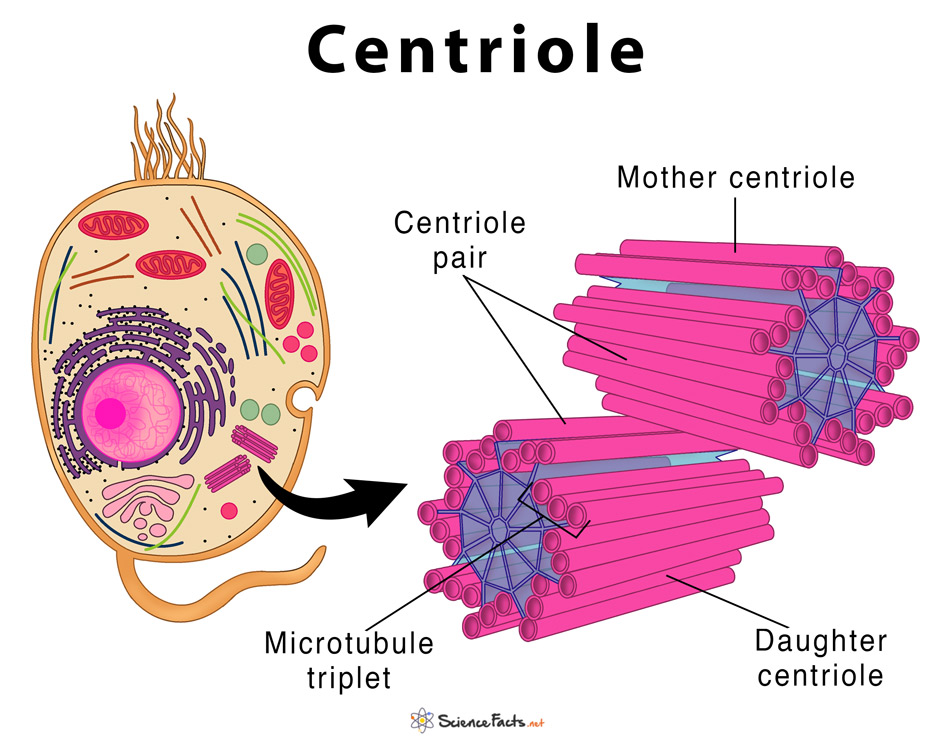
Centrioles
Two structures oriented orthogonal to each other that form the centrosome

Centrosome
Formed from two centrioles; also called the microtubule organizing center (MTOC)
Basal body
A modified single centriole that orients the axoneme inside cilia and flagella

Axoneme
Internal structure of cilia and flagella, oriented by the basal body

Nemaline rod myopathy
Cytoskeleton- Disease with muscular weakness, from mutations in microfilament-associated proteins (including actin)
Glycogen granules
Cytoplasmic inclusion prominent in liver and muscle cells, storing carbohydrate reserves
Lipid droplets
Cytoplasmic inclusion prominent in adipocytes, storing fat reserves
Pigment granules
Cytoplasmic inclusion, found in skin cells and retina epithelium
Type II Diabetes
Plasma membrane