Pyramids
0.0(0)
Studied by 0 people Note
Note Call Kai
 Learn
Learn Practice Test
 Spaced Repetition
 Match
Match Flashcards
 Knowt Play
Card Sorting
1/50

There's no tags or description
Looks like no tags are added yet.
51 Terms
1
New cards
Ankh‑haf
A Fourth Dynasty prince (c. 2600 BCE) and high official at Giza whose tomb highlights royal lineage and Old Kingdom administrative structure.
2
New cards
Djedkare Isesi
A Fifth Dynasty pharaoh (mid‑25th century BCE) noted for his administrative reforms that helped stabilize and evolve state governance.
3
New cards
Djer
A First Dynasty ruler (c. 3000 BCE) whose reign contributed to Egypt’s early state formation and dynastic traditions.
4
New cards
Djoser
A Third Dynasty pharaoh (c. 2650 BCE) celebrated for commissioning the Step Pyramid at Saqqara—a breakthrough in monumental stone construction.
5
New cards
Harkhuf
A Sixth Dynasty nomarch and explorer (c. 2400 BCE) whose ventures into Nubia illustrate early state expansion and trade.
6
New cards
Hemiunu
A Fourth Dynasty architect (c. 2580 BCE) credited with designing the Great Pyramid at Giza, symbolizing peak engineering achievements.
7
New cards
Herodotus
A 5th‑century BCE Greek historian whose accounts introduced Egypt’s customs and monuments to the wider ancient world.
8
New cards
Hetepheres
A Fourth Dynasty queen (c. 2600 BCE) known from her richly adorned tomb near Giza, exemplifying royal mortuary practices.
9
New cards
Imhotep
A Third Dynasty polymath (c. 2650 BCE), architect of Djoser’s Step Pyramid and later revered as a god of wisdom and medicine.
10
New cards
Khafre/Chephren
A Fourth Dynasty pharaoh (c. 2550 BCE) who built the second pyramid at Giza and is associated with the Great Sphinx, marking high Old Kingdom monumentality.
11
New cards
Khufu/Cheops
A Fourth Dynasty ruler (c. 2580 BCE) renowned for commissioning the Great Pyramid at Giza—a landmark of engineering and royal power.
12
New cards
Manetho
A 3rd‑century BCE Egyptian priest-historian whose dynastic history remains key to reconstructing Egypt’s chronology.
13
New cards
Menkaure/Mycerinus
A Fourth Dynasty pharaoh (c. 2490 BCE) noted for his smaller pyramid at Giza, offering insights into variations in royal burial practices.
14
New cards
Metjen
A Fifth Dynasty high official (mid‑25th century BCE) whose elaborately decorated tomb reveals aspects of elite administrative life.
15
New cards
Narmer
An Early Dynastic pharaoh (c. 3100 BCE) credited with uniting Upper and Lower Egypt, foundational to the nation’s formation.
16
New cards
Rahotep and Nofret
A royal couple from the Fourth Dynasty (c. 2600 BCE) whose exquisitely decorated tomb underscores elite family life and funerary customs.
17
New cards
Snefru
A pioneering Fourth Dynasty pharaoh (c. 2600 BCE) celebrated for innovating pyramid design with the Bent and Red Pyramids.
18
New cards
Unas (Unis)
The last pharaoh of the Fifth Dynasty (c. 2350 BCE) whose pyramid features the earliest Pyramid Texts—a key development in funerary religion.
19
New cards
Weni
A distinguished Sixth Dynasty military and administrative leader (c. 2400 BCE) whose records provide insights into Egypt’s internal and external campaigns.
20
New cards
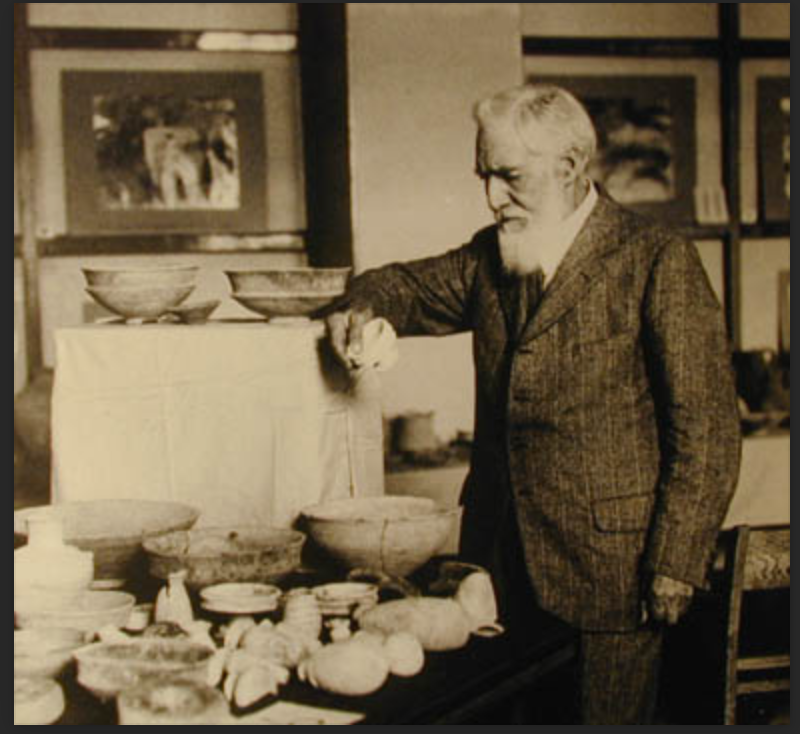
Flinders Petrie
A late 19th–early 20th‑century British archaeologist who pioneered systematic excavation methods, laying the foundation for modern Egyptology.
21
New cards
George Reisner
An early 20th‑century American archaeologist whose extensive fieldwork at Egyptian sites deepened our understanding of ancient society and architecture.
22
New cards
Jean‑François Champollion
An early 19th‑century French scholar who deciphered the Rosetta Stone, unlocking hieroglyphs and revolutionizing Egyptology.
23
New cards
Karl Richard Lepsius
A mid‑19th‑century German Egyptologist celebrated for comprehensive surveys and documentation that advanced the preservation and study of Egypt’s heritage.
24
New cards
Bent Pyramid
An Old Kingdom pyramid built by Snefru at Dahshur (c. 2600 BCE) that changes angle mid-construction, reflecting early design experiments.
25
New cards
Exemption decrees
Royal edicts from the Old Kingdom granting tax or labor relief, illustrating state control and social contracts between the monarchy and its subjects.
26
New cards
False door
A funerary architectural element (common from the Middle Kingdom onward) serving as a symbolic portal for the deceased’s spirit.
27
New cards
G7000X = Tomb of Hetep-heres
An identified Old Kingdom tomb noted for unique inscriptions and architecture that illuminate elite burial customs.
28
New cards
Gebel el-Arak Knife Handle
A finely carved ceremonial knife handle from the Middle Kingdom, discovered at Gebel el-Arak; its inscriptions hint at ritual significance.
29
New cards
Hed Sed jubilee
A royal festival, especially celebrated in the Old Kingdom, through which a pharaoh reaffirms his strength and divine right to rule.
30
New cards
Mastaba
A flat‑roofed, rectangular tomb used in the Early Dynastic and Old Kingdom periods, representing one of Egypt’s earliest monumental burial forms.
31
New cards
Master of animals
An artistic motif showing a central figure flanked by animals, symbolizing dominion over nature and royal or divine power.
32
New cards
Narmer palette
A ceremonial slate palette from the Early Dynastic period (c. 3100 BCE) that graphically represents the unification of Egypt.
33
New cards
Palace façade
An ornate decorative element on royal palaces (especially in the New Kingdom) used to project the grandeur and authority of the pharaoh.
34
New cards
Pyramid Texts
Religious inscriptions carved inside pyramids (beginning with Unas, c. 2350 BCE) that offer spells and rituals for the afterlife.
35
New cards
Red Pyramid
A pyramid built by Snefru at Dahshur (c. 2600 BCE) with reddish limestone, representing one of the earliest 'true' pyramid designs.
36
New cards
Reserve heads
Small sculpted representations of pharaohs from the Old Kingdom, believed to serve a protective or symbolic role in the afterlife.
37
New cards
Sequence dating
A mid‑20th‑century archaeological method that determines the relative age of artifacts by analyzing stylistic changes, crucial for Egyptian chronology.
38
New cards
Serekh
An early royal emblem—a rectangular frame often topped by a falcon—used in the Early Dynastic period to denote a pharaoh’s name and authority.
39
New cards
Smiting scene
An artistic motif depicting a pharaoh striking an enemy, symbolizing royal might and divine justice; prevalent in New Kingdom reliefs.
40
New cards
Sphinx
A monumental limestone statue with a lion’s body and a human head (c. 2500 BCE, Giza) embodying strength, mystery, and protective power.
41
New cards
Sun/solar temples
Religious complexes (especially prominent in the New Kingdom and later) dedicated to the sun god Ra, underscoring the importance of solar worship.
42
New cards
Wadi el-Jarf papyrus
An Old Kingdom logbook from a harbor at Wadi el-Jarf (c. 2600 BCE) that provides rare insights into maritime activities and state administration.
43
New cards
Wepemnefret slab stela
An inscribed stone slab from the Old Kingdom used in funerary contexts, reflecting royal propaganda and religious symbolism.
44
New cards
Abusir
A necropolis near Memphis (predominantly Fifth Dynasty, c. 2400 BCE) known for its pyramids and tomb complexes that reveal Old Kingdom funerary practices.
45
New cards
Abydos
One of Egypt’s oldest sacred sites in Upper Egypt, renowned for its temples and long‑standing cult of Osiris central to ancient religion.
46
New cards
Giza
A plateau near modern Cairo (predominantly Fourth Dynasty, c. 2600 BCE) hosting the Great Pyramid, Sphinx, and other iconic monuments.
47
New cards
Hierakonpolis painted tomb 100
A tomb at Hierakonpolis—an important Early Dynastic ceremonial center in Upper Egypt—whose painted decorations reveal early funerary art and rituals.
48
New cards
Meidum
An archaeological site (c. 2600 BCE) featuring a pyramid complex that marks the transition from step pyramids to smooth‑sided 'true' pyramids.
49
New cards
Saqqara
A vast necropolis serving ancient Memphis, home to Djoser’s Step Pyramid (c. 2650 BCE) and used continuously from the Early Dynastic onward.
50
New cards
Umm el‑Qaab
Synonymous with the Giza Plateau, this burial ground (c. 2600 BCE) contains the tombs of Fourth Dynasty pharaohs and their mortuary complexes.
51
New cards
Wadi Hammamat
An ancient quarry region in eastern Egypt prized for its high‑quality stone, essential for monument construction and trade from prehistoric times onward.