Conditions in OT Exam #1 - Arthritis, Ortho, & Pain
 Call Kai
 Learn
 Practice Test
 Spaced Repetition
 Match
 Flashcards
 Knowt Play
1/40

There's no tags or description
Looks like no tags are added yet.
41 Terms
Rheumatoid Arthritis
A chronic, systemic, inflammatory autoimmune disorder created through a complex interplay of contextual factors, genes, and abnormal immune response
redness, warmth, and swelling of joints
fatigue, feeling of sickness, weight loss, fever
usually affects same joint on both sides of body
may develop suddenly, within weeks, or months
most often begins between ages 25-50
Osteoarthritis
Degenerative joint disease; inflammation of the bone and joints
most common type of arthritis
primarily affects cartilage
may initially affect joints asymmetrically
affects hands and weight bearing joints
can cause joint pain and stiffness
usually develops slowly over many years
Swan Neck Deformity

Swan Neck Deformity Splint

Boutonniere Deformity
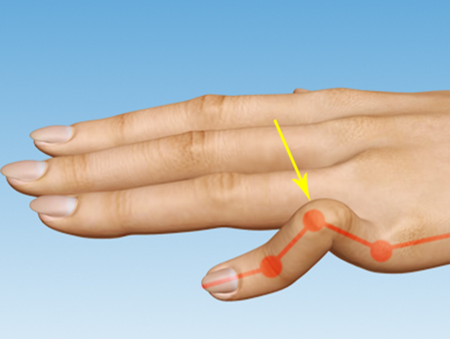
Boutonniere Deformity Splint

Ulnar Drift

Gout & Hyperuricemia
Gout: a crystalline form of inflammatory arthritis that is marked by significant pain that first presents in the metatarsophalangeal joint of the big toe; crystallization of uric acid within affected joints
Hyperuricemia: a high serum uric acid level that exceeds 6.8 mg/dL and is associated with an imbalance of production and excretion through the urine
Systemic Lupus Erythematosus
Chronic disease with no cure that causes pain and inflammation in any part of the body; body attacks otherwise healthy tissue
Butterfly Rash: symptom of SLE - rash across bridge of nose and cheeks
Juvenile Idiopathic Arthritis
Most common type of arthritis in children under 16 years of age
not a childhood version of RA
not one disease process with one cause but considered a heterogeneous group of diseases each with distinguishing features
Crepitus
The crunching feeling or sound coming from the articular surface
Arthroplasty
Joint replacement
Factors that Determine a Fracture
1) The amount of force applied to the bone
2) The strength or toughness of the bone
Pathological Fracture
Fracture caused by insufficiency of the bone due to low density; can’t sustain normal force
Osteopenia
Reversible weakening of the bone that increases risks of developing osteoporosis
Heterotopic Ossification
Abnormal bone formation in extra skeletal soft tissues; cause & pathophysiology unknown
Ecchymosis
Discoloration of the skin caused by bleeding/bruising
Open vs. Closed Fracture
Open: breaks through the skin’s surface
Closed: not broken through the skin’s surface
Types of Fractures

Comminuted Fracture
Has 2 or more bone fragments
Greenstick Fracture
Bone breaks on one side and bends on the other rather than snapping in two
Often seen in children whose bones are soft and growing
ORIF - Open Reduction & Internal Fixation
Secures fractures with hardware (plates, screws)
External Fixation

Total Hip Replacement
Posterior: enter from back; move, cut, repair muscles and capsule with artificial material
Anterior: enter from front; work between the muscles - better recovery and less pain
Hip Precautions
Posterior:
Don’t bend past 90 degrees
No internal rotation
Don’t cross legs
Anterior:
No external rotation
Don’t extend hip (leg behind you)
IM - Intramedullary Nailing
Metal rod into femur
No hip precautions (because did not replace the joint)
typically, patients are WBAT – weight bearing as tolerated
Adaptive Equipment for Hip Replacement
Sock aid
Reacher
Dressing Stick
Commode
Long sponge / shower head
Weight Bearing Status
NWB – Non-weight bearing – Operated leg should not touch floor
TTWB – Toe-touch weight bearing – 10-15% - Foot of operated leg may rest on the floor
PWB – Partial weight bearing – 30-50% of weight through operated leg; typically specify %
WBAT – Weight bearing as tolerated – As much weight as patient can tolerate
FWB – Full weight bearing
Total Knee Replacement
No precautions
Normal ADLs within 3-6 weeks
Walking to prevent clots
Spinal Precautions
No BLT!
Bending
Lifting
Twisting
Lumbar Fusion vs. Lumbar Disc Replacement
Lumbar disc replacement preserves spinal motion and may allow faster recovery, while spinal fusion stabilizes the spine but eliminates movement at the treated segment

Total Shoulder Replacement Precautions
NWB
No lifting more than a coffee cup
Limited shoulder movements
At discretion of surgeon, based on procedure
Myofascial Pain vs. Fibromyalgia
Myofascial Pain: chronic pain disorder in which pressure on sensitized muscles causes pain that presents in other muscular regions
localized
intense, deep muscular pain
Fibromyalgia: diffuse pain that’s widely spread throughout the musculoskeletal system
widespread and diffuse
often several co-existing conditions
Common Trigger Points of Myofascial Syndrome

Types of trigger points:
Active – Pressure produces pain at site
Latent – Dormant; no pain on palpation
Secondary – Become active when a different muscle is palpated
Satellite – Elicit pain because of close proximity to another trigger point
Low Back Pain & 6 Common Conditions
1) Lumbar Radiculopathy: sciatica - nerves are compressed by bones and cartilage
2) Herniated Disc: outer layer of disc ruptures from vertebral pressure
3) Spondylolisthesis: one vertebra slides or displaces over another one
4) Spondylosis: form of OA characterized by age-related degenerative spinal column changes
5) Facet Joint Syndrome: as discs lose water and compress, disc height changes causing misalignment
6) Spinal Stenosis: degenerative, when 1 or more spinal openings begin to narrow causing pressure on the spinal cord or nerves
Rotator Cuff Injury
Immediate pain
Dull pain
Pain while laying down
Weakness and restricted ROM
Elbow Conditions
Medial Epicondylitis: golfer’s elbow; pain occurs on the inside of elbow
Lateral Epicondylitis: tennis elbow; pain occurs on the outside of elbow - repetitive use of the forearm muscles
Carpal Tunnel
Compression of medial nerve at the wrist
Olecranon Bursitis
Bursa between skin and olecranon process of the ulna becomes inflamed
Osteochondritis Dissecans
Disrupted blood flow to joint results in necrosis and loosening of bone & cartilage
De Quervain Tenosynovitis
Pain and inflammation of the tendons located on the radial side of the wrist at the base of the thumb