Module 3.3: Postmortem Physiological Bone Change
 Call Kai
 Learn
Learn Practice Test
 Spaced Repetition
 Match
Match Flashcards
 Knowt Play
1/16

There's no tags or description
Looks like no tags are added yet.
Name | Mastery | Learn | Test | Matching | Spaced | Call with Kai | Chat |
|---|
No analytics yet
Send a link to your students to track their progress
17 Terms
What happens after skeletonization?
when soft tissue has decomposed, the remains ever a state of advanced decay
there will be changes that impact the bone
modification and degradation of the skeleton will largely depend on the depositional environment
Define biostatinomy
pre-burial modifications affecting the organic components
Define diagenesis
post-burial modifications affecting inorganic components ending in fossilization
What are the 7 postmortem skeletal changes?
weathering
biotubation
burning
cutmarks and fractures
staining
animal damage
Explain weathering and the factors that influence weathering
decomposition of hard tissues as a response to natural agents in the immediate environment over time
separation of the organic and inorganic components of the bone
organic parts of lost (from drying out, decomposing, etc.)
sun exposure
wet/dry cycles
freeze/thaw cycles
bone density
genus/species
What can weathering do to the bone?
bleaching
cracking
flaking
warping
erosion
Explain bioturbation
disturbance of sediment by living organisms
caused by burrowing animals like earthworms, rodents, rabbits, weasels, moles
no direct contact
Explain plant damage
roots searching for water and nutrients secrete acid to break up soil which can etch the surface of buried bone
larger roots can cause articulation
can look like cut marks
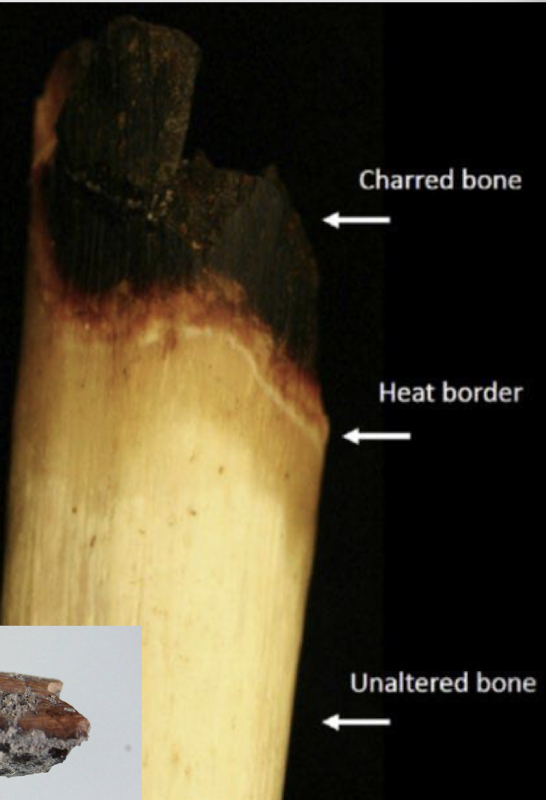
Explain burning
cremation or burning can char or burn the bone
level of char is impacted by…
fleshed or de-fleshed bone
temperature/duration of the fire
Explain cutmarks
incisions or cuts (v-shaped or u-shaped) in cross-sections
chopping or hacking marks
often the result of peri- or postmortem trauma
Explain fractures in bone changes
perimortem and postmartem trauma
a bone broken during perimortem is hard to fracture
a bone broken during postmortem trauma is easier to fracture
tree branch analogy
Explain staining
bone staining from soil or discolouraiton from sediments are transported via groundwater into bone pores
staining can also occur from prolonged contact with…
fluids
leaves
algae
metal objects
Explain scavenging
consumption and associated modifications of a set of remains by animals
can affect the rate of decomposiiton of soft tissue and postmortem bone modification
important to know animal modification and disturbances when studying remains
different species will follow a pattern of succession when colonizing or scavenging remains
What is insect scavenging
insects will be the first scavengers to arrive if present
forensic entomologists use insect activity to estimate the PMI from soft tissue in early decomposition
factors
seasonality
movement of remains
trauma
presence of drugs
What type of flies scavenge a body? What do they do and what is the life cycle of a fly?
blow flies, house flies, flesh flies
deposit eggs or maggots within minutes to hours after death
but flies don’t modify bones
eggs → larva → pupa → adult
What is omnivore and carnivore scavenging
scavengers will eat soft and hard tissue
modify, disarticulate, and disperse soft and bone tissues
caninds: wolves, cayotes, foxes, dogs
racoons, pigs, opossus, bears, cats, crows, vultures, rodents
What is aquatic scavenging
sharks and fish eat soft tissue like skin
crustacean tear away muscle
beach flies and sea lice
mollusks
echinoderms