DRUGS ACTUAL: Lesson 89 – Common Drugs for Liver and Pancreas
 Call Kai
 Learn
 Practice Test
 Spaced Repetition
 Match
 Flashcards
 Knowt Play
1/32

There's no tags or description
Looks like no tags are added yet.
33 Terms
Liver health: Milk Thistle (Silybum marianum)
Contains an active flavonoid complex called silymarin, a powerful antioxidant that fights inflammation and helps prevent toxins from attaching to liver cells
Liver health: Artichoke (Cynara scolymus)
Contains cynarin, a polyphenol that is used to support a sluggish liver and improve bile flow
Turmeric (Curcuma longa)
Contains curcumin, which can reduce liver fat and inflammation in metabolic dysfunction-associated steatotic liver disease (MASLD), though high doses require caution.
Ginger (Zingiber officinale):
Can lower liver enzymes and improve inflammatory markers in individuals with fatty liver disease
Green Tea (Camellia sinensis)
Provides antioxidants that support general metabolic health, though concentrated green tea extracts are linked to liver injury
Whole Grains and Dietary Fiber:
Lower risk of insulin resistance, obesity, and hepatocellular carcinoma (liver cancer)
Ashwagandha
Causes drug-induced liver injury, jaundice, and elevated liver enzymes
Kava
Associated with acute liver failure; therefore, banned in several countries
Comfrey
Contains pyrrolizidine alkaloids that can cause severe venous occlusion and chronic liver damage
Black Cohosh
Causes hepatitis and acute liver failure
Chaparral
Causes acute liver failure
High-Dose Green Tea Extract & Turmeric
Culinary amounts are generally safe, but high concentrations can overwhelm liver metabolism and lead to toxicity
Glutathione peroxidase is not clinically viable as an oral supplement because it is completely degraded by the digestive system before it can enter the bloodstream or reach cells. As a large, complex protein, it faces the same digestive barriers as the proteins in the food you eat.
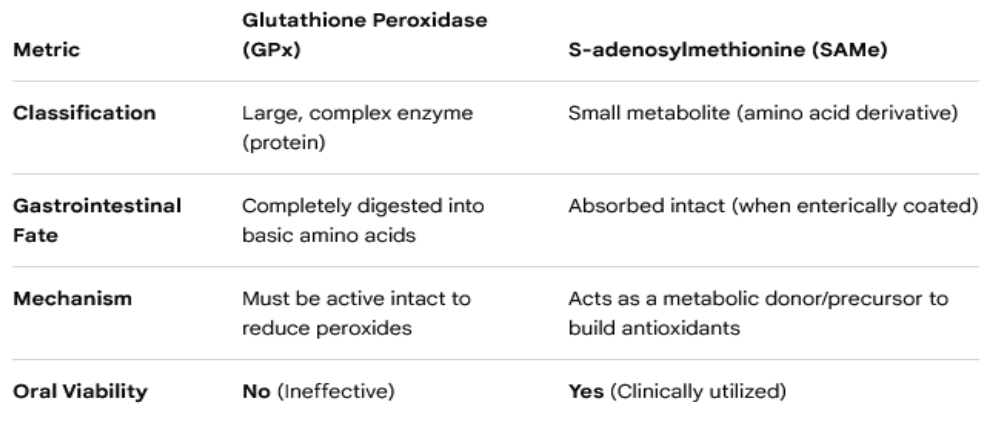
S-adenosylmethionine (SAMe) MOA Glutathione Synthesis (Transsulfuration Pathway)
precursor to cysteine → rate-limiting amino acid in producing glutathione - the liver's primary endogenous antioxidant and detoxifying agent.
By restoring or maintaining glutathione levels, SAMe neutralizes reactive oxygen species and detoxifies harmful chemicals and drugs like acetaminophen.
S-adenosylmethionine MOA: Transmethylation & Membrane Fluidity
As a major methyl donor, SAMe participates in methylation reactions critical for synthesizing membrane phospholipids.
maintain hepatocyte plasma membrane integrity and fluidity, which preserves normal enzyme function and ion transport.
S-adenosylmethionine MOA: Bile Flow Regulation (Anticholestatic Effect)
SAMe supports the activity of membrane transport systems involved in bile secretion, helping resolve or prevent intrahepatic cholestasis
Ursodeoxycholic Acid (UDCA): Displacement of Toxic Bile Acids
orally, it enriches the human bile acid pool.
competitively displaces more toxic, hydrophobic endogenous bile acids (like chenodeoxycholic and deoxycholic acids) that damage liver cells through detergent action
ursodeoxycholic acid: Cytoprotection and Membrane Stabilization
Toxic bile acids destabilize cell and mitochondrial membranes, leading to cellular swelling, necrosis, and apoptosis.
UDCA inserts into these lipid bilayers, reduces membrane polarity, and directly protects hepatocytes and cholangiocytes from detergent induced injury.
Ursodeoxycholic acid: Anti-Apoptotic Effects
preserves mitochondrial integrity and blocks the mitochondrial pathway of apoptosis, preventing premature cell death in stressed liver and duct cells
Ursodeoyxcholic acid: Choleretic Effect (Stimulating Bile Flow)
increases the secretion of bile acids, phospholipids, and cholesterol into the bile.
by increasing intracellular calcium levels → transport proteins and vesicular exocytosis across the canalicular membrane.
It also upregulates protective membrane transporters, such as the chloride-bicarbonate anion exchanger
Ursodeoyxcholic acid: Immunomodulatory Properties
decreases the abnormal overexpression of major histocompatibility complex (MHC) class I molecules on hepatocytes, which helps attenuate the autoimmune attack seen in conditions like Primary Biliary Cholangitis (PBC).
reduces proinflammatory cytokine output and quenches reactive oxygen species (ROS) produced by Kupffer cells (liver macrophages).
Silymarin indications

Silymarin contraindications

N-acetylcysteine uses: Acetaminophen (Paracetamol) Overdose
Given i.v. or p.o. to replenish liver glutathione reserves and prevent acute liver injury
N-acetylcysteine uses: Mucolytic Therapy
inhalant via nebulizer or oral tablet in chronic bronchitis, cystic fibrosis, and chronic obstructive pulmonary disease (COPD)
N-acetylcysteine uses: Antioxidant & Cellular Health
Neutralize free radicals, reduce oxidative stress, and support phase II liver detoxification
Paracetamol (acetaminophen) is highly toxic to?
cats even in tiny amounts, rapidly causing severe red blood cell damage (methemoglobinemia and Heinz body anemia) and acute hepatic necrosis (liver failure).
Therapy for cats who ingested acetaminophen:
Antidote: N-acetylcysteine (NAC), which replenishes glutathione stores and helps detoxify NAPQI (N-acetylp-benzoquinone imine).
Supportive Care: IV fluid therapy, oxygen support, and monitoring for liver and red blood cell damage.
Specialized Therapies: Under strict veterinary supervision, agents like SAMe/silybin or cautiously dosed methylene blue may be considered depending on methemoglobin levels.
Choleric vs cholagogue agents

Why feline triaditis occurs:
In cats, the bile duct and the pancreatic duct merge before emptying into the duodenum through a single opening
Inflammation or an overgrowth of bacteria in the gut easily ascends into the bile and pancreatic ducts. An underlying autoimmune dysfunction may also trigger simultaneous inflammation across all three areas.
Clinical signs of feline triaditis: Appetite and Weight Changes
Reduced appetite (anorexia or hyporexia)
Progressive weight loss
Clinical signs of feline triaditis: GI
Vomiting (frequent or chronic)
Diarrhea or loose, unformed stools
Thickened intestinal loops or abdominal discomfort upon palpation
Feline triaditis: General and Systemic Signs
Lethargy and decreased activity/hidden behavior
Icterus (jaundice) – a yellow tint to the skin, gums, or whites of the eyes, signaling liver/biliary involvement
Fever, Abdominal pain or a hunched posture, Dehydration