EKG - Axis Determination / Fascicular Blocks
 Call Kai
 Learn
Learn Practice Test
 Spaced Repetition
 Match
Match Flashcards
 Knowt Play
1/28

There's no tags or description
Looks like no tags are added yet.
Name | Mastery | Learn | Test | Matching | Spaced | Call with Kai | Chat |
|---|
No analytics yet
Send a link to your students to track their progress
29 Terms
AXIS
direction of depolarization through the heart
VECTOR
general direction of movement of depolarization
MEAN QRS VECTOR
Fixed end-point of the Vector at the AV NODE
Average of all vectors of the ventricles into one
What direction does the Mean QRS vector normally point
Left and downward due to larger depolarization of LV
What plane is used to plot a QRS vector
Frontal palnt
What is a normal axis
Between 0 and 90 degrees (LLQ)
Axis Deviation
Any anatomic displacement of the heart also displaces the Mean QRS Vector
Tall skinny patients tend to have an axis deviation to the
Right
Obese patients tend to have axis deviation to the
Left
LV Hypertrophy will cause an axis deviation to the
Left
Myocardial infarction will cause an axis deviation
The opposite side of the hear from the infarct
What can be obtained from measuring Mean QRS Vector
The POSITION of the Heart
Indication of any HYPERTROPHY (POINTS TOWARD)
Information regarding INFARCTION (POINTS AWAY)
What leads are used to assess mean QRS vector
I
aVF
How do lead I and aVF determine axis deviation
Lead I = Determines left or right
QRS (+) = Mean QRS is to left
QRS (-) = Mean QRS is to right
Lead avF = Determines superior / inferior
QRS (+) = Mean QRS points down
QRS (-) = Mean QRS points up
How does left axis deviation appear on EKG
Lead I → Positive QRS
aVF → Negative QRS
How does right axis deviation appear on EKG
Lead I → Negative QRS
aVF → Positive QRS
How does extreme right axis deviation appear on EKG
Lead I → Negative QRS
aVF → Negative QRS
What lead sits at 0 degress for axis
Lead I
What lead sits at 90 degress for axis
avF
What lead sits at 60 degress for axis
II
What lead sits at 120 degress for axis
III
What lead sits at -150 degress for axis
aVR
What lead sits at -30degress for axis
aVL

Axis
Right Aix Deviation

Axis
Left Axis Deviation
“Fascicular Block” / “Hemi-Block”
a conduction BLOCK
Cuases of Right Axis Deviation
Possible Left Posterior Hemiblock
Normal in small children and thin adults
Severe RV Hypertrophy
PE
Advanced pulmonary lung disease
Causes of Left Axis Deviation
Left Anterior Hemiblock
AMI
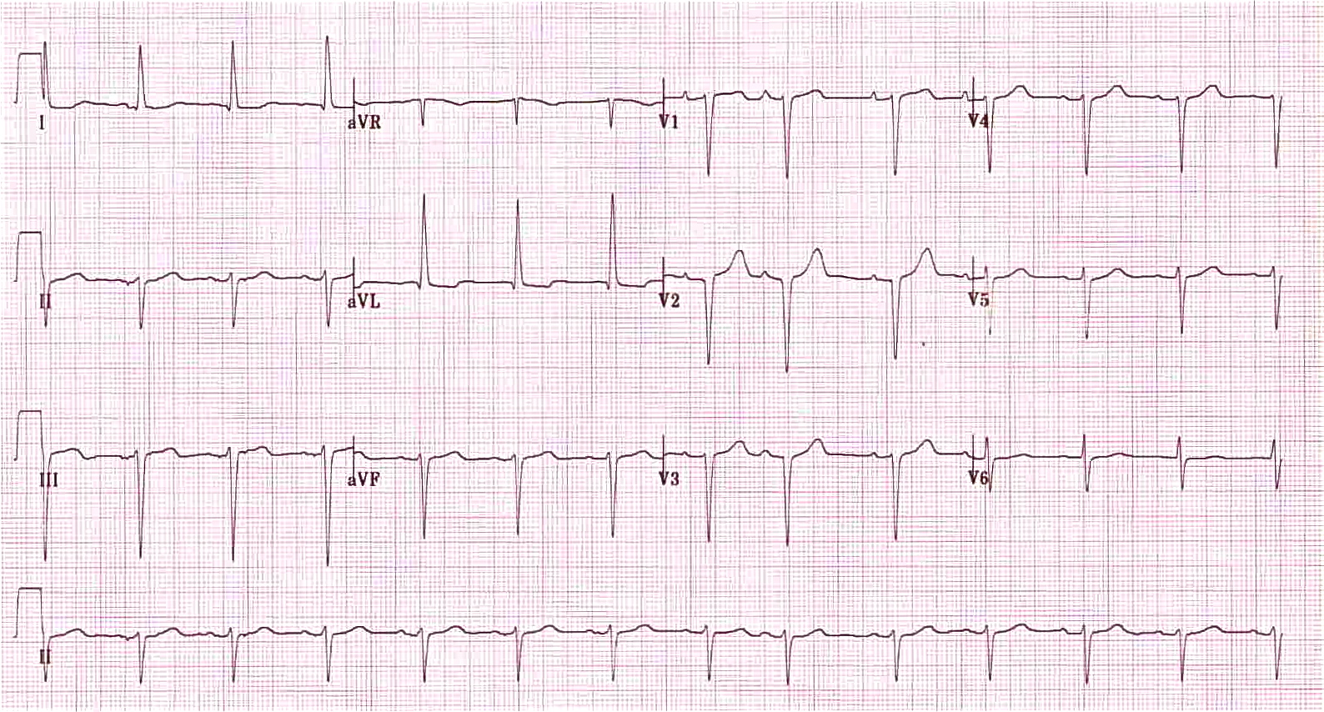
Axis
Left Axis Deviation