Week 7 — Neglect Theories & Apraxia

0.0(0)
Studied by 0 people
call kaiCall Kai
learnLearn
examPractice Test
spaced repetitionSpaced Repetition
heart puzzleMatch
flashcardsFlashcards
GameKnowt Play
Card Sorting

1/77

encourage image

There's no tags or description

Looks like no tags are added yet.

78 Terms

1
New cards

What are the three theories of neglect covered in this unit?

  1. Primary sensory disorder; 2. Attentional disorder; 3. Representational disorder.


2
New cards
In the De Renzi et al. (1970) tactile maze study, how was the maze explored, and why was the hand chosen that way?
The maze sat behind a curtain and the patient searched for a marble by moving a finger; the hand used was on the same side as the lesion, so it was unaffected by any sensory or motor loss.
3
New cards

What did the De Renzi tactile maze results show?
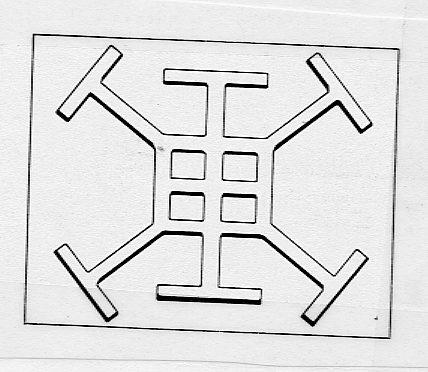

Each lesion group was slower finding the marble on its neglected, contralesional side of the maze than on its ipsilesional side — even though tactile and motor information were intact.

4
New cards
Why does the De Renzi maze result argue against a primary sensory account of neglect?
Because patients neglected contralateral space even when the sensory information reaching them was intact.
5
New cards
What MRI evidence argues against neglect being a primary sensory disorder?
Objects presented in neglected space still activate the appropriate visual regions of the occipital lobes.
6
New cards
Why does the multimodality of neglect argue against a primary sensory account?
Neglect affects auditory and tactile judgments as well as vision, so it cannot be a deficit in one single sense.
7
New cards
How are sounds on the left experienced by neglect patients, and what does that imply?
They are mislocalized but still heard — the stimulus was processed, just referred to the wrong side.
8
New cards
What does visual extinction suggest about neglect?
That different perceptual representations are competing for attention and visual awareness, rather than failing at a primary sensory stage.
9
New cards
Who was patient PS in the Marshall & Halligan (1988) burning house study?
A 49-year-old woman with left neglect caused by a right-parietal aneurysm.
10
New cards
In the burning house study, what did patient PS say when shown each house drawing separately, and when asked if the two houses were the same or different?
She described each drawing simply as a house, and said the two houses were the same.
11
New cards

When asked which house she would prefer to live in, what did patient PS do?


She called it a silly question because the houses were the same, yet she chose the non-burning house 17 out of 21 times (81%).

12
New cards
What does the burning house result demonstrate?
That the left-side flames were processed unconsciously and influenced her preference, even though she had no conscious awareness of any difference — showing visual processing in neglected space continues up to object recognition and possibly semantics.
13
New cards
In Riddoch & Humphreys (1983), what was the line-bisection task and what was the cue?
Patients bisected a horizontal line that had the digit 5 at its far left end, and were sometimes told to find and report the cue before bisecting.
14
New cards
What happened when neglect patients bisected the cued line without being told to report the cue?
The mere presence of the 5 at the left end did not correct their bisection — they still bisected too far to the right.
15
New cards
What happened when patients were told there was a number at the left end and had to report it before bisecting?
They then bisected the line correctly.
16
New cards
What is automatic (exogenous) orienting of attention?
Orienting elicited by the mere presence of a cue — stimulus-driven, without any instruction to attend to it.
17
New cards
What is deliberate (endogenous) orienting of attention?
Orienting that is internally driven, as when a cue must be found and reported.
18
New cards
What specific deficit did Riddoch & Humphreys conclude neglect patients have?
A specific deficit in the automatic component of attentional orienting, while deliberate orienting is relatively intact. (Training deliberate leftward shifting helps in the clinic but does not generalize well to everyday life.)
19
New cards
In the Posner et al. (1982) cueing task, what does the patient have to do?
Say as quickly as possible which of two boxes a target appears in, after one box flashes as a cue.
20
New cards

What is a valid cue in the Posner task, and what is an invalid cue?


Valid: the box flashes and 50 msec later the target appears in that same box. Invalid: the box flashes and 50 msec later the target appears in the opposite box.

21
New cards
Why are responses slower on invalid-cue trials than valid-cue trials?
On an invalid trial attention must disengage from the cued location, move, and re-engage at the target location; on a valid trial attention is already there.
22
New cards
In healthy controls on the Posner task, how do valid and invalid reaction times compare?
Valid-cue responses are faster than invalid-cue responses (roughly 350 msec vs 600 msec on the slide scale).
23
New cards
For left-neglect patients, what happens on Posner trials with targets in the intact right hemispace?
There is essentially no valid/invalid difference — performance looks normal.
24
New cards

For left-neglect patients, what happens on Posner trials with targets in the neglected left hemispace?


Valid-cue performance is preserved, but invalid-cue reaction time hits the 5-second response ceiling — the target is effectively never detected.

25
New cards
What does the Posner pattern show is impaired in left neglect?
Disengaging attention from the intact hemispace in order to shift it to the neglected side.
26
New cards
What is the attentional theory of neglect in one sentence?
The two hemispheres compete to control attention in contralateral space, and right-parietal damage unbalances that competition so patients cannot disengage from the intact (right) hemispace.
27
New cards
What is the standard (Mesulam) theory of right-hemisphere dominance of spatial neglect?
The right hemisphere controls shifts of attention to both left and right space, while the left hemisphere controls attention only to right space — so left-hemisphere damage can be compensated but right-hemisphere damage cannot.
28
New cards
Why, on the standard theory, do only right-hemisphere lesions cause severe, prolonged neglect?
Because after left-hemisphere damage the intact right hemisphere can still shift attention both ways, but after right-hemisphere damage only left-hemisphere rightward shifting remains.
29
New cards
What are the two wrinkles in the standard asymmetry theory of neglect?
There is no clear evidence that the brain network mediating spatial attention is asymmetrical, nor that it is actually damaged in neglect.
30
New cards
What is the dorsal attention network, and where is it?
A bilateral, preparatory, goal-directed spatial attention system in superior parietal / intraparietal cortex — and it is not asymmetric.
31
New cards
What is the ventral attention network, and what does it do?
A right-lateralized, nonspatial system in inferior parietal / supramarginal cortex that handles arousal and vigilance, detects salient unexpected stimuli, and interrupts dorsal focus so attention can disengage and reorient.
32
New cards
What is the revised conclusion about why neglect is right-hemisphere dominant?
Right-hemisphere dominance of neglect reflects the laterality of the ventral network mediating nonspatial arousal, detection, and disengagement — not the laterality of the dorsal spatial-attention network. The key evidence: neglect severity tracks damage to the inferior-parietal ventral network, not the superior-parietal dorsal network.
33
New cards
What prediction follows if neglect is really a ventral-network arousal/disengagement problem?
That increasing arousal should temporarily ameliorate spatial neglect.
34
New cards
In Robertson et al. (1998), what was the temporal order judgment task?
Two bars flashed and the patient judged which came first; the point of subjective simultaneity measured the severity of the bias.
35
New cards
In Robertson et al. (1998), how large was the temporal bias in left-neglect patients without alerting?
Perceived simultaneity occurred only when the left event preceded the right event by up to about 1,200 msec; controls were near zero.
36
New cards
What did adding a bilateral warning beep do in Robertson et al. (1998)?
The nonspatial phasic alerting reduced the rightward bias in all patients and reversed it in some — but only on that trial; the effect dissipates immediately, so it is not a practical rehabilitation.
37
New cards
What is the representational theory of neglect?
That the deficit lies in constructing the left half of an internal mental representation, not merely in attending to external stimuli.
38
New cards
In the Bisiach & Luzzatti (1978) Piazza del Duomo study, what were patients asked to do?
Two patients with left neglect, tested in hospital, imagined Milan's Cathedral Square from two opposite viewpoints and reported everything they could see from each imagined perspective.
39
New cards
What did patients IG and NV report from each imagined viewpoint of the Piazza del Duomo?
Only the landmarks on the right side of the imagined view, omitting everything on the left — so landmarks reported from one viewpoint were omitted from the reverse viewpoint, and vice versa.
40
New cards
Why does the Piazza del Duomo result support a representational rather than purely attentional account?
Because the same real landmarks were neglected or reported depending purely on which side of the imagined view they fell on — the deficit was in the mental representation itself.
41
New cards
How does the representational account explain anosognosia in neglect?
Since patients cannot form a representation of what is missing, they believe their incomplete reality is complete and defend it.
42
New cards
In the Bisiach, Luzzatti & Perani (1979) cloud study, what was the basic same/different task?
Patients judged pairs of cloud outlines that were identical, different on the left, or different on the right, and made more errors when the difference was on the left.
43
New cards
What was the critical slit manipulation in the cloud study?
Clouds were never shown whole; each cloud slid across a central slit so information arrived only temporally at fixation, and patients had to construct the spatial cloud in their minds.
44
New cards
What did the cloud slit result show, and why is it hard to explain attentionally?
Patients still made more errors for left-side differences regardless of the direction of movement — since nothing was ever visible as a whole spatial stimulus, the failure must be in building the representation, not in attending to a visible left side.
45
New cards
In Zorzi et al. (2002), what is the mental number line hypothesis?
That numbers are represented in the brain along a left-to-right spatial line, small numbers on the left and large numbers on the right.
46
New cards
In Zorzi et al. (2002), what task did neglect patients perform, and what was the result?
Four neglect patients with intact numerical skills heard two numbers defining an interval (e.g., 5–9) and stated the midpoint without calculating; they shifted the midpoint progressively further rightward as interval size increased (e.g., answering 8 for 5–9), while controls and non-neglect patients showed no bias.
47
New cards
Why does the Zorzi number-line result matter for the representational theory?
It shows the mental number line is functionally isomorphic to a physical line — its left half can be neglected just like real space.
48
New cards
In Saj et al. (2014), what is the mental time line, and how was it tested?
Time is represented spatially with the past on the left and the future on the right; participants learned what David (age 40) liked to eat at age 30 (past) and will like at age 50 (future), then recalled items and dated each to past or future.
49
New cards
What did neglect patients do on the Saj et al. (2014) time task?
All groups recalled about 80–90% of items, but neglect patients showed a future bias, systematically misattributing past (age-30) items to the future (age-50) — neglecting the left/past side of the mental timeline.
50
New cards
What is perceptual neglect (PN)?
Being unable to attend to visual, auditory, or olfactory stimuli in the contralesional side of the perceptual domain.
51
New cards
What is representational neglect (RN)?
Being unable to represent, describe, or explore the contralesional side of mental images.
52
New cards
What is the lecture's reconciliation of the attentional and representational accounts?
The core deficit is an inability to attend to the left side of space, whether real perceptual space or imagined representational space. PN and RN are almost always observed together, suggesting that shared core deficit — but a few RN-without-PN dissociations exist, possibly from a disconnect between an intact attentional system and visuospatial working memory.
53
New cards
What is apraxia?
A disorder of performing learned, skilled motor acts despite understanding the command and being physically able to perform it.
54
New cards
What does apraxia rule out by definition?
Impaired comprehension and impaired primary motor ability.
55
New cards
In right-handers, apraxia is associated with lesions of which hemisphere, and in which hand is it tested?
The left hemisphere; because patients often have right hemiplegia, apraxia is tested in the left (nondominant) hand.
56
New cards
Name the four categories of acts used in clinical assessment of apraxia, with one example each.
Limb gesture (wave goodbye); limb manipulation (use a hammer); buccofacial gesture (stick out tongue); buccofacial manipulation (blow out a match). Buccofacial acts are less localizing because either side of the face can initiate them.
57
New cards
What is the gradient of impairment across apraxia test conditions, from worst to best?
Pantomime (show me how) is worst, then imitation (watch how I do it), then actual object use (here is the object, show me how) is least impaired — but patients are impaired in all three.
58
New cards
What is the classic sign of apraxia in pantomime?
Using a body part as the object — e.g., the hand itself as the hammer or toothbrush, instead of pantomiming holding it.
59
New cards
Besides body-part-as-object errors, what difficulties do apraxic patients show?
Difficulty with the selection, sequencing, and spatial orientation of movements; they look clumsy.
60
New cards
Why do apraxic patients rarely complain about their disturbance in real life?
Right-handers with left-hemisphere damage are hemiplegic on the right and blame their clumsiness on using the nondominant left hand, and real life uses real objects — the least-impaired condition — so apraxia is mainly elicited artificially in the clinic.
61
New cards
What did Liepmann & Mass (1907) observe in their patient?
A patient with right hemiplegia who performed poorly when attempting skilled acts with the intact left hand on verbal command.
62
New cards
What is Liepmann's motor engram idea?
That the left hemisphere contains motor engrams — learned movement formulas, or time-space-form pictures of movements — that organize skilled acts.
63
New cards
According to Liepmann, why does a callosal lesion cause left-hand apraxia?
Because the lesion disconnects left-hemisphere motor engrams from the motor areas of the right hemisphere, impairing commands, imitation, and object use in the left hand.
64
New cards
What extra observation did Liepmann's account explain that a language account cannot?
That the left hand of patients with right hemiplegia is clumsier than the left hand of people who merely broke their right hand — its skill is borrowed from the left hemisphere.
65
New cards
What was Geschwind's (1962) patient, and what could he do?
A patient with damage to the anterior four-fifths of the corpus callosum who was apraxic in the left arm but not the right: on verbal command he did nothing or something grossly incorrect with the left hand, yet could imitate or use an object with it.
66
New cards
What pathway did Geschwind propose for a verbal command to the left hand?
Wernicke's area (comprehend) → left premotor area → across the corpus callosum → right premotor/motor area → left hand; the callosal lesion blocks that crossing.
67
New cards
Why could Geschwind's patient imitate and use objects with the left hand on his account?
Because imitation and object use do not depend on language, so they bypass the blocked language pathway.
68
New cards
On Geschwind's model, what does a left premotor lesion predict?
Paralysis of the right limbs (right hemiplegia) plus failure to carry out commands in the left limb. A lesion of the Wernicke's→premotor pathway (arcuate fasciculus) instead predicts conduction aphasia, no paralysis on either side, and failure to carry out commands in both arms.
69
New cards
Why does Geschwind's language account fail for most apraxia patients?
Most patients are impaired on imitation and object use too, not just on verbal command — a pure language disconnection would leave imitation intact, but they cannot imitate.
70
New cards
What is the key claim that the left hemisphere is dominant for motor skill, not just language?
That the right hand's superiority in right-handers is in skill, not just strength — the left hemisphere must have an advantage in controlling skilled acts.
71
New cards
What was the decisive Heilman et al. (1982) patient?
A left-handed man with damage to right motor/premotor areas, severe left-sided paralysis, but no language disorder because his language was lateralized to the left hemisphere (as in about 70% of left-handers).
72
New cards
Why was Heilman's left-handed patient the critical test of Geschwind vs. Liepmann?
His motor engrams were in the dominant (right) hemisphere while his language was in the left — so the two accounts made opposite predictions about his intact right hand.
73
New cards
What did the two accounts predict for Heilman's patient's intact right hand, and what actually happened?
If apraxia were only a language disconnection, his intact left-hemisphere language→premotor circuit should let his right hand perform normally; if it were a motor-engram disconnection, he should be apraxic in the right hand. He was apraxic in the right hand, and impaired on imitation and object use — supporting Liepmann.
74
New cards
Where are motor engrams stored, according to Heilman?
In the parietal lobe of the dominant hemisphere — the supramarginal gyrus and angular gyrus (SMG/AG) — sent to premotor/motor cortex to organize the act.
75
New cards
What are the two ways ideomotor apraxia can arise on Heilman's model?
Damage to the SMG/AG engrams themselves, or disconnection of SMG/AG from premotor areas.
76
New cards
In Heilman's gesture comprehension test, what did patients do?
They watched films of pantomimed acts that were well-executed, clumsily performed, or used a body part as an object, and chose the gesture that looked the best — no performance was required.
77
New cards
What were the gesture comprehension error counts by lesion site and apraxia status?
Anterior lesion: apraxic 2.7 errors, nonapraxic 2.0 errors. Posterior lesion: apraxic 9.0 errors, nonapraxic 2.1 errors.
78
New cards
Why are only posterior apraxics impaired on gesture comprehension?
Because they have lost the engram representation to compare against; anterior (disconnection) apraxics have intact engrams, so they discriminate good from bad gestures normally despite being unable to perform.