Fields and their consequences
 Call Kai
 Learn
 Practice Test
 Spaced Repetition
 Match
 Flashcards
 Knowt Play
1/12

There's no tags or description
Looks like no tags are added yet.
13 Terms
Gravitational Potential
outside the Earth’s surface, G.P.E is the energy an object possesses due to its position in a gravitational field
The gravitational potential at a point is the gravitational potential energy per unit mass at that point. It is a scalar quantity. This is the work done per unit mass in bringing a test mass from infinity to a defined point
A force field is any region of space where a body will experience a non-contact force
For a point outside a uniform sphere, the mass of the sphere may be considered to be a point mass at its centre
It has an even mass distribution and the distance being considered is larger than its size
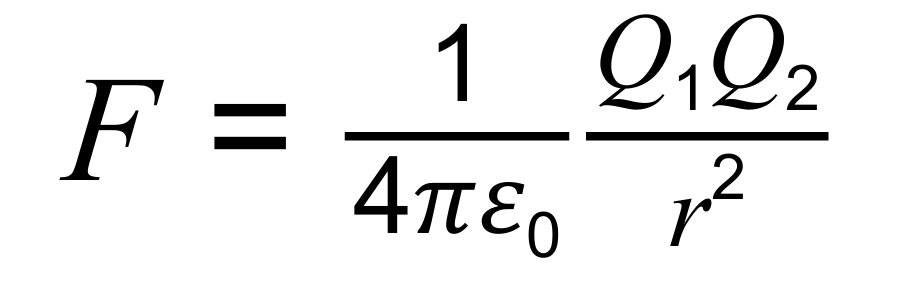
Coulomb’s Law
Force between point charges in a vacumm
Air can be treated as a vacuum
Charge may be considered to act at the centre of a charged _____
sphere

Electric Fields
A charged particle that experiences a constant force in a uniform field follows a ______ path
When a charge moves along an __________ surface, no work is done.
parabolic, equipotential
Electric and gravitational fields
g or E are the same everywhere in a uniform field, and so field lines are parallel and equally spaced.
The potential gives energy per unit mass or positive charge
The masses of subatomic particles are magnitudes smaller than their charges.
So the magnitude of electrostatic forces between subatomic particles is ________greater than the magnitude of gravitational forces
magnitudes
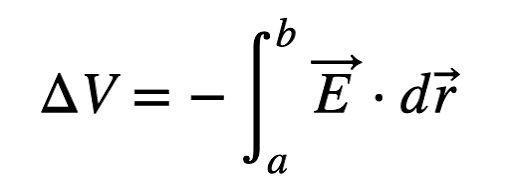
Electric potential
V is the work done per unit charge in taking a small positive test charge from ______ to a _______ point; so delta V is the difference between two points.
It is a ______
The sign indicates the sign of the charge
Electric potential has a value of zero at infinity
Around an isolated negative charge, electric potential has a _______ value
infinity, defined, scalar, negative

Capacitors
A capacitor is an electrical component which stores charge.
It is made up of two conducting parallel plates with a gap between them which may be separated by an insulating material known as a ______.
When the capacitor is connected to a source of power, opposite charges build up on the two _______ plates causing a uniform electric field to be formed.
Dielectrics have a property called _______ (epsilon), which is a measure of the ability to store an electric field in the material.
Relative permittivity is the _____ of the permittivity of the dielectric to the permittivity of ____ ______.
dielectric, parallel, permittivity, ratio, free space

Dielectrics
A dielectric is formed of ____ _______, which are molecules with one end which is positive and one which is negative.
Usually, when there is no electric field, these molecules are arranged in ______ directions
When an electric field is present these polar molecules will move and ____ themselves with the field.
The negative ends will be rotated towards the positive plate of the capacitor and the positive ends to the negative plate
Each molecule has its own electric field, the strength of which depends on the dielectric's ______, which will now oppose the field formed by the capacitor, reducing this field.
The potential difference required to charge the capacitor decreases as electric field strength _________.
This causes ________ to increase.
polar molecules, random, align, permittivity, decreases, capacitance
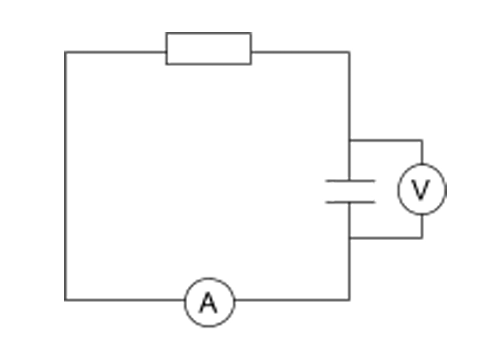
Capacitor Charging
When charging, _______ are pulled from the plate connected to the positive terminal of the power supply
Hence the plate nearest the ________ terminal is positively charged
They travel around the circuit and are pushed onto the plate connected to the negative terminal
Hence the plate nearest the negative terminal is negatively charged
As the negative charge builds up, fewer electrons are pushed onto the plate due to electrostatic repulsion from the electrons already on the plate
When no more electrons can be pushed onto the negative plate, the charging stops
electrons, positive

Capacitor Charging Graphs
At the start of charging, the current is large and gradually falls to zero as the electrons stop flowing through the circuit
The current decreases exponentially, so the rate at which the current decreases is proportional to the amount of current it has left
Since an equal but opposite charge builds up on each plate, the potential difference between the plates slowly increases until it is the ____ as that of the _____ _____
Similarly, the charge of the plates slowly increases until it is at its maximum charge defined by the capacitance of the capacitor
same, power supply
Discharging Capacitors
Capacitors are discharged through a resistor with no power supply present
The electrons now flow back from the negative plate to the positive plate until there are equal numbers on each plate and no _______ ______ between them
At the start of discharge, the current is large and gradually falls to zero
As a capacitor discharges, the current, p.d and charge all decrease exponentially
The graphs of the variation with time of current, p.d and charge are all identical and follow a pattern of exponential decay
potential difference
Time Constant
RC (resistance x capacitance) is known as the Time Constant of the circuit
Every RC seconds, the charge decreases by a factor 1/e (__%)
This exponential decay means that no matter how much charge is initially on the plates, the amount of time it takes for that charge to _____ is the same
The time for the charge to halve is ___ RC
After ___, the capacitor is 99% discharged
37, halve, 0.69, 5
Gravitational and Electric fields
Both have inverse-square force laws
Both represented through field lines
Both have equipotential surfaces
Masses always attract, but charges may attract or repel