Psych 202 Chapter 14 - Gallimore
 Call Kai
 Learn
 Practice Test
 Spaced Repetition
 Match
 Flashcards
 Knowt Play
1/80

There's no tags or description
Looks like no tags are added yet.
81 Terms
stress
perception and responses to events that are appraised as overwhelming or threatening

appraisal
evaluation or estimation of worth
primary appraisal
judgement about potential harm or threat to well-being
secondary appraisal
judgement of options available to cope and effectiveness of coping
what can determine different levels of stress?
the gap between the resources you have and the resources needed for a given situation; the larger this gap, the more stress one feels
eustress
good stress associated with positive feelings, optimal health, and performance
eustress and performance
stress can motivate desirable behaviors (i.e. studying for an exam) and as it increases from low to moderate, so does performance
optimal level
peak of curve separating eustress from distress; performance peaks here

distress region
when stress exceeds optimal level and becomes debilitating; performance declines
responses to stress
physiological (i.e. heart rate, headaches)
cognitive (i.e. difficulty concentrating)
behavioral (i.e. drinking, smoking)
health psychology
scientific study of how stress and other psychological factors impact health and how people respond to illness
who discovered the fight-or-flight response?
Walter Cannon
fight-or-flight response
now often referred to as fight-flight-freeze; sympathetic nervous system response to a significant stressor

homeostasis
maintaining physiological variables like blood pressure, respiration, digestion, and temperature to make sure they are at optimal level for survival
who is the world's foremost stress expert?
Hans Selye
what did Hans Selye discover?
prolonged negative stimulation (stressors) caused rats to show signs of adrenal enlargement, thymus and lymph node shrinkage, and stomach ulceration
general adaptation syndrome
body's nonspecific physiological response to stress; occurs in three parts
1) alarm reaction
2) stage of resistance
3) stage of exhaustion

(1) alarm reaction
body's immediate reaction to stress (fight-or-flight)
(2) stage of resistance
body has adapted to stressor, remains on alert, and prepared to respond like alarm reaction with less intensity
(3) stage of exhaustion
no longer able to adapt and resist; physical wear on body's tissues and organs; illness, disease, and other permanent body damage occurs in stage 3
The Office Fire Drill (Video)
Dwight creates a pretend fire scenario to evaluate how his coworkers respond after what they should have learned in his fire safety presentation; good example of primary and secondary appraisal with their initial responses to stress and how to cope with it

what two systems are involved with stress physiologically?
1) autonomic nervous system (the sympathetic and parasympathetic nervous system)
2) hypothalamic-pituitary-adrenal (HPA) axis
HPA axis
an alarm reaction triggers the sympathetic nervous system with the release of adrenaline, which activates the fight-or-flight response; simultaneously, the HPA axis activates and the hypothalamus tells pituitary gland to release ACTH; ACTH activates adrenal glands to secrete cortisol

ACTH
adrenal corticotropic hormone
effects of extended release of cortisol
physiologically
-PTSD, depression, etc
physically
-significantly weakened immune system, high blood pressure
chronic stressors
persist over an extended period of time (i.e. being homeless)
acute stressors
brief focal events that can be overwhelming after event (i.e. moving homes)
traumatic events
when person is exposed to actual or threatened death or serious injury
post-traumatic stress disorder (PTSD)
a chronic stress reaction characterized by experiences and behaviors that may include intrusive and painful memories of stressor event, jumpiness, persistent negative emotional stress, detachment from others, angry outbursts, avoidance of reminders of event

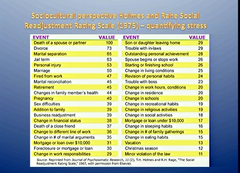
social readjustment rating scale (SRRS)
lists 43 life events that require readjustment; aims to measure the stress and adjustment included with these life events that add up over time and how much more likely one is at risk for illness due to these life experiences
daily hassles
minor irritations and annoyances that are part of daily life; can build up and leave us just as stressed as life changing events
job strain
a work situation that combines excessive job demands and workload with little discretion in decision making or job control
job burnout
general sense of emotional exhaustion and cynicism due to chronically stressful work conditions; has three dimensions...
1) exhaustion
2) depersonalization
3) diminished personal accomplishment
exhaustion stage
emotional resources are drained and you have nothing more to give

depersonalization stage
emotional detachment between worker and recipients of service
diminished personal accomplishment stage
evaluate own work negatively, dissatisfaction with job-related accomplishments, or feeling as though one failed to influence others' lives through work
Office Space Job Burnout (Video)
worker is being evaluated by his bosses to see how he is working on a day-to-day basis; he admits that he does little to no work because he is so exhausted and at this point is only trying to avoid punishment and criticism due to work burnout
Robert Sapolsky on Stress (Video)
a few weeks every year, Sapolsky shifts his lab focus to a safari reserve in East Africa to observe what animals do with their free-time; they are stressed out by their personal relationships!
psychophysiological disorders
physical disorders or diseases that are worsened by stress and emotional factors
types of psychophysiological disorders
cardiovascular (hypertension, coronary heart disease) gastrointestinal (ibs) respiratory (asthma, allergy) musculoskeletal (tension, headaches, back pain) skin (acne, eczema)
neuroticism
identified as a risk factor for chronic health problems and mortality
immune system
major pathways that stress and emotional factors can take leading to illness and disease; body's surveillance system with variety of structures that protects body from invaders
psychoneuroimmunology
psychological factors influence immune system and functioning; a study in 1981 looking at brief and chronic stressor's effect on the immune system - stress hormones released during HPA axis activation adversely impact immune function!
who does brief and chronic stress effect the immune system?
inhibits production of lymphocytes which are important to immune response
telomeres
proteins that protect the ends of chromosomes; shortened telomeres inhibit cell division and lead to more rapid aging
telomeres and childhood trauma
telomeres are shorter in people with more childhood trauma
cardiovascular disorders
focus of psychophysiological disorders because the heart is central to stress response
heart disease
leading cause of death in the developed world and in U.S; 1 in 3 U.S. deaths is due to heart disease
risk factors for heart disease
social (aging, income) behavioral (unhealthy diet, drug/alcohol use) obesity, diabetes, hypertension
angina
chest pain, symptoms of heart disease
Type A personality
aggressive and chronic struggle to achieve more, excessive competitive drive, chronic stress for time urgency, impatience, hostility towards others
Type B personality
more relaxed and laid-back
heart disease and personality
Type As are more likely to have heart disease than Type Bs
social strain
created by angry and hostile moods that lay foundation for disease-promoting cardiovascular responses
negative affectivity
tendency to experience distressed emotional states involving anger, contempt, disgust, guilt, fear, nervousness
what is heart disease linked to?
negative affectivity and depression
coping
mental and behavioral efforts to deal with stress
problem-focused coping
manage or alter the problem causing stress
emotional-focused coping
efforts to change or reduce negative emotions from stress; avoiding, minimizing, or distancing from prbolem; positive comparisons with others; seeing something positive in a negative event
what coping is used with controllable stressors?
problem-focused coping
what coping is used with uncontrollable stressors?
emotion-focused coping
what does stress reaction depend upon?
our perceived control; our beliefs about personal capacity to exert influence over and shape outcomes
Seligman experiment
dogs placed in chamber and received inescapable electric shock; demonstrated learned helplessness
learned helplessness
belief that one is powerless to do anything about a noxious stimulation
social support
strong interpersonal relationships with close, caring individuals that help during times of distress, sorrow, and fear; includes advice, guidance, encouragement, acceptance, emotional comfort, and tangible assistance such as financial help
low levels of social support
indicates greater risk of mortality
higher levels of social support
indicates better survival rates following breast cancer and infectious diseases, HIV, and decreased common cold!
physical effects of racism
targets of racism are linked with increased depression, lowered self-esteem, hypertension, and cardiovascular disease
relaxation response technique
combined relaxation with transcendental meditation, has four components
1) sit
2) quiet w/ eyes closed
3) repeat mantra
4) passively allow mind to focus on pleasant thoughts
biofeedback
uses electronic equipment to accurately measure a person's neuromuscular and autonomic activity; used successfully with tension headaches, high blood pressure, asthma, phobias
happiness
an enduring state of mind consisting of joy, contentment, and other positive emotions as well as the sense that one's life has meaning and value
three elements of happiness
1) the pleasant life
2) the good life
3) the meaningful life
the pleasant life
attainment of day-to-day pleasures that add fun, joy, and excitement to life
the good life
identifying unique skills and abilities and engaging these talents to enrich our lives
the meaningful life
deep sense of fulfillment that comes from using talents in service of greater good
affective forecasting
predicting intensity and duration of future emotions
positive psychology
science of happiness, seeks to identify and promote qualities that lead to greater fulfillment, focus on people's strengths and what helps individuals to lead happy and content lives
UW-Madison Center for Investigating Healthy Minds
center examines wide range of ideas such as
-kindness curriculum
-neural correlates of prosocial behavior
-psychological effects of Tai Chi training
-digital games to foster prosocial behavior in kids
-effectiveness of yoga and breathing in reducing PTSD symptoms
positive affect
pleasurable engagement with environment such as happiness or joy
optimism
tendency to look on the bright side of things
flow state
particular experiences that are so engaging and engrossing it becomes worth doing for its own sake