Synaptic Plasticity pt. 1
 Call Kai
 Learn
 Practice Test
 Spaced Repetition
 Match
 Flashcards
 Knowt Play
1/53

There's no tags or description
Looks like no tags are added yet.
54 Terms
neuroplasticity
cellular mechanism of learning and memory
changes in strength of preexisting synaptic connections, lasting from seconds to years
growth of new synapses, paring away of old ones
not all strictly synaptic: changes in intrinsic properties of neurons also contribute
advantages of using aplysia
large cells, fewer cells and simpler system, ganglia easy to maintain in vitro
Gill withdrawal reflex
Blow H20 you get a flap

habituation
used to the stimulus
most animals learn to ignore harmless stimuli
sensitization
a shock or other noxious stimuli leads to an enhanced response
habituation and sensitization are examples of
non associative learning
associative learning
classical conditioning
operant conditioning
non- associative learning
habituation, sensitization (gill withdrawal), and dishabituation
classical conditioning experiment
gill withdrawal
operant conditioning experiment
feeding behavior
siphon tap
leads to gil withdrawal
sensitization affects
behavior
synaptic potentials affects
facilitation
behavior deals with
sensitization
habituation
conditioning/learning/memory
synapses deals with
facilitation
depression
plasticity
facilitation affects synapses in two ways
more spikes or each spike gives a bigger EPSP
what causes facilitation in aplysia
serotonin
what does serotonin do
bath application of 5HT causes increase in excitability and larger individual EPSPs
Blocking 5HT blocks behavioral sensitization and synaptic facilitation
Aplysia interneurons release 5HT following tail shock
5HT and cAMP
applying serotonin will spike broadening, cAMP and 5HT induce the same effect. 5HT works through cAMP via activation of PKA
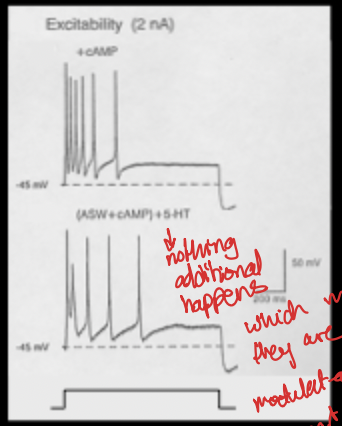
how does PKA increase excitability
since it is current clamp, current is constant. It increases Rinput because more channels are closing (K2P) which increases delta V in the RC charging curve
also PKA helps phosphorylate Ks to increase excitability.
Removing IKs from two types of IV plots results in
only Iks= only change in slope
Take away IKs from graph where there is a leak current then x intercept and slope changes

increase EPSP from tap
SN response causes increase sensitivity and an increase in EPSP in MN
Pre (SN)
changes in NT release
effects
more Ca2+ channels
modify SNAREs
more vesicles
post (MN)
changes in sensitivity to transmitter
increased receptors
decreased gleak
quantal analysis presynaptic facilitation graphs

quantal analysis post synaptic facilitation
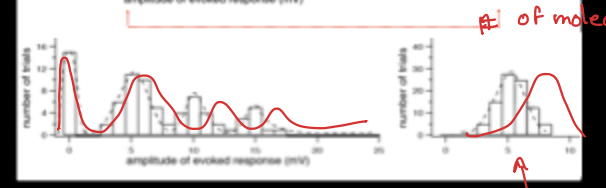
quantal analysis presynaptic depression

quantal analysis postsynaptic depression

increase in MN in EPSP is a presynaptic mechanism
this is because there is a change in the amount of NT that increases EPSP. It makes it appear as though it is a postsynaptic mechanism

spike broadening and 5HT
5HT causes KV2 to close which leads to greater AP and bigger Ca2+ influx and increase NT.

5HT and PLC pathway
5HT binds, activation of G protein, which activates PLC which causes IP3 and DAG. IP3 increases Ca2+ and DAG activates PKC which lowers KV2 levels.
5ht channel models

short term and long term memory

puff
conditioned stimulus
shock
unconditioned stimulus
paired stimuli leads to what
super conditioning
CS and then US circuit
the 5ht nueron is has a CB1 receptor in the cerebral ganglia
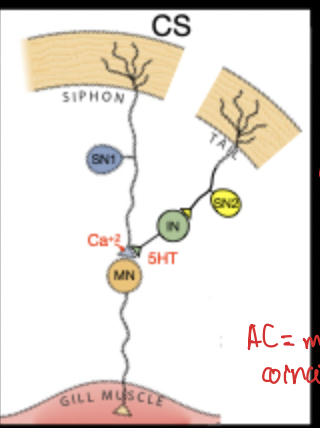
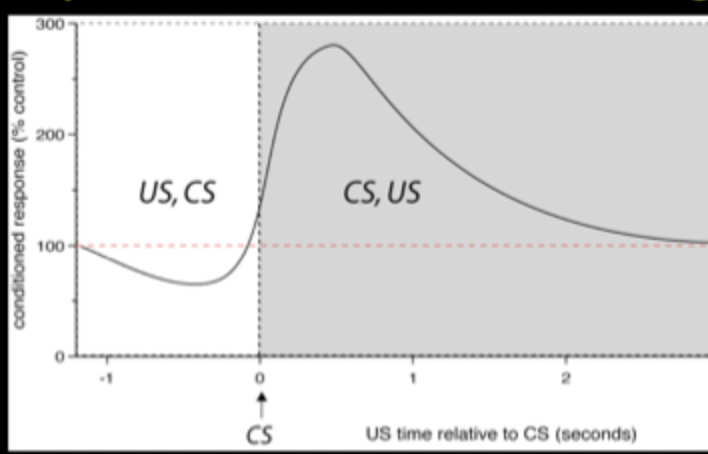
coincidence detection by AC type 1
5HT activates cAMP so does Ca2+ but when Ca2+ comes before 5HT we see an increase in cAMP

timing affects
desentization and sensitization
5HT receptor antagonists
affects short term memory
PKA inhibitors
affects short term memory
transcription inhibitors like actinomycin D
affect long term memory
protein synthesis inhibitors like ansiomycin
affect long term memory
reduction in CREB activity
affect long term memory
CREB
cAMP response element binding protein
CRE
cAMP response element
sequence found upstream of genes transcribed in response to a spike in cAMP
Phosphorylation of CREB1
turns on CRE containing genes
What do CREB driven genes do
stabilize short term changes
facilitate formation of new synapses
Add new Ca2+ channels into SN
Increase persistent activation of PKA
Add new AMPA type receptors to MN
facilitation during non association sensitization
presynaptic only
sensory neurons fire more spikes and each spike releases more quanta
classical conditioning
has both pre and postsynaptic elements with NMDA dependent component resulting in new AMPA type receptors
non associative vs associative

operant conditioning of feeding
food was enclosed in netting so the aplsya couldn’t get food , failure to swallow suppresses subsequent feeding of the same food in second session,but other foods are unaffected.
this may work by inhibiting parts of their nervous system through NO.
buccal ganglia
contains the central pattern generator sending out rhythmic drive to the muscles during feeding. turns feeding on and off
ring ganglia
cerebral ganglia or the head for the apylsa