Civ Arts Exam #2
 Call Kai
 Learn
 Practice Test
 Spaced Repetition
 Match
 Flashcards
 Knowt Play
1/49

Earn XP
Description and Tags
this is not gonna go well
50 Terms
Ave Maria
Time Period
What is it Portraying/Purpose & Mood
Instrumentation
Composer
Renaissance
Sacred latin motet praising the Virgin Mary. Serene, reverent, pure, prayerful,. Recounts key events in Mary’s life and ends with a personal prayer asking her to remember the singers
Written for 4 vocal parts
Josquin des Prez
La Primavera (Spring)
Time Period
Programatic?
What is it Portraying/Purpose & Mood
Instrumentation
Form(s)
Composer
Baroque
Yes; Programmatic concerto-instrumental music intended to portray specific story, scene, or poem
accompanied by Italian sonnet about springtime. Joyful, bright, energetic, festive. Arrival of spring. Movement 1 of 3 movements.
Solo Violin, String Orchestra, and Harpsichord
Concerto Grosso (small group of soloists contrasts from full orchestra) & Ritornello Form (catchy main orchestral refrain)
Antonio Vivaldi

Fugue in G Minor
Time Period
Programatic?
What is it Portraying/Purpose & Mood
Instrumentation
Form(s)
Composer
Baroque
No
written as showcase for organ performance and counterpoint mastery during Bach’s time as an organist.
Solo Organ
Fugue Structure & Polyphonic
Johann Sebastian Bach
The Joke
Time Period
What is it Portraying/Purpose & Mood
Instrumentation
Form
Composer
Neoclassicism
playful musical trick; deceptive false endings
String Quartet (2 violins, viola, cello)
Joseph Haydn
Symphony No. 40 in G Minor, K. 550 - First Movement
Time Period
What is it Portraying/Purpose & Mood
Instrumentation
Form(s)
Composer
Classical
Orchestral concert piece written during a period of intense personal and financial hardship for Mozart. Tragic, urgent, dramatic, emotional tension. 3 note rhythmic pulse opening.
Strings, Flute, Oboes, Clarinets, Bassoons, and French Horns (NO TRUMPETS or TIMPANI)
Sonata Allegro Form
Wolfgang Amadeus Mozart

St. Peter’s Basilica & Square
Artist/Sculptor/Architect
Time Period
Type of Art
Other Info
Square & Colonnade: Bernini; Basilica: Michelangelo, Maderno, Bramante, etc.
Baroque
elliptical, not-parallel
Colonnade: doric, made of travertine (1.5 cubic ft of it), 4 rows of columns, lined with statues of saints (women and men). The square itself encloses visitors in the maternal arms of the church (church up to this point had been known only for collecting taxes, which is why many left)

St. Peter’s Egyptian Obelisk
Artist/Sculptor/Architect
Time Period
Type of Art
Other Info
3rd century Egyptian emperor
Baroque
Monument/Egyptian Obelisk
inscribed at the bottom with info about popes, once stood in Circus Maximus, 3 different coats of arms of popes inscribed on it, compass rose and sundial placed on ground to mark time & solstices
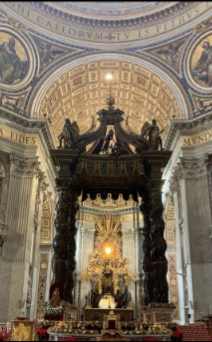
St. Peter’s Baldacchino
Artist/Sculptor/Architect
Time Period
Type of Art
Other Info
Bernini
Baroque
Bronze Sculpture
highlights where altar was (whole basilica was so ornate, this was needed to show visitors where altar was), ornate, 95 ft. high, guilt bronze, Solominic columns (spiraled), cornice curves inward, life-sized angels on top, top looks like draped cloth

Altar of the Chair of St. Peter
Artist/Sculptor/Architect
Time Period
Type of Art
Other Info
Bernini
Baroque
Gilt Bronze Sculpture
the chair itself (original relic) is inside the sculpture, 4 gigantic bronze statues representing 2 Greek and 2 Latin doctors of the church, small window above altar to allow light to hit bronze and create “rays”, dove represents holy spirit, divided into 12 sections for 12 disciples.
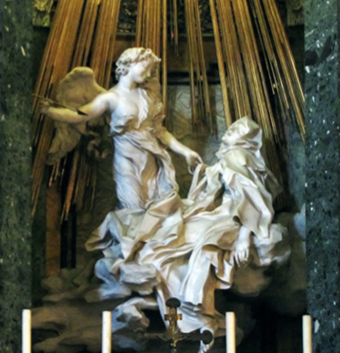
Ecstasy of Saint Teresa
Artist/Sculptor/Architect
Time Period
Type of Art
Other Info
Bernini
Baroque
White Marble Sculpture
artist has created an environment where light source shines on rays. Teresa is being stabbed in the heart by an angel with a golden spear.

Theater Box with Members of Conora Family
placed next to the Ecstasy of Saint Teresa Statue adds drama and points to Bernini’s theatrical background, while paying homage to the family that the chapel was made in honor of.

Apollo and Daphne
Artist/Sculptor/Architect
Time Period
Type of Art
Other Info
Bernini
Baroque
Marble Sculpture
emotional expression, transformation. Cupid shot the Golden arrow into Apollo, making him love the next woman he saw. Cupid shot the Lead arrow into Daphne, drying up love and filling Daphne with revulsion toward romance. She couldn’t excape Apollo so she asked her river-god father to turn her into a tree so as to not be defiled by Apollo’s touch. She then transformed, captured in the sculpture. themes of close pursuit and fear, fluid movement, drama, and transformation.
Calling of St. Matthew
Artist/Sculptor/Architect
Time Period
Type of Art
Other Info
WHAT TECHNIQUE DOES THIS PAINTING USE??
Caravaggio
Baroque
Oil on canvas
light & darkness, modern clothing (not biblical times), Jesus inviting Matthew (tax collector) to join him as a disciple.
Chiaroscuro: the strong contrast between light and dark across a composition

Caravaggio
Artist/Sculptor/Architect
Time Period
Type of Art
Other Info
Simon Vouet (or Caravaggio? - aka Michelangelo Merisi of Caravaggio)
Baroque
Oil on canvas self-portrait
most of Caravaggio’s pieces were biblical scenes. he was known for having weapons, brawling, getting arrested, committing murder, and drinking. his paintings didn’t make sense of his lifestyle.

Hall of Mirrors
Artist/Sculptor/Architect
Time Period
Type of Art
Other Info
Commissioner: King Luois XIV; Architect: Jules Hardouin-Mansart; Painter: Charles Le Brun
Baroque
French Baroque Architecture (highly decorative but less severe)
one of the grandest rooms in the world. 34 ft wide, 250 ft long. room on each side. originally built as an open door terrace overlooking the gardens before it was enclosed to create the central gallery. connects the King’s Grand Apartment on one end to the Queen’s Grand apartment on the other.
large arched windows line on side of hall, casting natural light onto mirrors on opposite side
chandeliers and decor were elaborate, all reflecting light
mirrors were made exclusively in Venice, but the king wanted everything in Versailles to come from France so he enticed Italy to give up its secrets

The War Room
room in Hall of Mirrors, Versailles
Connects to King’s Grand Apartment
oil on canvas
features allegorical and symbolic artwork glorifying French military victories led by the King

The Peace Room
room branching off of the Hall of Mirrors, Versailles
marble panels, gilded bronze, etc.
designed with motifs representing harmony, culture, and peace (musical instruments and olive branches)

gilded bronze relief mounted on marble panels placed on wall of the Peace Room off Hall of Mirrors, Versailles
features a musical instrument, symbolizing peace and harmony
Head is Apollo’s (sun god) to represent light, order, and harmony

French Royal Coat of Arms: blue oval in the middle contains 3 golden fleur-de-lis, the official symbol of the French monarchy
angels & cherubs frame the royal coat of arms with garlands
oil paintings in surrounding arches depict peace, music, and the flourishing of the arts
Golden Lyre (bottom): a relief continuing the theme of peace
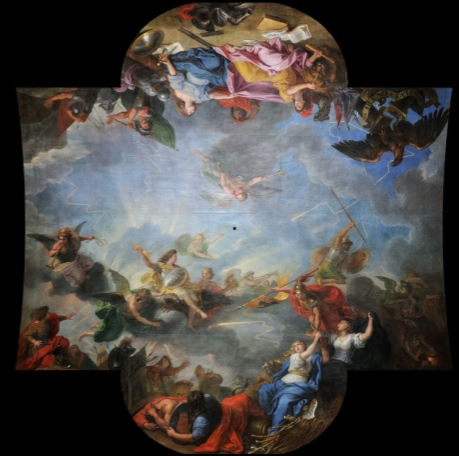
Hall of Mirrors Ceiling Paintings: “Capture of the City and Citadel of Gand in Six Days”
Artist/Sculptor/Architect
Time Period
Type of Art
Other Info
Charles Le Brun
Baroque
Oil painting on canvas
illustrates French political success. looks upside down until on the ceiling.

in Hall of Mirrors
Sun God head = who King Luois XIV thought he was (appointed by God)
King Louis’s motto: Nec Pluribus Impar = “Above all”
King Luois XIV tried converting France to Catholicism. 2000 churches destroyed, forced Protestants to leave. Baptized children Catholic.

“Order Restored in the Kingdom’s Finances” in Hall of Mirrors
Artist/Sculptor/Architect
Time Period
Type of Art
Other Info
Charles Le Brun
Baroque
oil on canvas
pet represents wealth. Bottom Right Woman: accounting/bookkeeping holding a ledger. Bottom Left Woman: France’s wealth. Center Left Woman: Minerva (armored goddess) shielding the kingdom and guiding the King’s financial decisions

“Peace of Aix-la-Chapelle” in the Hall of Mirrors
Artist/Sculptor/Architect
Time Period
Type of Art
Other Info
Charles Le Brun
Baroque
oil on canvas
Luois is in the center bc he put himself in religious art (corny ahh). Celebrates Treaty of Aix-la-Chapelle, ending the War of Devolution between France and Spain. Copying Greco-Roman art.

Self-Portrait with Maulstick Rembrandt
Artist/Sculptor/Architect
Time Period
Type of Art
Other Info
Rembrandt
Baroque
oil on canvas - “brush strokes”
circles in back might be maps on the wall? not signed = he may not have been done with it? holding a stick because if you’re painting something very detailed you have to put a stick on it to steady your hand.
white cap: painter’s cap proving it’s a self-portrait
red garment: focal point symbolizing richness
furlined robe: status, prestige, dignity - but he was bankrupt at the time
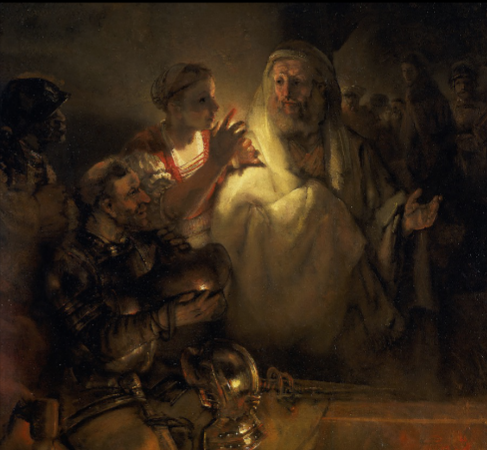
The Denial of St. Peter
Artist/Sculptor/Architect
Time Period
Type of Art
Other Info
Rembrandt
Baroque
Oil on canvas - brush strokes (thick broad impasto)
chiaroscuro (use of single candle to illuminate Peter’s expression of vulnerability, hesitation, and guilt).

Young Woman with a Water Pitcher
Artist/Sculptor/Architect
Time Period
Type of Art
Other Info
Johannes Vermeer
baroque
oil on canvas
depicts domestic virtue, cleanliness, and tranquility
water pitcher: purity & cleanliness
Jewlery Box & Pearls: worldly vanities
Map of 17 Provinces: the netherlands, reflecting Dutch Pride

Still Life: An Allegory of the Vanities of Human Life
Artist/Sculptor/Architect
Time Period
Type of Art
Other Info
Harmen Steenwyck
Baroque
Oil on oak
reminder of mortality. books represent human knowledge, arts, and intellectual pleasures. Japanese sword and Pottery represent power, ealth, strength, and status. Oil lamp represents brief spark of human life. Seashell represents venity. Pocket Watch represents passing time.

Salon de la Princesse, Hotel de Soubise
Artist/Sculptor/Architect
Time Period
Type of Art
Other Info
Germain Boffrand
Rococo
Architecture
carved wood paneling, sky-blue ceiling, ovate, large mirrors, gold trim

Pilgrimage to Cythera
Artist/Sculptor/Architect
Time Period
Type of Art
Other Info
Jean-Antoine Watteau
Rococo
oil on canvas
birthplace of Venus where 2 aristocratic lovers are going to. fete galante = new painting genre invented by Watteau. Lady looking back is centerpiece as richest and most beautiful. goes through 4 stages of love between the couple.
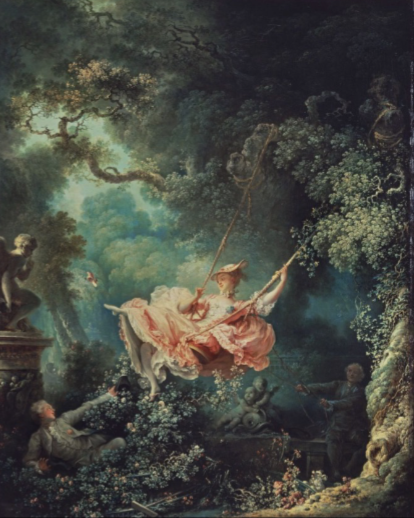
The Swing
Artist/Sculptor/Architect
Time Period
Type of Art
Other Info
Jean-Honore Fragonard
Rococo
Oil on canvas
kicked off shoe represents her not being bound to any lover. older man in the background (husband?) pulls ropes of swing unaware her lover is looking up her dress. Cupid is signaling secrecy. Twin cherubs look alarmed. This was Fragonard’s breakthrough to make some money.

Oath of Horatii
Artist/Sculptor/Architect
Time Period
Type of Art
Other Info
Jacques-Louis David
Neoclassic
oil on canvas
3 brothers of the Horatii family salute their father before going to fight the 3 Curiatti brothers to end the Roman-Alba Longa war. the women are weeping because they are sisters and wives of both families. brighter, detailed, roman architecture, geometric pattern on floor, very symmetrical. political message: loyalty above all else. clothing and architecture = roman (not of the time). message = of the time.

Death of Marat
Artist/Sculptor/Architect
Time Period
Type of Art
Other Info
Jacques-Louis David
Neoclassic
Oil on canvas
Marat was a french revolutionary, scientist, and political journalist who suffered from a severe skin condition and spent hours soaking in a medicinal bath to soothe it. Assassinated by a woman who stabbed him. David made marat appear as a martyr for the revolution by placing him in Jesus’ pose in the Pieta.
bathtub = sarcophagus (darkened, shallow background)
prominent wound (single stab)
“Given that I am unhappy, I have the right to your help” (framed Marat as a compassionate public servant who was betrayed)
secular figure presented as a martyr and religious figure

Napolean Crossing the Alps
Artist/Sculptor/Architect
Time Period
Type of Art
Other Info
Jacques-Louis David
Neoclassic
oil on canvas
napolean’s sitting up on horse while it’s rearing up on a steep cliff (completely unrealistic). not looking at trail or where his hand is pointed (as if he can determine where his troops will go without fear that destiny will present dangers to them). calm expression. Napolean fills entire space, making him appear larger than life.

Nicolo Paganini
Artist/Sculptor/Architect
Time Period
Type of Art
Other Info
Jean Auguste Dominique Ingres (David’s student)
Neoclassic
Graphite and chalk on tracing paper
Paganini was a violinist that wrote some music. he’s holding a violin and bow. lines are supoerior to color to Ingres.

string quartet: 1st violin, 2nd violin, viola, cello
painter is anonymous
Franz Joseph Haydn was considered the father of the string quartet

La Madaleine
looks like parthenon
high relief sculptures
greek model
corinthian columns
horizontal dentil molding & entablature
construction began w intention of it becoming a church, but during french rev., religion was banned and work halted. alternate uses were proposed (bank, library, train station). Napoleon decided on transforming it into a civic monument to his soldiers, but following his downfall, King Louis XVIII finished it as a catholic church.
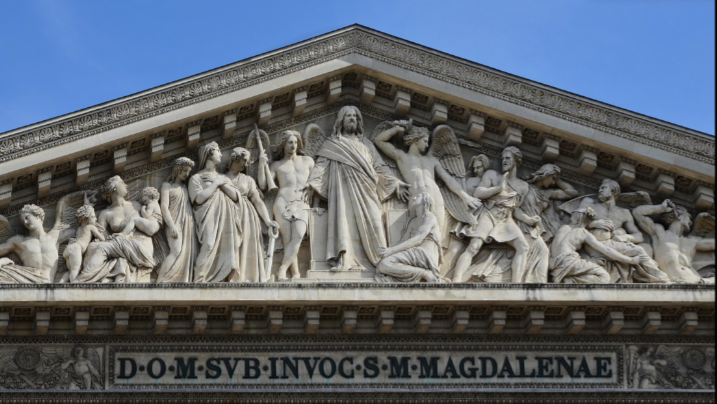
The Last Judgement
Artist/Sculptor/Architect
Time Period
Type of Art
Other Info
Philippe Joseph Henri Lemaire
Neoclassic
Pediment high relief sculptures
saints to the left of Jesus, Mary magdeline to his right, pleading for whose who did not make it. those hell bound are to the right of Mary.
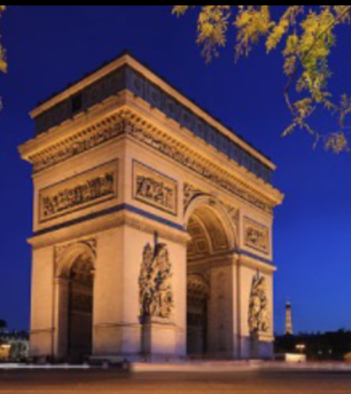
Arc de Triomphe
Artist/Sculptor/Architect
Time Period
Type of Art
Other Info
N.A.
Neoclassic
Architecture
beneath it are tombs of soldiers of WWI. modeled after Arc of Titus. Holds elements of ancient roman architecture with roman decorative details (allegorical figures from Roman Mythology)
Polyphony/Polyphonic
Monophony/Monophonic
Homophony/Homophonic
describes a section or piece of music with more than one independent melodic voice or line
a type of music that has only one part (voice) performed by one or more persons
a section or piece of music in which the lines or voices move in the same rhythym simultaneously
Concerto Grosso
Consort
Chordal
a work from Baroque orchestra in which the main body of the orchestra plays a recurring theme (ritornello) and soloist(s) play an intervening unrepeated section (episode); the form includes alternation between full orchestra and soloist(s), and also alternation of the main theme with new material.
a group of (generally 4) musical instruments that are basically the same but are of different sizes
the vertical structure of music creating chords (identifiable sonic structures), as opposed to the linear structure of music creating melodies
Fugue
Episode
Equal temperament
Overtones
a type of polyphonic composition or compositional technique based on a principal theme (subject) and melodic lines (counterpart) that imitate the principal theme
(1) in a fuguem a section of music in which the fugue subject is absent. (2) the part of concerto grosso form in which the ritornello is absent.
a tempered (altered, not naturally occurring) system of pitches based on mathematical equidistance of pitch (not based solely on overtones)
higher tones that are part of a lower pitch, sometimes called partials
Harpsichord
Harmony
Melody
Organ
a forerunner of the modern piano in which the strings were plucked by a mechanism connected to the keyboard; with the exception of the keyboard feature, it is more akin to a lute than to an organ.
the chordal part of music; the vertical structure of the sound when more than one pitch sounds together
the linear structure of music found in an individual part; the tune
a wind/keyboard instrument made up of many metal (and some wood) pipes that are supplied with air from a bellows; the type existed before the Baroque, but in the Baroque the organ became a large build-in instrument and often a focus in the interior design of churches, as well as a staple in church music.
Ritornello
Tablature
Timbre
Tutti
the repeated, recurring theme of a Baroque concerto (concerto grosso) functioning in a way similar to a refrain
a type of musical notation for instrumental music that shows the placement of the fingers on the instrument; a present-day system may be seen on guitar charts
the tonal quality of different types of instruments
the term means “all” and is used to designate the sections of the concerto grosso that include all of the instruments (the full orchestra)
Solo/Solist
Standardized Tuning
music that has only one person playing or singing the melody; can also be used to indicate that only one person is playing on each part, as in the Vivaldi concerto grosso.
the adoption of specific pitch (frequency of sound waves) such as A = 440 Hz
Sonata-allegro form
Exposition
Development
Recapitulation
standard 1st-movement form: exposition-development-recapitulation
first section of sonata form in which contrasting themes are introduced, ending in new key; repeated in most classic-period works
part of sonata form between the exposition and recapitulation in which heme or fragments of themes are developed; modulates to various keys; may contain new material
the last section of a movement in sonata form that restates the themes of expositions, but this time stays in the original key
Symphony
Sonata
String Quartet
multi-movement work for orchestra, emerging in the Classic era. The first movement is in sonata form and the last movement is often in rondo form. The order of the movements of the symphony are arranged Fast, Slow, Minuet/Scherzo, Fast.
a multimovement work for a solo instrument that follows the basic structure of the symphony
two violins, viola, and cello; multimovement works for these four instruments
Orchestra
Dynamics
Tempo
a relatively large ensemble with a full string section; generally includes wind instruments also
directions (usually in Italian) for volume (piano, forte, crescendo, diminuendo, etc.)
the pace of the underlying beat; how fast or slow the music is played
Themes in Baroque Styled Art
extravagance
grandeur
ornate detail
dynamic movement
drama, intense emotion
curving forms
light and shadow (chiaroscuro)
Themes in Rococo Styled Art
a category of late Baroque style
features white, gilded, and pastel colors
highly ornate paintings, architecture and decoration
theatrical, drmatic style
focus on pleasant scenes (nature, outdoors, etc.)
forms with asymmetry, scrolling curves, sculpted moldings
use of trompe-loeil frescoes to create illusions of motion and drama
Themes in Neoclassicism Art
Age of Enlightenment focused on the mind (vs. Baroque which was emotions)
time of Revolutions (American/French/Industrial)
Spirit of Questioning - science, church, philosophy
New discoveries at Pompeii/Herculaneum
fascination with ancient Greece and Rome
Elgin Marbles (relief sculptures from Parthenon) brought to England
“Grand Tour” (upper classes traveled to Italy and Greece)
Published works about ancient Greek and Roman art/culture were best-sellers