Diploma of Nursing: Physical Health Status KBA 3
 Call Kai
 Learn
 Practice Test
 Spaced Repetition
 Match
 Flashcards
 Knowt Play
1/61

Earn XP
Description and Tags
Immune system, Lymphatic system, special senses and the Nervous system
62 Terms

1
Dendrites

2
Nucleus
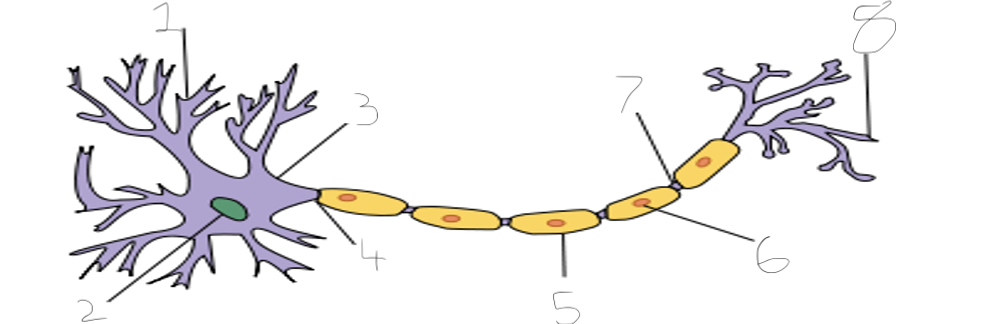
3
Soma


5
Myelin Sheath

6
Axon

7
Node of Ranvier
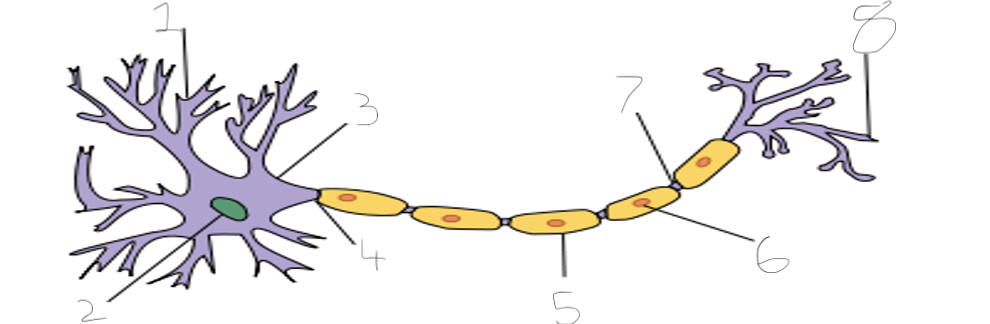
8
Axon terminals
Part of neuron the receives the message
Dendrites
The nucleus is in the..
Soma
The long part that carries impulses away from the cell body is the…
Axon
The gap between neurons is the..
Synapse
what is CVA and the symptoms
Cerebrovascular accident (stroke) is where the blood supply to the brain is interrupted or a blood vessel has burst leaving the brain with no oxygen which leads to brain damage
Symptoms include, facial drooping, impaired vision/speech, dizziness
Describe Dementia
A condition that affects the brain and causes a decrease in memory, thinking, communication and the ability to perform adls
How do the neurological and cardiovascular system interact
Neuro controls HR and BP by sending signals to the heart and blood vessels, the CV system supplies the brain and nerves oxygen and nutrients through the blood allowing them to function properly
Vision
Eyes- detects colour, light, shapes and movement so that we can see
Hearing
Ears- detects sounds and allows us to hear
balance
inner ear- maintains balance, awareness of head positioning and posture
smell
nose-detects odours in the air
taste
tongue (tastebuds) detects flavours such as sweet, sour, salty and bitter
how does special systems interact with the neurological system
Senses detects info such as sight, taste, smell, sound and balance and sends that info to the brain through nerves, the neurological system processes this information and allows the body to respond appropriately

1
Pineal gland

2
Thyroid gland

3
adrenal glands
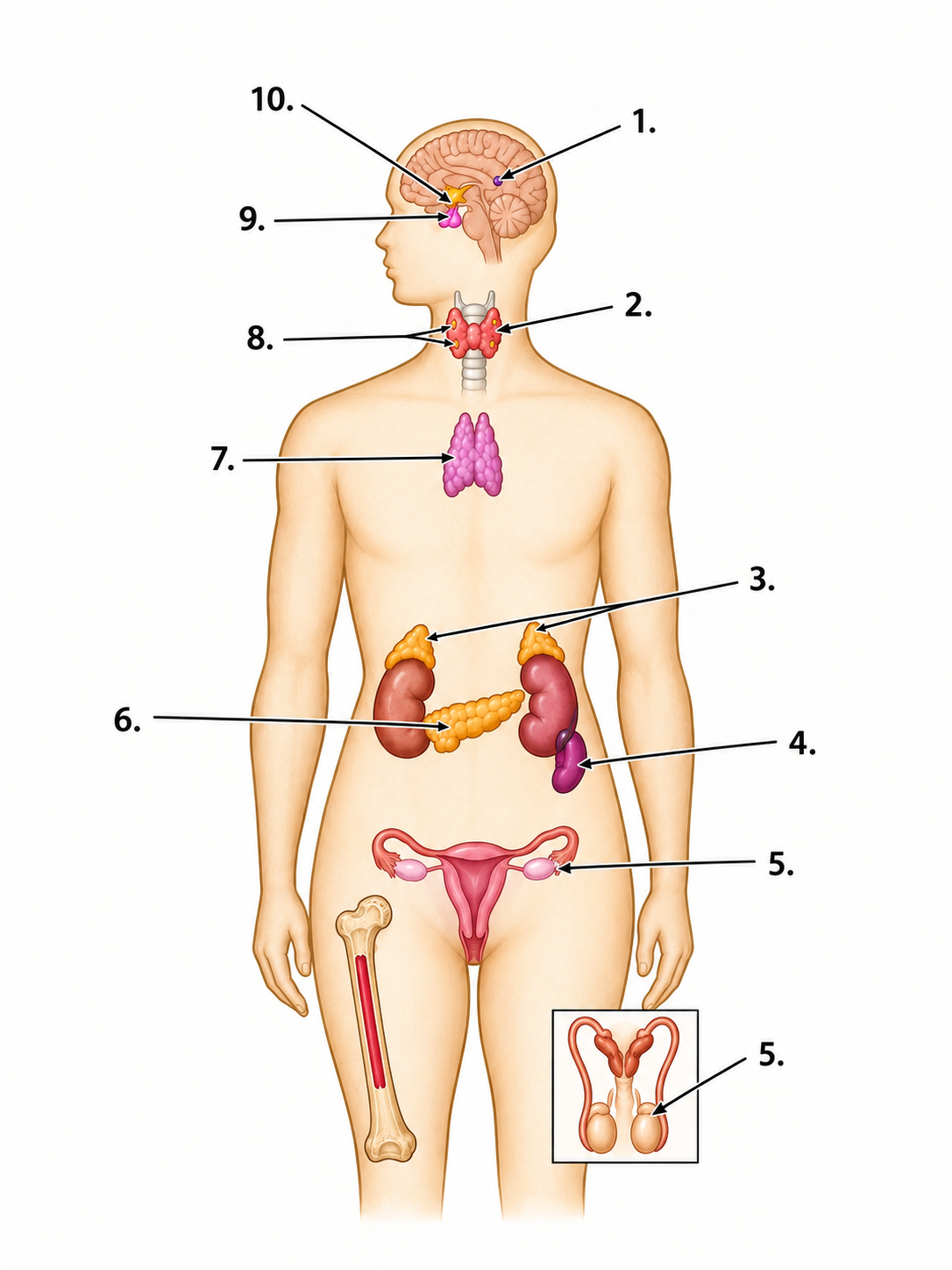
4
ovaries

5
testes

6
pancreas

7
thymus gland

8
parathyroid gland

9
pituitary gland

10
hypothalamus
Pituitary gland
controls growth and regulates other glands-growth hormone and prolactin
Thyroid
Regulates metabolism, energy use and body temperature-thyroxine, triiodothyronine and calcitonin
adrenal glands
helps the body respond to stress and regulates BP- adrenaline, cortisol and aldosterone
pancreas
regulates BGL- insulin and glucagon
ovaries
supports female reproductive system and regulates the menstrual cycle- oestrogen and progesterone
explain and the endocrine and the digestive system interact
the digestive system breaks down carbs from food into glucose and the the endocrine regulates BGL using insulin and glucagon to maintain a normal BGL
Lymph
lymph is a clear fluid that contains WBC and helps the body fight of infections, It forms when excess fluid leaks out of the blood capillaries into the surrounding tissues, when the fluid reaches the lymphatic vessels it becomes lymph
main purpose of the immune system
the protect the body against infection and diseases

1
tonsils and adenoids

2
thymus

3
axillary nodes

4
spleen

5
peyter’s patches

6
appendix

7
bone marrow

8
inguinal nodes
two functions of the lymphatic system
fluid balance and immune defence
how does the lymphatic and cardiovascular system interact
the LS collects excess fluid from body tissues and returns it to the blood stream, helping maintain fluid balance. it works with the CVS to support blood circulation and prevent fluid build up in the tissues
WBC types
Neutrophils
Lymphocytes
monocytes
basophils
eosinophils
difference between specific and non-specific defence mechanisms
NS- bodies first line of defence against all pathogens
SD- targets particular pathogens using the immune system
role of B cells
produces antibodies that recognise and help destroy specific pathogens, some B-cells become memory cells allowing the immune system to respond faster if the same pathogen enters the body again r
role of t cells
help coordinate the immune response and destroy infected or abnormal cells, some t-cells become memory cells
antibodies
antibodies are proteins produced by B-cells that recognise and bind to specific antigens on pathogens, they help the immune system to destroy pathogens and prevent infections from spreading
ovaries
Produces eggs and releases the hormones oestrogen and progesterone which regulates the menstrual cycle and supports pregnancy
uterus
A muscular organ where a fertilised egg is implanted and develops into a baby during pregnancy, its muscles contracts during childbirth to help push the baby out
testes
Produce sperm and testosterone which supports sperm production and male reproductive development
prostate
Produces fluid that forms part of semen and helps protect and support sperm
vagina
A muscular canal that connects the cervix to the outside of the body, it allows menstrual blood to leave the body, receives the penis during intercourse and acts as the birth canal during childbirth
penis
Transfers semen to the female reproductive tract during intercourse and allows urine to leave the body through the urethra
main stages of a period
Menstruation- the uterus sheds its lining, causing blood and tissue to leave the body through the vagina
Follicular phase- a follicle in the ovary develops an egg, while the uterine lignin begins to thicken in preparation for possible pregnancy
Ovulation- the ovary releases a mature egg which travels to the fallopian tube
Luteal phase- the uterine lining is maintained in preparation for pregnancy, if fertilisation does not occur, hormone levels drop and the cycle begins again with menstruation
how can emotional factors affect physical health and identify 2 systems that can be affected
Mental and emotional factors such as stress, anxiety and depression can affect physical health by causing changes in hormone levels, sleep, appetite and energy levels
Cardiovascular- stress and anxiety can increase HR and BP
Immune system- long-term stress can weaken immune responses making the body more vulnerable to infections