Erikson's Theory
 Call Kai
 Learn
 Practice Test
 Spaced Repetition
 Match
 Flashcards
 Knowt Play
1/28

There's no tags or description
Looks like no tags are added yet.
29 Terms
What is psychosocial development?
A field of psychology focusing on the development of personality, including social attitudes and skills, from infancy through maturity.
Who is Erik Erikson?
A German 'ego' psychologist and psychoanalyst known for his theory of psychosocial development.
What is the main focus of Erikson's theory?
How social influences contribute to our personalities throughout our entire lifespans.
How many stages are in Erikson's psychosocial development theory?
Eight

What is a crisis in Erikson's theory?
A challenge that must be resolved to move on to the next developmental stage.
What is the basic strength developed in Stage 1: Trust vs. Mistrust?
Hope
What age range does Stage 1: Trust vs. Mistrust cover?
Age 0-1.

What is the negative outcome of Stage 1: Trust vs. Mistrust?
Mistrust.
What is the basic strength developed in Stage 2: Autonomy vs. Shame and Doubt?
Will
What age range does Stage 2: Autonomy vs. Shame and Doubt cover?
Age 1-3.
What is the negative outcome of Stage 2: Autonomy vs. Shame and Doubt?
Shame and doubt in abilities.
What is the basic strength developed in Stage 3: Initiative vs. Guilt?
Purpose.
What age range does Stage 3: Initiative vs. Guilt cover?
Age 3-6.
What is the negative outcome of Stage 3: Initiative vs. Guilt?
Guilt.
What is the basic strength developed in Stage 4: Industry vs. Inferiority?
Competence.
What age range does Stage 4: Industry vs. Inferiority cover?
Ages 6-12.

What is the negative outcome of Stage 4: Industry vs. Inferiority?
Inferiority.
What is the basic strength developed in Stage 5: Identity vs. Role Confusion?
Fidelity.
What age range does Stage 5: Identity vs. Role Confusion cover?
Age 12-18.
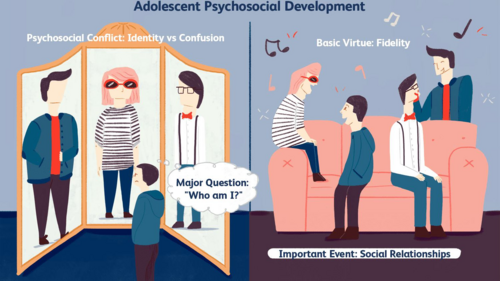
What is the negative outcome of Stage 5: Identity vs. Role Confusion?
Role confusion or identity crisis.
What is the basic strength developed in Stage 6: Intimacy vs. Isolation?
Love.
What age range does Stage 6: Intimacy vs. Isolation cover?
Age 18-40.

What is the negative outcome of Stage 6: Intimacy vs. Isolation?
Isolation.
What is the basic strength developed in Stage 7: Generativity vs. Stagnation?
Care
What age range does Stage 7: Generativity vs. Stagnation cover?
Ages 40-65.

What is the negative outcome of Stage 7: Generativity vs. Stagnation?
Stagnation.
What is the basic strength developed in Stage 8: Integrity vs. Despair?
Wisdom.
What age range does Stage 8: Integrity vs. Despair cover?
Age 65-Death.

What is the negative outcome of Stage 8: Integrity vs. Despair?
Despair.