6.2 Microbial Interactions
 Call Kai
 Learn
 Practice Test
 Spaced Repetition
 Match
 Flashcards
 Knowt Play
1/22

There's no tags or description
Looks like no tags are added yet.
23 Terms
Define symbiotic relationship & what are its types
Two organisms live together in a close partnership
Types; mutualism, commensalism, parasitism
A type of symbiotic relationship in which both species benefit from the interaction is called (+/+)
Mutualism - may be obligate or facultative mutualism
ex → human gut microbes (some non-pathogenic e.coli stains) and humans!!
another ex → rhizobium bacteria & leguminous plants
A type of symbiotic relationship in which one species benefits while the other species is neither helped nor harmed is called (+/0)
Commensalism
ex → Staphylococcus aureus (fastidious bacterium requires specific growth factors) & Haemophilus influenzae (secretes b-hemolysins & other enzymes & lyse RBCs, releasing growth factors it needs to survive)
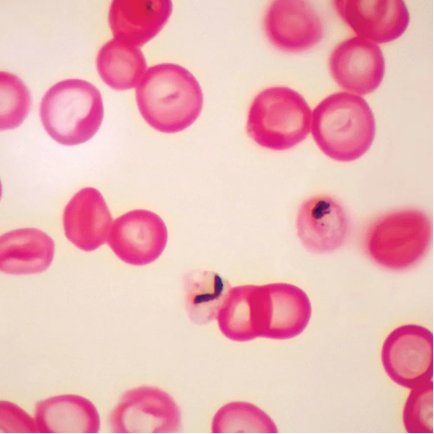
Describe parasitism (+/-)
One species benefits while other species is harmed
Livies in/on host, feed on its nutrients & reduces its health, survival, or reproduction (doesn’t kill immediately)
ex → ticks feeding on dog’s blood, tapeworms in mammalian gut, protozoan plasmodium falciparum infects RBCs causing malaria, viruses
Is parasitism a symbiotic relationship?
Yes - one benefits, one is harmed
ex → Tapeworm living inside a human and absorbing nutrients.
The organism living in or on the other organism is called the ___________ - it benefits from the relationship
Parasite
The organism on/in which the other organism lives is called the _____________ - it is harmed by the interaction
Host
What type of relationship exists between viruses and their host cells?
Obligate Intracellular Parasites
Define antagonistic relationship
One organism harms or kills another organism
Includes predation (+/-), parasitism (+/-), competition (-/-)
Define predation
Predator organism hunts, kills, & consumes prey organism
Parasitism
Parasite lives in or on host organism, feeds on its nutrients & reduces its health, survival, or reproduction (doesn’t kill immediately)
Define competition
2 or more organisms fight for limited resources (food, nutrients, space, or oxygen), reducing the survival or growth of both.
ex → E. coli and Salmonella competing for nutrients in the intestine.
Explain how competitive relationships could harm both organisms
Exploitation: Both use up shared resources, leaving less for each.
Interference: Organisms directly block or harm competitors.
Both can experience reduced growth and survival.
ex → Penicillium produces antibiotics that inhibit bacteria. P.aerug releases chemicals that inhibit fungi.
Explain how antibiotic production harms the producer and organism it acts against
Producer: Making antibiotics uses energy and resources, which can slow its own growth.
Target organism: Antibiotics inhibit growth or kill the organism.
Define synergistic relationship
2 or more organisms work together and achieve a greater benefit than they could individually.
Both benefit (survive better together!)
Neither depends on the relationship to survive.
Not considered symbiosis.
ex → Biofilms, dental plaque
Define planktonic cells
Free-floating, single-celled organisms that live independently in liquid.
Reproduce quickly when nutrients are abundant.
Easily killed by antibiotics, disinfectants, and the immune system.
ex → Free-floating E. coli bacteria in water or liquid culture.
Define biofilm
A mixed community of microbes growing on a living or nonliving surface
synergistic relationships
Explain why biofilms are considered synergistic relationships
Microorganisms work together for better survival and protection.
100–1,000× more tolerant to antibiotics, antimicrobials, and immune defenses.
Provide long-term stability and protection.
Can release planktonic cells to spread.
What is quorum sensing?
Cell-to-cell communication bacteria uses to detect & respond to their population density
Release and detect chemical signals (autoinducers).
Detect how many bacteria are nearby.
Change gene expression and behavior.
(Quorum sensing) Signaling molecules
Chemical signals called autoinducers.
Released by bacteria to communicate.
Build up as bacterial numbers increase.
Trigger changes in gene expression.
(Quorum sensing) Low cell density
Few bacteria = low autoinducer concentration.
Signals are too low to trigger a group response.
(Quorum sensing) High cell density (“Quorum”)
Many bacteria = high autoinducer concentration.
Signals reach a threshold and activate gene expression.
Bacteria coordinate group behaviors (ex. biofilm formation).
How does quorum sensing impact microbial behavior or the formation of biofilms?
Allows bacteria to communicate and coordinate group activities, such as:
Biofilm formation
Virulence
Bioluminescence
Sporulation
Conjugation
Competence