Geology Midterm
 Call Kai
 Learn
Learn Practice Test
 Spaced Repetition
 Match
Match Flashcards
 Knowt Play
1/121

There's no tags or description
Looks like no tags are added yet.
Name | Mastery | Learn | Test | Matching | Spaced | Call with Kai | Chat |
|---|
No analytics yet
Send a link to your students to track their progress
122 Terms
What is a mineral?
a naturally occurring, inorganic, crystalline, solid, with a definite chemical formula
What are all the properties of Minerals?
Naturally occurring
Inorganic
Crystalline
Solid
Definite chemical formula
What does it mean that a mineral is Naturally Occurring?
Minerals must be produced and found in nature
What are synthetic minerals?
Minerals created in a lab
What does it mean that a mineral is Inorganic?
Traditionally they are the products of physics and chemistry alone without the aid of biological agents
However, there are minerals (biominerals) created by organisms
Shells of clams
What does it mean that a mineral is Crystalline?
All minerals have a regular and repetitive framework resulting from an organized set of atoms
This framework controls the shape that mineral crystals display
What does it mean that a mineral is Solid?
It’s solid…
When frozen, ice can be considered a mineral, but as a liquid it cannot
What does it mean that a mineral is Definite Chemical Formula?
Each mineral is characterized by a set of elements
Can be expressed as a chemical formula
What is a Mineraloid?
Are substances that are amorphous (have no ordered atomic structure)
What’s the Difference Between a Rock and a Mineral?
- A rock can be…
o An aggregate of one or more minerals
o Composed of mineraloids
o Composed of solid organic matter
- Minerals are the building blocks of rocks
What are Minerals composed of?
Minerals are composed of atoms
What is an atom?
Atoms are the smallest particles of matter that cannot be split into simpler substances by chemical processes
What are atoms composed of?
- Atoms are composed of a nucleus and an electron cloud
- The nucleus contains positively charged protons as well as neutrons, which do not have a charge
What is atomic mass?
An element’s atomic mass is the sum of its protons and neutrons
What are isotopes?
Atoms of the same element that have different numbers of neutrons
What are the five common bond types?
o Covalent
o Ionic
o Metallic
o Hydrogen
o Van der Waals
What are Mineral’s Optical Properties?
Luster
Metallic
Non-Metallic
Streak
Double Refraction
What is Luster?
How the light is reflected off of a mineral’s surface
What is Streak?
The color of a mineral when it is powdered
What is Double Refraction?
Splitting light into two beams
Double refraction is found in the mineral calcite
It’s the tv static effect = seeing double when placed on paper
What are Mineral’s Shape Properties?
Crystal form (habit)
the geometric shape it will naturally take if it is given enough space in its growth
What are Mineral’s Mass-Related Properties?
Specific Gravity
think of it practically as how heavy something feels to you given its size
What are Mineral’s Mechanical Properties?
Hardness
measures a mineral’s resistance to being scratched
Tenacity
describes how easily a mineral can be broken or deformed
What is a cleavage plane?
Cleavage plane
When a mineral breaks along a plane of weakness, it produces a flat surface
Depending on a clean the break is, a minerals cleavage can be described as poor, fair, good, or excellent
What is fracture?
Fracture
If a mineral breaks with no sign of a cleavage plane
it can be conchoidal (shell-like)
What do Geologists use to measure the hardness of a mineral?
Mohs’ Hardness Scale
it’s a scale from 1 - 10 with 1 being the easiest and 10 being the hardest
Fingernail – Penny – Glass – Steel – Diamond
Other properties of minerals with their mineral correspondent
- Odor – Sulfur smells like rotten eggs
- Taste – Halite is salty, trona tastes alkaline (baking soda)
- Magnetism – Magnetite
- Fizzy reaction to acids – Calcite and dolomite (when scratched)
- Fluorescence – Fluorite glows under a blacklight
What is Olivine?
A green mineral
What is Biotite?
A black mineral that peels apart
What is Orthoclase?
Is usually pinkish
What is Quartz?
Is super common
What is Halite?
Salt
What is Fluorite?
A fluorescent mineral
What is Hematite?
Iron Ore
What is Magnetite?
Naturally magnetic iron ore
What is Limonite?
A yellowish iron ore
What is Pyrite?
“Fool’s gold”
What is Galena?
A heavy, silvery mineral
Stinks when HCI is applied
What is Gypsum?
A soft “evaporite” mineral
What is Calcite?
It fizzes with acid and possesses double refraction
What is Dolomite?
It will only fizz with acid if it is powdered first
What are Carbonates?
Minerals with a chemical formula consisting of the carbonate ion ends with (-CO3) bonded to a metal cation
Calcite - it fizzes with acid and possesses double refraction
Dolomite - it will only fizz with acid if it is powdered first
What are Native Elements?
Minerals that are made up of only one element
Examples:
Gold
Graphite
Diamond
During the Rock Transformation Process what is Weathering?
Mechanical or chemical processes that break a larger rock into smaller pieces or its chemical components
During the Rock Transformation Process what is Metamorphism?
Change that occurs in a rock due to extreme amounts of heat and/or pressure (NOT melting)
What is the difference between Magma and Lava?
Lava is magma that erupts from a volcano
Magma (inside the earth) and Lava (outside the earth)
What are the two types of Igneous Rocks?
Intrusive
Extrusive
What are Intrusive Rocks?
Form from magma cooling inside the earth
What are Extrusive Rocks?
Form from lava cooling on the Earth’s surface
Identifying Igneous Rocks (Texture) - What is Pegmatitic?
crystals are larger than 30 mm in size

Identifying Igneous Rocks (Texture) - What is Phaneritic?
crystals are 1-30 mm in size

Identifying Igneous Rocks (Texture) - What is Aphanitic?
crystals are smaller than 1 mm in size (can’t see any crystals)

Identifying Igneous Rocks (Texture) - What is Porphyritic?
a combination of phaneritic and aphanitic texture (bigger crystals floating in crystals that you can’t see)

Identifying Igneous Rocks (Texture) - What is Glassy?
volcanic material that cools so fast the minerals can’t form (it looks smooth and glassy)

Identifying Igneous Rocks (Texture) - What is Vesicular?
contain many tiny holes resulting from volcanic gases escaping from cooling lava (looks like airy sponge)

Identifying Igneous Rocks (Texture) - What is Pyroclastic?
contains fragments of broken volcanic rock because of explosive volcanism

Identifying Igneous Rocks (Composition) - What is Felsic?
Light colored
Identifying Igneous Rocks (Composition) - What is Mafic?
Dark colored
Identifying Igneous Rocks (Composition) - What is Intermediate?
Mix of both light and dark
What are Dikes and Sills?
Are magmatic intrusions that follow cracks or openings in the rock
Dike – Vertical cracks in the crust
Sill – Horizonal cracks in the crust

Igneous Rocks - Granite
Felsic
Coarse
is commonly used for buildings, tombstones, monuments, statues, countertops, etc…

Igneous Rocks - Rhyolite
Felsic
Fine
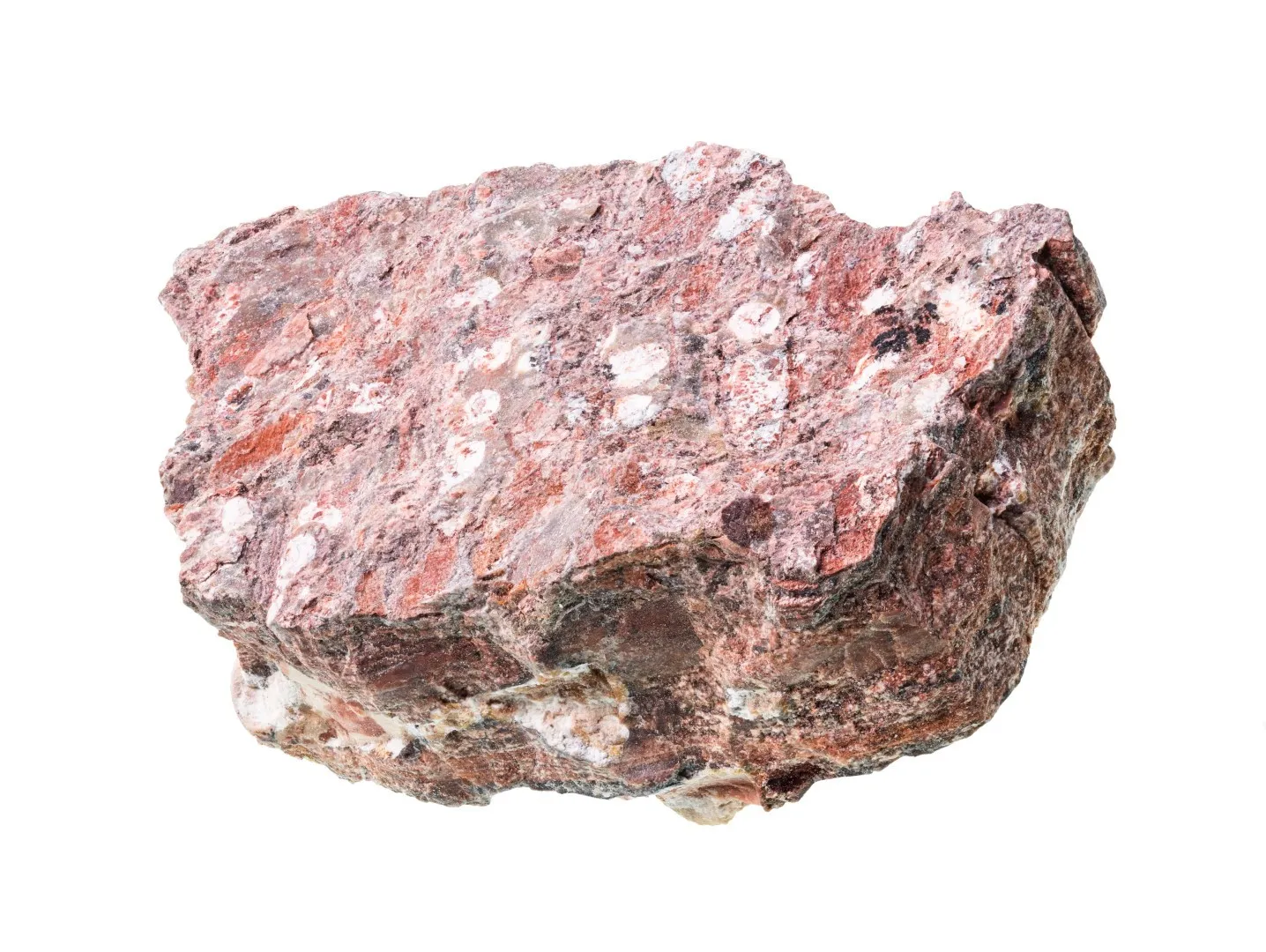
Igneous Rocks - Diorite
Intrusive
Intermediate

Igneous Rocks - Andesite
Intrusive
Intermediate
Fine

Igneous Rocks - Gabbro
Intrusive
Mafic

Igneous Rocks - Basalt
Mafic
Fine

Igneous Rocks - Obsidian
Glassy

Igneous Rocks - Pumice
a lightweight vesicular rock that can float in water, is often used in pedicures

What is Migmatite?
a rock that partially melts
What are Protoliths?
The Original Rock
During the heat and pressure of metamorphism, the original minerals in the rock become unstable and change into more stable minerals
Texture - What does Foliated mean?
have foliations (bands of aligned mineral grains) = have lines / layers
Texture - What does Non-Foliated mean?
no foliations = doesn’t look like it has layers
What are types of Metamorphic rocks?
Regional – have undergone heat and pressure
Contact – have undergone just heat
Dynamic – have undergone just pressure
What are Regional Metamorphic Rocks?
are formed by both heat and pressure and are the most common
What is the order of Regional Metamorphic Rocks?
Shale → Slate → Phyllite → Schist → Gneiss
What is Aureole?
When magma from an igneous pluton bakes surrounding rocks the baked zone is the Aureole
What is Marble?
metamorphosed limestone
is a Contact Metamorphic Rock

What is Quartzite?
metamorphosed quartz sandstone
is a Contact Metamorphic Rock
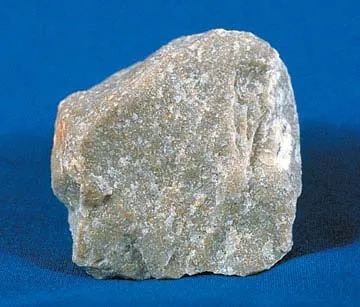
What is Pseudotachylite?
is a black, glassy rock found at fault zones, landslides, and impact structures (ex. meteor landing). They are indicative of incredibly high pressure/stresses

What is Serpentinite?
is green, is California’s state rock
is a Hydrothermal Metamorphic Rock

What is Soapstone?
feels soapy, has a lot of talc in it
is a Hydrothermal Metamorphic Rock
What is Eclogite?
is a very high Pressure/Temperature metamorphism of basalt/gabbro
Usually red and green
High Pressure/Temperature Metamorphic Rock

What is Blueschist?
is a very high Pressure, low Temperatures rock that forms in subduction zones
a High Pressure/Temperature Metamorphic Rock

What are the 4 basic layers in the Earth?
o Inner Core
o Outer Core
o Mantle
o Crust
What is the Lithosphere?
The uppermost layer of the mantle combined with the crust
What is the Crust?
is the outermost skin of the earth
5-70 km thick
What are the two ways the Crust can be divided?
Oceanic crust
o Oceanic crust underlies the Earth’s oceans and is composed of basalt and gabbro
Continental crust
Continental is composed mainly of granite and diorite, often covered by sedimentary rocks
The continental crust is thicker than the oceanic crust, but is less dense
What is the Mantle?
- is just below the crust and contains 84% of the Earth’s volume and 67% of its mass
What is the Asthenosphere?
Right below the lithosphere is the asthenosphere, which flows in a plastic fashion because of higher temperatures
What is the Core?
the inner core and outer core can collectively be called the core
The core is mainly made of iron with small amounts of nickel
The core is 15% of earths volume but 30% of its mass
What is the difference between the Inner Core and the Outer Core?
The inner core is solid
The outer core is liquid
What are Plate Tectonics?
pieces of the Earth’s lithosphere (called plates) move in relation to each other
What are Plates?
The Earth’s lithosphere (crust and uppermost mantle) is divided into Plates
Plates are rigid and deform by breaking to produce earthquakes
What are Passive Margins?
found at the edge of continents where the continent and the surrounding oceanic crust are on the same tectonic plate
What are Active Margins?
where the edge of a continent coincides with a plate boundary, and earthquake and volcanic activity is common
What is a Divergent Boundary?
Is found between two plates that move in opposite directions from each other
What is a Convergent Boundary?
are when two plates collide
What are the three types of Convergent Boundaries?
Continental-continental
Continental-oceanic
Oceanic-oceanic
Continental-Oceanic Convergence
Ocean crust is denser than continental crust, so the oceanic crust is forced down into the mantle
Leads to continental arc volcanoes
Oceanic-Oceanic Convergence
When two oceanic crusts collide, whichever plate is slightly colder and denser will subduct
Leads to island arc volcanoes