Ch.10 AP Microeconomics (Externalities)
0.0(0)
Studied by 3 people Call Kai
 Learn
Learn Practice Test
 Spaced Repetition
 Match
Match Flashcards
 Knowt Play
Card Sorting
1/25

Earn XP
Description and Tags
Last updated 7:00 PM on 9/16/22
Name | Mastery | Learn | Test | Matching | Spaced | Call with Kai | Chat |
|---|
No analytics yet
Send a link to your students to track their progress
26 Terms
1
New cards
Clean Air Act
1970 reaction to Rachel Carson in her 1962 in Silent Spring, It describes one of a number of pieces of legislation relating to the reduction of smog and air pollution in general. The legislation forced the country to enforce clean air standards to improve health and showed that American was moving towards certain environmentalist measures.
2
New cards
Silent Spring
A book written to voice the concerns of environmentalists. Launched the environmentalist movement . Had suspicion that the pesticide DDT (Negative externality), by entering the food chain and eventually concentrating in higher animals, caused reproductive dysfunctions. In 1973, DDT was banned in the U.S. except for use in extreme health emergencies.

3
New cards
Externality
The uncompensated impact of one person's actions on the well-being of a bystander, can be positive(restoring old buildings) or negative(take pollution for example)

4
New cards
Positive externality
A beneficial side effect that affects an uninvolved third party. (Research,restoration) for example. Leads to smaller quantities than are socially desirable.

5
New cards
Negative externality
A situation where a third party, outside the transaction, suffers from a market transaction by others (pollution, traffic congestion, dogs barking at you when you're walking ,etc,.) Leads to larger quantities than socially desirable.

6
New cards
Patent
A document granting an inventor sole rights to an invention for a given time, a way that the government creates positive externalities.

7
New cards
Private cost
The cost borne by the producer of a good or service
8
New cards
Coase Theorem
The proposition that if private parties can bargain WITHOUT cost (or very little cost) over the allocation of resources, they can solve the problem of externalities on their own, proposed by Ronald Coase, other words this sould work if there are no transaction costs.
9
New cards
Social cost
The total cost of a good to society (social cost) includes the costs of production incurred by the industry as well as the external costs (externalities)
10
New cards
Internalizing the externality
Altering incentives so that people take account of the external effects of their actions, can be done by imposing taxes(negative externality) or subsidies(positive externality)
11
New cards
Education
A prominent example of a positive externality, the consumer of it becomes a more productive worker and reaps the benefit of higher wage. Also leads to more informed voters, which leads to a more efficient government, lower crime rates, and higher levels of technological innovation. Internalizing this externality requires the use of a government subsidy.

12
New cards
Technological progress
___________ __________ is a key to why living standards rise over time.
13
New cards
Technology spillover
The impact of ones firms research &production efforts on other firms access to tech. advance. positive externality.
14
New cards
Industrial Policy
Government intervention in the economy that aims to promote technology enhancing industries.
15
New cards
Regulation
A rule or order issued by an executive authority or regulatory agency of a government and having the force of law
16
New cards
Command and Control Policy
Forms of regulation that depend on government laws and agencies to enforce rules, including such things as regulated limits on pollution or fuel efficiency standards; contrasts with market-based or incentive-based approaches.
17
New cards
Market Based Policy
A way to counter externalities by providing incentives so that private decision-makers will choose to solve the problem on their own(maybe).
18
New cards
Corrective tax
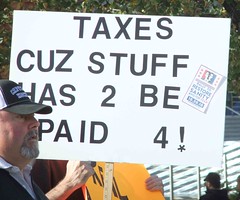
A tax designed to induce private decision makers to take account of the social costs that arise from a negative externality, also called Pigovian tax
19
New cards
EPA
An independent federal agency established to coordinate programs aimed at reducing pollution and protecting the environment
20
New cards
Pigovian tax
A tax designed to induce private decisions makers to take account of the social costs that arise from a negative externality, same as corrective tax.
21
New cards
Gas Tax
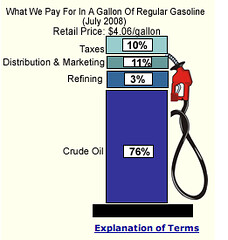
What is the name of the tax imposed upon vehicles which do not meet specified fuel economy targets? Actually makes the economy work better and does not cause a deadweight loss.
22
New cards
Rachel Carson
United States biologist remembered for her opposition to the use of pesticides that were hazardous to wildlife (1907-1964)

23
New cards
Charities
Not-for-profit organizations that are established to support good causes, from society's point of view. A private response to negative externalities.

24
New cards
Contracts
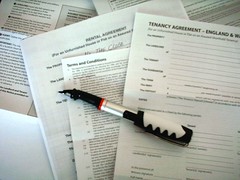
Legal agreements for the exchange of resources and services, another private response to externalities.
25
New cards
Ronald Coase
Economist who won a Nobel prize in economics for arguing that assigning property rights to either party would result in the internalization of externalities, Coase Theorem.
26
New cards
Transaction costs
The costs that parties incur in the process of agreeing to and following through on a bargain, will be the reason that private parties do not internalize externalities according to the Coase Theorem.