8 - Heath
 Call Kai
 Learn
 Practice Test
 Spaced Repetition
 Match
 Flashcards
 Knowt Play
1/37

There's no tags or description
Looks like no tags are added yet.
38 Terms
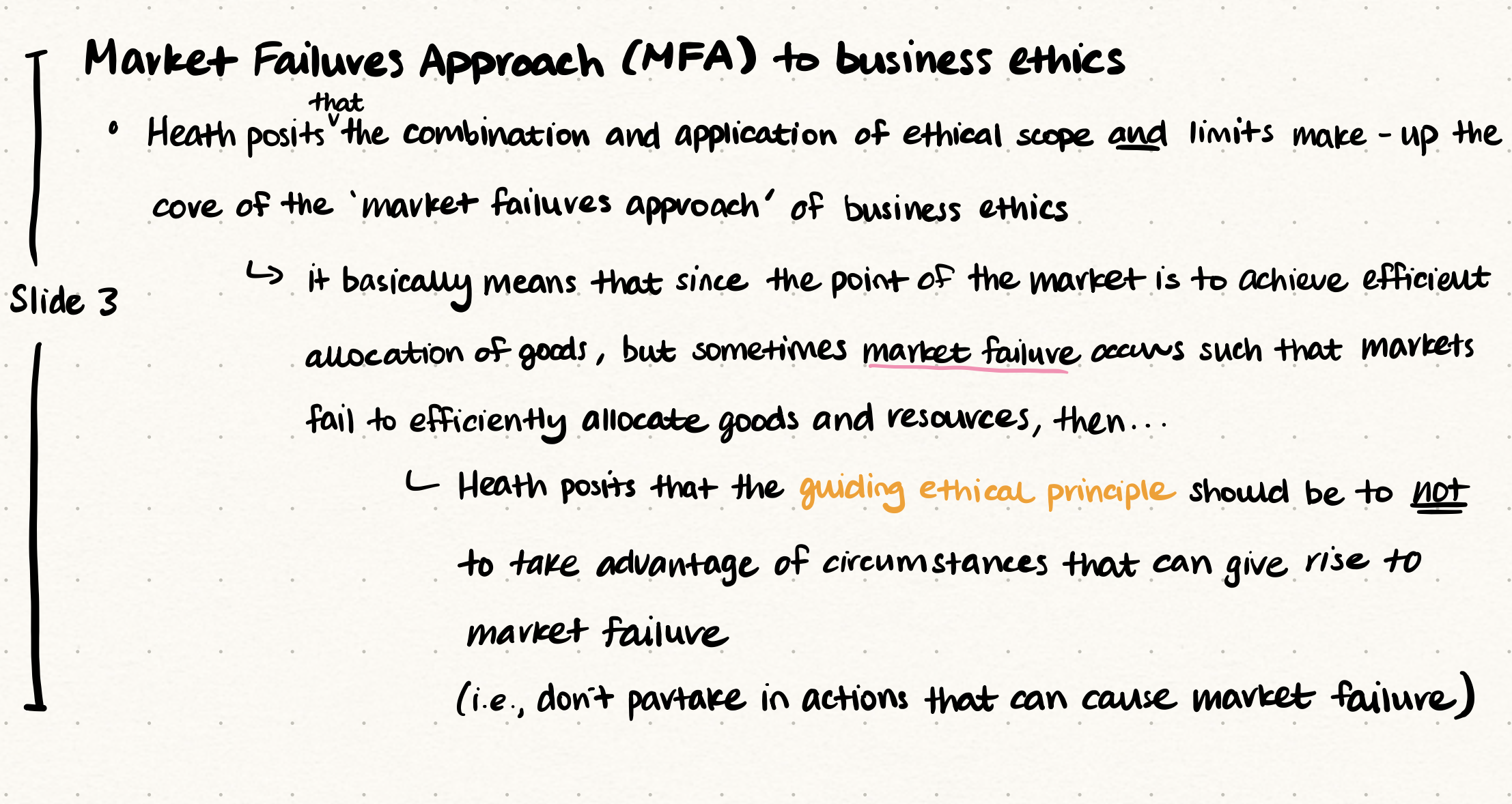
According to Heath, what 2 ethical principles does the market failure approach (MFA) use to judge business behaviour?

Explain Heath’s take on the Market Failure Approach to business ethics.
Explain why Heath posits that the functional requirements of the market are morally controversial.

Explain how Heath views the spirit of moral permissions in a market context, and why he thinks that.

Explain if Heath thinks that people can behave without any limits in a market context. If there are limits, what implications does this have on the moral permissions in a market context?

According to Heath, what is generated through the special tailoring of moral permissions associated in the market?
*slide 6

What are the 3 competitive strategies Heath highlights to be acceptable in a market context?
Supply and demand decisions
Pricing decisions
Shifting the supply curve
Explain what the competitive strategy of “supply and demand decisions” is according to Heath.

Explain what the competitive strategy of “pricing decisions” is according to Heath, and why this strategy emerges.

What is one caveat Heath highlights in economic actors’ pricing decisions?
*slide 8

What does Heath highlight the price mechanism does for economic actors?
*slide 8

Explain why Heath thinks that moral permissions are a right in the market.

Explain what the competitive strategy of “shifting the supply curve” is according to Heath. How does Heath feel about this strategy, and why?

Explain how Heath feels about economic actors (in market contexts) behaving in ways outside of what’s deemed moral in everyday contexts.

Why does Heath think that the market allocates the production and consumption of goods so efficiently?

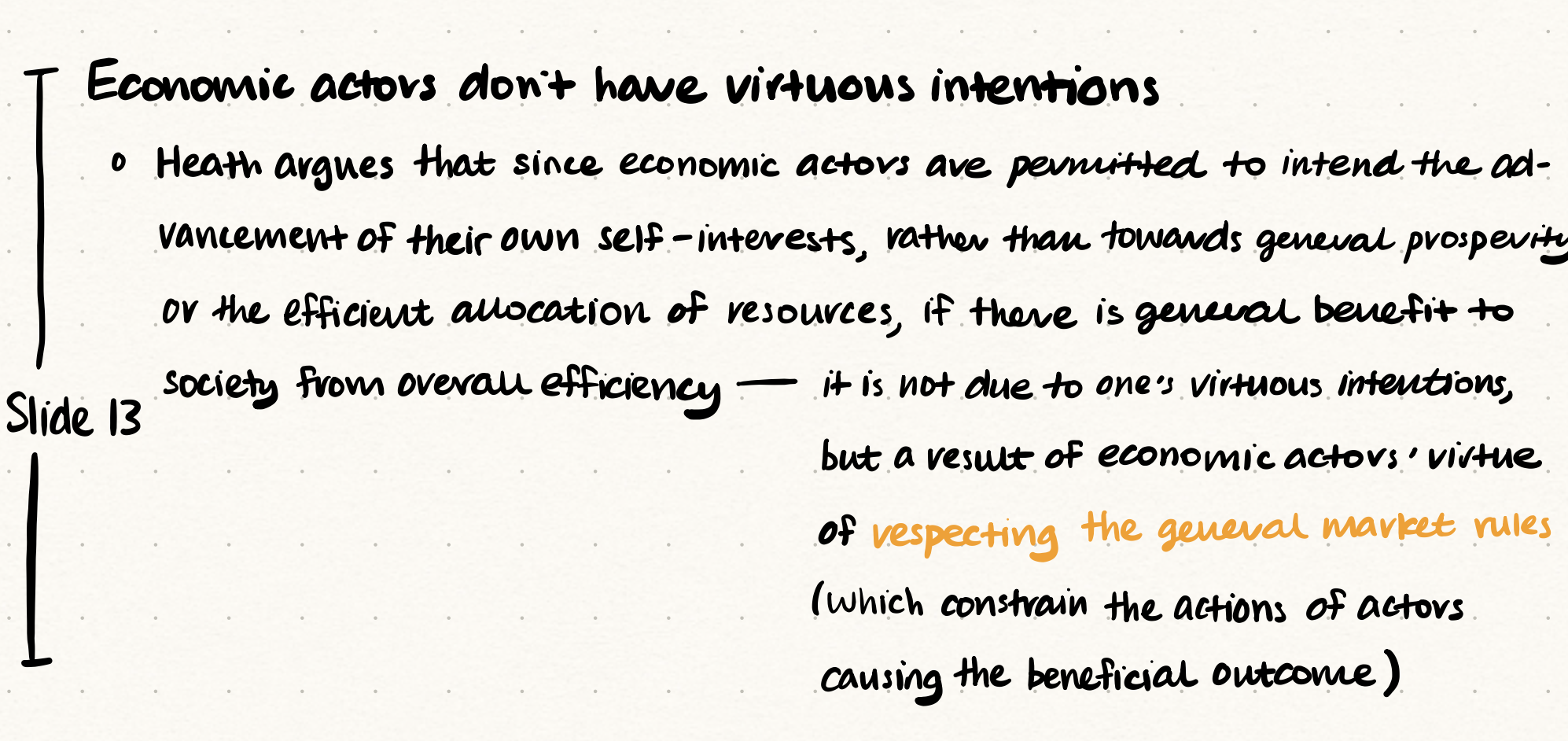
Why does Heath think that economic actors do not have virtuous intentions? And what mindset does Heath argue economic actors have?
What does Heath argue is the main focus of business ethics?
*slide 14

According to Heath, what is healthy competition and what is the point of it being staged?
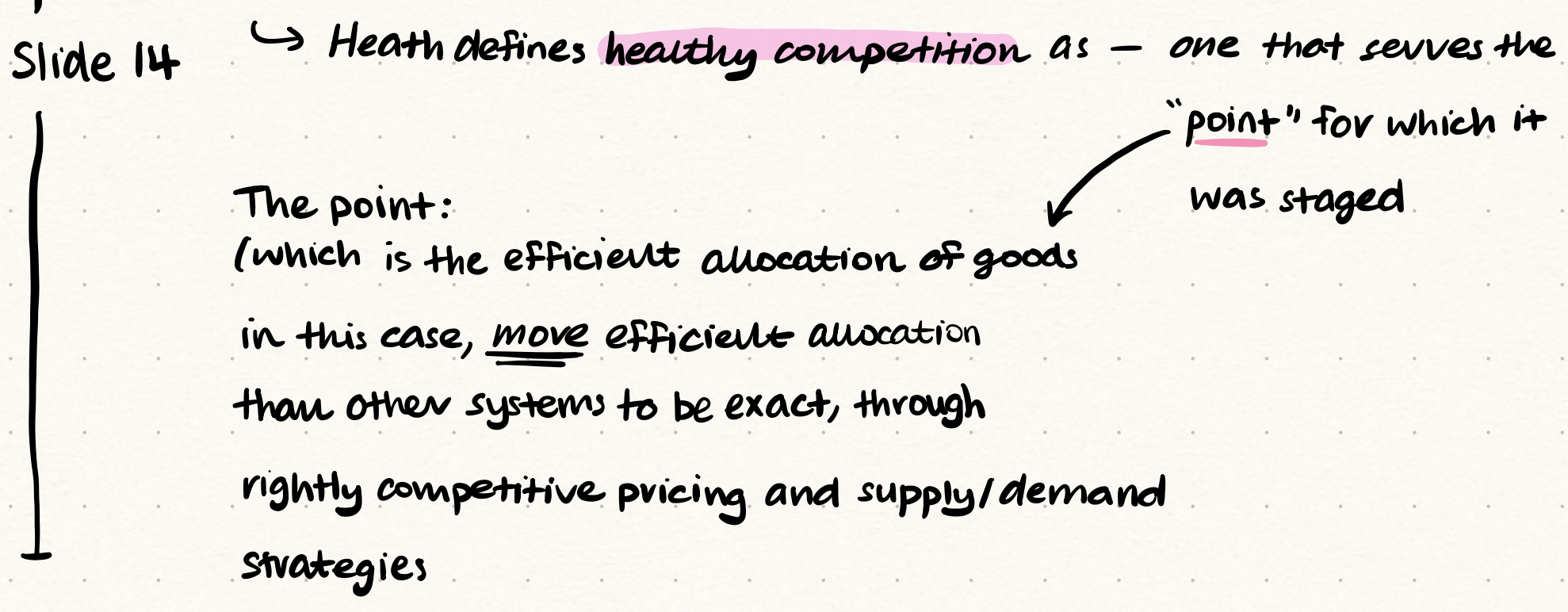
Explain how Heath thinks markets achieve cooperative gains. As a result, what does Heath believe healthy competition is, and how does this connect to the legal structure of the market?

According to Heath, what laws help sustain the market economy and how do they do that?

Explain the relationship between Heath’s business ethics and the legal structure of the market economy. Why do we see this relationship?
*slide 16

Why does Heath think that the Market Failures Approach (MFA) provides a moral argument for compliance with the law? What are the implications of this on economic actors’ behaviours in a market context?

Why does Heath argue that markets require both law and ethics?

What does Heath argue is the purpose of business ethics? What does Heath derive from this?

What are the 4 business ethics moral constraints Heath highlights?
Anti-competitive practices
Negative externalities
Information Asymmetry
Contracting Costs
Explain why Heath has set a moral constraint of “anti-competitive practices,” provide examples too.

What does Heath argue is needed to curb anti-competitive practices? Explain why.

Explain why Heath thinks that there should be restrictions against anti-competitive practices in a market context.

Explain why Heath has set a moral constraint of “negative externalities.”

According to Heath, how do negative externalities contribute to market failure?

Explain an example of how negative externality can be addressed to prevent market failure.

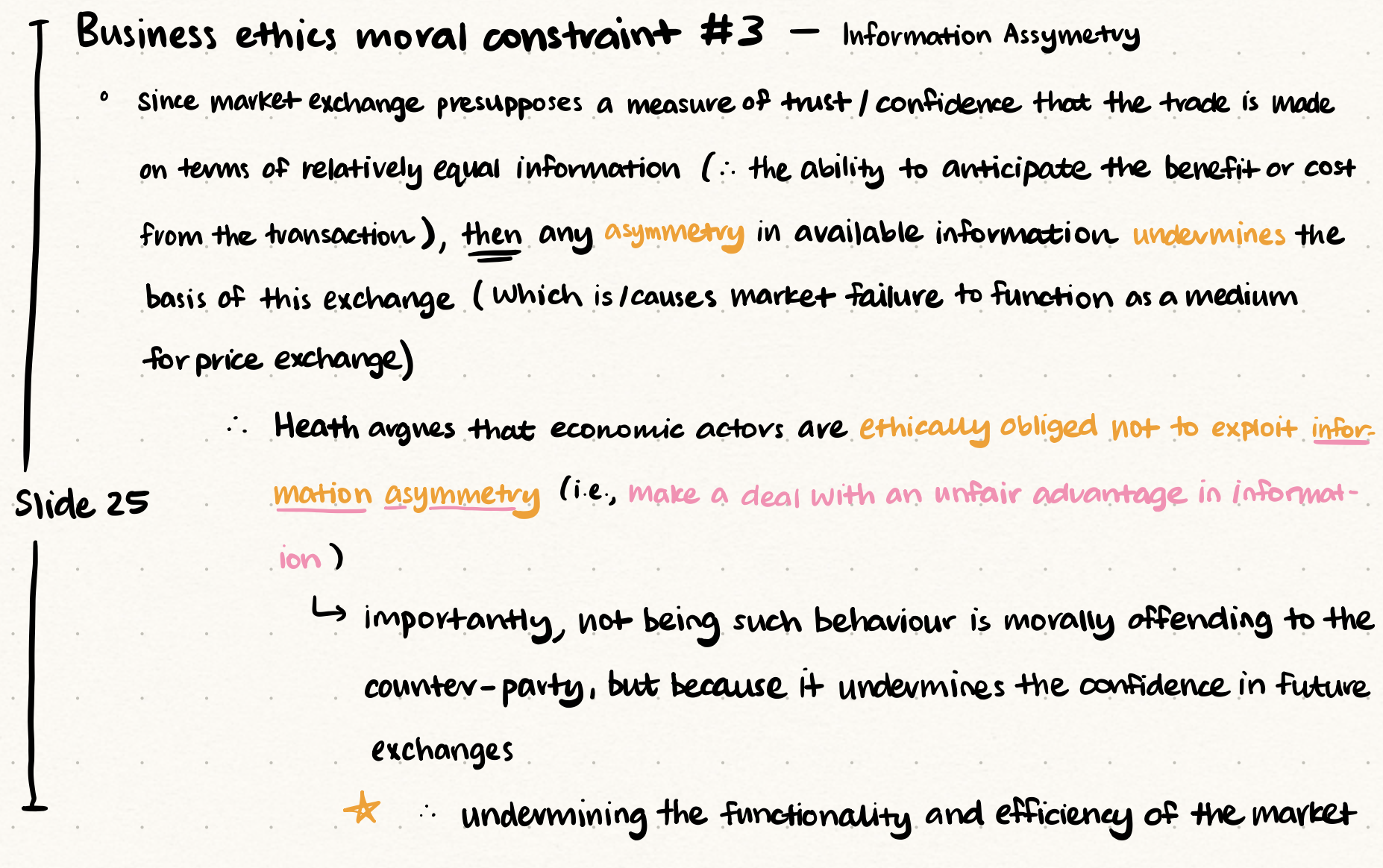
Explain Heath’s moral constraint of “information asymmetry.” Why is this a moral constraint to Heath?
Explain why Heath has set a moral constraint of “contracting costs.”

Does Heath think that moral restraint is the only response to market failure? Why or why not?

Does Heath think that all the ethical constraint on competitive strategies (that are within pareto principles) generate pareto efficient outcomes? If not, how does Heath justify these ethical constraints in pareto terms?

To Heath, is there a tendency for firms to see the state as an adversary? If so, how does Heath feel about firms seeing the state as an adversary?

Explain how Heath believes firms should behave when interacting with the state.

Explain Heath’s view on moral ethics being violated due to pressures from market competition.
