Chapter 5 - Pulmonology
 Call Kai
 Learn
 Practice Test
 Spaced Repetition
 Match
 Flashcards
 Knowt Play
1/187

There's no tags or description
Looks like no tags are added yet.
Name | Mastery | Learn | Test | Matching | Spaced | Call with Kai | Chat |
|---|
No analytics yet
Send a link to your students to track their progress
188 Terms
Respiratory System consists of…
air passages of the nose to the lungs
respiratory system functions
being oxygen into the body
expel waste product of carbon dioxide
major organs of the respiratory system
Nasal cavity
nostril
larynx
oral cavity
pharynx
trachea
lefts main (primary) bronchus
bronchi
alveoli
left lung diaphragm
parietal pleura
right lung
right main (primary) bronchus
Carina of trachea

nas/o
nose
sept/o
dividing wall
parts of the pharynx
nasopharynx
oropharynx
laryngopharynx

what is the larynx
your voice box
first part of the lower respiratory tract
remains open during speech and respiration to allow air into the trachea
when swallowing the larynx pulls up to the epiglottis, forcing food into the esophagus
URI
Upper Respiratory Infection
bacterial or viral infection
example is the common cold
antibiotics do not treat viral infections
treated through supportive care
What is the trachea
your windpipe
passageway for inhaled and exhaled air
has cartilaginous “rings” (actually c shaped so the esophagus around it can expand for swallowing food) to protect the windpipe
Bronchi
trachea divides into right and left primary bronchi
pathway that branches to the lungs
bronchi enter into the lungs and divide into smaller bronchioles
bronchi supported by rings of cartilage similar to the trachea
bronchus
one major airway
bronchi
more than one bronchus
bronchiole
smaller airway branching from a bronchus
alveoli
ends of bronchiolies
where oxygen exchange happens with capillaries
secrete surfacant that keeps their walls from collapsing
alveol/o
air sac or a small cavity/hollow
asthma
hyperactivity of the bronchi or bronchioles to an allergen or inhaled substances
causes inflammation, excess mucus production, and bronchospasm
latin term for breathe hard
greek term for shortness of breath
-spasm
sudden involuntary muscle contraction
asthm/o
asthma
bronchitis
acute or chronic infection/inflammation of the bronchi
chronic infection due to smoking or pollution
acute due to an infection
-iectasis
condition of dilation, expansion or stretching
bronchiectasis
permanent enlargement and loss of elasticity in the bronchioles; allows secretions to accumulate
reactive airway disease
blanket term for conditions with reversible airway narrowing and wheezing
Lung Anatomy
spongy aire filled structures
right lung lobes
right upper lobe (RUL)
RML
RLL
Left lung lobes
LUL
LLL
top of lungs is the apex
base rests on the diaphragm
BS
Abnormal breath sounds
normal breathing sounds like soft wind through a tunnel
pleural friction rub: creaking or grafting dur to inflammation of pleura
crackles/rales: irregular crackling or bubbling due to fluid or infection in the alveoli
Rhonchi: humming, whistling, or snoring due to mucus or foreign body obstruction (FBO)
Stridor: high pitched crowing due to edema or obstruction
Wheezes: high pitched whistling or squeaking due to asthma attack or reaction
FBO
foreign body obstruction
atel/o
incomplete
-ectasis
condition of dialation
atelectasis
collapse of all or part of the lung
COPD
Chronic Obstructive Pulmonary Disease
group of chronic lung disease, including chronic bronchitis and emphysema
happens due to chronic air pollution ot smoking
characterized by chronic inflammation, severe coughing, SOB, and sputum production
alveolar hyperinflation leads to b chest (barrel chest)

CF
Cystic Fibrosis
inherited condition caused by recessive gene; causes problems in repiratory, digestive and sweat secretions
mucus secreted too thick and blocks alveoli
constant coughing an bronchiectasis occur
lung infections are frequent and lack of oxygen is chronic
fibr/o
fiber
em-
in
py/o
pus
-ema
condition
empyema
localized pockets of pus that have collected inside a body cavity of the lung due to a bacterial infection
Legionnaires’ disease
severe sometimes fatal bacterial infection
starts as flulike symptoms and progresses to severe pneumonia and liver and kidney degradation
Occupational lung disease
group of lung diseases caused by constant workplace exposure to inhaled particles such as asbestosis
-coniosis
condition caused by dust
Lung Cancer
most common among smokers
when tar deposits in the lungs become cancerous and spread
pneumonis
infection of lobes of the lungs; fluid, white blood cells, and microorganisma fill passages
Causes:
bacterial
viral
aspiration (inhales material: vomit, food, saliva)
Double lung means it has affected both lungs
aspir/o
to breath in
pulmonary edema
build up of fluid in the alveoli
causes:
left sided heart failure
chest wall trauma
pneumonia
Severe acute respiratory syndrome (SARS)
severe, communicable viral illness that can be fatal
spreads through close contact
pulmonary embolism
a traveling clot or fat globule lodges in the lung
blocks blood flow and causes SOB
often occurs in patients who are on bedrest
SOB
shortness of breath
embolus
something traveling through the blood stream
TB
Tuberculosis
communicable disease that is caused by Mycobacterium tuberculosis
Causes nodules/tubercles in the lungs
waxy coating makes the bacterium resistant
requires a 9-month-long course of drugs as treatment
tubercul/o
tubercle
tubercle
small nodule
bronchiole
Small passages that end in alveoli
Anatomy of the Thorax
The bony cage between the neck and diaphragm
Sternum ribs and spine protect the lungs and thoracic cavity
lungs fill most of the thoracic cavity
Mediastinum
lies between the lungs
diaphragm
makes up the inferior border of thoracic cavity

hemothorax
blood in the thoracic cavity, typically due to trauma
Pleural effusion
accumulation of excess fluid in the pleural space due to inflammation or infection

-thorax
thorax, chest
effus/o
flowing out
Pleurisy
inflammation/infection of the pleura that cause the two pleural layers to rub against one another and create pleural friction rub

pleur/o
lung membrane
-isy
condition of infection or inflammation
pneumothorax
air in the pleural space that causes the lung to collapse; typically caused bby the result of a penetrating trauma
AKA collapsed lung

pneum/o
air, lung
Mechanics of breathing
Inspiration
thoracic volume increases, pressure goes down, air moves in
Expiration
thoracic volume decreases, pressure goes up, air moves out

Apnea
absense of spontaneous respiration due to respiratory failure or arrest
in infants, it may be due to immature CNS (central nervous system)
in middle aged adults may be caused due to obstructive sleep apnea
a-
without
pne/o
breathing
bradypnea
abnormally slow rate of breathing due to brain damage or chemical imbalance in the blood
dyspnea
abnormal, difficult, laboured or painful breathing
dyspnea on exertion occurs during activity in patients with lung disease
orthopnea
difficulty breathing when lying supine; patient sleeps sitting up or semi-upright
orth/o
straight
tachypnea
abnormally fast breathing due to lung disease
cough
protective mechanism to forcefully expel things from the lungs
expectoration
coughing up sputum
ex-
away from
pector/o
chest
-ation
process
hemoptysis
coughing suptum that contains blood
-pytsis
condition of coughing up
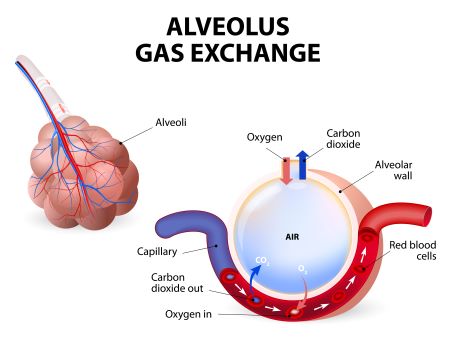
gas exchange
O2 given into the bloodstream
blood cell drops CO2 to be exhaled
anoxia
complete lack or severely decreased level of oxygen in srterial blood and body tissue. caused by choking suffocation or drowning
ox/o
oxygen
asphyxia
abnormally high level of CO2 and an abnormally low level of O2 in the blood
signs may be tachycardia and cyanosis
sphyx/o
pulse
hypercapnia
very high level of CO2 in arterial blood
hypoxemia
very low level of O2 in arterial blood
capn/o
carbon dioxide
ABGs
Arterial Blood Gasses
blood test to measure O2 and CO2 and acidity in a sample of arterial blood
important to assess lung and kidney function
Corboxyhemoglobin
blood test to measure the levels of carbon monoxide in blood. typically done for patients exposed to fire or fumes
carbox/y
carbon monoxide
glob/o
comprehensive; shaped like a globe (think hemoglobin)
-in
substance
Oximetry
non invasive test to measure oxygen saturation of the blood; oximeter emits light waves that reflect off hemoglobin

PFT
Pulmonary Function Test
breathing test to measure the volume of air that can be forcefully inhaled or exhaled

Sleep Study
procedure to determine whether a patient has obstructive sleep apnea; uses sensores to measure movement, breathing, and O2 level
Sputum C&S
Lab test to identify which bacterium is causing lung infection
sputum placed in a culture dish with disks of antibiotic drugs to see which drug the bacterium is sensitive to
Tuberculosis test
test that shows whether a person has been exposed to TB
CXR
chest radiography/X-Ray
CT and MRI scans
Tomography scans that take many images in small slices to provide detailed picture of lung structure
CT: uses xrays
MRI: Uses Magnetic Field
tom/o
cut; layer; slice
Lung Scan
procedure in which radioactive air is breathed in and a radioactive drug is injected to identify areas of poor gas uptake and poor perfusion in the lungs
ventilation: radioactive tracer is inhaled
perfusion: radioactive tracer is injected
per-
through, throughout
fus/o
pouring