Diseases of the Peri Parturient Ewe 2
 Call Kai
 Learn
Learn Practice Test
 Spaced Repetition
 Match
Match Flashcards
 Knowt Play
1/50

There's no tags or description
Looks like no tags are added yet.
51 Terms
What percentage of ewe deaths occur around the lambing period? What is the annual mortality rate target?
75%
Annual target: 1-3%
What are the different options for approach to dystocia?
Vaginal delivery
Caesarian
Embryotomy
Euthanasia
How would you approach a dystocia?
Wear gloves
Keep Clean as Possible
Lots of lubrication
use NSAIDS
Use EPIDURALS
Use ANTIBIOTICS – 5 days
Give Lamb Colostrum
What should be done with any dystocia in the first 24 hrs?
supplement colostrum
(vast bruising as result of dystocia)
How is a simple embryotomy performed?
Dead lambs not possible to deliver per vaginum
Forelimbs removed
Cur through skin round leg above carpus then up towards elbow
Undermine attachment should to chest wall
Pull leg off
Use a lot of lubrication
What should be considered with dystocia related death?
Age of ewes (ewe lambs)
breed of ram (patterns across groups)
condition of ewes (body condition score)
Hygiene when lambing (history)
Hygiene of pens (observe)
Staff numbers
Staff training
What are indication for a C section in a ewe?
Over sized lamb
Ringwomb
Vaginal Prolapse
Foetal monster
Malpresentation
What are the contraindications for a c section?
Rotten lamb/ smelly fluids unless can exteriorise uterus
Embryotomy or euthanasia best
In what position is a c section performed?
Lateral recumbency- left side up
What are the options for c -section analgesia?
Local infiltration procaine (40ml total)
Inverted L block
Paravertebral - 5 ml procaine per site
Plus sacrococcygeal epidural for analgesia and straining reduction
What is the incision site for a c section in a ewe?
Last rib and wing of ileum ½ way
10-15 cm below transverse process
15cm invision
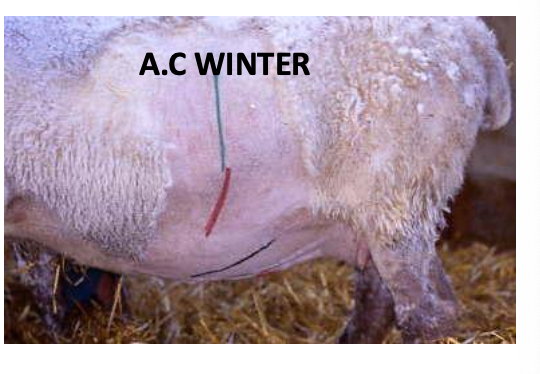
Green line most common approach^
Outline how a c section is performed
Broad spec long acting AB (5 day)
NSAIDs (meloxicam
lat recumbency (LHS up)
epidural/ local block
Cut through skin, sub cut tissues then use scissors to incise EAO + IAO, then lift transverse muscle before incising so don't puncture rumen
Grasp uterine horn and exteriorise
Incise 10-12cm
Remove lamb
Check for another
Close wound
Explain how you would close a wound in a c section?
Continuous inverting (usually using cat gut) to suture uterus, check for leakage and replace
Peritoneum and transverse internal and external oblique (one or two layers) simple continuous cat gut
Skin forward inter locking simple interruptued, nylon
What is very important to do after a c section?
Feed lambs
What bacteria causes metritis in ewes?
Opportunistic environmental bacteria including clostridium tetani
(uterine infec.)
What can cause metritis in ewes?
Dystocia
Poor hygiene
Dead lambs
Post abortion
What are the clinical signs of metritis?
Dull, depressed, recumbant
Toxaemia congested mucous membranes
Red/brown or purulent vaginal discharge

How is metritis treated and prevented?
Antibiotics (e.g.- IV oxytetracycline) NSAIDs
Guarded prognosis
May affect milk production monitor lambs
Prevention- review hygiene measures, dystocia mangement, environmental hygiene, clostridial vaccination
When is vaginal prolapse common?
Last 4 weeks of pregancy (1-2%)
Vagina or vagina and cervix, may include bladder
What are the causes of vaginal prolapse?
Not one cause- following can contribute:
Age
Litter size
Prolific breeds> hill breeds
35-40% will re-prolapse
Nutritional factors- obesity, bulky feed, hypocalcaemia, lack of trough spaces (bloat)
Stocking rates
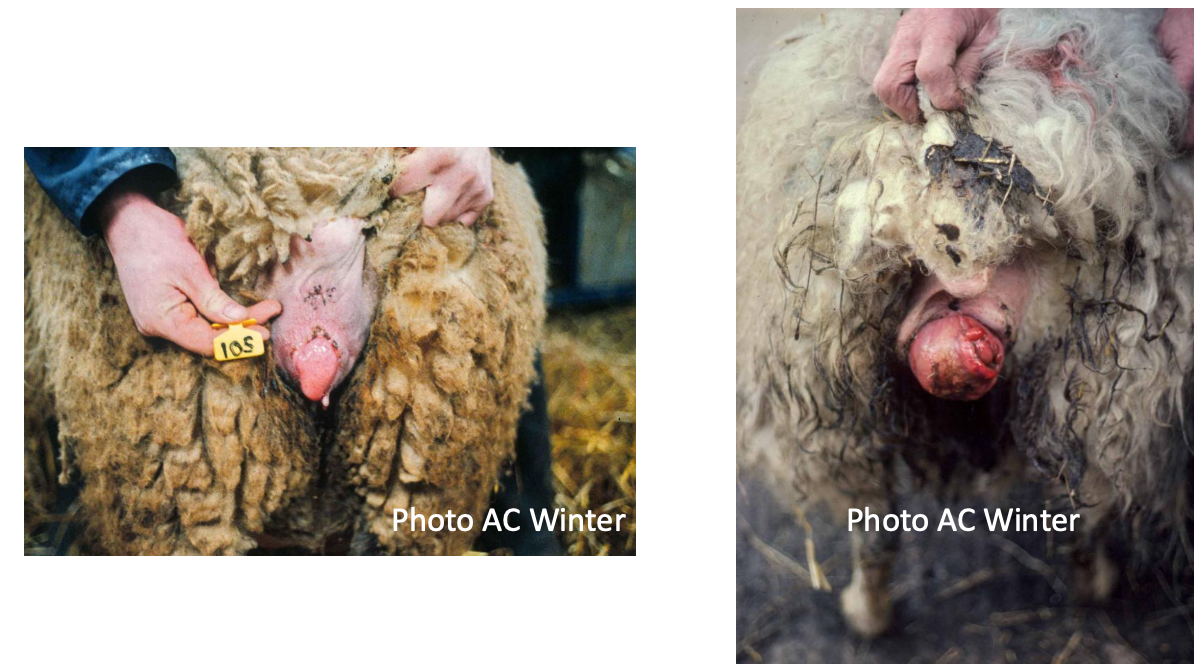
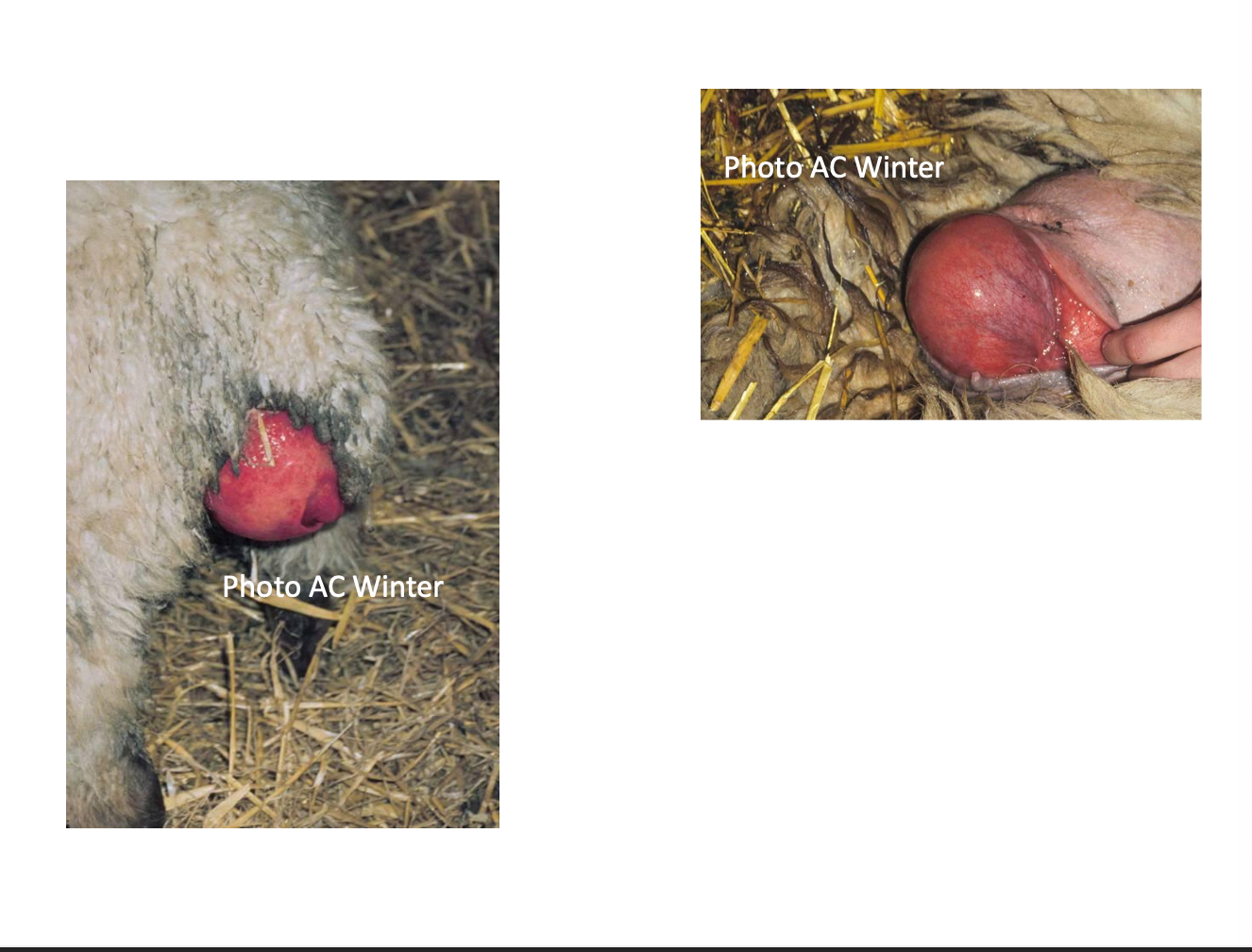
result in inflammed swollen infected tissues, obstruction bladder urine retention
How can you treat mild and uncomplicated vaginal prolapses?
Retention devices
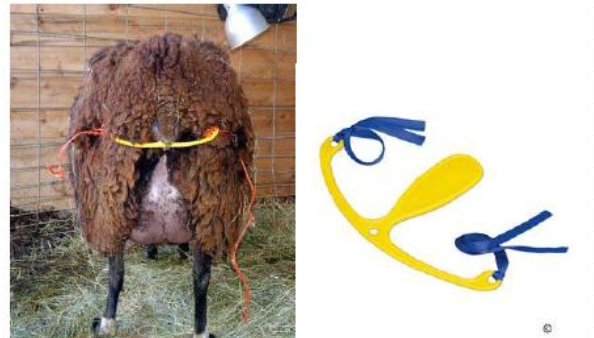
Harnesses (avoid pressure sores)
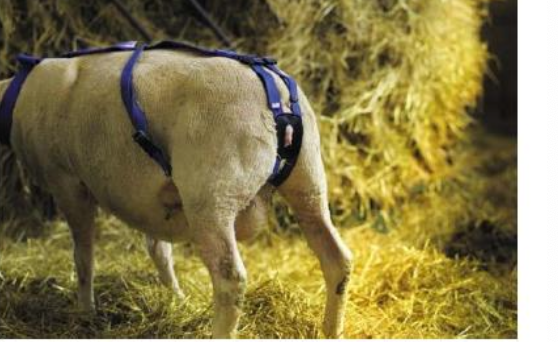
NSAIDS
LA antibiotic
(often treated by farmer)
What are the limitations of retention devices for vaginal prolapse?
Discomfort
Irritation mucosa
Secondary infection
How is a vaginal prolapse treated surgically?
Epidural anaesthesia (reduce straining + provide analgesia)
NSAIDS and antibiotics
Clean and assess- chlorhex
Replace prolapse- gentle palm of hand, raise back end of ewe
Suture
Mark ewe, remove sutures before lambing
Explain how you would perform an epidural on a sheep with a prolapse?
Sacrococcygeal or 1st intercoccygeal space
Give 1.75 ml 2% procaine for short action
Or 1.75 ml procaine + 0.25ml 2% xylazine for longer action (24h+)
How would you place a suture for a vaginal prolapse?
Obstetrical tape (not suture material)
Purse string (leave 1.5cm opening)
Buhner suture
If a ewe is prolapsing whilst lambing what should you do?
Caesarian
What are some complication of vaginal prolapse? How would you address this?
Rectal prolapse alongside vaginal prolapse
Replace and epidural, purse string suture
How are prolapses prevented?
Review and address farm risk factors
Cull
Inc risk reprolapse
Put harness on before prolapse occurs next pregnancy
What is being shown here?
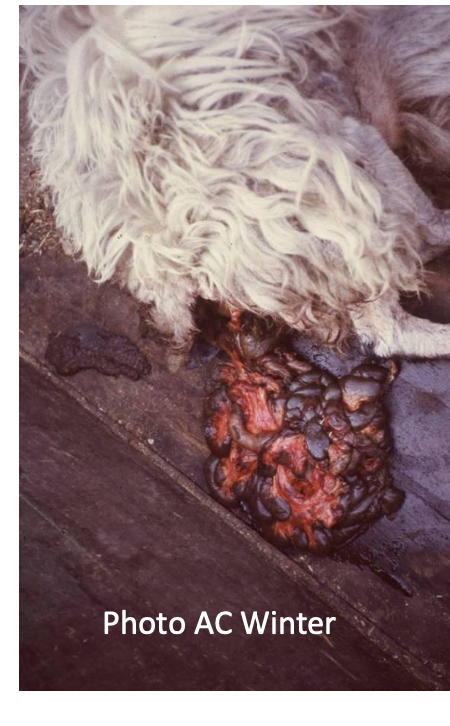
Intestinal prolapse through vaginal wall due to tear
Euthanise if seen alive
may save lamb if alive
What are some causes of uterine prolapse post lambing?
excessive traction at lambing
hypocalcaemia
How is uterine prolapse treated?
Epidural
Clean
Remove or trim placenta
Replace carefully and ensure fully inverted
Suture
Antibiotics and NSAIDs
How would you treat a cervical prolpase post lambing?
Treat as vaginal pre lambing
Mark for culling
What is the typical prevalance of mastitis in a flock?
4-5%
What are the consequences of severe mastitis?
ewe death
premature culling
lamb death
poor lamb growth
often detected late in sheep than cattle (worse prog.)
What are the three main clinical presentations of mastitis in ewes?
Peracute/gangrenous/ toxic mastitis
Acute mastitis
Chronic mastitis
When does peracute/ gangrenous mastitis commonly occur?
Often 4-8 weeks post lambing when ewe is in peak lactation
Can occur immediately post lambing
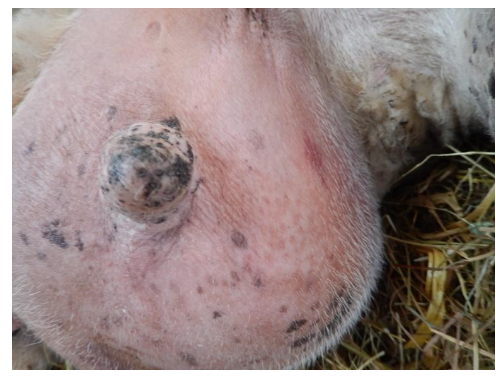
What are the clinical signs of per acute/ gangrenous mastitis?
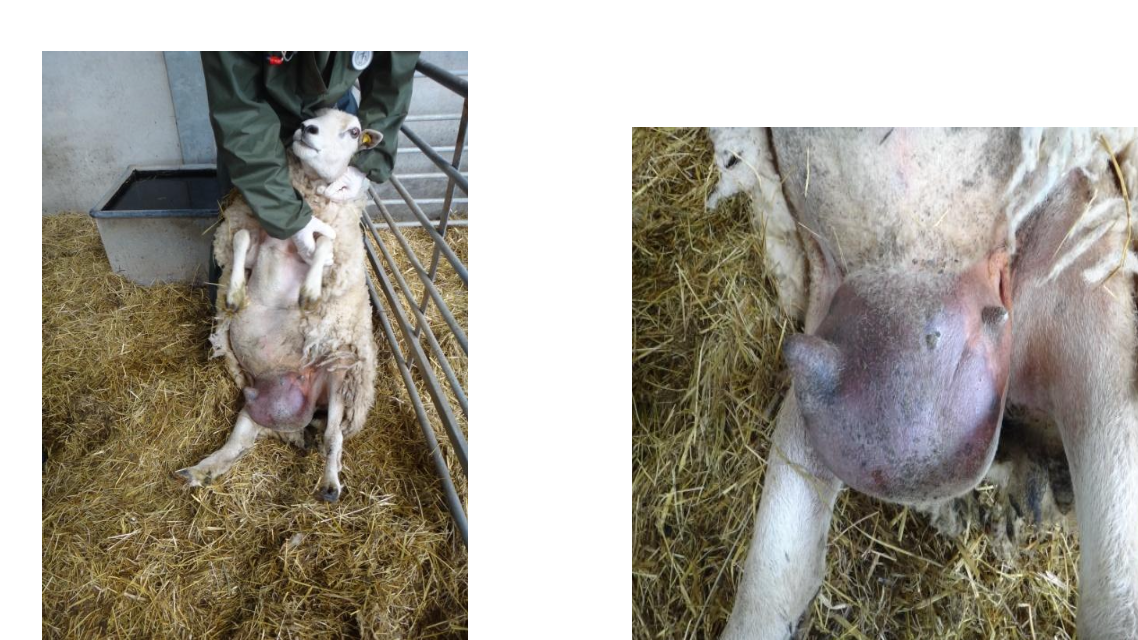
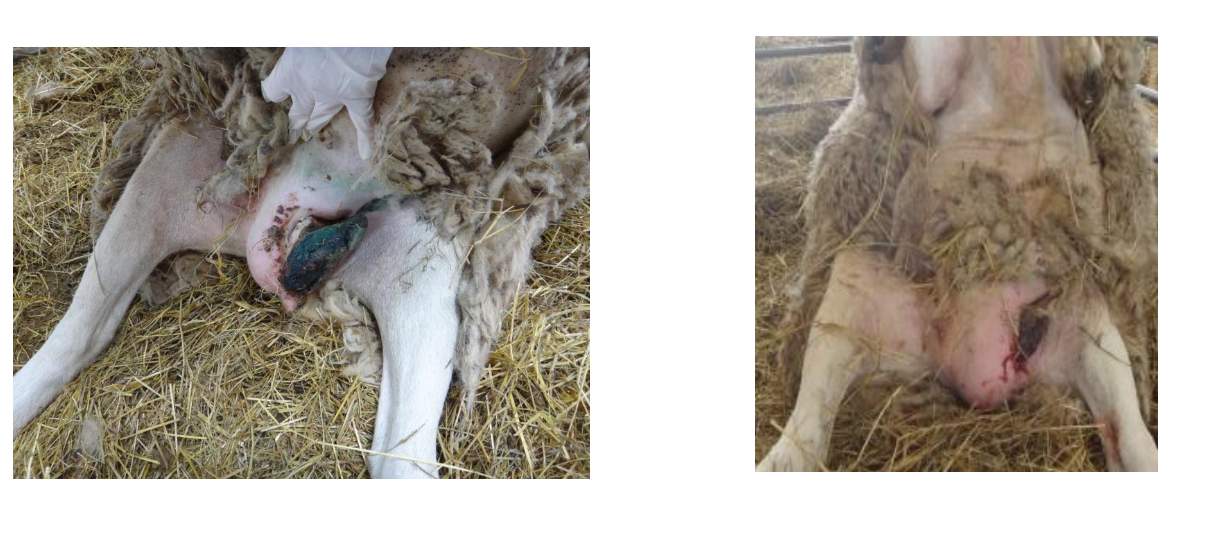
Ewe sick, toxaemia, tachycardia, rumen stasis, inappetant, lame, recumbent
Lambs hungry
Udder swollen, cold blue, clear boundary between diseased and healthy tissue, will eventually slough
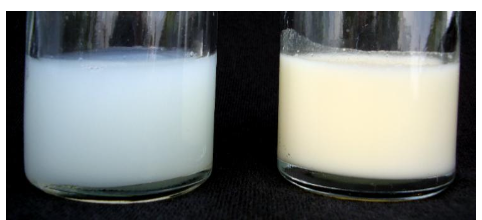
Milk severely discoloured
When does acute mastitis most commonly occur?
Immediately post lambing or often 4-8 weeks when ewe is in peak lactation
What are the clinical signs of acute mastitis?
Ewe fever, lame, lambs hungry
Udder red, painful, swolllen
Milk abnormal appearance, discoloured, clots, watery
When is chronic mastitis often detected?
When ewe is dry at weaning or culling time when udder checked
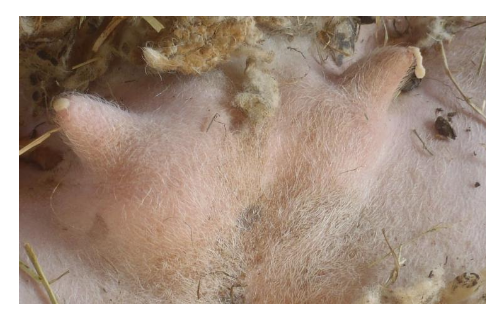
What are the clinical signs of chronic mastitis?
Ewe not systemically ill
Udder abscesses, swollen or light purulent discharge from teats
What are the most common bacteria involved in mastitis in the UK and what is the ROI?
Most cases enter through teat end
Staphylococcus aureus- from teat skin
Mannheimia haemolytica- from lambs mouth
Bacteriology can help determine source
What are some other pathogens causing masitis?
Strep spp, E. Coli - Environmental
A pyogenes
Maedi -visna
Leptospira interogans var hardjo
Mycoplasma agalactiae- notifiable
What are the soruces of infection with mastitis?
Teat skin and lambs mouth (S. aureus, M. haemolytica)
Previous chronic infections in udder (emerges in next lactation)
Environment: E. coli, streps
Explain how mastitis tends to occur in the ewe
Milk supply demand mismatch
Ewes under supply, lamb over suckling
Immune suppression from metabolic stress and teat damage caused by lamb
Allows bacteria to invade
What are the risk factors for mastitis in ewes?
Genetic factors- fast lamb growth rates and low milk prod ewes
Prolificacy- multiple lambs
Age- younger or older
Udder confirmation- abnormal teat position
Udder abscesses/ chronic infections
Teat lesions- orf, chapping, over sucking
Concurrent disease - Fluke, Johnes, worms, preg toxaemia, dystocia
What can be done to manage risk factors for mastitis?
Farm management factors
Nutrition- don't underfeed in late preg and lactation, keep good BCS, Vit E/Sel def., ensure good lamb nutrition (creep feeding- takes pressure off ewe), wean lamb according to weight/growth rate/ewe BCS
Review weaning policy
Don't turn out with triplets
Control concurrent disease
Prevent orf
Hygiene
Milking practices
Cull ewes over 7, those with udder lumps, broken mouthed, abnormal teat position
How is gangrenous mastitis treated?
Euthanasia (likely will be culled even if save)
How is acute mastitis treated?
Systemic antibiotics (based on C&S)
First line amoxicillin min 5 days
Tilmicosin licensed prod (vet only admin)
Strip udder to remove toxins
NSAIDs
IV fluids
Supportive care
How is chronic mastitis treated?
Culling
What are the most common causes of teat lesions?
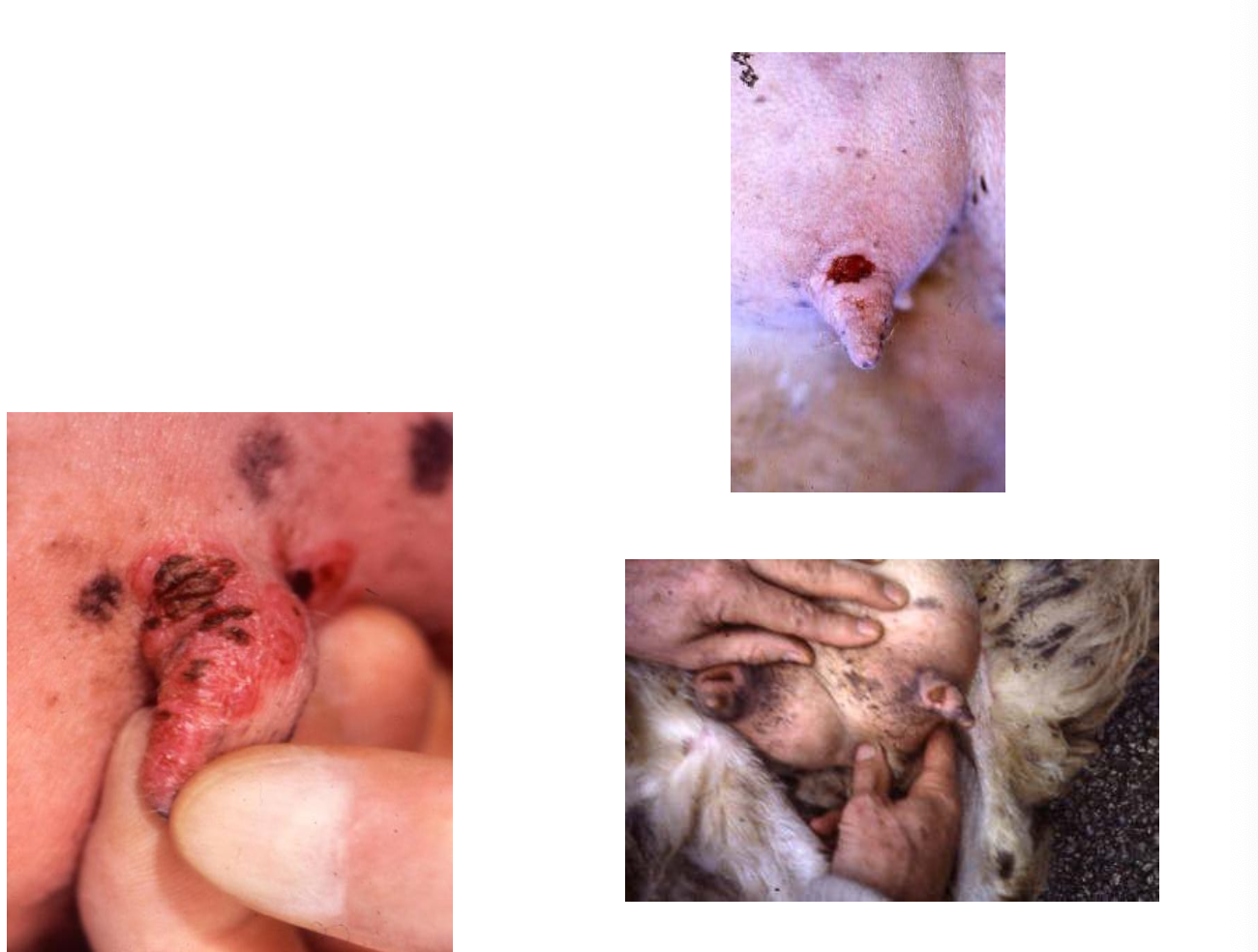
Damage from
Over sucking
Chilling- chapped teats
Poor conformation
Orf
Predisp to 2° infection