Functional Assessment - Neuro PM
 Call Kai
 Learn
Learn Practice Test
 Spaced Repetition
 Match
Match Flashcards
 Knowt Play
1/35

There's no tags or description
Looks like no tags are added yet.
Name | Mastery | Learn | Test | Matching | Spaced | Call with Kai | Chat |
|---|
No analytics yet
Send a link to your students to track their progress
36 Terms
Identification of patient’s specific functional activities
Functional assessment

A functional assessment will do one or both of the following:
Aability to do them independently (safely and without assistance)
How well do they do them (quality)?

Why do we do functional assessment in PT?
To document work towards?
1.
2.
To document work towards ultimate goals of rehab
To return patient to a lifestyle that is as close as possible to the pre-morbid level OR
Maximize current potential for function and maintain it as long as possible (if neurodegenerative)
What is a functional activity?
All tasks, activities and roles that an individual self-identifies as essential for their ______

What is a functional or activity limitation?
The inability of a patient to perform an action or activity in ______
Usually occurs due to?

Identifying Functional Limitations using ICF Model
Refers to _______ and structures instead of pathology and impairment
Refers to _______ instead of disability and handicap
Takes into ______ factors
Language of PT now reflects ICF model

Body Functions and Structures

Activity and participation - what 3 functions?
Physical Function - 2 main categories
Sensorimotor skills of daily self-care - feeding, dressing, hygiene, physical mobility?
Physical Function - 2 main categories
Advanced skills - vital to independent community living - managing personal affairs, shopping, cooking, home chores, driving?
Psychological Function - 2 main categories
Refers to intellectual or cognitive abilities?

Psychological Function - 2 main categories
Refers to coping mechanisms needed to deal with everyday events and traumatic/stressful happenings in life?

Refers to the individual’s performance of social roles?
Participation in recreational activities, clubs, social interactions with others (telephoning, visiting relatives/friends), occupational pursuits

Discordance between actual performance of individual in a particular role and community expectations. (i.e. unable to be a worker, a student, a spouse)?

What must be accounted for when defining “normal” for participation restriction
Cultural & social differences

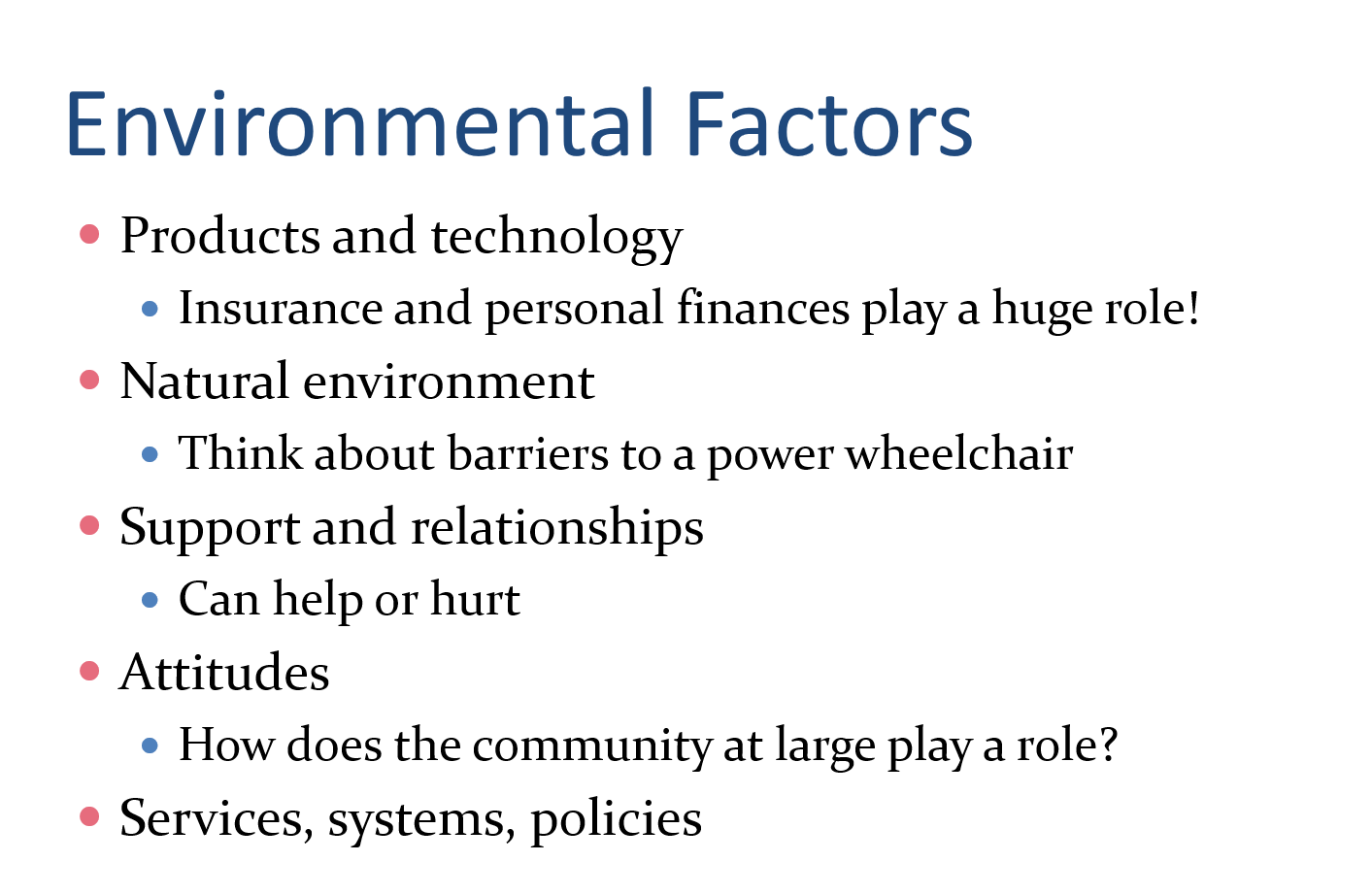
Environmental Factors
What role do functional tests and measures serve?

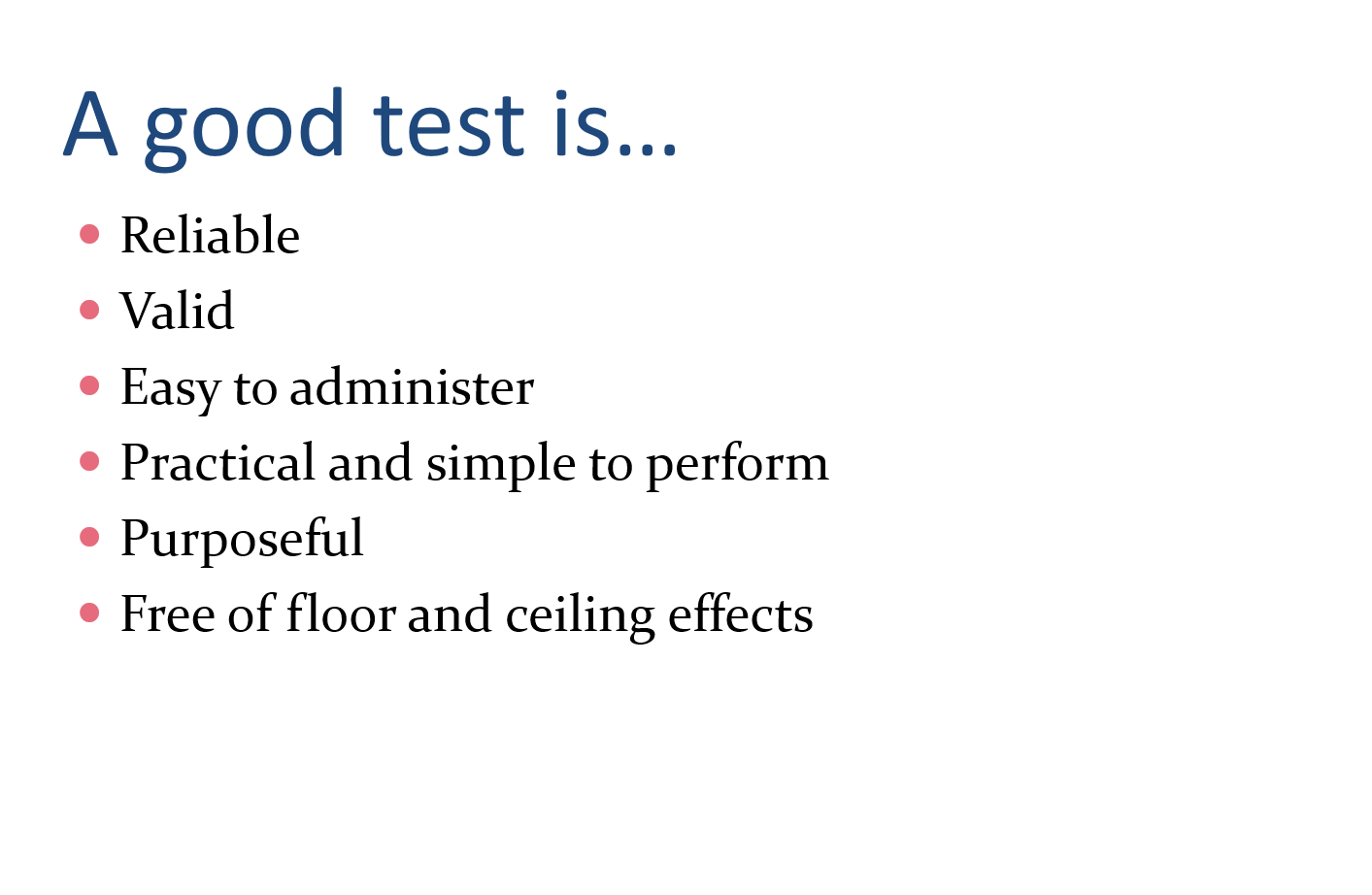
A good test is…
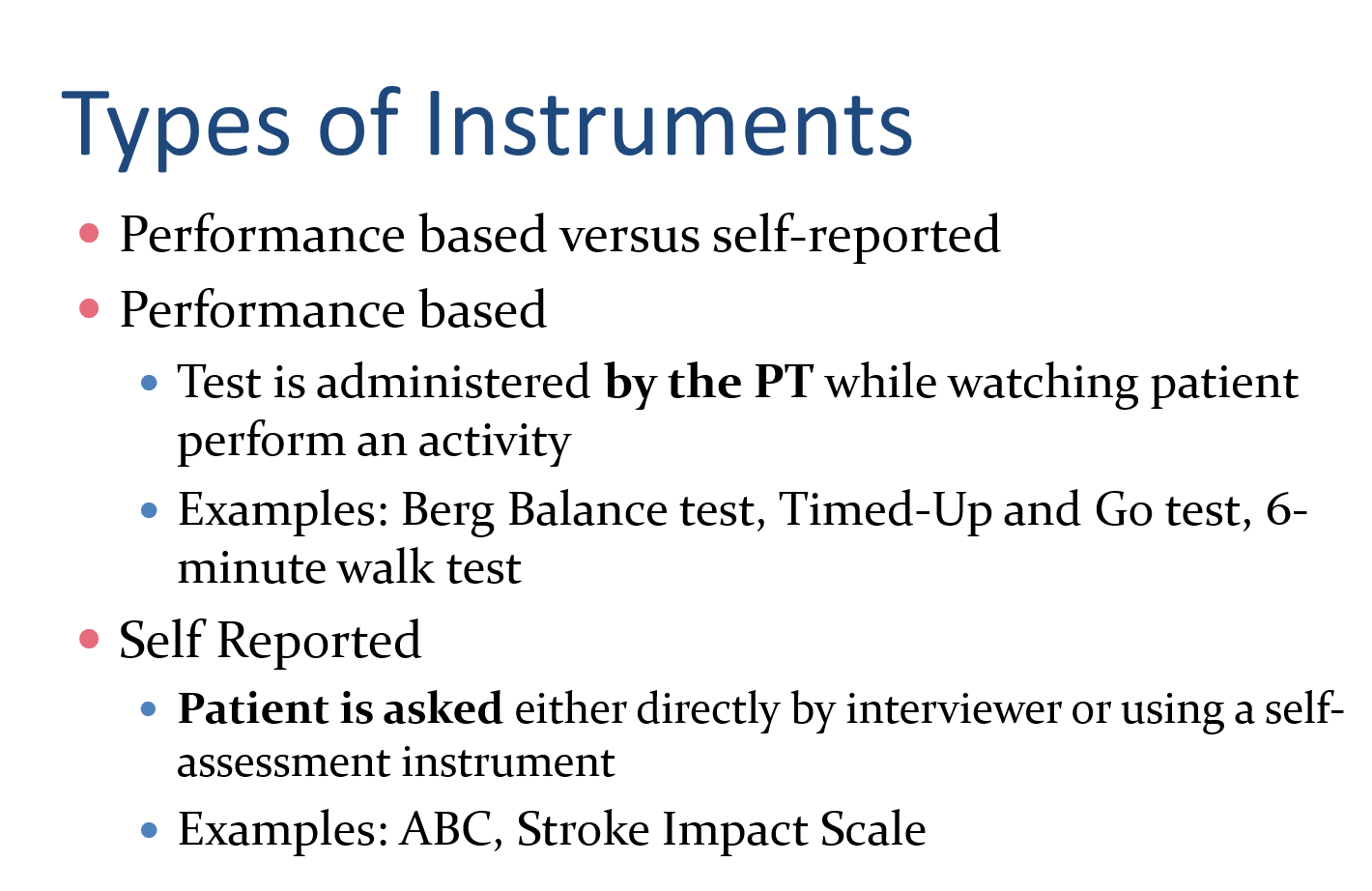
What type of test is administered by the PT while watching patient perform an activity?

What type of test is it where Patient is asked either directly by interviewer or using a self-assessment instrument
Performance-based assessments
Must give?
____ assistance beyond safety concerns
Data gathered under a _____
____ success or failure of person’s ability to perform goal-directed activities in natural conditions
Must look at ____

Self-Assessment Tests
Based on?
Should use clearly worded questions and patient-friendly language, without bias
Must consider?
Distinguish between?
GET A _____

Options for Response Formats
Nominal measures:
Ordinal measures:
Summary/additive measures:
Visual Analog Scales:
Video recordings

Consider Factors that Influence Functional Testing / Outcomes
Settings must be?
Precise instructions:
Result may be biased by ___ so what must be considered?
Retesting should be done periodically to document progress and contribute to discharge planning process

What do we do with the information collected from a functional assessment?
Write patient-centered functional goals & outcomes of intervention

Documentation of Function
See Box 8.1 in OSS PR book
Important Descriptors - what do they tie together?

Choosing Functional Assessments
explore what properties of the tools being used?
APTA suggests PT's should only use tools in which what is know?
psychometric properties
reliability/validity/specificity/sensitivity


Neuro CPG- Core Outcome Measures
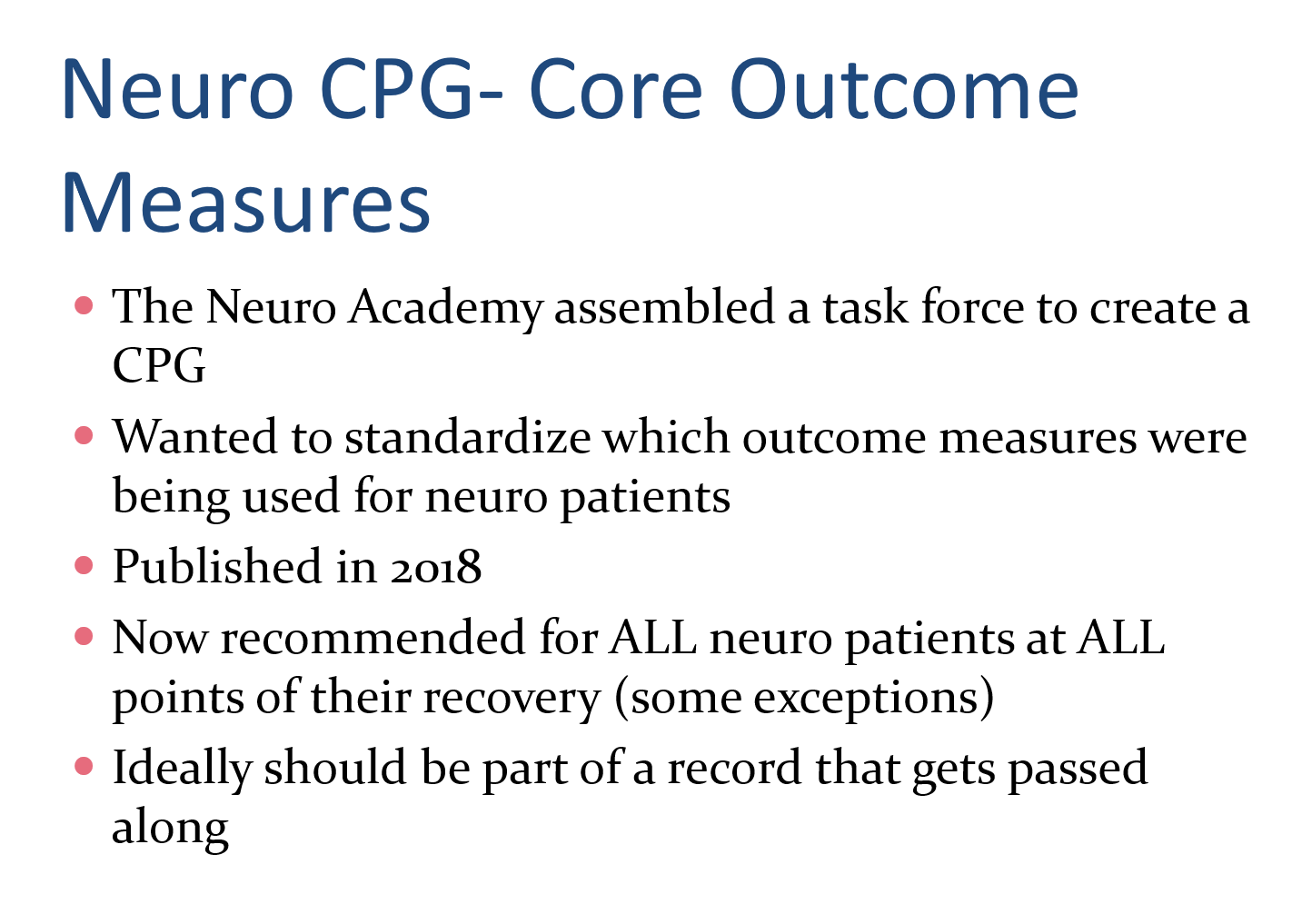
Neuro CPG - Core Outcome Measures
what are the 6 selected tests?

Basic principles - Core outcome measures
Should be done when? at minimum?
Document what score if pt is not able to achieve score yet?

When is it appropriate to omit a test?
Specifically for ABC scale?

Communication of test results with patients

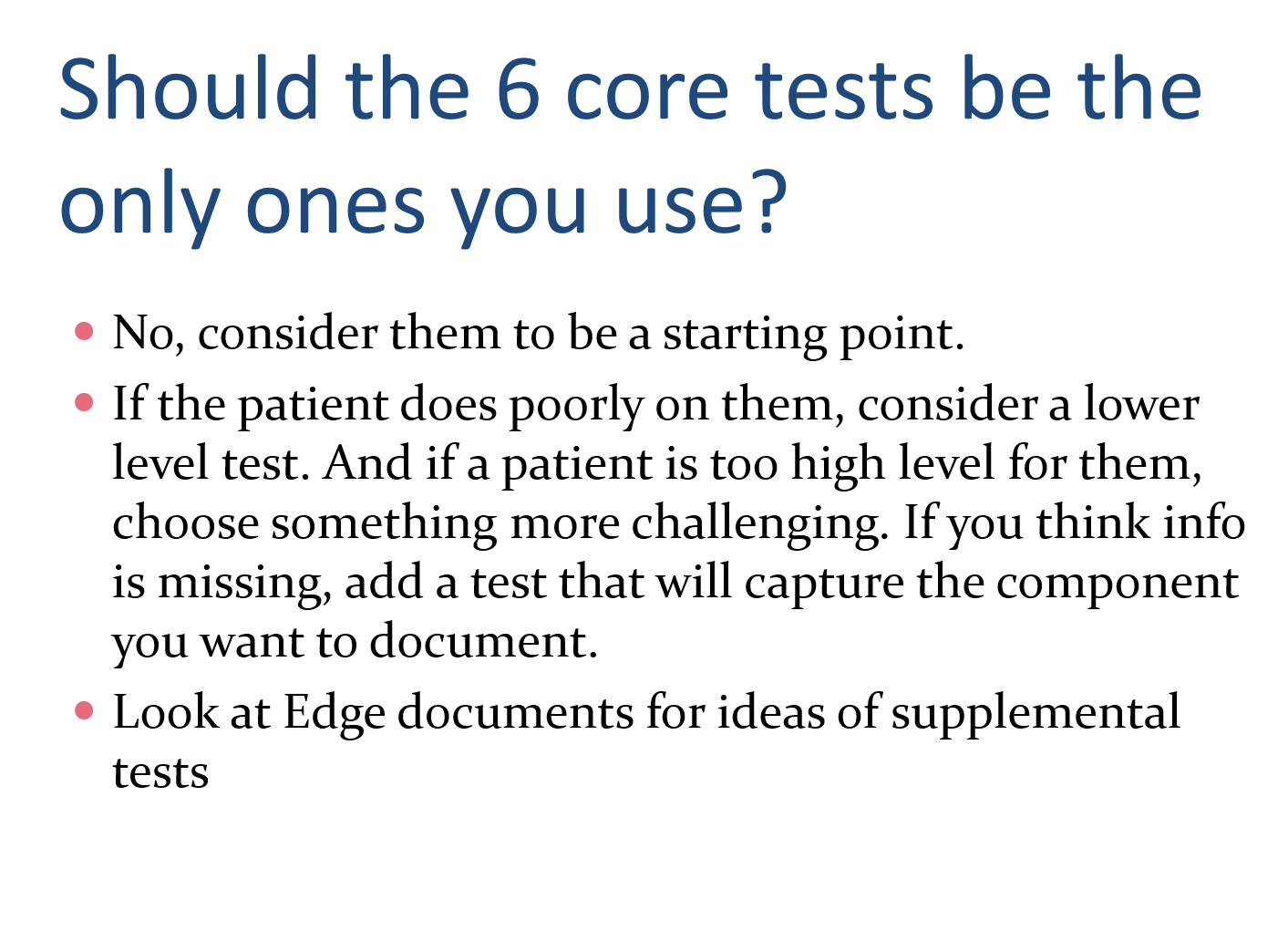
Should the 6 core tests be the only ones you use?
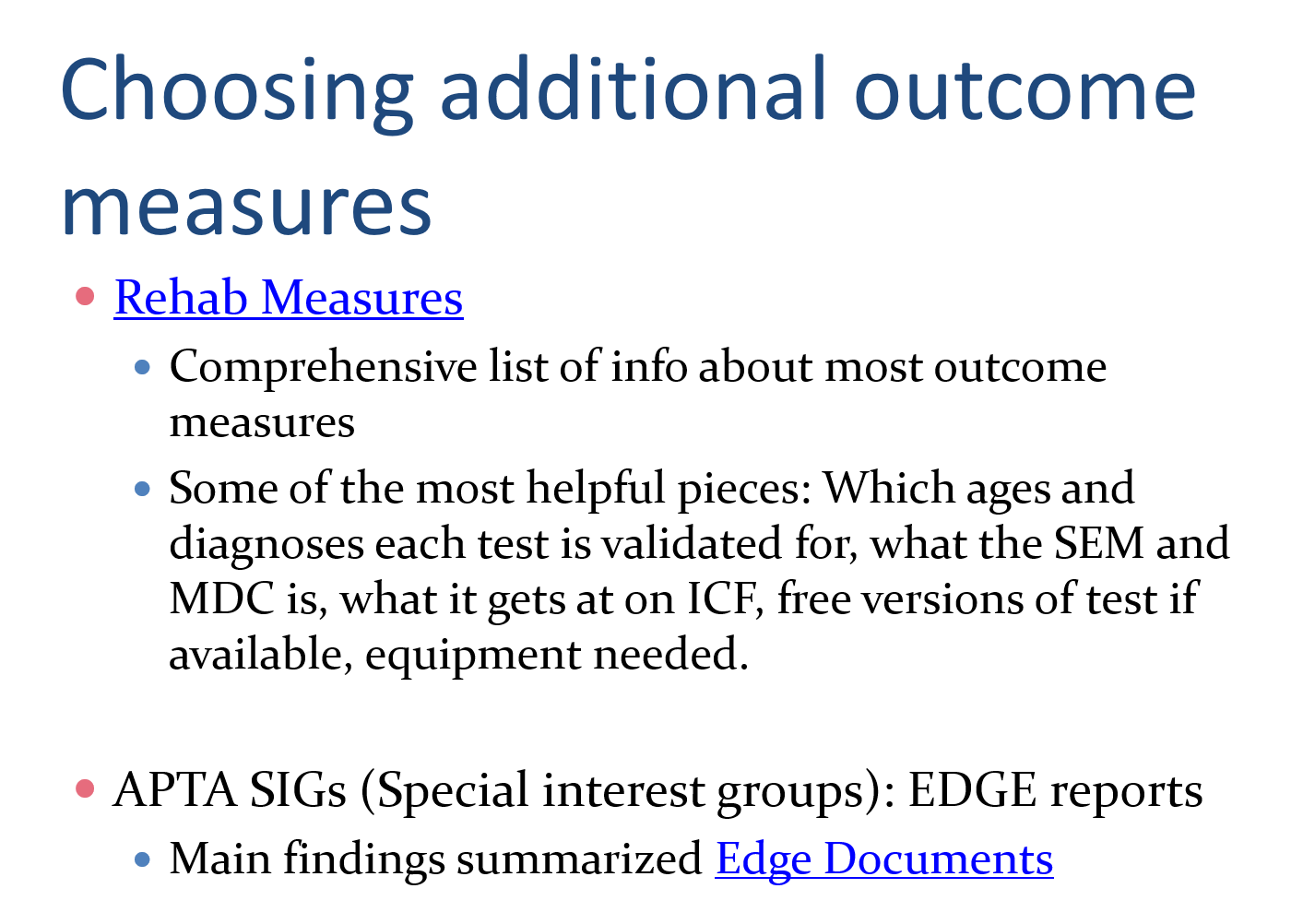
Choosing additional outcome measures
Provides data on functional status of adults with specific chronic conditions and the well-being of patients experiencing depression compared to subjects with a chronic medical condition
Participation Level Tests
