DC Biology Unit 1 Study Guide
 Call Kai
 Learn
 Practice Test
 Spaced Repetition
 Match
 Flashcards
 Knowt Play
1/28

There's no tags or description
Looks like no tags are added yet.
29 Terms
Describe the steps in the scientific method
1) Observation: can be images, personal viewing, or reading literature.
2) Ask a question and form a hypothesis: form two hypotheses: the null hypothesis and the alternative hypothesis.
3) Experiment: use independent and dependent variables throughout experiments.
4) Analyze results: either reject or accept the null hypothesis.
Differentiate between a theory, a hypothesis, and a prediction
Theory: explanation of how and why certain phenomena occur in the natural world. Based on extensive observation, experimentation, and peer review.
Hypothesis: educated guess. Must be consistent with what’s already known, and capable of being tested and possibly falsified by evidence.
Prediction: a specific, expected outcome that logically follows if a scientific hypothesis or idea is true.
Describe the characteristics common to all living things
Matter: Anything that has mass and takes up space.
Subatomic Particles: Protons (+), Electrons (-), and Neutrons (0).
Elements: Pure substances that cannot be broken down further by chemical reactions.
Name and describe the components of an atom
An atom is mostly empty space. They are made of subatomic particles with positive and negative charges. They have mass.
Describe how the number of valence electrons of an atom determines its bonding patterns
Valence electrons are found in orbits farthest from the nucleus of an atom. These electrons determine the way in which the atom will combine with other atoms, and thus determines its chemical properties.
Determine the number of valence electrons in an atom given its atomic number

Differentiate among nonpolar covalent, polar covalent, hydrogen, and ionic bonds
Nonpolar covalent: occurs when two atoms share bonds equally.
Polar covalent: occurs when electrons are not shared equally (positive and negative charges).
Hydrogen: attraction between slightly negative and slightly positive ends of atoms (weak bonds).
Ionic: atoms that are held together by an attraction between negatively and positively charged ions.
Describe how the emergent properties of water make it conducive to life
Solid water is less dense than liquid water, so as water freezes, the hydrogen bonds become rigid, which pushes water molecules around to expand the liquid. This causes solid water to float, allowing for life in water.
Explain why carbon can form diverse structures
Carbon has 4 valence electrons, so it creates covalent bonds with other elements to acquire 4 more electrons to fill outer shells.
List the four categories of organic macromolecules and name their monomers
Carbohydrates: Monosaccharides
Lipids: Fatty Acids
Proteins: Amino Acids
Nucleic Acids: Nucleotides
List functions of proteins, nucleic acids, carbohydrates, and lipids
Carbohydrates: an energy source for living organisms.
Lipids: building blocks and energy source for living organisms.
Proteins: workers of the cell.
Nucleic Acids: holds genetic information.
Recognize and describe the basic structures of amino acids, proteins, nucleotides, DNA, monosaccharides, polysaccharides, steroids, and triglycerides
Amino acids: a central carbon atom, an amino group, a carboxyl group, a hydrogen atom, and an R group.
Proteins: primary structure is a linear sequence of amino acids with covalent bonds. There are also secondary structures (twisting into coils), tertiary structures (folding into sheets to create globular proteins), and quaternary structures (made of several polypeptides).
Nucleotides: Made of a pentose sugar, a phosphate group, and a nitrogen-containing base.
DNA: a double helix that looks like a twisted ladder.
Monosaccharides: made of Carbon, Oxygen, and Hydrogen to form little rings (pentagons or hexagons).
Polysaccharides: made of long chains of monosaccharides.
Steroids: four carbon rings bonded together.
Triglycerides: look like a capital E with three fatty acid chains next to a glycerol.
Differentiate between saturated and unsaturated fatty acids
Saturated does NOT have double bonds and the structure is straight, while unsaturated has AT LEAST one double bond and the structure is bent.
Differentiate between acids and bases
Acids have an excess of hydrogen ions (pH < 7) while bases have an excess of hydroxyl ions (pH > 7)
Recognize the following functional groups: hydroxyl, carboxyl, amino, sulfhydryl, phosphate, and methyl
Hydroxyl: OH-, Carboxyl: COOH-, Amino: NH2-, Sulfhydryl: SH-, Phosphate: PO4²-, Methyl: CH3-
Differentiate between hydrolysis and dehydration synthesis
Dehydration synthesis builds large polymers from smaller monomers by REMOVING water, while hydrolysis breaks polymers back down into monomers by ADDING water.
Explain the terms complementary and antiparallel in relation to DNA structure and function
Complementary and antiparallel describe how the two strands of a DNA molecule align and fit together to form a stable double helix.
Describe the structure of a nucleotide
Made of a pentose sugar, a phosphate group, and a nitrogen-containing base.
Describe the organization of nucleotides in a DNA molecule
Nucleotides are organized into a double helix formed by two long polynucleotide strands.
Describe DNA packaging in prokaryotes and eukaryotes
DNA packaging organizes and condenses long genetic molecules to fit inside cells.
Explain the four levels of protein structure
The primary structure is a linear sequence of amino acids with covalent bonds, secondary structures twist into coils, tertiary structures fold into sheets to create globular proteins, and quaternary structures are made of several polypeptides.
Explain how the order of amino acids determines the way in which a protein folds
As the chain of amino acids grows, the chemical properties of each individual building block interact with the surrounding water and with other parts of the chain.
Explain the relationship between protein folding and protein function
A protein's function is entirely dependent on its three-dimensional folded shape. If a protein does not fold into the correct shape, it cannot do its job.
Given the description of an experiment, give the null and alternative hypothesis and determine the dependent and independent variables

Differentiate between the control and controlled variables of an experiment
A control (or control group) is a baseline sample or test subject that does not receive the experimental treatment, while controlled variables are the specific conditions kept constant across all groups to ensure a fair test.
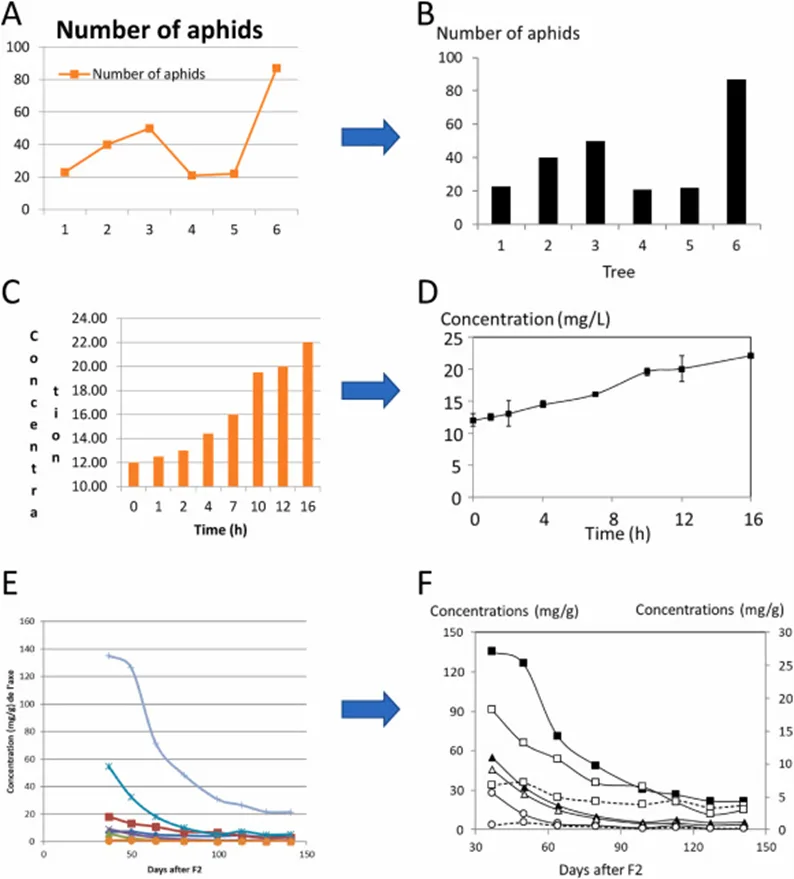
Evaluate whether data should be presented in the text, as a table, or in a graph
Choose text for simple numbers, tables for exact values and comparisons, and graphs for visual trends and patterns.
Given a set of data, determine the type of graph that would be most appropriate for presenting the data
Explain the purpose of the sports drink and the detergent solution in the process of DNA isolation
The sports drink provides a gentle liquid medium containing salt to collect and protect loose cheek cells, while the detergent solution breaks open those cells to release the DNA.
Given a table of mRNA codons, determine the amino acid sequence that will be formed from a DNA sequence
