Fish order exam (the 'Formes)
 Call Kai
 Learn
 Practice Test
 Spaced Repetition
 Match
 Flashcards
 Knowt Play
1/51

There's no tags or description
Looks like no tags are added yet.
52 Terms
Lampridiformes
opahs
-dorsal fin with extremely long base
-Upper jaw protrusible
-fins lack true spines

Gadiformes
Cods and Rattails
-absence of true fin spines
-long dorsal and anal fins
-barbel on chin
-3 dorsal fins (cods)

Beryciformes
squirrelfish, fangtooths, flashlight fish
-Jakubowskies Organ: a cluster of sensory cells between the nasal and lacrimal bones
huge eyes
spiny
red color usually
Mugiliformes
mullets
-pelvic fins well behind pectoral fins
-small triangular mouth
-very separated dorsal fins, first fin with 4 spines

Atheriniformes
silversides and relatives
-weak anal fin spine
-weak or absent lateral line canal
-paired nostril openings
slight upturned mouth
posterior dorsal fin

Beloniformes
needlefishes, half-beaks, flying fish
-lower pharyngeal bones fused to triangular plate
-dorsal and anal fins at rear end of body
-lower lobe on caudal fin longer than upper lobe

sygnathiformes
seahorses and pipefishes
-tube shaped snout
-small mouth with non-protrusible upper jaw
-abdominal pelvic fins

scorpaeniformes
scorpionfishes, groupers, soapfishes, seabass
-sub-orbital stay (post-ocular directed spine on opercle)
-unique gasbladder

serranoids
sea basses

lower perciformes
perches, snooks, jawfish, sunfish
-thoratic pelvic fin iwth 1 spine 5 rays
-ctenoid scales
-lower jaw protruding upper jaw

perciformes
butterflyfishes, etc
-thoratic pelvic fin iwth 1 spine 5 rays
-ctenoid scales

Carangiformes
jacks and remoras
-1-2 tubular ossifications (pre-nasals)
-small adherent scales
-remoras have modified dorsal fin on head

polypteriformes
ropefishes
-lungs
-spiral valve
-mostly cartelage skeleton
-ganoid scales
-2 gular plates

acipenseriformes
sturgeons and paddlefishes
-heterocercal tail
-5 rows of bony scutes
-4 oral barbels
-pectoral fins with soft rays fused into anterior spine-like element

lepisteiformes
Gars
-bony ganoid scales
-elongate jaws and fanglike teeth
-dorsal and anal fins located posterior
-abbreviated heterocercal tail

Amiiformes
Bowfin
-cylindrical body with long dorsal fin
-heterocercal tail
-maxilla included in gape
-median gular plate

elopiformes
tenpounders, ladyfish, tarpons
-long jaws w/ toothed premaxillae and maxillae in gape
-wide gill openings
-single gular plate
-elongate body

albuliformes
bonefish
-forked caudal fin
-small inferior mouth
-small scales

anguilliformes
true eels
-lack pelvic fins, pelvic girdle
-scales mostly absent
-gill openings narrow and gill rakers are absent
-rounded caudal fin continuous with dorsal and anal fins

clupeiformes
herrings and anchovies
-Otophysic Connection: a connection between gas bladder and otic region by way of pneumatic duct. Sound hits the swimbladder, compresses, and the membrane inside the auditory bulla is moved, which triggers the fluid inside to push the hair membrane.
-1 or more unpaired scutes crossing abdominal midline
no fin spines
np adipose fin
no gular plate

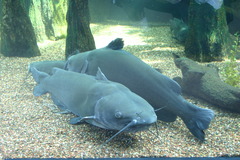
siluriformes
catfish
-4 barbels
-maxilla lacks teeth
-spine like rays at anterior dorsal and pectoral fins.
usually adipose fin; no true scales, instead bare or bony plates
characiformes
piranhas
-freshwater
-adipose fin
-highly developed teeth
-nonprotrusible upper jaw
body usually covered in scales

Argentiniformes
deep sea smelts
-adipose fin
-Crumenal Organ (modified dorsal portion of gill arches, serves to trap food particles
-light producing organs and upward directed eyes
dorsal fin near body misline
big eyeballs

Osmeriformes
"true" smelt w/ adipose fin
-scales without radii
-maxilla included in gape
-elongated body

salmoniformes
Salmon and trout
-Soft rayed with adipose fin
-pelvic fins thoracic with auxiliary process

esociformes
pikes and mudminnows
-anal fin far posteriorly
-duck bill like mouth
-lacks teeth
no adipose fin

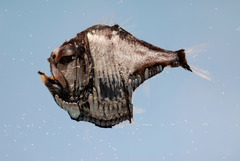
stomiiformes
hatchet fish, dragonfish, bristlemouths
-variety of luminescent organs present, large light organs under the eyes
-hatchetfish have large dorsally directed eyes
-upper jaw includes toothed premaxilla and maxilla
aulopiformes
lizardfish
-large mouth, supermaxilla small/absent
-adipose fin usually present
-dorsal fin small, midbody
-forked caudal fin
elongate

myctophiformes
lanternfish & blackchins
-large terminal mouth, extending well past posterior wall of orbit
-small photophores arranged in species-specific rows
-pelvic fins abdominal
some with adipose

Labriformes
wrasses and relatives
-unique pharyngeal jaw with a muscular "string"

chromides
chichlids and damsalfishes
-body laterally compressed and deep
-nostrils on either side of head
-incomplete lateral line

blenniformes
blennies
-jugular pelvic fins w embedded spine
-elongate
-pelvic bones form nut-like pod

gobiiformes
gobies
-united pelvic fin
-absence of perietal bones

xiphiiformes
swordfishes
-elongate bill derived from premaxillae
-2 anal fins
-origin of dorsal fin over operculum

scombriformes
tuna, mackerel
-dorsal finlets between caudal and dorsal/anal fins
-slender caudal peduncle
-2 dorsal fins that fold into grooves on dorsal surface

cottiformes
sculpins (snailfish and eelpouts)
-fan like pec fins
-long dorsal w/ notch
-pelvic fin 1 spine 4 or less rays

ophidiiformes
cusk eels
-v. deep living fish
-jugular pelvic fins
-dorsal and anal fins
large head
mouth with confluent anal and dorsal
highly reduced caudal fin

Batracoidiformes
toadfishes
-broad head with dorsally oriented eyes
-large mouth
-gill membrane broadly united with isthmus

Lophiiformes
anglerfish, frogfishes, batfishes, goosefish, monkfish
-globiform body
-pore like gills
-loose skin
-presence of esca/illicium in some

pleuronectiformes
flatfish
-eyes migrated on one side of body
-highly compressed body
-coloration on eye side but not on blind side

Tetraodontiformes
puffers, sunfish, triggerfish
-hyomandibular and palatine firmly attatched to neurocranium
-reduced skull
-skin modified as spines, sheilds, or plates

cypriniformes
carps, minnows, koi
-scaleless head
-very protrusible jaw
-1st exclusion of maxilla from the gape
3 branchiostegal rays; no teeth
subcohort protacthopterygii
argentiniformes, osmeriformes, salmoniformes
physostomous swim bladder
found in salmoniformes, swim bladder is directly connected to the gastrointestinal tract so that fish gulp and fart air to regulate boyancy
physolistous swim bladder
not connected to digestive tract, uses diffusion in blood to regulate boyancy
retractor dorsalis
all fishes "above" salmoniformes have a muscle that connects the vertebral column with upper pharyngeal jaws, making these internal "jaws" into biting and crushing structures.
Weberian ossicles
the tripus, interaclarium, scaphium, and laustrum increase hearing acuity by transmitting vibrations from swimbladder to the inner ear
Schreckstoff
one punctured fish sends out "fear" sense to the rest of the school that triggers them to to escape
Cyprinodontiformes
killifish
small
dorsal fin posterior
scaled heads
dorsal & anal fin adjacent to each other
Trachiniformes
stargazers
-dorso-ventrally depressed
-upwardly directed eyes and mouths

Gobiescoiformes
clingfish
-pelvic fin modified to suction disc
Acanthuriformes
compressed laterally
narrow peduncle with bony scute/spine (1 or more spine)
Dory