Molecular Genetics
 Call Kai
 Learn
 Practice Test
 Spaced Repetition
 Match
 Flashcards
 Knowt Play
1/22

There's no tags or description
Looks like no tags are added yet.
23 Terms
What are SNP’s
tiny differences in DNA between people
stands for single nucleotide polymorphism
theyre one reason people arent genetically identical
What is GBS
genotyping by sequencing
technique used to find lots of SNP’s by sequencing DNA
cut up dna, sequence parts, compare individuals, identify SNP’s
Compare GBS and SNP array
SNP is the genetic difference whereas GBS is the method used to find the genetic difference
both GBS and SNP arrays are able to identify SNP’s but they use different SNP’s to do so
what are the advantages and disadvantages of SNP arrays

what are the advantages and disadvantages of GBS

What type of inheritance do mitochondrial DNA and Y chromosome show
uniparental inheritance
mitochondrial DNA only inherited along maternal line
Y chromosome inherited
mitochondrial dna does not recombine
what is the recombination like in autosomes and mitchondrial DNA + Y chromosome
autosomes - recombine creates unique combination of SSR’s and SNP’s
mito DNA and Y chromosome - do not recombine - dna sequence only changes through mutation
what are some features of the mitochondrial genome
high copy number
easy amplification
lack of recombination
maternal inheritance
high mutation rate - particularly in non coding control region - D loop
sequence contains SNP’s and microsatellites
what are the features of Y chromosome
sequence contains SNP’s and microsatellites
Y chromosome is single copy and has high content of repetitive DNA, more difficult to analyse than mitochondrial DNA
what is a haplogroup
describes line of descent
a group of people that share a common genetic ancestor because they all inherit the same genetic marker
example - if theres a mutation and it gets passed down through generations everyone who inherits it can be grouped together in same haplogroup
they are usually identified using the mito DNA and Y chromosome
How do you know if theres a mutation in your mito DNA
need a reference sequence
haplogroup analysis
nucleotide changes
how to build and read a haplogroup phylogeny
the big box H is a haplogroup
further down you go the more specific the genetic group becomes
to build it:
they look at peoples mtDNA and compare it with reference sequence - rCRS, then look for mutations
same mutations = same genetic group
the numbers are positions on the mtDNA where mutation has occured

what is the difference between genomes in prokaryotes and eukaryotes
Prokaryotes:
single chromosome and plasmids
genes dont contain introns
very little repetitive DNA
genes often found in clusters
Eukaryotes:
genomes have multiple chromosomes
no plasmids
organelle genomes
genomes contain introns
gene clusters rare but sometimes found
whats the difference between transcriptomes and genomes
transcriptomes are smaller than genomes
vary in size less as no repetitive sequence
what are the main steps to next generation sequencing
DNA or RNA extraction
library preparation
cluster generation
sequencing
what are the main steps in illumina DNA sequencing
DNA is broken down into small fragments
adapters and barcodes are attatched to each fragment
adapters allow flow cells to be stuck to a flow cell and barcodes link the DNA fragment to the sample
primers bind to the adapters
each fragment is copied many times - this group of copies = a cluster
this happens at the same time across the flow cell
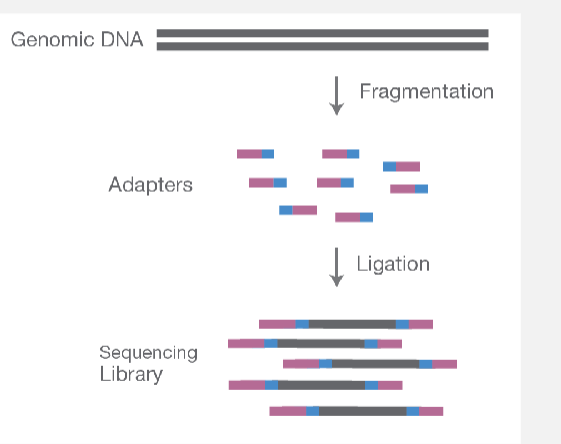
What are the main steps in next generation sequencing
machine supplies dNTP’s - each base has a fluroescent dye
only one base is added at a time - temporary OH cap stops another base being added immediately after
machine shines light on the DNA and records the fluorescent colour - can identify which base was added
fluorescent dye and cap are removed - allows next base to be added
machine repeats the process many times
difference between sanger and next generation sequencing

what is long read sequencing
next next generation sequencing
generates reads up to 1Mb which can span repeats and allow resolution of complex genomic regions such as centromeres and telomeres
SMRT and oxford nanopore sequencing are two of the leading technologies
what is long read sequencing
reads longers stretches of DNA in one go rather than breaking information into short reads
long read sequencing technologies - PAC bio and oxford nanopore
whats PAC bio
reads DNA by detecting flashes of light
circular DNA is immobilised in small wells ready for sequencing
uses DNA polymerase to add fluroscently labelled nucleotides to template
sequencing is error prone so each templates sequenced multiple times
what is oxford nanopore
motor proteins unwind dna and feed single stranded dna into a nanopore
electrical current is passed over nanopore dna moves through pore