Chemical Signaling
 Call Kai
 Learn
Learn Practice Test
 Spaced Repetition
 Match
Match Flashcards
 Knowt Play
1/17

There's no tags or description
Looks like no tags are added yet.
Name | Mastery | Learn | Test | Matching | Spaced | Call with Kai | Chat |
|---|
No analytics yet
Send a link to your students to track their progress
18 Terms
receptors
proteins with binding sites for specific signalling chemicals
enzymes vs receptors

quorum sensing in bacteria
a change in behavior of a colony when its population density reaches a certain threshold
bioluminescence in fibrio fischeri and mutualism with the bobtail squid
hormones
produced by endocrine gland and transported by bloodstream
hormones can persist in body for much longer than with nerve impulse
estrogen, insulin, glucagon, testosterone
neurotransmitters
transmits signals across synapses
very quick and rapid removal
acetylcholine, dopamine, serotonin
cytokines
proteins that acts as chemical messages within cells or between nearby cells
multiple effects depending on binding site
calcium ion
muscle fibre - calcium ions bind to a protein on actin to allow myosin heads to attach
neurons - causes the release of neurotransmitters from presynaptic neuron
chemical diversity of hormones and neurotransmitters

localized and distant effects of signalling molecules
hormones can have effects over large distances
neurotransmitters produce a localized effect between neurons
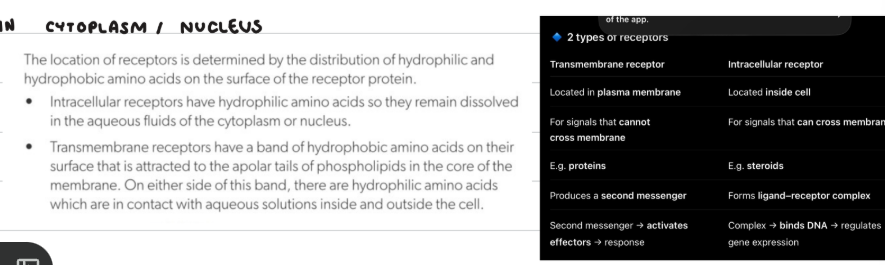
Transmembrane receptor in plasma membrane and intracellular receptor in cytoplasm and nuecleus
Initiation of signal transduction pathways by receptor
transduction pathway - sequence of interactions initiated by the ligands binding to the receptor
intracellular pathway - ligand enter the cell, binds to receptor, complex regulates gene expression
transmembrane pathway - ligand binds w receptor, receptor chagnes shape, produces secondary messenger molecules and causes changes within cells
transmembrane receptors for neurotransmitters and changes to membrane potential
neurotransmitters released from presynaptic neuron
bind to receptors on post synaptic neuron
causes sodium ion channels to open
sodium enters the cell via facilitated diffusion
changes the membrane potential
e.g. acetylcholine is a messenger between neurons and muscle fibres
Transmembrane receptors that activate G protein

Mechanism of action of epinephrine receptors

transmembrane receptors with tyrosine kinase activity

Intracellular receptors that affect gene expression

effect of hormones oestradiol and progesterone on target cells

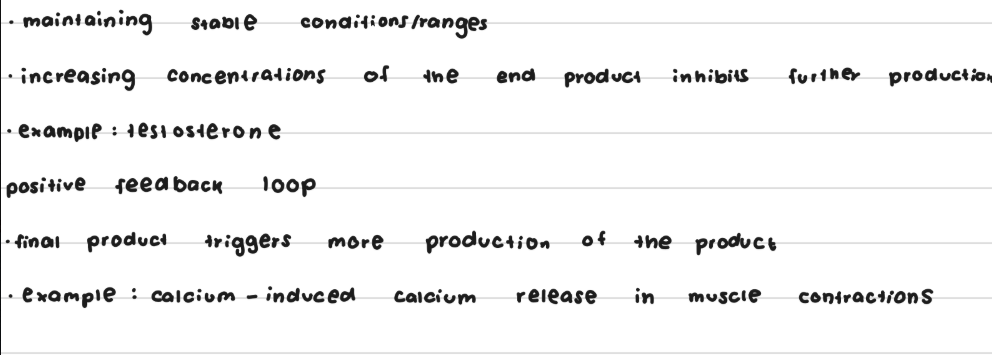
regulation of cell signalling pathways by positive and negative feedback