ARTH study guide
 Call Kai
 Learn
Learn Practice Test
 Spaced Repetition
 Match
Match Flashcards
 Knowt Play
1/44

There's no tags or description
Looks like no tags are added yet.
Name | Mastery | Learn | Test | Matching | Spaced | Call with Kai | Chat |
|---|
No analytics yet
Send a link to your students to track their progress
45 Terms


Ewer Brocca
Medici Porcelain Manufactory (Italian, Florence, 1570-1587), Soft-paste porcelain decorated in underglaze
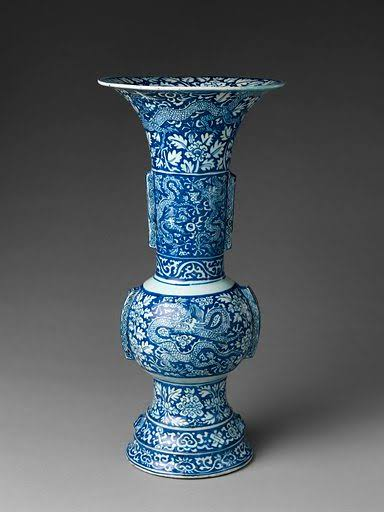
China, Ming dynasty (1368–1644), Wanli mark and period
(1573–1620) Vase with dragons amid flowers, porcelain painted with cobalt blue under transparent glaze
Silk Road in the context of fine china
Chinese potters imported high-grade cobalt blue pigment from Persia via Middle Eastern merchants.
Used cobalt as the dye to make their signature white and blue pottery
Became very popular in Europe due to its elegant design and the fact that it was very hard to come by since it needed to be imported
Many European courts wanted to replicate the "secret recipe" of Chinese porcelain; hence the Ewer Brocca

China China Bust - Ah Xian
China China bust 15, 1999, cast porcelain with hand-painted underglaze decoration,
Casts of his friends and family after he fled China to Australia due to political instability
Contemporary art in China
Contemporary art is not necessarily art now
In China, this is art that was created after the death of Chairman Mao
Art up until then was specifically limited to propaganda for the Red Revolution and to boost Mao
After that, however, artists had 2 options for what to do
They could go back to traditional ink paintings
Portraiture: hyperrealism or postimpressionism
Though some did their own thing

Destruction route
Huang Yang Ping, Huang Yong Ping, The History of Chinese Painting and A Concise History of Modern Painting Washed in a Washing Machine for Two Minutes, 1987
Took 2 books that talked about what a good Chinese painting is and what fine arts is and threw them in the washing machine
Dadaist Move

Reconstruction move
Yang Jiechang, 100 Layers of Ink No.1, 1994, ink and acrylic on paper
laid down on canvas
Calls upon the materiality of ink painting
Yang had to contend with the expectation that ink painting wasn’t avant-garde enough because ink was a traditional medium
Used old materials to create a new form

Re Materialize move
Zhan Wang, Artificial Rock (Jiashanshi), 1996, stainless steel
Used new materials to create a traditional form: the og scholar's rock is limestone rock that has been eroded into a very evocative and interesting form, highly sought out
The artist is updating this traditional art into a more manufactured form
A real stone is used for the sheets of metal to be hammered onto it before then being welded together


Salvaged material Move
Xu Bing, Background Story, 2022, natural debris, glass panel, and lightbox.
Explored the connection between reality and illusion
The painting is based on another painting by a traditional Chinese artist that idealizes nature. However Xubing uses trash and other shit put together meticulously so that when a light is shown through it, it looks exactly like the traditional painting. Turns our understanding of beauty on its head
Xu Bing, Phoenix, 2008
Comment on the cycle of urban construction and destruction that was happening around him

Salvaged Material Move
Ma QiuSha, Wonderland Black Square
Used stocking to wrap around broken chunks of concrete
What inspired her was a childhood memory of her mom taking her to
School and noticing all the other moms that were taking their kids to school
And how, since she was a kid, she could only see their legs, which had
Stalking on them
This was during a time that childrearing was a really big part of her time
And her piece is like an evocative way of commenting on that and the
Female body
Chaine Operatoire
Chain of operations
A tool for archaeologists to look at every step of an operation and understand how it was made
The Chaine Operatoire of Roman Painting: the true fresco
Collect Materials
Purchase Materials
Prepare Wall Surface
Paint
Display

Garden scene from House of Golden Bracelets: Pompeii
Depicts an Ideal garden
All plants are flowering, despite some not being in season


The house of the painters at work
Shows the process of painting due to the house being incomplete
Cinnabar and Red Ocre relationship
Roman artists used brilliant, saturated cinnabar for high-impact central panels or detailed focal architectural zones, while filling surrounding, less-critical backgrounds with economical red ochre
Cinnabar
Really nice red color
Very expensive
Used to display the wealth of a patron
Red ochre
Very similar and cheaper
Materiality
The quality or state of being material, related to, derived from, or consisting of matter

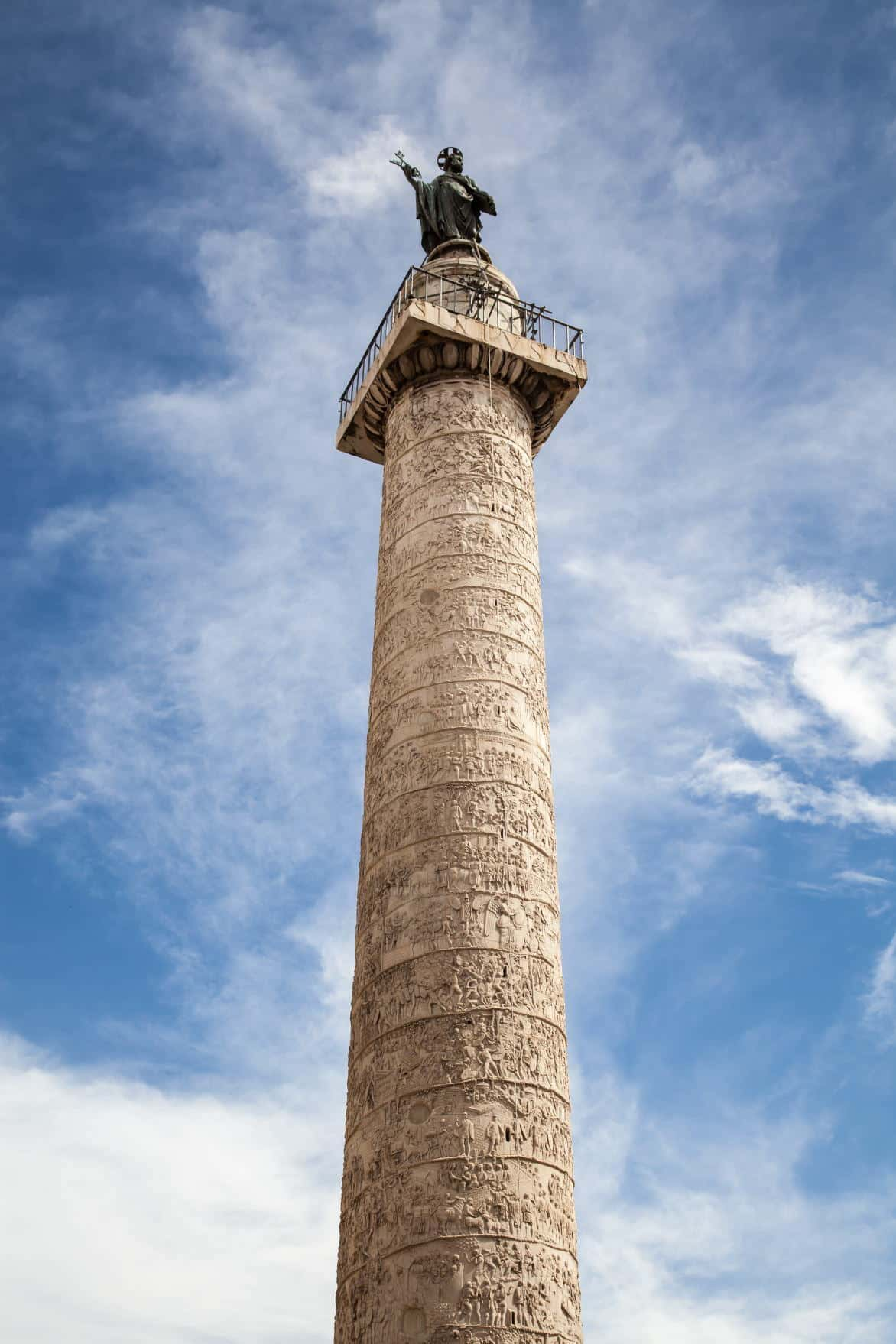
Column of Trajan, Rome
has a narrative bas-relief frieze that spirals up around the column, approximately 620 feet in length.
Certain parts of it can only be viewed from certain angles, and most of it is inaccessible
Victory column, used to honor Trajan’s epic victories and how good of an emperor he is, located in the Roman Forum, which is where important figures were honored
column of trajan materiality
made from Carrara marble which is a very durable and luminous marble. Had to be loaded onto ships and tranported across the mediteranian and through the tibris river to reach Rome.
showed how much honor Trajan had since this material was very expensive and difficult to obtain and

The Anavysos Kouros
Kouros: means young boy, youth
His left foot advances, and he has an archaic smile.
Ideal male form, not what Kouros looked like
Frontal
Rigid
Symmetrical
Used as grave markers
Materiality of Anavysos Kouros
Parian Marble very valuble for its crystalline structure, very fine grain that allows for very controlled carving
Parian marble is slightly translucent, which is similar to that of flesh
discussion of permanace
It is a sculpture that connects so much people, from the marble miners to the sculptor a lot of people were involved
hair wa

Japan, Edo period
Tea bowl, Ido ware, 17th century
Glazed stoneware with kintsugi repairs

Japan Muromachi period
(water jar) named “Matsugane” (Pine Root) Bizen ware, 16th century
Ash-glazed stoneware (with lacquered wood lid)

Japan Edo Period (1603–1868)
Tea bowl, Hagi ware, 17th century
Glazed stoneware, with lacquer repairs
Wabi sabi and Kensugi
Wabi Sabi: the philosophy of finding the imperfect perfect
Kintsugi: the practice of taking broken pottery and repairing it with gold enamel
Celebrate that life will never be perfect and that we must embrace its flaws

Tanaka Yū Japanese, born 1989
Tsutsumimono 23Y-15, 2023
Depicts the wrapping used to store pottery

Borobudur, Central Java, Indonesia
Buddhist Stupa
The Stupa invites the viewer to climb up the monument to begin to understand the enlightenment of the Buddha and follow his journey up the monument and t towards the heavens
On the path up, tons of reliefs show the buddah’s journey at eye level
Some connection to the Column of Trajan

Abdur Rahman Chughtai, illustration in Muraqqa-i Chughtai (1928).
Was done using multiple lithography negatives that were all specific to a certain color
paired with poetry
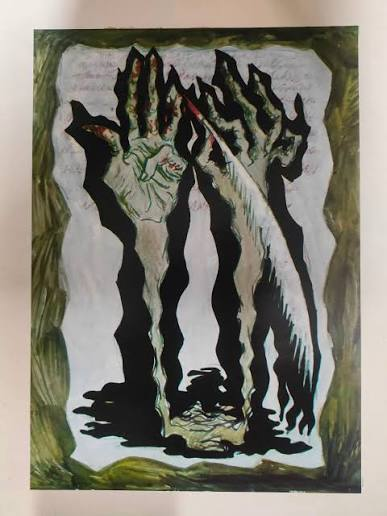
Couplet by Ghalib accompanied by Sadequain’s painting. From Sadequain’s
Ghalib portfolio album (1969)
made in comemoration of Ghalib a famous indian poet
The Buddha Shakyamuni (sage of Shakyas)
The historical founder of Buddhism, also known as Siddhartha Gautama

Rembrandt van Rijn, Portrait of woman possibly Maria Trip, 1639
Lace is a huge part of this piece and was really hard to make, shows wealth (womans trade)
her dress is made of silk which came from silk worms
pearls were also a product of trade with asia
both of these were a product of the dutch colonialism and subsequent wealth which is shown in her outfit

Giusseppe Sanmartino, Veiled christ ,1753, Naples
made of Carrara marble, very durable


Ville D’este, Cardinal Ippolito II d’Este, TIvoli Italy
Gardens were used as a way to show humanity’s triumph over nature
were meant to be highly excessive and boastful, especially the water features, since fresh water was hard to come by
The rich liked to play water pranks on each other
was a feat of engineering; it had a fully automatic water organ and had to divert a river just for everything to function
Wagner Material.
Material isn't just matter. It's the specific substance an artist works with, tied to form and idea, and it carries meaning about how and when a work was made.
Materials have been ranked. Fine arts (painting, sculpture) were valued above crafts partly because of their materials, shaping the art/craft divide.
Material Art From China, Wu Hung
Material Art: Wu Hung's term for Chinese artists who consistently use one unconventional material as the carrier of meaning, rather than image or style.
Three phases: '80s margins of the New Wave, '90s global spread (pulp, gunpowder, hair), post-2000 turn toward metaphysical, project-based work.
Argument against Western bias. Western theory treated matter as lower than form, and this case study shows why materials need transcultural, historically specific analysis.
Technology and Trade, Becker
Dyes vs. pigments: Pigments were mostly minerals (ochres, cinnabar) or manufactured (Egyptian blue, white lead). Dyes came from plants, insects, and shellfish and were soluble, so they could wash out.
Material as status: Cinnabar, Egyptian blue, and murex purple signaled wealth, while ochres were cheap because the minerals were abundant.
Substitutes were normal: Layering madder over woad, or mixing Egyptian blue with red ochre, imitated purple, and was acceptable unless sold as the real thing.
The Myth of Whiteness in Classical Sculpture, The new yorker
myth that marble statues back then were pure white but they wer once painted
stakes: White-supremacist groups use white statues as emblems, yet the ancient world was diverse, and darker figures were painted to look lifelike.
Beyond the Cult of the Replicant
digitization is seen as a second way of preserving something
Aura and authenticity are constructed: An object's aura depends on its documented provenance and assigned meanings, not just its physical stuff. Choosing what to digitize is also a curatorial act that confers value.
Material presence still matters: The physical object keeps a special affective power, as with 9/11 artifacts or a bronze's patina, while digital versions often feel like secondary sources. Digital objects can offer other senses and access, such as zooming and remote use.
Experiencing the Multisensory Past
Argument: Alan Chalmers argues that virtual reconstructions of the past must be multisensory (visuals, audio, smell, feel, taste), and authentically simulated, or they risk misrepresenting how past environments were experienced.
Caveat: We can never know exactly how the past looked, but simulation lets researchers test and rule out possibilities in a controlled way.
Philadelpheus-AnavysosKouros
Smuggled in pieces: Looters smashed it into about ten fragments at night, hammering it over a large stone, then packed the pieces in crates with foodstuffs. The author notes the fractures still produced near-perfect joins, so it was re-assembled, with only small parts replaced in plaster and later recovered.
Material and condition: It is Parian marble with a reddish tint, 1.94 m tall, and surface erosion from the soil in places. Original paint survives or is inferred: red on the hair, fillet, and pubic hair, and the pupils were probably painted.
Chinese Glazes
traces how clay, wood ash, minerals, and kiln conditions shaped Chinese stoneware and porcelain
Inside Japanese Ceramics
Focus: Japanese potters work with the clay, glaze, and fire instead of controlling them. Defects like crawling, pinholes, and crackle are admired as qualities of the material.
Arts of Southest Asia
Focus: Kerlogue's chapter traces Buddhist art across Southeast Asia, where materials and forms track both doctrine and regional resources.
Stone as cosmos: Borobudur is a stone mountain whose square terraces rise to circular ones, and walking its reliefs enacts the move from the material world to formlessness. At Candi Plaosan, softly carved surfaces were meant to reflect sunlight, so light became part of the work.
Lithographic Assemblages, The Urdu Art Book in the Age of Print, Iftikhar Dadi
Urdu artists' book grew out of the "lithographic assemblage," meaning the scribes, calligraphers, presses, and materials of 19th-century print, which stayed close to manuscript.
Why lithography: Metal type handled Nastaliq script poorly (a full font weighed about 200 lbs and was costly). Lithography reproduced calligraphers' handwriting directly, so Urdu newspapers were still handwritten until the 1980s.
Chughtai: His 1928 Muraqqa-i Chughtai merged Ghalib's verse, calligraphy, borders, and multicolor plates, some printed in Europe. It revived the older muraqqa album in the age of print.
The Art of Gandhara, Behrendt
Focus: Behrendt traces Gandharan Buddhist art, which is mostly carved from schist, through relics, narrative reliefs, and devotional icons.
Relics as matter: The Buddha's remains were "pure, material stuff of enlightenment." Schist reliquaries were treated as saturated with that power, so they were reused and repaired, and they held coins, crystal, gold, and pearl.
Journal of Asian Civilizations
Argument: Moizza Elahi urges studying Gandharan art through materiality and globalization, instead of the old "Hellenistic influence" framing that treats Gandhara as a passive recipient.
Chaîne opératoire: Reliefs passed through specialist hands: quarrying, squaring the block, outlining, carving, drilling, painting and gilding, then installation. Trial sketches show masters teaching apprentices, and Kharoshti letters on the backs marked where each panel went.