Module 2 lectures 5&6
 Call Kai
 Learn
 Practice Test
 Spaced Repetition
 Match
 Flashcards
 Knowt Play
1/40

There's no tags or description
Looks like no tags are added yet.
41 Terms
growth and trade offs

Larger dogs have a shorter life than smaller dogs
Same with mice - the ones that were light when they were young have the longer lifespans
But get the opposite across different species - i.e. an elephant lives longer than a mouse - difference is that large animals grow much slower (slower cell turnover rates)
growth factors and the growth-lifespan tradeoff
can study snell dwarf mice - low growth hormone, prolactin and thyroxine
Snell dwarf mice don’t really grow a pituitary because of a mutation
These are even smaller than the growth hormone knockout mice
They live a lot longer than a normal mouse
Good evidence that hormones that regulate our growth influence how long we live
things that regulate the growth-lifespan trade-off
growth factors
nutrients
mTOR (on a cellular level)
nutrients and the growth-lifespan trade-off
Less food means they are smaller, but they live much longer
This has also been shown in primates etc
mTOR complex 1
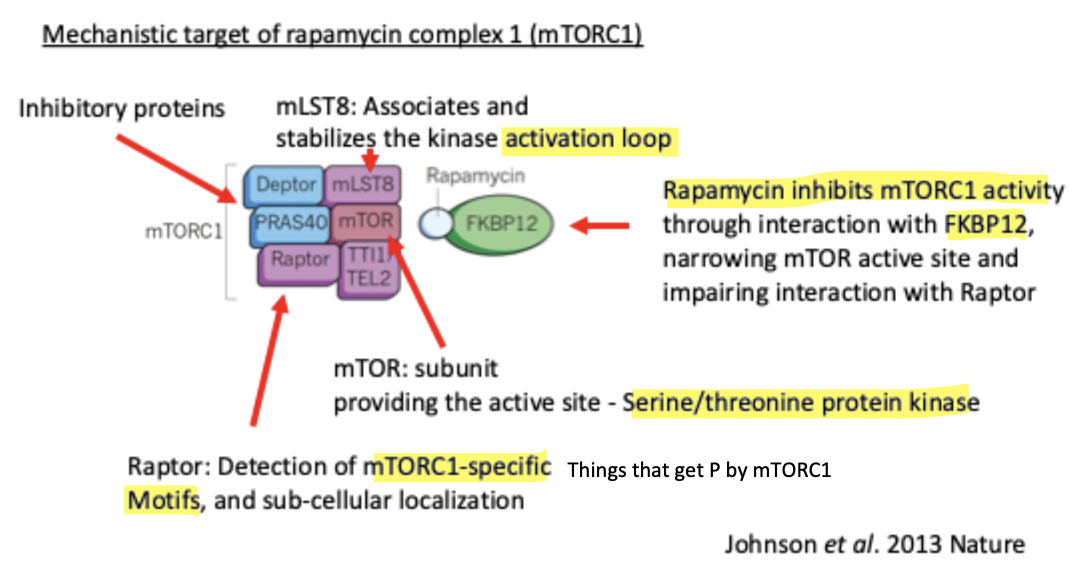
When connected narrow active site - stops things from being able to get in and get phosphorylated
mTOR 1 vs 2
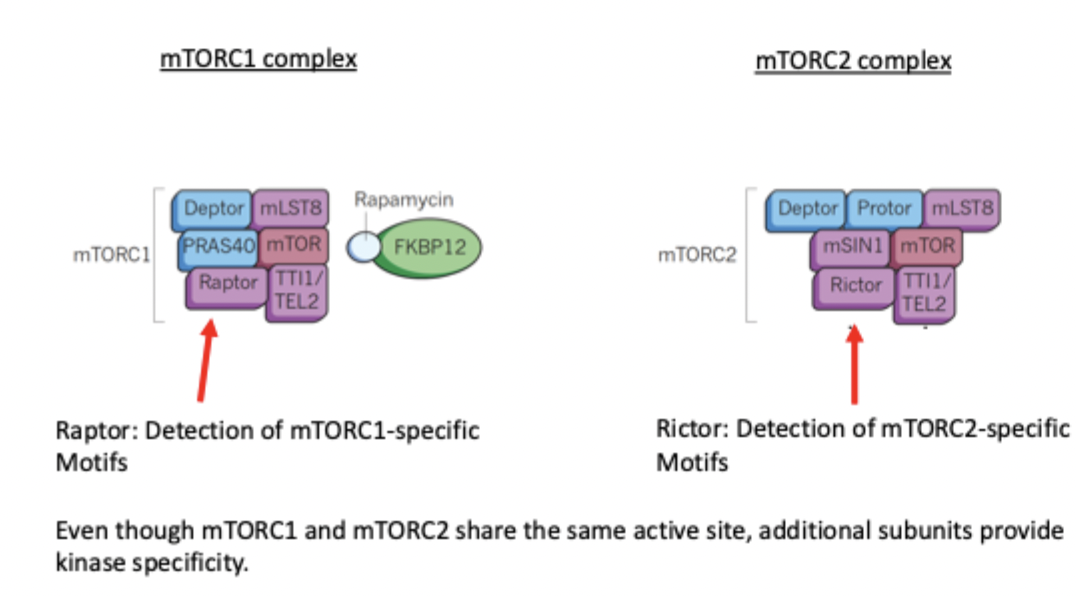
These two do very different things even though they have the same kinase
crystal strucure of mTOR1

rapamycin

Through a soil sample
mTOR1 complex inputs and outputs

Integrates information about growth - both suppressive and promoting
Detects when everything is ready for growth and produces a downstream effect
upstream regulators - growth signal mTOR1 activation

Pathways inhibit negative regulator of mTOR (TSC1)
When this is inhibited it allows Rheb to be active - can bind GTP and activate the mTOR kinase
There are additional signals that come in to TSC and influence it - e.g. hormones, markers of inflammation
upstream regulators - sensing of cellular energy

upstream regulators - sensing of amino acids
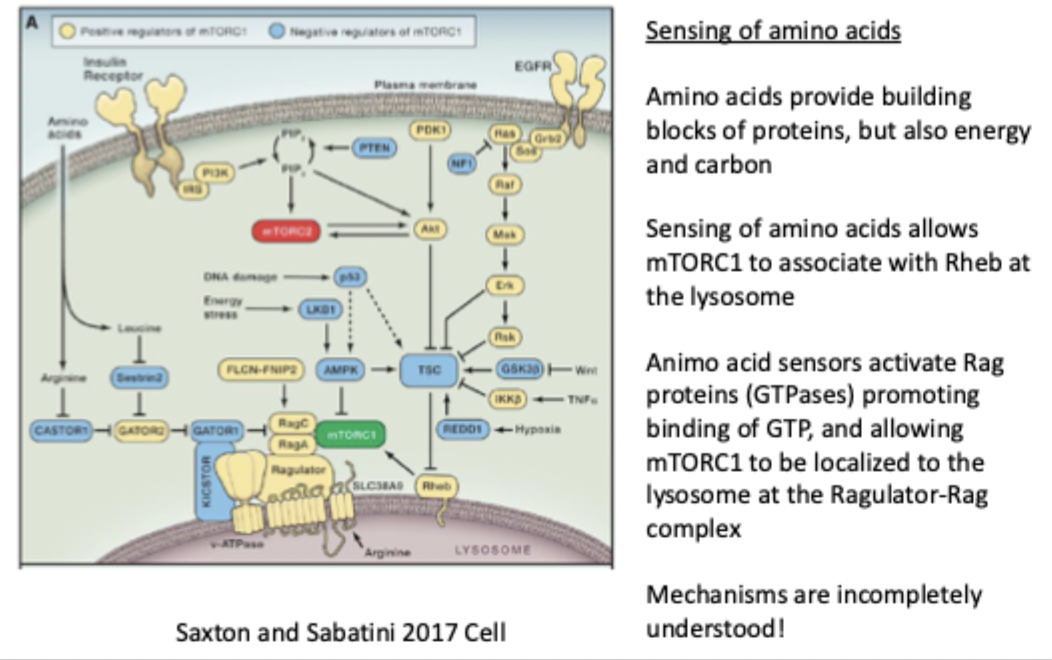
Basically allows a complex to pull mTOR to the lysosome
Adding amino acids very quickly makes the mTOR complexes come together and interact at lysosomes
structural basis of mTOR1 activation on the lysosomal membrane

Specific interactions with the lysosomal membrane and other proteins in the complex influence the conformation of the active site

what mTOR1 needs to be fully activated

overall downstream cellular effects of mTOR1

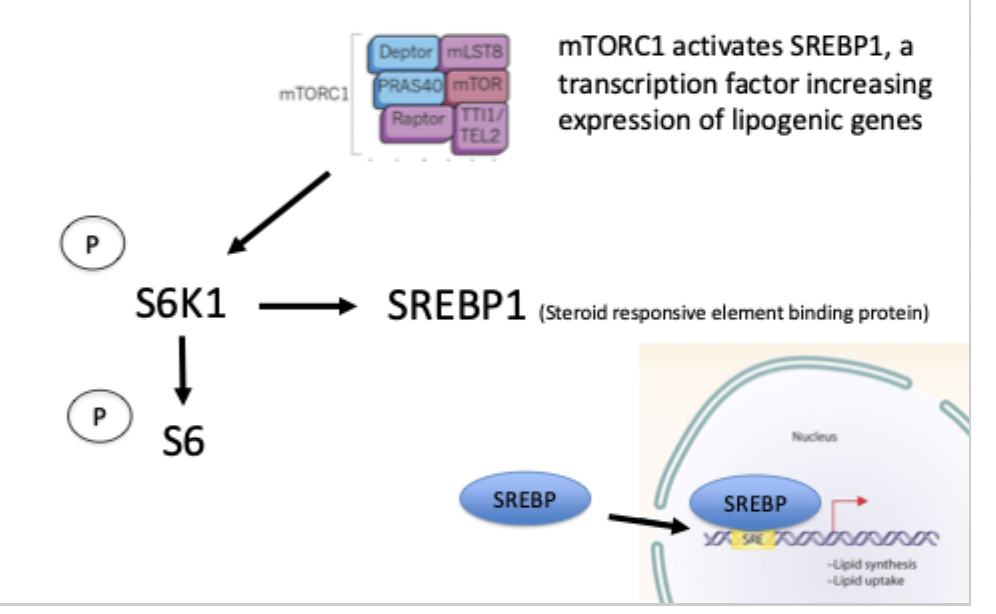
mTORC1 and upregulation of protein translation
S6K and S6 used as good marker of mTOR activity - p of this measured as an indication of mTOR activity


Phosphorylation by mTOR allows mRNA to move to the right part of the ribosome
what other anabolic processes upregulated by mTORC1
lipogenesis
glycolysis
mTORC1 and lipogenesis
mTORC1 and glycolysis

autophagy in mTORC1 (catabolic process)

autophagy in cell catabolism

mTORC1 and control of liver size

Deleting this causes an increase in mTOR
Saw that these animals had a much bigger liver (30-40%)
Also have an impaired response to fasting - liver reduces in size with fasting (don’t see this when mTOR is functional)
Deleting raptor inhibits mTOR activity
Get animals with smaller liver size
mTORC1 and control of hepatocyte size

Larger hepatovyte size - actual size of the cells
So mTOR regulating both the size of the cells and the size of the whole organ
mTORCq as a regulatory of whole animal growth
Fetuses after rapamycin injected are much smaller
mTORC1 suppression reduces the growth of whole mice - Injection with rapamycin (or inclusion through food) of live mice also shows a large decrease in size and growth
hepatic mTOR signaling and stess resistance

During surgery there is ischaemia when blood supply cut off, reperfusion then causes oxidative damage and inflammatory injury
Calorie or protein restriction before surgery can reduce this damage
Decrease in mTOR signalling has been linked to the protective effect
At the moment an association not a causation
increased hepatic mTOR ignalling and stress resustance

When mTOR has been forced on there is high P of S6 and S6K
This is maintained when they are protein restricted
Damage persists when mTOR is activated - shows that it is causal
Shows mTOR important in regulating stress resistance
other model organisms and mTORC1 in ageing

This is showing where components of mTOR are conserved between species
effects of mTOR on whole organism stress resistancw
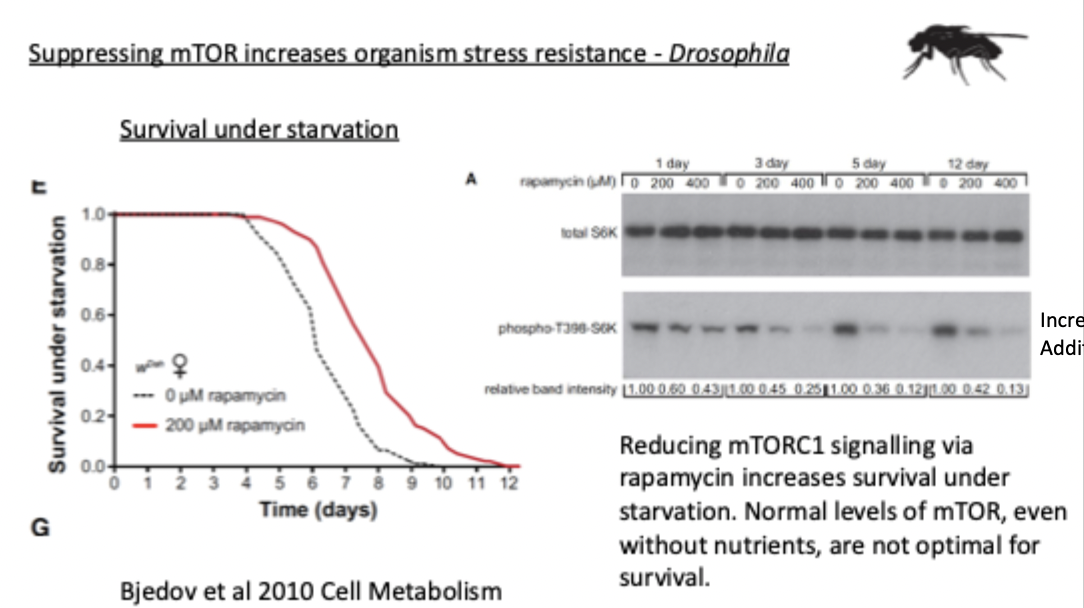
Increasing doses of rapamycin show increasing inhibition of mTOR
Additive with the mTOR reduction from stress
Reducing mTOR through rapamycin increases survival in starvation
Can see with a large dose of this drug they die quickly, but with rapamycin treatment they survive a lot longer
consequences of mTOR signalling for lifespan
Progressive inhiition of mTOR causes a progressive increase in survival
But there is a trade off with reproduction and lifespan
This is why we see so much mTOR signalling - very important in these aspects
See the same thing in mice
In males, for every dose of rapamycin there is a smaller response than in females
Can inhibit mTOR through rapamycin above or through other ways that have veen developed
Note that you cannot completely delete mTOR as animals are not viable
Showed deletion of these two suunits led to a significant increase in survival
what causes mTOR effects on lifespan?
constitutively active S6K blocks rapamycine lifespan effects in flies
Can see rapamycin treatment increases lifespan in control animals
If you activate S6K before treatment there is no increase in lifespan
Shows S6K is very important in the lifespan response
So effect on protein synthesis is important in lifespan response
Knockout of S6K have deficit in protein translation
Mice live longer (females) but not significant effects in males
Significantly reduced lifespan and don’t respond to rapamycin treatment in genetically modified so flies that produce no 4EBP1 (which promotes translation)
does mTOR mediate the beneficial effects of dietary restruction
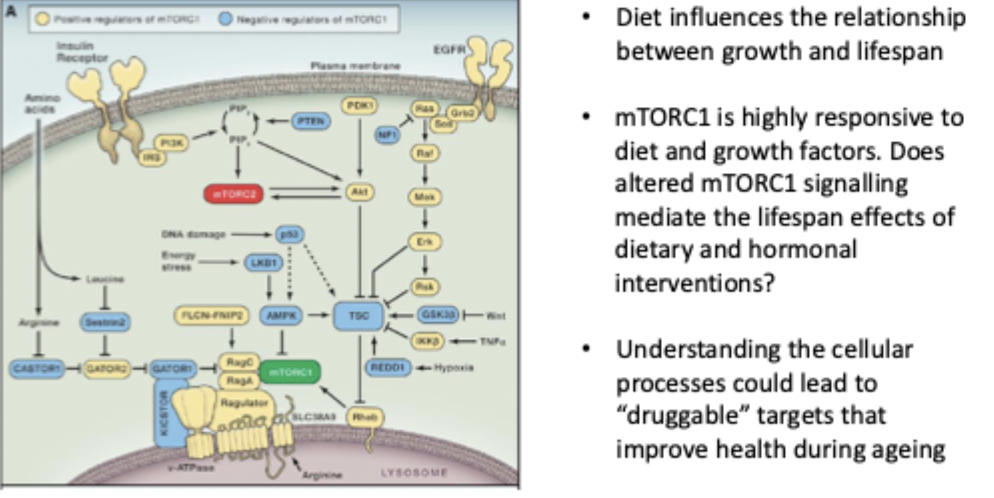
Predicted that the lifespan increase seen in dietary restriction is because of a reduction in mTOR signalling
dietary restriction in humans

evidence for mTORC1 in dietary restriction

is mTOR signalling required for the beneficial effects of dietary restriction
in wrms dietary restricted animals to not show lifespan extension when mTORC1 is inhibited genetically
No additive benefit - get the benefit from one and from the other but don’t get an increase when you do both together
That indicates that these two things are working through the same pathways in this species

mTOR signalling and ageing in mice
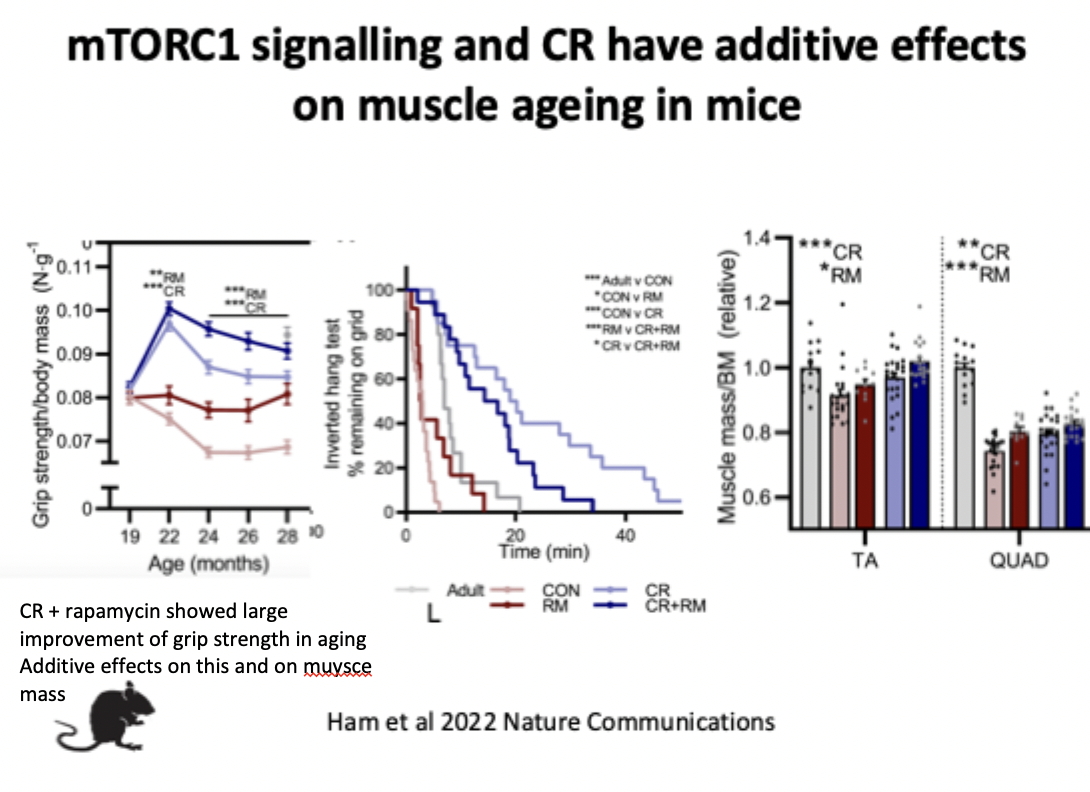
So shows that probably two different pathways in mice unlike in worms
When you eat food there is a transient increase in mTOR signalling - rapamucin may e inhiiting this?
translating knowledge of mTOR signalling to improve human health during ageing

Only been looking at lifespan and animals protected in cages
People wont want to take these drugs when young because of effects on growth etc
rapamycin treatment later in life in mice
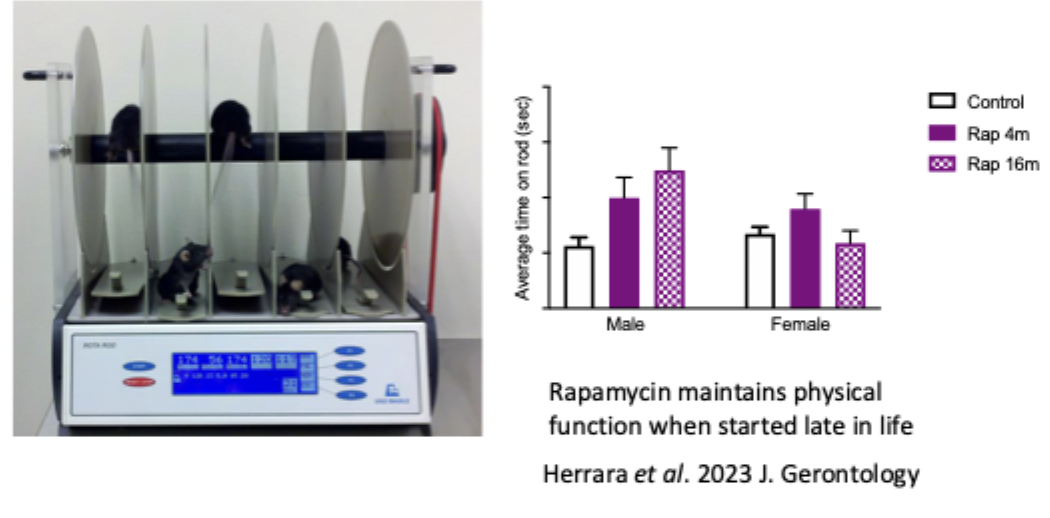
Treatment early in life showed the mice were more able to balance on the rod
In males this was shown even when treatment started later at 16 months
But in females only got the benefti when started at 4 months and the benefit was less
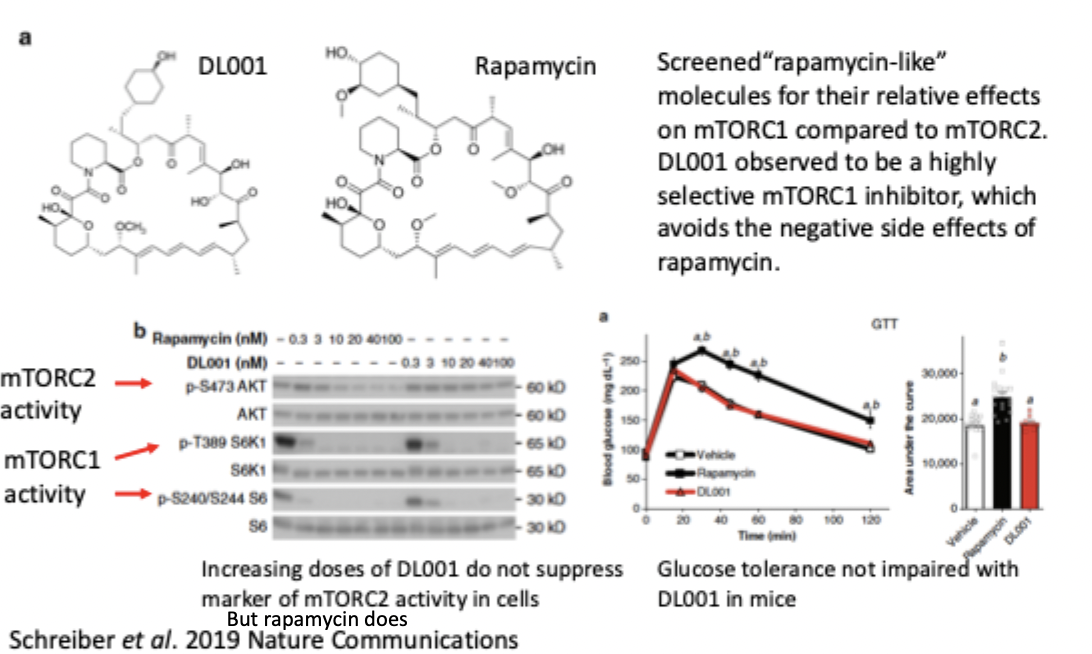
rapamycin and impaired glucose tolerance

Less able to take up glucose from the blood stream
chronic rapamycin on mTOR 1 and 2

Share kinase subunit
Can inihiit both bit initially thought that it only inhiited C1
This is when chronic treatment
development of selective mTORC1 inhibitors
can rapamycin improve function during ageing in humans

This is showing the opposite of what was expected
The fact that they were training and tryong to develop muslce probably had something to do with this