Section 2: Misconceptions and Stereotypes
 Call Kai
 Learn
Learn Practice Test
 Spaced Repetition
 Match
Match Flashcards
 Knowt Play
1/34

There's no tags or description
Looks like no tags are added yet.
Name | Mastery | Learn | Test | Matching | Spaced | Call with Kai | Chat |
|---|
No analytics yet
Send a link to your students to track their progress
35 Terms
“The God Complex”
Inordinate influence of monotheism beliefs, especially Protestant Christianity
This comes with an immediate expulsion to polytheistic religions, where we see the definitions of Section 1 can be very ignorant.
What is the importance of studying religions that are not Christianity?
Each religion has their own way of participating and practing their own traditions and beliefs. In Japan, there are high levels of participation and practice, but low levels of beliefs, compared to Christianity.
Temple of Jerusalem
The first “national” temple built in the capital of Jerusalem for Yahweh’s worship. It was procured through the God of Abraham in 10th century BCE. It was considered as a ritualistic space for Yahweh. Animals, grains, fruits, and many more were used as sacrifices to ensure protection from enemies, ensure rain and prosperity in agricultural lands, and to have birth sons.
The bigger the sacrifice…
The more Yahweh will give you in return.
When was the Temple of Jerusalem torn down?
70 BCE
What was the only site that was left untouched by the Temple of Jerusalem?
The Holy Site - The Western Wall…
Western Wall
American presidents would come and kiss the wall, and even slip papers that have written prayers in the cracks of the wall. This would signify the relationship between political figures and religious sites.
Christianity
This emerges as a Jewish reform movement in first-century Roman Palestine.
A figure named Jesus, born in Nazareth and traveled to Jerusalem for Jewish practices (sacrifical offerings), and is also a 1st-century Jew.
It gradually became distinct from its Jewish “parent”.
Argued a “new” covenant, replacing the “old” Abrahamic one, where Abraham and his people will be protected by God in exchange of being fully devoted to God. The new covenant is: Abraham and his people will be protected by Jesus in exchange of being fully devoted to Jesus. God now chooses to act through Jesus (His life, death, ressurection) A reminder of Gospel of John’s reimagining of God birthing Jesus.
Around 30, Jesus is executed by Rome but is raised from the dead, eventually ascending to Heaven with God.
Early Christians eventually understood this “sacrifice” as the path to salvation. We are all born with Original Sin, and in order to get rid of it, a big sacrifice is needed. This sacrifice was done by Jesus being crucified. To continue being healed from Original Sin, you will need to be a member of Christianity and to continually preach the Gospel.
Now, Jesus is the new temple.
In 1st-4th century comes growth, diversity, persecutions…
What do the Christian scriptures conclude?
Jesus is the “Messiah” (The Anointed One)
The form of salvation Jesus offers is victory over death (eternal life)
What is the Greek word of Messiah?
Christos (Jesus Christ)
What are the examples were Jesus showed victory over death (cheating death)?
Raising Lazarus from the dead
Walking on water
Why is Christianity not considered a Middle Eastern religion, when it originated from Jerusalem?
Because it became popularized in Europe, within the Roman Empire.
Constantine the Great (306-337)
Upon becoming emperor, Constantine decided to give protection to Christians in order to have followers. He eventually gets baptized and Christianity is officially under the Roman Empire. The insignia shown on banners held by Roman soldiers were an example of a Christogram.
What is a Christogram?
A combination of letters that form an abbreviation of Jesus Christ. For Constantine, his Roman soliders had the insignia of Chi (X) and Ro (P).

When does Christianity become the official religion of Rome?
Late 300s
Martin Luther “Father of the Reformation”
1500s (16th century)
Theological and instituitional reforms
Created the 95 Theses in 1517, which were recommendations on improving the Catholic Church
One of these theses wassola fide, which means faith alone. Faith alone in God should be enough for devotion to Christ.
True Church: community of faithful believers headed by Christ
Unmediated, personal relationship with God
The printing press was new at the time, and had printed out many copies of the 95 Theses, which allowed for word to spread far in Europe, sparking what is known as the “Protestant Reformation”.
Result? It created a major schism in Western Christianity (Protestants vs. Catholics).
He was excommunciated by the Pope.
Through the major split between Western Christianity, what were the major differences between Protestant Christianity and Catholic Christianity?
Protestants tend to individualize Christianity by focusing on personal belief.
Catholics tend to institutionalize Christianity by focusing on the Church as the insitutition.

What symbol is this and which religion does it originate from?
The “om”
Hinduism

What symbol is this and which religion does it originate from?
Suastika (on top)
Ahimsa (on bottom)
Jainism

What symbol is this and which religion does it originate from?
Dharma wheel
Buddhism

What symbol is this and which religion does it originate from?
Yin and yang
Daoism

What symbol is this and which religion does it originate from?
Torii
Shintoism

What symbol is this and which religion does it originate from?
Star of David
Judaism

What symbol is this and which religion does it originate from?
Cross
Christianity

What symbol is this and which religion does it originate from?
Star and Crescent
Islam
Syncretism
A non-neutral term
All religions overlap each other, meaning there can’t be a line that truly divides them.
Religion as a category
Charts are a convenience to organizing religion in categories.
Can you belong to more than one religion?
It depends! It is designated under specific rules and regulations of each cultural and world context.
How can syncretism reinforce the standard of exclusivity?
Syncretism is the belief that religions can overlap with one another, as there is no definite line that draws a boundary between each religion. The standard of exclusvitiy is the idea that a particular religion’s beliefs are true or authoritative in a way that excludes other religious beliefs.
Syncretism can reinforce the standard of exclusivity because it highlights what a religion considers non-negotiable or incompatible with other beliefs.
What are the 3 major religious streams in Chinese society?
Buddhism
Daoism
Confucianism

What does this painting of Shakyamuni, Laozi, and Confucius tell us?
Each respective person is the creator of Buddhism, Daoism and Confucianism. All of these words are separate from each other, but a part of the same system; therefore, not exclusive to one another (syncretism!)
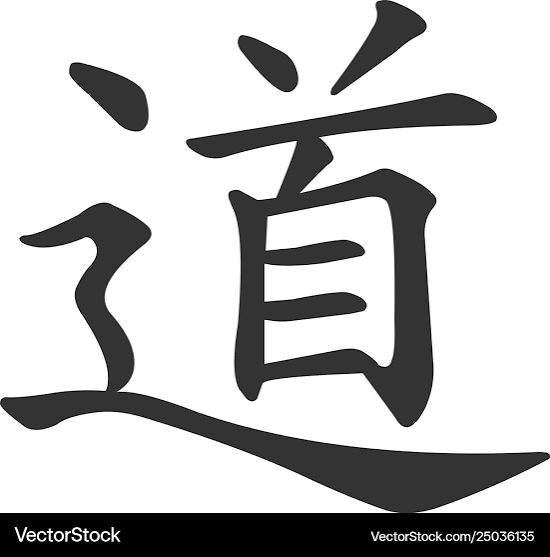
Dao
An important Chinese term
Means “way”, “path”, “course”, “teachings”
How do atheists still believe?
Specific to Japan, some people who do not consider themselves as Shinto or Buddhist would participate in practices that are considered religious. This is because religiosty is embedded through cultural values, family heritage, or everyday life. This is very utilitarian!
Specific to countries that have majority Christianity believers, some atheists would get married in churches, and this is due to cultural values and family heritage.
“Born Shinto, die Buddhist”
Shinto practices carry certain aspects that are with beginning life (baptisms, child ceremony), whilst Buddhist practices carry certain aspects that are with ending life (funeral rites, etc.).
“Born Shinto, marry Christian, die Buddhist”
A fun take on a classic saying: Some people would participate in Christian customs, geared towards younger people who get married.