Med-Term Ch.2 Flash Cards
 Call Kai
 Learn
 Practice Test
 Spaced Repetition
 Match
 Flashcards
 Knowt Play
1/65

There's no tags or description
Looks like no tags are added yet.
66 Terms
The study of the structures of the body
Anatomy
The study of the functions of the body
Physiology
Pathophysiology is the study of?
Disease
How many anatomical planes is the human body divided into
3 sections
A vertical plane that divides the body into front and back sections
Frontal plane (aka Coronal)
Anterior means?
or ventral represents the front of the body
Postenior means?
or dorsal represents the back of the body
A vertical plane that divides the body into equal left and right halves
Midsagittal
A plane that divides the body into unequal left and right sections
Sagittal
Near the midline or centre of the body
Medial
Near the side of the body; farther from midline (center) of the body
Lateral
near the point of origin ( the point which something starts)
Proximal
Away form the point of orgin
Distal
a horizontal plane that divides the body into upper(superior) and lower(inferior) sections
Transverse/Horizontal plane
located closer to the top of the head (situated above another body part)
Superior
located near the soles of the feet ( situated above another body part)
Inferior
Relating to the cranium (head) or situated near the head
Cephalic
Relating to, or situated near, the tail or inferior end of the body
Caudal
Spaces within the body that contains and protects the internal organs and other body structures
Body cavities
How many body cavities are there
2 ( Dorsal and Ventral)
protects the organ and tissue within the back side of the body
Dorsal cavity
What 2 cavities is the dorsal cavity separated into
cranial and spinach cavities
protects the organ and tissue within the front side of the body
Ventral cavity
What 3 cavities is the ventral cavity separated into
thoracic, abdominal, and pelvic
A cavity located within the skull and protects the brain
cranial cavity
A cavity located within the spinal column and protects the spinal cord
Spinal cavity
A cavity( chest cavity) that protects the heart, lungs, esophagus, and major blood vessels in the chest.
Thoracic cavity
What separates the thoracic cavity fro the abdominal cavity
The diaphram
A cavity that contains the stomach, liver,spleen,gallbladder,pancreas, and parts of the large intestine
Pelvic cavity
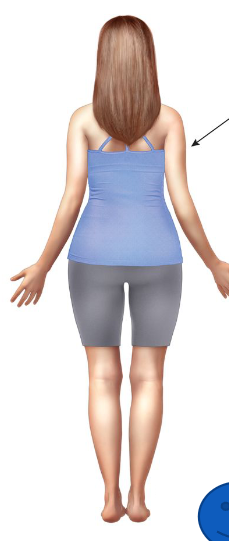
Which body view is this
Dorsal view (Posterior)

Which body view is this
Ventral view (Anterior)

Which plane is the blue one
Midsagittal plane

Which plane is the pink one
Sagittal plane
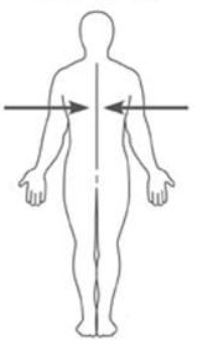
Which anatomical terms of location relative to the planes is this
Medial

Which anatomical terms of location relative to the planes is this
Lateral

Which anatomical terms of location relative to the planes is this
Distal

Which anatomical terms of location relative to the planes is this
Proximal

Which horizontal/ transverse plane divide is the down arrow
Inferior
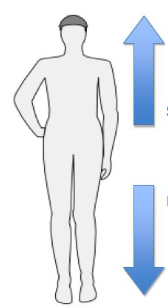
Which horizontal/ transverse plane divide is the up arrow
Superior

Which plane is this called
Transverse/ Horizontal plane

The arrow going up is toward the ?
cephalic

The arrow going down is toward the?
caudal
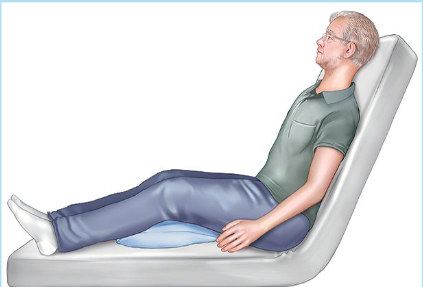
What body position is shown in the image?
high fowler’s – a sitting position with the head of the bed
(elevated 75 to 90 degrees; knees raised slightly)
-used for mealtime, oral care, x-rays, and breathing
treatments

What body position is shown in the image?
low fowler’s – a semi-sitting position with the head of the bed
(elevated 15 to 30 degrees; knees raised slightly)
-used for rest and relief of pressure of the hips and shoulders
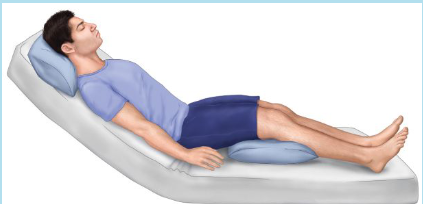
What body position is shown in the image?
semi-Fowler’s – a semi-sitting position
the head of the bed elevated 30 to 45 degrees; knees bent for comfort
-used for rest during childbirth and lung expansion

What body position is shown in the image?
knee-chest – lying facedown with
knees bent while resting on the knees and chest
-used in rectal and pelvic exams

What body position is shown in the image?
lateral — left or right side lying position
- this is the most common position
- used as a “recovery position” for illness, injury, and
surgery; during labor and to prevent aspiration (breathing in) while
vomiting.

What body position is shown in the image?
prone – lying flat with the face down
-used for cutting-edge treatment in breast cancer care;
bedsore treatment

What body position is shown in the image?
Sims’ – lying on the side with the hip and knee straight,
and the other hip and knee bent or flexed
-used for rectal exams

What body position is shown in the image?
supine – lying flat with the face up
-used for CT and MRI scans
What body position is erect?
normal standing position
(used for chest x-rays; assessment for neurological issues and sudden rise in blood pressure upon standing)
In anatomical position, a person is?
1. standing upright
2. head and feet facing forward
3. arms at the sides
4. palms of hands facing forward
What does (RUQ) mean?
Right Upper Quadrant
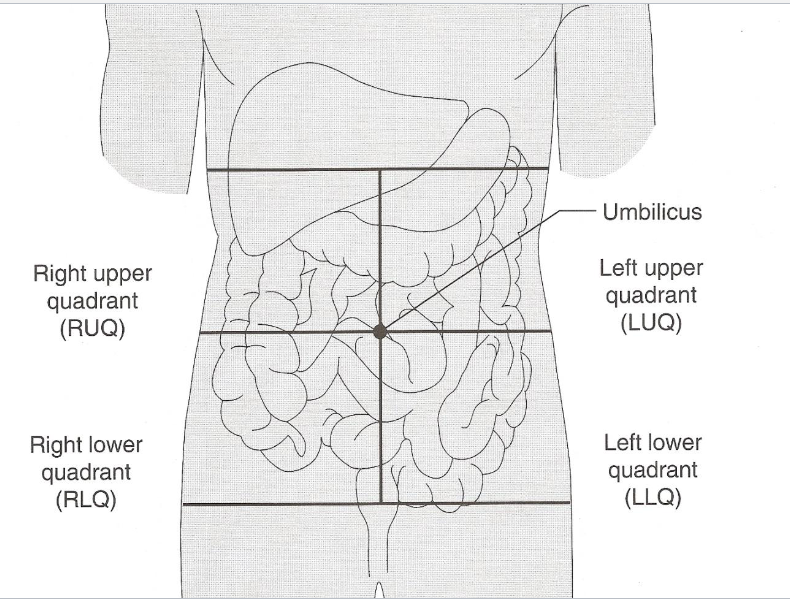
What does (LUQ) mean?
Left Upper Quadrant

What does (RLQ) mean?
Right Lower Quadrant

What does (LLQ) mean?
Left Lower Quadrant

Terms are always referenced from _?_ of the body?
Patient’s side?'
Quadrants are divided into?
four nonspecific quarters using imaginary lines.
Where is the vertical line in the abdominal quadrants
The belly button serves as the intersection point for a horizontal and a vertical line
The abdominopelvic cavity is divided into how many regions?
9
The upper part of the abdomen on both sides of the epigastric region and beneath the cartilage of the ribs
Right and left hypochondriac (pertaining to below the cartilage)
The area above the stomach
epigastric region
the two regions of the back that are lateral to the lumbar spine (the lower back)
right and left lumbar regions
the area surrounding the umbilicus
umbilical
the lower part of the abdomen on both sides of the hypogastric region?
right and left iliac regions
the area of the abdomen below the umbilical region
hypogastric (pertaining to below the stomach) region (pelvic region)