unit 2&3 🍄
 Call Kai
 Learn
Learn Practice Test
 Spaced Repetition
 Match
Match Flashcards
 Knowt Play
1/174

There's no tags or description
Looks like no tags are added yet.
Name | Mastery | Learn | Test | Matching | Spaced | Call with Kai | Chat |
|---|
No analytics yet
Send a link to your students to track their progress
175 Terms
are viruses classified as living organisms? (2.1)
no, because they contain no cellular structure (no cytoplasm or other major organelles) and cannot make their own energy
are viruses living or non-living? how do they work? (2.1)
non-living and are a lifeless chemical; within a host cell (prokaryotic or eukaryotic) they can replicate
structure of a virus? (2.1)
nucleic acid (DNA or RNA) + capsid
how to classify viruses? (2.1)
size and shape of capsid (outer protein layer that surrounds the DNA or RNA of a virus)
type of diseases they cause

what type of viruses infect and destroy bacterial cells? (2.1)
bacteriophage (aka bacteria eaters)
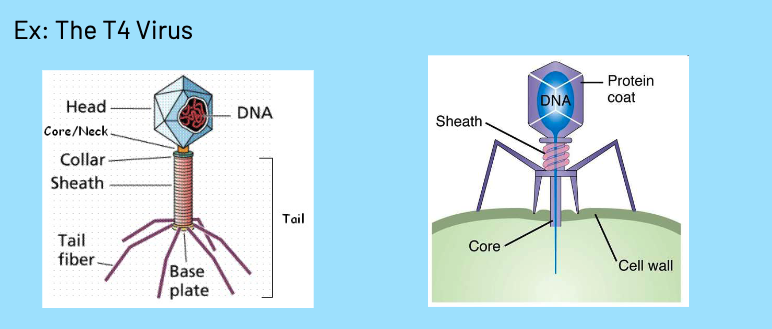
what does replication require? (2.1)
a eukaryotic or prokaryotic cell’s metabolism to replicate its DNA or RNA and make a protein coat
lytic vs lysogenic (provirus) cycle? (2.1)
lytic cycle occurs in host cell’s cytoplasm and uses host cell machinery to copy viral dna/rna
lysogenic cycle virus enters host cells’ nucleus and viral DNA becomes part of host cell chromosone
list steps of the lytic cycle? (2.1)
attachment - entry - replication - assembly - lysis (cell breaks)

explain attachment and entry for lytic cycle? (2.1)
attachment proteins on the surface of the virus bind to protein receptors on the surface of the host cell’s membrane
entry the virus injects its generic material (RNA or DNA) into the host’s cell

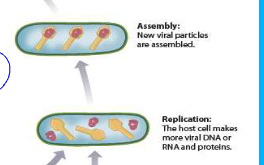
explain replication and assembly for lytic cycle? (2.1)
the host cell makes more viral DNA or RNA and proteins
new viral particles are assembled
explain lysis stage? (2.1)
the host cell breaks open and releases new viral particles

explain the lysogenic (sneakier) cycle? (2.1)
viral DNA becomes part of the host cell’s chromosomes (happens in nucleus) and replicates with it through cell division
provirus leaves host’s chromosone
can become bad if the virus gets triggered to go into lytic cycle (chemical trigger or lack of food, for example)

ways that a virus can be spread? (2.1)
air
direct contanct
contaminated water
vectors (virus being carried by another species
mosquitoes are a vector for the virus causing yellow fever
foxes are vectors for rabies virus
how do genetic engineers use viruses to introduce specific genes into the host cell? (2.1)
insert the gene into the genetic material of the virus
virus enters host cell and directs the cell to make multiple copies of the virus
each new virus in each new cell contains the added gene
pandemic vs epidemic vs endemic? (2.1)
pandemic widespread occurrence of a disease
epidemic a disease that affects a large number of people
endemic something that belongs to a particular people/country
ways that bacteria and archaea classified? (2.2)
morphology, gram stain (bacteria only), nutrition, habitat, oxygen requirements, reproduction
three types of shapes? (2.2)
cocci, bacilli, spirilli
what is cocci (coccus)? (2.2)
spherical shape
enterococcus found in intestines of warm-blooded animals

what shape is rod-shaped? (2.2)
bacilli (bacillus)
e.coli found in intestines (cows), strain 0157 can lead to food poisoning in humans

what shape is spiral shaped? (2.2)
sprilli (spirilla)
three ways that cells are grouped together? (2.2)
diplo —> pairs
staphylo —> clusters
strepto —> chains

what type of bacteria is it if has a thick protein layer on their cell wall and stains purple? (2.2)
gram-positive

characteristics of gram-negative bacteria? (2.2)
thin protein layer and stain pink

facts about nutrition for bacteria/archaea? (2.2)
some carry out photosynthesis (bacteria), some are heterotrophs, some get energy from inorganic compounds (archaea)
what is the anaerobic process that occurs in environments that lack oxygen known as? (2.2)
methanogenesis
produces methane as a byproduct
used by archaea
what types of environments are archaea able to live in? (2.2)
extreme ones, which gives them the name extremophiles

are organisms
characteristics of obligate aerobes? (2.2)
require O2 for cellular respiration and need air or water
ex. Mycobacterium tuberculosis
do obligate anaerobes need oxygen? (2.2)
no, they will die in the presence of it
ex. Clostridium botulinum
do faculative bacteria live or die in O2? (2.2)
they can live in the presence or absence of O2
Escherichia coli can live in intestines or aerobic lake water
how do prokaryotes produce? (2.2)
through the process of binary fission —> producing two genetically identical cells
fast, simple form of cell division

when does conjugation occur? (2.2)
less favourable conditions
transfer of genetic material involving two cells
gives an organism a chance that some of the new genetic material may be better adapted to changing conditions, thereby increasing biodiversity

what are plasmids? (2.2)
small loops of DNA separated from the main genetic material
can split and rejoin from the original plasmid and can be transferred during conjugation
what are endospores? (2.2)
dormant (at rest) bacterial cells
what type of bacterial cells are able to survive for long periods in severe/adverse environmental conditions? (2.2)
endospores
ex. freezing/high temperatures, radiation and toxic chemicals
examples of activities that bacteria help with? (2.2)
production of food products
proper functioning of bodies
decay of dead organisms
medical industry (genetic engineering, antibodies, insulin)
how does bacteria help with the functioning of our bodies? (2.2)
intestinal tract is filled with symbiotic bacteria
some are commensal (one species benefits, the other is unaffected)
some are mutualistic (both benefit)
some are parasitic (one is harmed, other benefits)
bacteria (bacterium)? (2.2)
individual prokaryotic cell or single specis in domain Bacteria
what is a prion? (2.2)
non-viral disease causing agents
no genetic material
how do infections work with prions? (2.2)
they cause damage to nerve cells in the brain (CJD - Humans / BSE - Cows / Scrapie - Sheep/Goats
disease happens when they change their molecular shape and become deadly
what is endosymbiosis? (2.3)
the theory that explains how eukaryotic cells evolved from the symbiotic relationship between two or more prokaryotic cells

how does endosymbiosis work? (2.3)
one cell engulfs another cell type —> it survives and becomes an internal part of the engulfing cell
what does theory suggest about mitochondria and chloroplasts? (2.3)
they were once small, free-living prokaryotes
they were engulfed by larger cells, remained intact and continued to function, benefitting the host cell
what is an endosymbiont? (2.3)
a cell that is engulfed by another in endosymbiosis
what is the cell that engulfs the endosymbiont called? (2.3)
host cell
what evidence is there to support endosymbiosis? (2.3)
similar features between chloroplasts, mitochondria and prokaryotes
membranes
circular chromosone
gene sequences
divide by binary fission

hypothesis for multicellularity? (2.3)
the first multicellular organisms arose from colonies created by dividing individual cells, and genes within these cells carried instructions to become specialized for different functions
Some cell groups became specialized in
absorbing nutrients, while others became specialized
in gathering information from the surrounding
environment
what do cell division and reproduction have in common in prokaryotic cells? (2.3)
they are both asexual (and at the same level in prokaryotic cells)
in eukaryotes, cell division and reproduction are not at the same level in individuals
what happens during sexual reproduction between two individuals? (2.3)
they produce eggs and sperm (aka gametes, AKA haploid cells) and when they fuse, they form a zygote (diploid = this cell contains two sets of chromosones from each parent)
what happens when gametes fuse? (2.3)
when they (ex. sperm cells and eggs) fuse, they form a zygote (aka a diploid = this cell contains two sets of chromosones from each parent)
what do haploid cells contain? (2.3)
one set of chromosones
what is sexual reproduction not possible without? (2.3)
meiosis
what do sexual life cycles alternate between in eukaryotes? (2.3)
meiosis (prouces haploid cells) and fertilization (produces diploid cells)
how are protists divided? (2.4)
grouped based on how they obtain nutrition - animal-like protists, plant-like protists and fungus-like protists
examples of fungus-like protists? (2.4)
plasmodial, cellular and water moulds

examples of plant-like protists? (2.4)
diatoms, dinoflagellates, euglenoids
what do dinoflagellates cause when nutrients are plentiful? (2.4)
red tides
a coastal phenomenon in which dinoflagellates that contain red pigments are so concentrated that the seawater has a distinct red colour

diatoms? (2.4)
phytoplankton (singe celled free floating aquatic organisms)
important source of food for larger marine organisms

dinoflagellates? (2.4)
plant-like protists
phytoplankton, like diatoms
have two flagella
reproduce quickly and the resulting population is a bloom or algal bloom
in soecies with red pigments its called a red tide

traits of animal-like protists? (2.4)
heterotrophs (ingest other organisms)
many are parasites (they benefit at the expense of another organism)
traits of fungus-like protists? (2.4)
heterotrophs, but instead of ingesting other organisms they absorb nutrients from both living, dead animals and waste
produce spores
traits of plant-like protists? (2.4)
contain pigment in chloroplasts to carry out photosynthesis
chlorophyll is the most common which gives them a green colour
characteristics of protista kingdom? (2.4)
unicellular
eukaryotic cell that is not a fungus, plant or animal and is therefore categorized into an “other” kingdom
a temporary cytoplasmic extension, aka “false feet”, is used by amoebas for feeding and movement. what is this also known as? (2.4)
pseudopod(ia)
found in animal protists

describe cilium (cilia)? (2.4)
short hair-like projections that aid in cell movement and particle manipulation when coordinated
found in animal protists
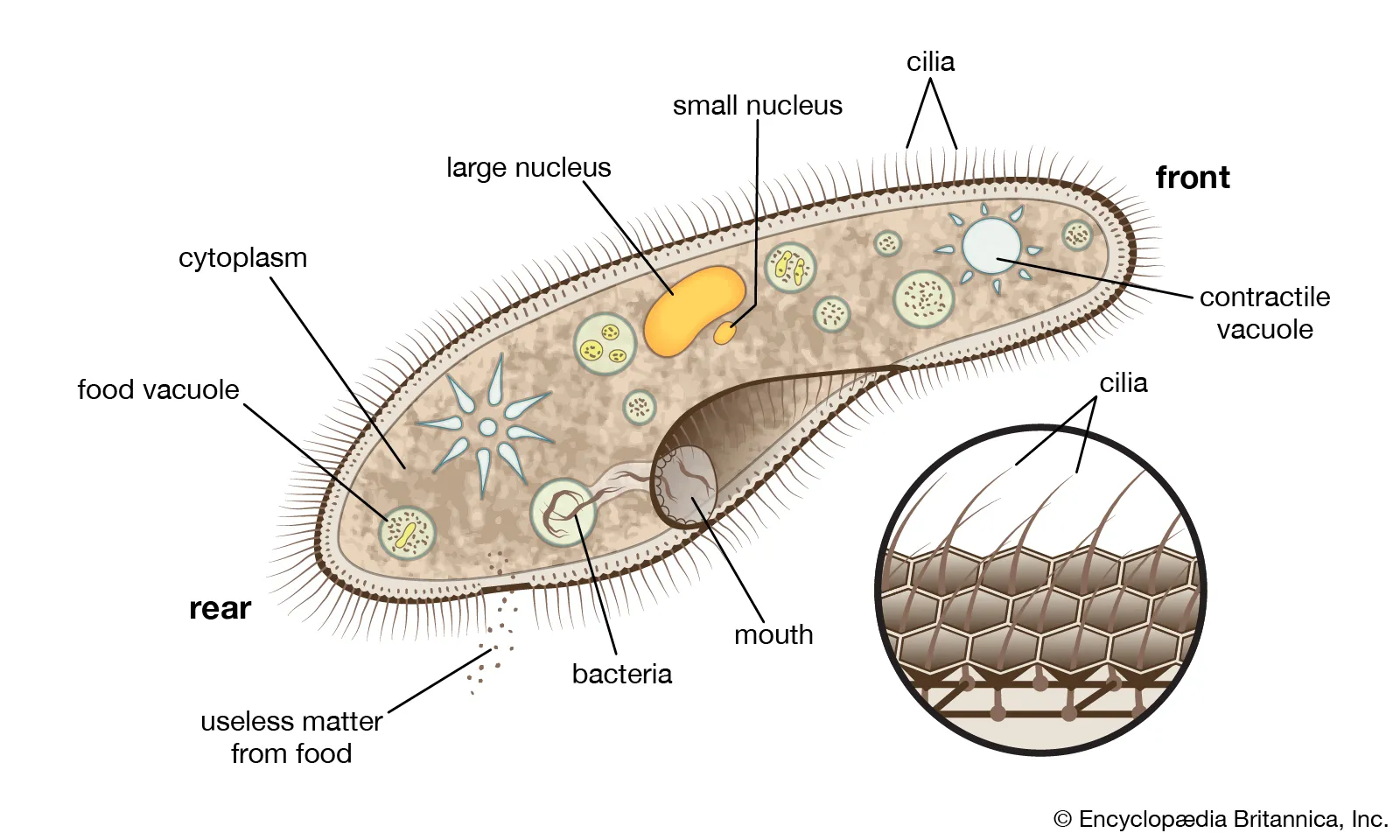
flagellum (flagella)? (2.4)
long hair-like projection extending from the cell membrane that propels the cell using a whip like motion (think of breathstroke)
found in animal protists
euglenoids? (2.4)
have flagella and can absorb nutrients
possessing both plant and animal like characteristics, they are autotrophs in sunlight and heterotrophs in the dark

what are plant embryos? (3.1)
small, simple multicellular plants that are dependent on the plant
plants reproduce with embryos, multicellular algae do not
if one protects the embryo, it can retain moisture (in response to the problem of drying out)
characteristics of algae? (3.1)
photosynthetic
classified by brown, red or green colour
some are unicellular and others are multicellular
why do scientists struggle with classifying algae in the protista or plantae kingdom? (3.1)
plantae is the only other kingdom with multicellular photosynthetic members
hard to define where a kingdom stops and begins
how many phyla are there for algae? (3.1)
6
how many phyla are single-celled, plant-like protists? (3.1)
3

how many phyla are seaweed (large, multicellular algae) based on colour? (3.1)
3

which algae are the largest and most complex protists? (3.1)
brown algae

which algae can grow to 60m in length? (3.1)
brown algae
they form underwater forests
they provide food and shelter for many animals
brown and red algae have specialized tissues. do they have true leaves or roots? (3.1)
no
how long can red algae grow to? (3.1)
1m
where is red algae found? (3.1)
warm, coastal tropical oceans

what colour chlorophyll is found in red algae?
green
what is the dominant pigment in red algae?
phycoerythrin (gives red algae their red colour)
the pigment allows them to grow at ocean depths of 100m or more
source of food in red algae? (3.1)
sushi, ice cream and other food products
where is green algae found? (3.1)
most in freshwater, some in saltwater
found in many ecosystems (surface of trees, sea ice, fur of sloths)

are green algae uni or multicellular? (3.1)
both, they are structurally diverse (+flagella)
what do cell walls contain in green algae, and how do they store their food? (3.1)
cellulose, and store food as starch
what are some benefits of algae to humans? (3.1)
oxygen for humans
vitamins
fertilizers
cosmetics
paint
petroleum
*what do xylem and phloem do? (3.1)
xylem carries water and minerals from the roots to the rest of the plant
phloem is used for transporting larger molecules, including sugars
vascular tissues
*what is lignin, and how does it affect xylem? ? (3.1)
a tough material found in the dead tube-shaped cells of xylem tissue
lignified xylem forms a firm structure that allows water and minerals to be transported throughout the plant
what allowed for the development and massive growth of trees? (3.1)
the fortification of xylem tissue with lignin
*what allowed for the evolution of roots? (3.1)
vascular tissue (xylem and phloem)
this provided strong anchoring ability and allowed cells to specialize in transporting water and minerals
*what evolved after plants developed vascular tissues? (3.1)
leaves
they increase the surface area of the plant (above ground) which allows for a better exchange of gases in photosynthesis
how does vascular tissue, leaves and roots relate to issues concerning how algae had to move to land? (3.1)
the evolution of roots provided a pathway for water and minerals along with support
ai answer — the evolutions provided an effective system for land survival by providing internal transport of water and minerals, offering structural support and helping maintain hydration
*reference other cards with star
define sporic reproduction? (3.1)
AKA alternation of generations - sexual reproduction that alternates between a gamete and spore making individual
this means there are two multicellular stages in the life cycle
the haploid version of the organism in sporic reproduction that produces gametes by mitosis is known as what? (3.1)
gametophyte
what is a sporophyte? (3.1)
the diploid plant in sporic reproduction that produces spores by meiosis
is made by gametes fusing and developing into the diploid version of the organism
why is green algae considered the most plant-like? (3.1)
cell walls are made of cellulose, they share the same photosynthetic pigments (chlorophyll) and store food as starch
are plants motile? (3.1)
nope
characteristics of plants? (3.2)
multicellular, eukaryotic, obtain food by photosynthesis
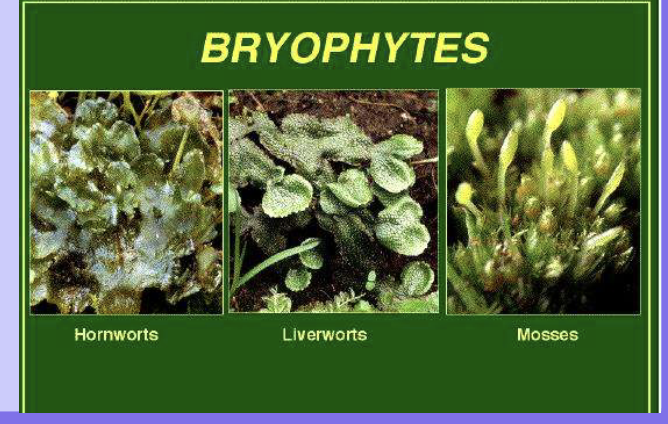
three types of phyla with non-vascular planta (bryophytes)? (3.2)
mosses, liverworts and hornworts
characteristics of bryophytes? (3.2)
no vascular tissue —> rely on diffusion and osmosis to transport nutrients
no roots and instead have small structures called rhizoids
need moisture for fertilization to occur
what dominates the life cycle in bryophytes? (3.2)
gametophyte