PSYCH 321
 Note
 Call Kai
 Learn
 Practice Test
 Spaced Repetition
 Match
 Flashcards
 Knowt Play
1/65

There's no tags or description
Looks like no tags are added yet.
66 Terms
What is Social Psychology?
scientific study of the way in which people's thoughts, feelings, and behaviors are influenced by the actual, imagined, or implied presence of others.
What do social psychologist do?
they are researchers who study how psychology is influenced by others.
Approach
experimental
more “basic,” less applied
focused is not on pathology
Early History
Norman Triplett (1897)
“Social faciliation”
competition enhances performances
Kurt Lewin
Focused on structure of “psychological situation”
What is B=ƒ(P,E) ?
Behavior = what a person does, thinks or feels in a given moment
Function: an ongoing results of, depends directly on
Persona = internal traits, including personality, past experiences
Environment= external context, including physical surroundings, social rule
Gordon Allport
Focused on attitudes and prejudice
Stanley Milgram
the role of obedience
the “banality of evil”
Phil Zimbardo’s prison experiment
power of social roles
almost certainly a fraudulent study
National research act
IRB approval
informed consent
no coercion
withdraw any time
data are protected
risks cannot be severe
balances against benefits
Institutional review board
group of staff/faculty
reviews research to ensure compliance with guidelines
Deception
Sometimes deception is needed
Omission
failing to do something you should have done (and inaction). ex: forgetting to file a required tax form.
Commision
actively doing something you should not have done (an action). ex: submitting a tax for with fake numbers
Debriefing
explains hypothesis and methods
details all deception
clears up any misunderstanding/misconceptions
Replication Crisis
A methodological problem where many published scientific studies cannot be successfully repeated or reproduced by other researchers.
What are they trying to figure out in Reis (2008)?
How to create a standardized framework for objective situations so social psychology stops confusing physical reality with personal interpretation.
How did Reis (2008) try to figure that out?
By reviewing past theories (ex: Lewin’s B=ƒ(P,E), and proposing 3 shifts:
Measure objective features before subjective perceptions
View situations as affordances (opportunities for action)
Focus on interpersonal interdependence (social interactions)
What was the conclusion/ what did Reis (2008) find?
Social psychology mistakes subjective reactions for objective situations; researchers must systematically measure real-world, social environments instead.
What are theories?
Explanation for observed phenomena.
Based on scientific evidence
Not “‘just a theory”
People ____ because ____
Ex: social pain overlap theory
People avoid rejection because it is painful
Hypotheses
Testable predictions
Produced by theories
Data support or fail to support your predictions
Theory building
Science makes bricks (findings)
Assemble bricks into structure (theories)
No theory, we just have a bunch of bricks
Theories tell us where next brick should go (hypotheses)
Two research methods
method: correlational and experimental
focus: prediction and causality
question answered: from knowing X, can we predict Y? Does X cause Y?
Correlational method
Test association between two variables
Measure them and test their correlation
Ex: is violent video game play correlated with being more violent?
Tells you whether people who play violent video games tend to be more violent
Strong Positive

Moderate Positive

Weak Positive
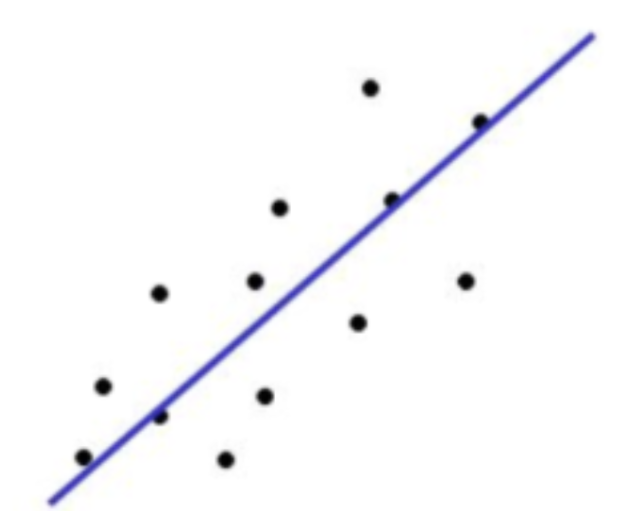
Strong Negative

Moderate Negative
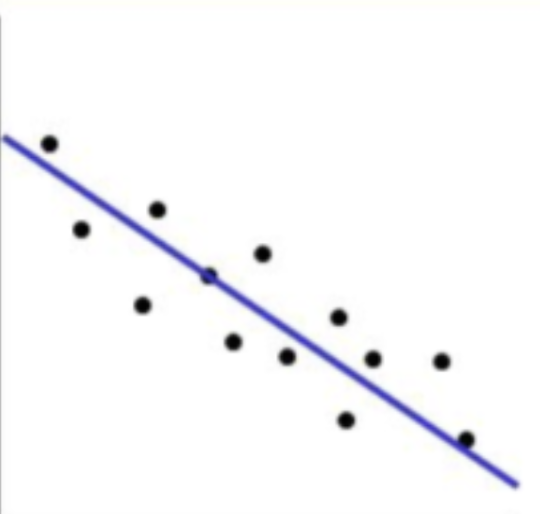
Weak Negative
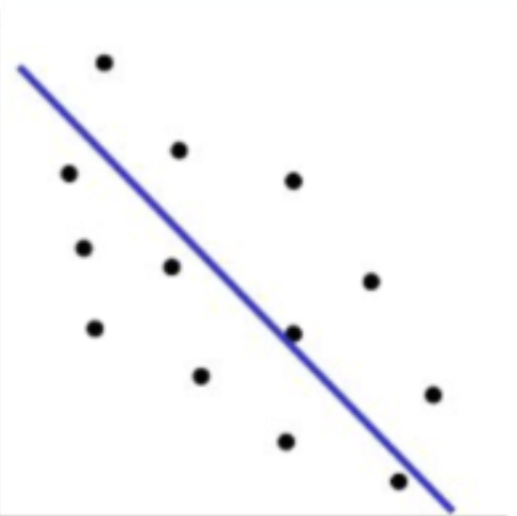
The Correlation Coefficient
Pearson’s r
Indicates two things about a correlation:
The strength of the correlation between two things
The direction of the correlation between two things
What is the range of the correlation coefficient?
-1.0 – 0.0 is negative correlation
0.0 – +1.0 is positive correlation
Does correlation equal causation?
No, correlation does not equal causation. Correlation can be meaningless.
Limitations of correlations: Directionality Problem
Violent media —> aggression
Violent media ←- aggression
Limitation of Correlation: 3rd variable problem
Violent media —> sensation seeking —> aggression
Experimental method
can determine causality (X causes changes in Y)
experimentally manipulate one variable (IV)
Measure an outcome (DV)
Test the effect of the IV on the DV
Experimental Manipulation
Manipulation & Pharmaceutical Experiment
Manipulation
creating different groups who receive specific forms of the intended variable
Experimental Group vs Control Group
Pharmaceutical Experiment
different forms of psychological variable
Excluded vs Included
Angry vs Calm
Random assignment
Participants must be randomly assigned to different levels of the IV.
Creates groups that are “initially equivalent
You manipulate your psychological variable
Now the groups differ on one thing only (the thing you manipulate)
Fixes directionality issue
Arrow can now only go one way (ex: from IV to DV) because IV came before DV (manipulation came before measure)
Fixes the 3rd variable problem
two groups are now equal on all possible 3rd variables
effect of IV is isolated from all other possible effects
Violent media → sensation seeking → aggression
What is the fundamental goal is science in social psychology?
to create and refine theories through systematic hypothesis testing
What is a correlational research design, and what is it’s main limitation?
Definition: measures both variable as they are to see if they relate
limitation: shows association only. It cannot prove causation.
What is an experimental research design, and how does it work?
Function: establishes cause and effect
Process: manipulate the IV and measures the DV
What three major events triggered the Replication Crisis?
Scientific fraud cases.
Published evidence for "impossible" phenomena (ex:precognition/ESP).
Ioannidis (2005) paper: Showed mathematically why most published research findings are false.
What was the Reproducibility Project Psychology, and what did it find?
Study: Attempted to replicate 100 cognitive and social psychology studies.
Finding: Only 36% (36 studies) successfully replicated, confirming the Replication Crisis.
What are Questionable Research Practices (QRPs) and p-hacking?
actions taken during data collection or analysis to manipulate results until achieving statistical significance (p<.05).
What are the 8 specific QRPs listed in the lecture?
Selective Reporting (Measures): Collecting many measures of the same thing, but only reporting those with p < .05.
Early Stopping: Checking data during collection and stopping as soon as p < .05.
Selective Reporting (Manipulations): Using multiple manipulations, but only reporting those with p < .05
Adding/Dropping Covariates: Tweak covariates until p < .05.
Adding/Dropping Outliers: Remove or include outliers until p < .05.
Sub-group Analysis: Running tests on specific sub-groups (e.g., males only) until finding p < .05.
Data Transformations: Transforming variables until p < .05.
Selective Reporting (Studies): Running multiple studies, but only publishing those with p < .05.
What is “publication bias against the null hypothesis”?
Academic journals strongly prefer publishing statistically significant results (p < .05) over non-significant (null) findings, pressuring researchers to p-hack.
What is the fields future direction to fix the Replication Crisis?
The Open Science Movement, which promotes transparency, pre-registration of hypotheses, and open data sharing.
What are they trying to figure out in Nosek et al. (2022)?
How to define and measure reproducibility, robustness and replicability, and how reliable psychology findings actually are after a decade of testing.
How did Nosek et al. (2022) try to figure that out?
By reviewing 10 years of replication studies (like the Reproducibility Project) to track success rates, identify why studies fail, and evaluate field-wide progress.
What was the conclusion/What did Nosek et al. (2022) find?
Replication rates are low due to low statistical power, p-hacking, and publication bias. To fix this, psychology must adopt Open Science practices (pre-registration, open data, and direct replications).
Open science movement
Response to the Replication Crisis
Center for Open Science in Charlottesville
Publicly share data, analysis code, and materials
Let others check your work (reduces fraud. QRPs)
Open science practices
A new way of doing research that emphasizes transparency + accessibility
Preregistration
Open materials
Open data
Open papers (preprints, postprints)
Before you run study or analyze an existing dataset, you publicly post your not editable plan for:
Hypotheses
Design
Sample size and composition
Procedure and materials
Analyses
Prevents hypothesizing-after-results-known- (HARKing)
can’t present exploratory findings as confirmatory
Prevents p-hacking
can’t secretly torture your data/stats
Post your materials
Measures
Stimuli
protocols/scripts
Post your dataset
de identified
Post/find papers to PsyArxiv
Preprint: Post-submission, pre-publication
Postprint: Post publication, pre-production
Open science is equitable and inclusive science:
Withholding data + materials disadvantages others
Perpetuates inequality
Open science enfranchises everyone
Scientists don’t own data + materials
Moral imperative to share
What was the conclusion/ what did Chester & Lasko (2021) find?
Most studies created experiments on the fly without pre-testing, with ~40% relying solely on surface-level validity—a key driver of psychology's replicability crisis.
How did Chester & Lasko (2021) try to figure that out?
meta-analyzed and coded 348 experimental manipulations from 2017 JPSP papers. They used this data to measure how often researchers relied on pre-validated tools, pilot testing, or proper manipulation checks.
What are they trying to figure out in Chester & Lasko (2021)?
How frequently social psychologists validate their experimental manipulations (construct validity) and whether current research practices meet psychometric standards.