Biochemistry Exam 4
 Call Kai
 Learn
 Practice Test
 Spaced Repetition
 Match
 Flashcards
 Knowt Play
1/256

There's no tags or description
Looks like no tags are added yet.
257 Terms
What do glucose, fatty acids, and amino acids get metabolized to in stage 2?
Acetyl-CoA

During stage 2, acetyl-CoA enters the citric acid cycle. What the products formed?
16 CO2 and 64 electrons

What is glucose broken down into?
CO2, water, and ATP
OR pyruvate
Which refers to the creation of macromolecules?
A. Catabolism
B. Metabolism
C. Anabolism
D. Creationism
C. Anabolism
Which refers to the breakdown of macromolecules?
A. Catabolism
B. Metabolism
C. Anabolism
D. Creationism
A. Catabolism
What is glucose converted to in glycolysis?
Pyruvate

What enzyme degrades lactose into galactose?
A. Galactosidase
B. Lactase
C. Manimase
D. Mishrase
B. Lactase

What occurs in lactose intolerance?
The individual either does not make the enzyme lactase or does not make enough lactase to break down milk sugar. This leads to the GI upset problems that accompany ingesting lactose.
T/F It is possible to become lactose intolerant by not having lactose in your diet for an extended period of time.
True
What are the 4 major pathways of glucose utilization?
1. Structure - cell wall polysaccharides, extracellular matrix
2. Storage - glycogen, starch, sucrose
3. Oxidation via pentose phosphate pathway - ribose -5-phosphate
4. Oxidation via glycolysis - pyruvate
T/F Glycolysis converts glucose to pyruvate and makes ATP but not NADH.
False. Glycolysis makes NADH and ATP along with pyruvate.

What is gluconeogenesis?
Making new glucose
What enzyme converts glucose to glucose 6-phosphate?
A. Aldolase
B. Hexokinase
C. Phosphofructokinase-1
D. Pyruvate kinase
B. Hexokinase

What enzyme converts fructose 6-phosphate to fructose 1,6-bisphosphonate?
A. Aldolase
B. Hexokinase
C. Phosphofructokinase-1
D. Pyruvate kinase
C. Phosphofructokinase-1

How much ATP is used during the preparatory phase of glycolysis?
2 ATP used

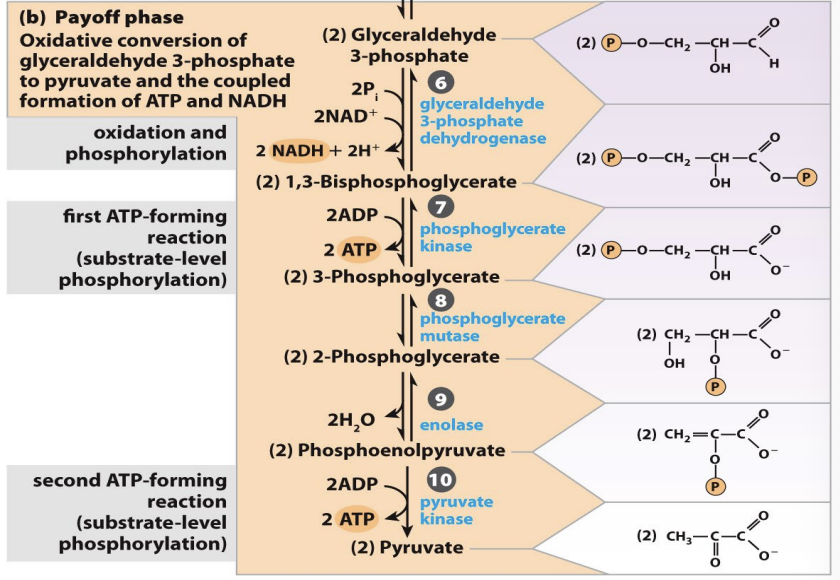
What is created during the payoff phase of glycolysis?
4 ATP, 2 NADH, 2 pyruvate

Which reaction of glycolysis is known as the first priming reaction?
Glucose to glucose 6-phosphate

Which reaction of glycolysis is known as the second priming reaction?
Fructose 6-phosphate to fructose 1,6-bisphosphonate
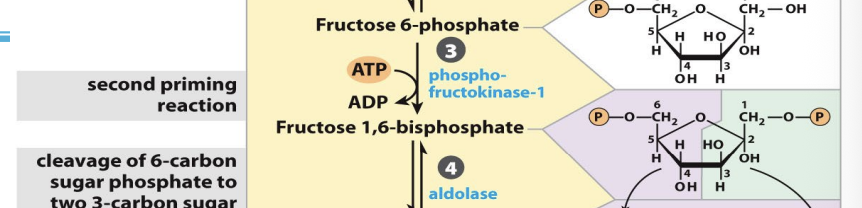
What enzyme is used in the first priming reaction in glycolysis?
Hexokinase

Which enzyme is responsible for cleaving the 6 carbon sugar phosphate to two 3 carbon sugar phosphates during glycolysis?
A. Aldolase
B. Hexokinase
C. Phosphofructokinase-1
D. Pyruvate kinase
A. Aldolase

During the payoff phase of glycolysis, glyceraldehyde 3-phosphate is converted to 1,3-bisphosphoglycerate. What is created here and which enzyme is responsible?
A. 1 ATP; Aldolase
B. 1 NADH; Hexokinase
C. 2 NADH; Glyceraldehyde 3-phosphate dehydrogenase
D. 2 NADH; Pyruvate kinase
C. 2 NADH; Glyceraldehyde 3-phosphate dehydrogenase

What is created when 1,3-bisphosphosglycerate is converted to 3-phosphoglycerate by phosphoglycerate?
A. 1 ATP
B. 2 ATP
C. 1 NADH
D. 2 NADH
B. 2 ATP

What enzyme converts phosphoenolpyruvate to pyruvate?
Pyruvate kinase
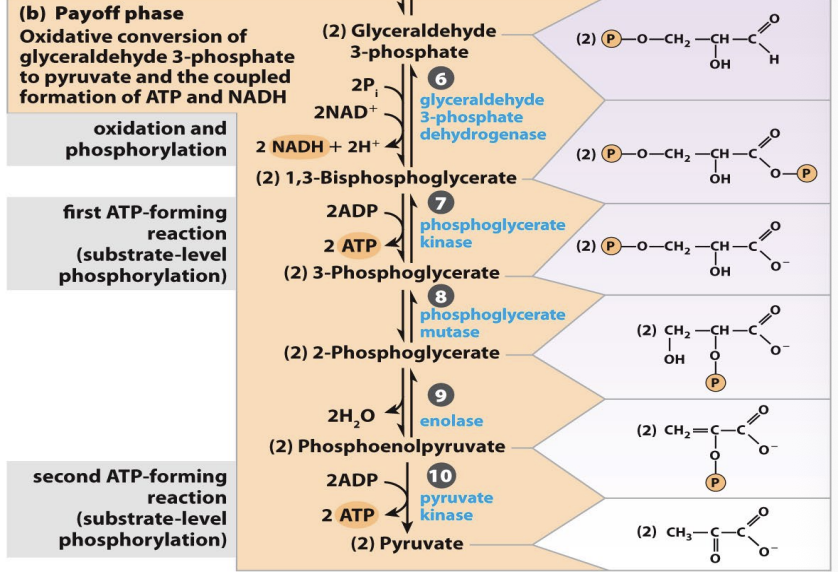
What is the net gain of ATP in glycolysis?
2 ATP

Which of the following are intermediate component(s) of glycolysis? Select all that apply
A. Uridine siphons-hate glucose
B. 1,3-bisphosphoglycerate
C. Alpha-ketogluarate
D. Phosphoenolpyruvate
E. Isocitrate
B and D

In the process of glycolysis, after glucose is phosphorylated into glucose 6-phosphate (G6P), it is isomerized into fructose 6-phosphate (F6P) by which of the following enzymes?
A. Triosephosphate isomer ask
B. Phosphoglycerate mutate
C. Enolase
D. Glucose phosphate isomerase
E. Phosphohexoisomerase
E. Phosphohexoisomerase

What are the inputs of glycolysis?
Glucose + 2NAD+ + 2ADP + 2Pi

What is gained from glycolysis?
2 pyruvate + 2 NADH + 2 ATP + 2 H+
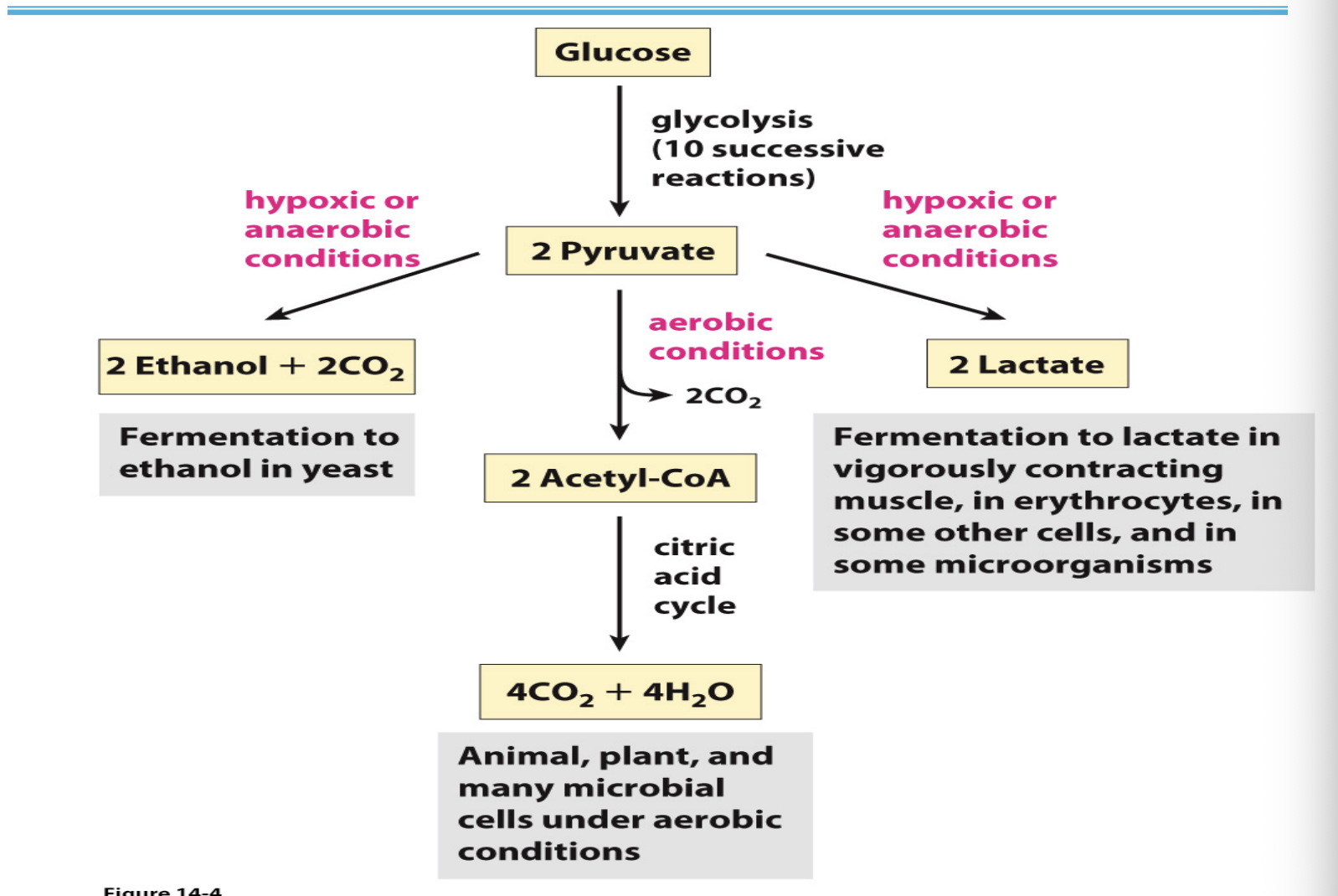
What are the 3 possible fates of pyruvate after glycolysis?
1. Converted to acetyl-CoA for CAC
2. Fermentation to ethanol in yeast (not human)
3. Fermentation to lactate

What pathway does pyruvate undergo in aerobic conditions?
Converted to acetyl-CoA

Imagine you are in space and have no oxygen. What will be the fate of your pyruvate?
Fermentation to lactate
What is lactose converted into?
Glucose and galactose
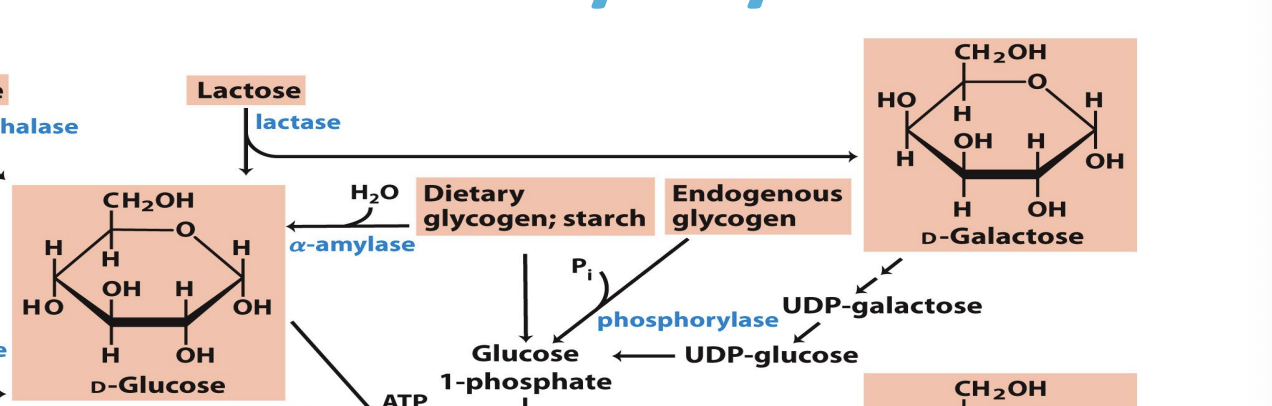
What is the change in oxidation state of the sugars when undergoing anaerobic glycolysis?
No net change in oxidation
During a strenuous workout, where does lactate build up?
A. Kidneys
B. Muscles
C. Mitochondrial matrix
D. Brain
B. Muscles
___________ is highly toxic if the transferase is missing.
Galactose
What disease is associated with missing transferase that eventually causes water to diffuse to the lens of the eye?
Cataracts
How are cataracts formed from missing transferase?
If transferase is missing or inactive, the presence of aldose reductase will reduce galactose to galatitol. Galatitol is osmotically active so water will be drawn to it in the lens forming a cataract (cloudy lens).
Glycolysis occurs at ______ _______ in tumor cells.
A. Decreased rates
B. Increased rates
B. Increased rates
Since tumor cells cannot make ATP as efficiently as normal cells, they must perform glycolysis at accelerated rates to keep up with need.
A 4-year-old child with GALT deficiency develops cataracts. Which of the following best explains the mechanism of cataract formation?
A. Excess galactose is converted to glucose, causing glucose accumulation in the lens.
B. Excess galactose is converted by aldose reductase to galactitol, which accumulates in the lens and draws water into the lens.
C. GALT deficiency directly causes crystallization of lens proteins.
D. Galactose inhibits collagen synthesis, causing swelling of the lens
B. Excess galactose is converted by aldose reductase to galactitol, which accumulates in the lens and draws water into the lens
A 55-year-old patient is diagnosed with an aggressive solid tumor. Although the tumor has an adequate blood supply, many regions of the tumor are poorly oxygenated because the tumor cells are growing faster than new blood vessels can form. Laboratory analysis shows that the tumor cells have increased GLUT1 expression, increased hexokinase activity, increased LDH expression, and increased glucose consumption compared with normal cells. A researcher treats tumor cells with a drug that inhibits hexokinase. Which of the following is the most likely consequence?
A. Increased glucose uptake and increased ATP production
B. Decreased glycolysis and decreased ATP production
C. Increased conversion of pyruvate to acetyl-CoA
D. Increased oxidative phosphorylation and increased lactate production
B. Decreased glycolysis and decreased ATP production
Which of the following could be targets for anti-cancer treatments?
A. GLUT 1
B. GLUT 3
C. Transketolase
D. Hexokinase
E. Glucose 6-phosphate dehydrogenase
All
Which of the following can be used to treat cancer by inhibiting the hexokinase enzyme?
A. 2-deoxyglucose
B. Lonidamine
C. 3-bromopyruvate
D. Inuhmine
A, B, C
Which of the following drugs treat cancer by inhibiting the transketolase enzyme that converts xylulose 5-phosphate to glyceraldehyde 3-phosphate?
A. Oxythiamine
B. Lonidamine
C. Inuhmine
D. Kyutamine
E. Transketolase does not convert xylulose 5-phosphate
A. Oxythiamine
Which of the following are overexpressed in cancer cells as they try to make more glucose 6-phosphate from glucose?
A. GLUT 1
B. GLUT 2
C. Transketolase
D. Hexokinase
A and D
GLUT 3 is also over expressed.
Why is the pentose phosphate pathway preferred by cancer cells versus the glycolysis pathway?
Because endpoint of pentose phosphate is ribose 5-phosphate which allows for more DNA formation. Cancer wants to replicated
Yeast undergo ______ fermentation.
Ethanol
T/F Ethanol fermentation in yeast is irreversible.
False. It is reversible
What does acetaldehyde do to our cell membrane?
It punches holes in it.
What is the term for making new glucose?
Gluconeogenesis

Why is gluconeogenesis necessary?
Glucose from our diet is not sufficient to all of bodies needs.
Gluconeogenesis occurs in the _______.
A. Muscles
B. Brain
C. Blood vessels
D. Liver
D. Liver

Glycolysis occurs mainly in the _______.
A. Muscles
B. Brain
C. Blood vessels
D. Liver
A and B. Muscles and brain

Which enzyme in the irreversible step of gluconeogenesis converts glucose 6-phosphate to glucose?
Glucose 6-phosphotase

What molecules are utilized in gluconeogenesis?
A. 4 ATP
B. 2 ATP
C. 2 GTP
D. 4 pyruvate
A and C. It uses 2 pyruvate, 4 ATP, 2 GTP, 2 NADH, 2 H+, 4 H2O

What are the end products of gluconeogenesis?
Glucose, 4 ADP, 2 GDP, 6 Pi, 2 NAD+
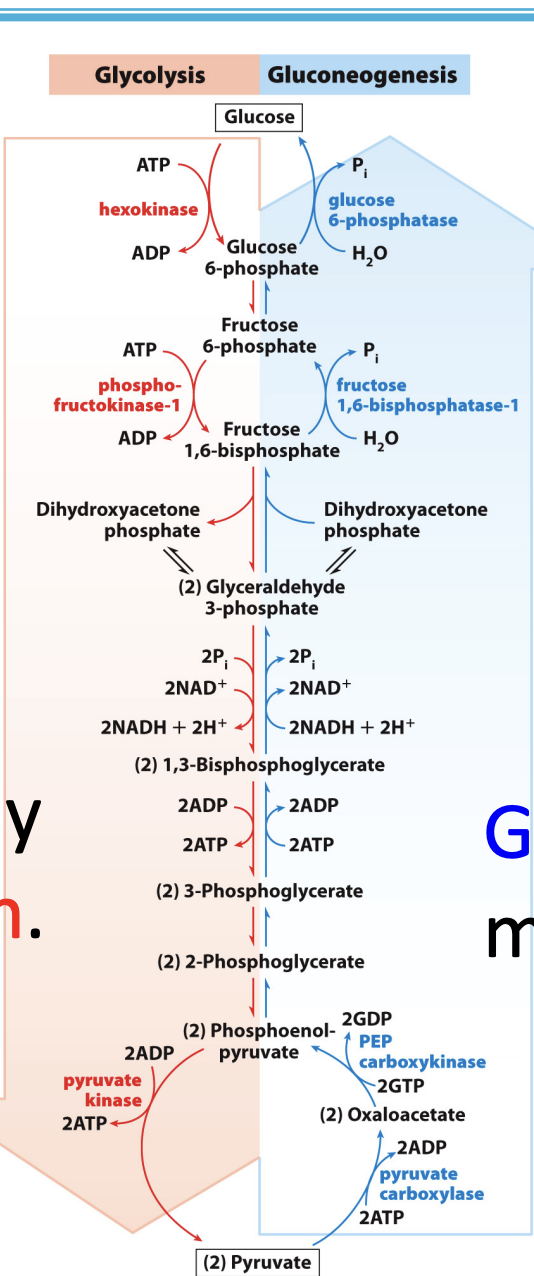
What are the costs of gluconeogenesis?
4 ATP, 2 GTP, 2 NADH

When is gluconeogenesis important?
A. During adequate sugar intake
B. During strenuous workout
C. During starvation
D. During walking
B and C
T/F Animals can produce glucose from sugars, fats, and proteins.
False. Sugars and proteins yes but NOT with fatty acids.
The first reaction in glycolysis that results in the formation of an energy-rich compound (ATP) is catalyzed by:
A. Glyceraldehyde 3-phosphate dehydrogenase
B. Hexokinase
C. Phosphofructokinase-1
D. Phosphoglycerate kinase
D. Phosphoglycerate kinase
Galactosemia is a genetic error of metabolism associated with:
A. Galactose 1-phosphate uridylyltransferase
B. Excessive ingestion of galactose
C. Inability to digest lactose
A.
Which enzymes are a part of the feedback mechanism that converts ribulose 6-phosphate to glucose 6-phosphate when more NADPH is needed?
Transketolase and transaldolase

Which of the following is a natural antioxidant that helps to lower oxidative stress?
A. Glutathione reductase
B. Transketolase
C. Pyruvate kinase
D. Mishrase
A. Glutathione reductase

How can the brain, nervous system, and red blood cells generate ATP?
A. From glucose only
B. From protein only
C. From Fatty acids only
D. From glucose and protein
A. From glucose only
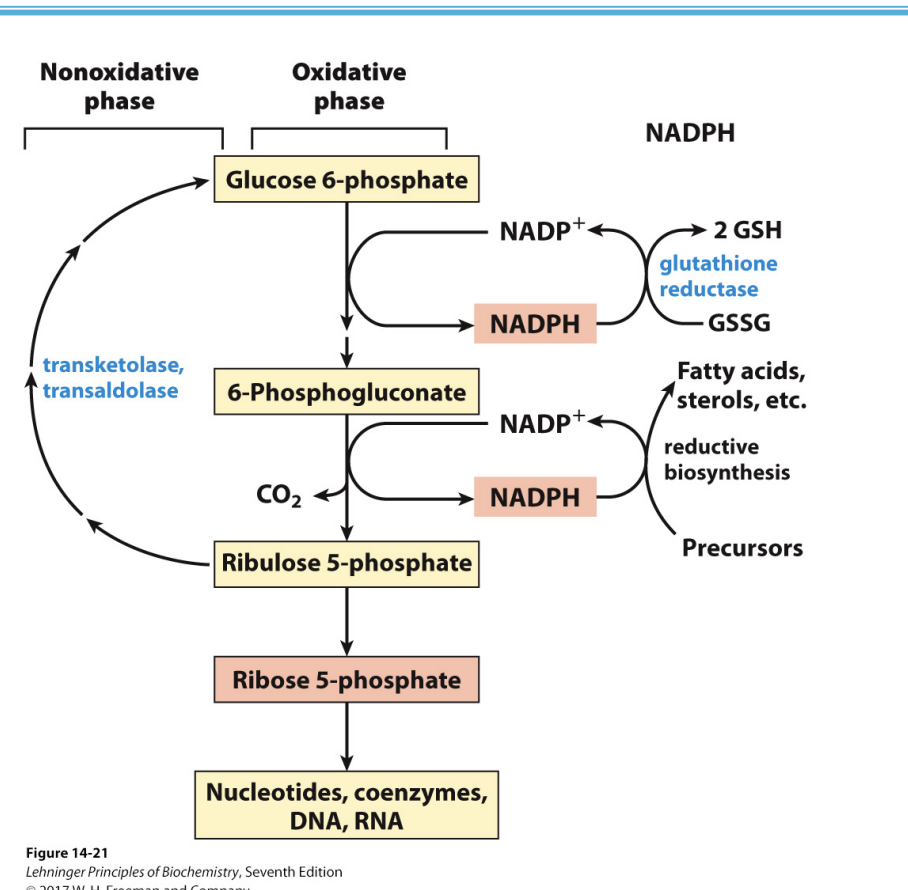
During strenuous exercise, the NADH formed in the glyceraldehyde 3-phosphate dehydrogenase reaction in skeletal muscle must be reoxidized to NAD+ if glycolysis is to continue. The most important reaction involved in the reoxidation of NADH is:
A. Dihydroxyacetone phosphate to glycerol 3-phosphate
B. Pyruvate to lactate
B. Pyruvate to lactate
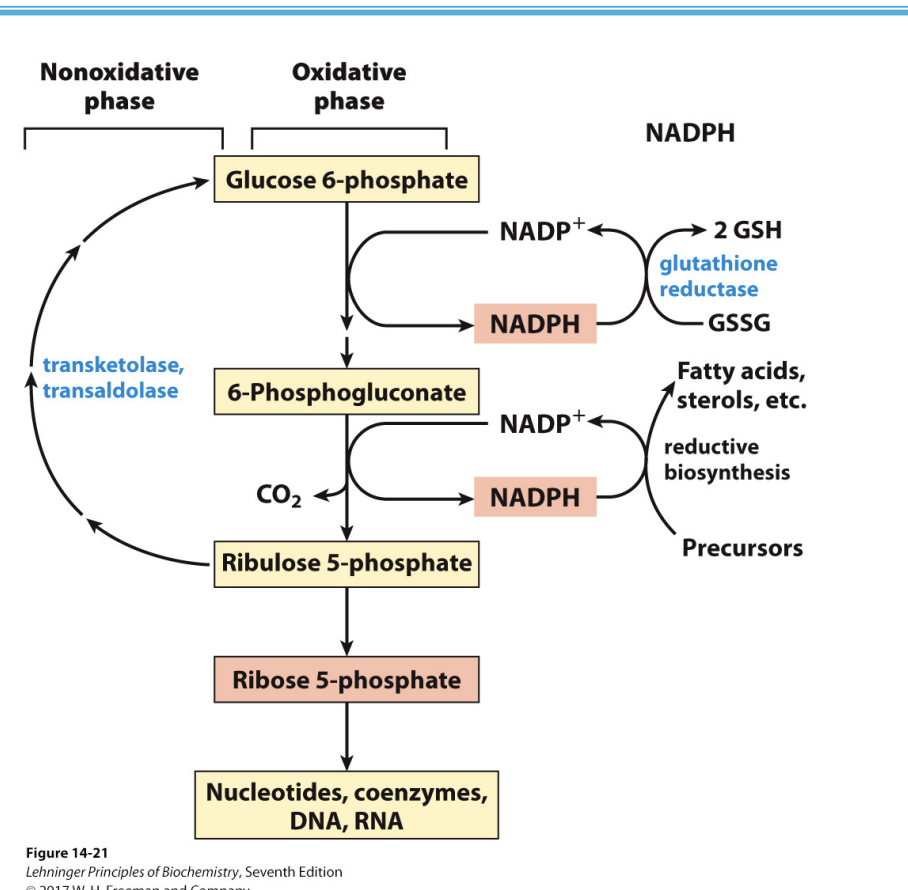
Which of the following are produced by the pentose phosphate pathway?
A. ATP
B. Ribose 5-phosphate
C. GTP
D. NADPH
B. Ribose 5-phosphate and D. NADPH
NO ATP
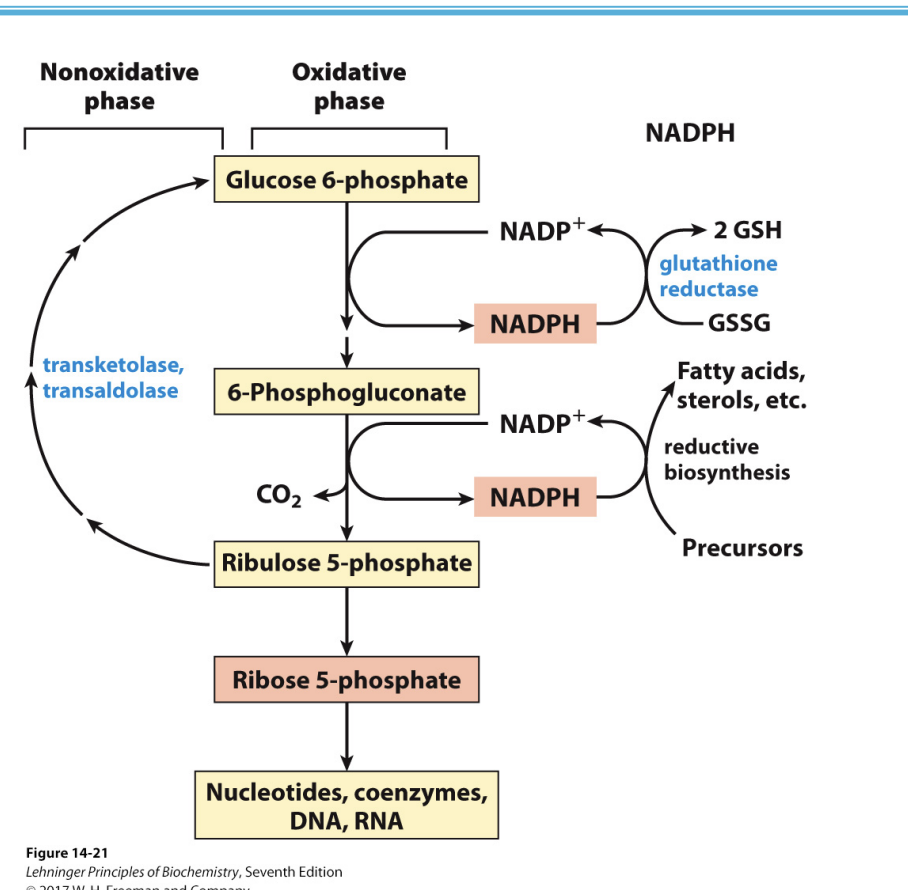
What is ribose 5-phosphate important in?
DNA
Which intermediate in the pentose phosphate pathway is involved in the feedback mechanism which is affected by which products are needed in the body?
A. Ribulose 5-phosphate
B. Ribose 5-phosphate
C. 6-Phosphogluconate
D. Glucose 6-phosphate
A. Ribulose 5-phosphate
If more NADPH is needed, this molecule will not be converted to ribose 5-phosphate and will instead be converted back into glucose 6-phosphate by transaldolase and transketolase and will go back through the pathway so more NADPH is produced.

What phase is the reaction of ribulose 5-phosphate to glucose 6-phosphate a part of?
A. Oxidative phase
B. Non-oxidative phase
B. Non-oxidative phase
What regulates partitioning into glycolysis versus pentose phosphate pathway?
A. NADH
B. NAD+
C. NADP+
D. NADPH
D. NADPH

More NADPH needed means which pathway will be followed?
Pentose phosphate pathway
Soldiers are checked for G6P dehydrogenase deficiency before being deployed to high malaria areas because
A. This will allow them to be more immune than others.
B. The high oxidative stress of malaria drugs could kill them.
C. The mosquitoes will be more prone to bite those with the deficiency.
D. The malaria medications reacting with this deficiency can make them hallucinate.
B.
This is a process by which cels can continue using glycolysis to extract energy in anaerobic conditions.
Fermentation
This is a process by which cells can use a variety of metabolites for the synthesis of glucose.
Gluconeogenesis
Glutathione is an example of _________.
A natural antioxidant
How does the anti-cancer drug imatinib (Gleevec) work?
It works by inhibiting the action of a specific tyrosine kinase which is the enzyme that increases synthesis of hexokinase.
Which vitamin is niacin?
A. B2
B. B3
C. B6
D. B12
B. B3
Which amino acid is niacin formed from?
A. Tryptophan
B. Alanine
C. Adenine
D. Cytosine
A. Tryptophan
Substrate level phosphorylation is a ___ contribution to aerobic cells energy
modest
electron transport phosphorylation is a ___ contribution to aerobic cells energy
major
What is the difference between NAD+ and NADP+?
NAD+ has a hydroxyl group.
NADP+ has a phosphate group esterified to that hydroxyl.
How many electrons are needed to reduce NADP+?
A. 0
B. 1
C. 2
D. 4
C. 2
Cholera is associated with:
A. Loss of electrolytes
B. Excessive loss of water
C. Decreased gluconeogenesis
D. Decreased fiber in diet
B. Excessive loss of water
Water goes into GI tract and causes dehydration.
What are the symptoms of pellagra?
The 3 D's
Diarrhea, dementia, and dermatitis
How do you treat pellagra?
Take vitamin B3 (niacin)
How would you explain the MOA of niacin to your patient?
Niacin helps you make more energy which helps with the dementia, diarrhea, and dermatitis.
Which of the following food sources can provide the maximum substrate for niacin?
A. Turkey
B. Egg
C. Potato
D. Ground beef
A. Turkey (tryptophan)
What type of phosphorylation happens in glycolysis?
substrate-level phosphorylation
Where in the mitochondria does oxidative phosphorylation take place?
A. Cytosol
B. Mitochondria matrix
C. Mitochondrial inner membrane
D. Mitochondrial outer membrane
C. Mitochondrial inner membrane
Is the conversion of pyruvate to acetyl-CoA endergonic or exergonic?
Exergonic
where is the majority of ATP formed
stage 3
what are the three stages of nutritional catabolism
Acetyl CoA production
Acetyl CoA oxidation
Electron transfer & oxidative phosphylation

Where does substrate-level phosphorylation take place?
In cytosol during glycolysis
What gets oxidized so NAD+ can be reduced?
CO2

What enzyme converts pyruvate to acetyl-CoA?
pyruvate dehydrogenase complex (PDC)
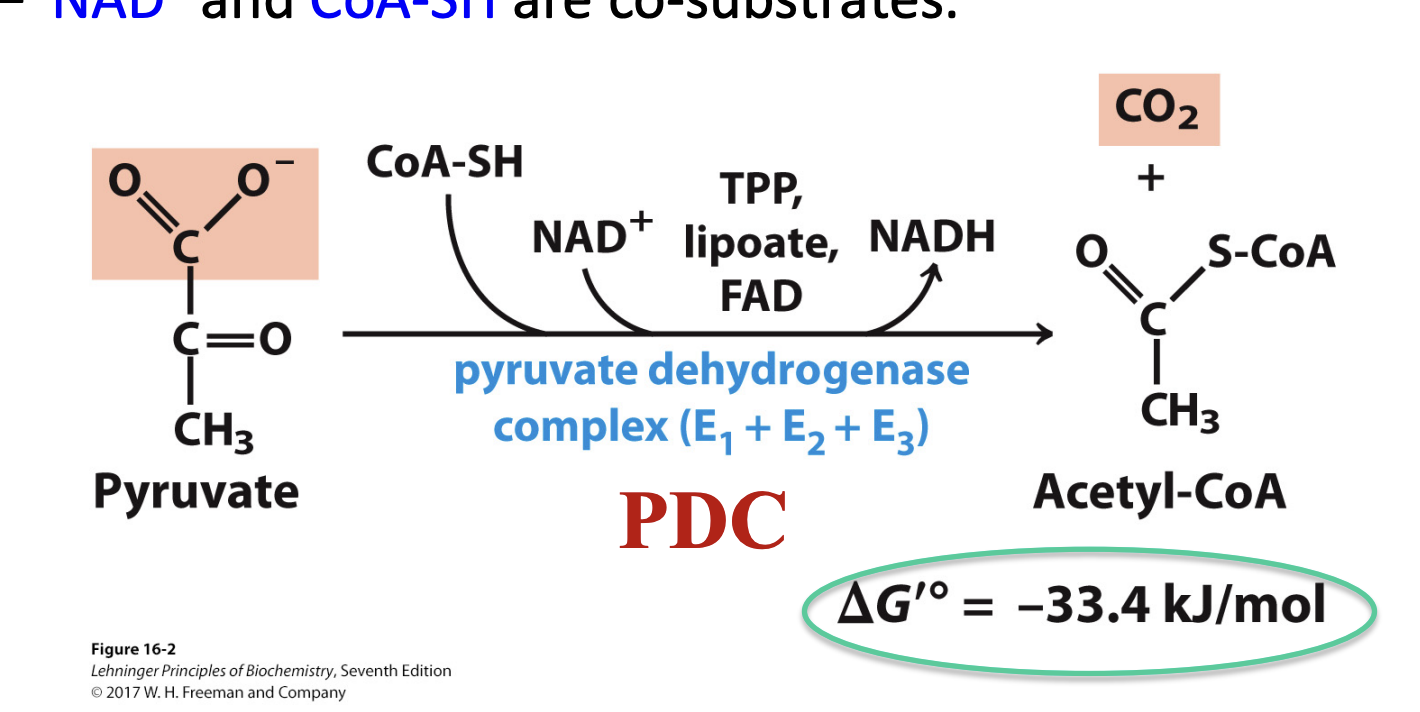
what are 3 prosthetic groups in the conversion of pyruvate to acetyl coA
TPP, lipoyllysine, and FAD

what are two co substrates in the conversion of pyruvate to acetyl coA
NAD and CoA-SH

What is the antigen for primary biliary cholangitis (PBC)?
Pyruvate dehydrogenase complex
What vitamin is pantothenic acid?
Vitamin B5. A deficiency in this will compromise TCA cycle and not allow oxidative phosphorylation.
What are the products of 1 turn in TCA cycle?
3 NADH, 1 FADH2, 1 GTP

A deficiency in Vitamin B1 leads to:
Beriberi