ERP - Nutr Care for Individuals and Groups
 Call Kai
 Learn
Learn Practice Test
 Spaced Repetition
 Match
Match Flashcards
 Knowt Play
1/24

There's no tags or description
Looks like no tags are added yet.
25 Terms
Carotenoids like lutein and zeaxanthin have been studied for their role in preventig or delaying cataracts and age-related macular degeneration. Which food is the best source for these carotenoids?
A. Kale
B. Almonds
C. Apples
D. Yogurt
A. Kale
Lutein and zeaxanthin are found in green leaft vegetables (eg. kale, spinach, broccoli, peas, and lettuce) and egg yolks.
Kale — BEST source: Very high in lutein and zeaxanthin
Almonds: Mainly a good source of vitamin E, not lutein/zeaxanthin
Apples: Not a significant source
Yogurt: Provides calcium/protein, but little lutein/zeaxanthin.

Which of the following changes occurs at an earlier Tanner stage for girsla than for boys?
A. Peak height velocity
B. Voice changes
C. Development of axillary hair
D. Increased sweat gland activity
A. Peak heigh velocity
Peak height velocity begins at Tanner stage 2 for girls, whereas it begins at Tanner stage 3 for boys.
Sweat gland activity increases for both boys and girls during stage 2
Axillary hair development begins for both boys and girls during stage 3
Voice changes are not delineated in the Tanner stages for girls.
Tanner stages (also known as Taner Scale or Sexual Maturity Rating) form a 5-step measuring system that doctors use to track physical growth and puberty changes in children and teens.

According to the Nutrition Care Process, what does a “discontinued nutrition diagnosis” signify?
A. The original diagnosis has been removed from the eNCPT
B. The patient is no longer receiving care at the facility
C. The diagnosis is no longer applicable based on assessment data
D. A new intervention is needed because a patient’s medication has been discontinued.
C. The diagnosis is no longer applicable based on assessment data
Use of nutrition diagnosis status labels is encouraged by the Academy of Nutrition and Dietetics. In the Nutrition Care Process, “discontinued nutrition diagnosis” is applicable when the nutrition diagnosis no longer exists because the client’s condition or situation has changed and the current assessment data no longer support the nutrition diagnosis.
Which of the following measures the energy expended during the activities necessary to sustain normal body functions and homeostasis?
A. Resting metabolic rate
B. Body Mass Index
C. Thermogenesis
D. Estimated energy requirements
A. Resting metabolic rate
Resting metabolic rate is the energy expended during the activities (such as respiration and circulation) necessary to sustain normal body function and homeostasis.
A. Resting metabolic rate (RMR) — Energy your body uses at rest for essential functions like breathing, circulation, maintaining body temperature, and organ function.
B. BMI — Measures weight relative to height; it isn't an energy measurement.
C. Thermogenesis — Energy used to produce heat, including from food and other processes.
D. Estimated energy requirements (EER) — The estimated amount of energy needed to maintain energy balance, including activity and other factors.
A child’s weight is plotted at the 50th percentile on the growth chart. This means that the child’s weight is:
A. greater than or equal to that of half the children of the same sex and ethnicity.
B. greater than or equal to that of half the children of the same age.
C. greater than or equal to that of half the children of the same ethnicity.
D. greater than or equal to that of half the children of the same age and sex.
D. greater than or equal to that of half the children of the same age and sex.
Growth charts consider the child’s age and sex, not ethnicity.
Which of the following are genetic disorders that affect energy conversion and are primarily treated with dietary modification?
A. Cluster B
B. Macrocytic anemia
C. Inborn errors of metabolism
D. Autoimmune thyroid disorders
C. Inborn errors of metabolism
Inborn errors of metabolism (such as phenylketonuria) are genetic disorders that affect energy conversion and are primarily treated with dietary modifications.
Macrocytic anemias are caused by nutrient decifiency
Autoimmune thyroid disorders are primarily treated with medication.
Cluster B is a phychological disorder.
Which electronic health record style was created to reflect the nutrition care process?
A. SOAP
B. ADIME
C. PIE
D. Focus
B. ADIME
SOAP is the oldest type of medical chart documentation.
PIE and Focus are a blending of chart notes types.
ADIME, which stands for “assessment, diagnosis, intervention, monitoring, and evaluation”, reflect the nutrition care process.
What is the term for a care delivery model in which multidisciplinary treatment is coordinated through a primary care physician to ensure the patient receives necessary care in a timely, individualized manner?
A. Health maintenance organization
B. Ambulatory care facility
C. Patient-centered medical home
D. Group practice
C. Patient-centered medical home
A patient-centered medical home is a care delivery model which multidisciplinary treatment is coordinated through a primary care physician to ensure the patient receives necessary care in a timel, individualized manner.
A health maintenance organization, or HMO, is a network of doctors, hospitals, and other health care providers who have agreed to accept a certain level of payment for any provided services, which lowers costs for members.
A ambulatory care facility is an outpatient care center that provides services like diagnosis, treatment, consultation, and intervention.
Group practice refers to a private practice shared by multiple providers.
What benchmark is commonly used to measure if weight loss is successful?
A. 3 months
B. 6 months
C. 1 year
D. 2 years
C. 1 year
In determining if weight loss has been successful, 1 year of maintenance is commonly used as the benchmark.
1 year = benchmark for successful weight-loss maintenance/outcome.
What is another term for the stages of change model?
A. Maslow’s hierarchy of needs
B. Health belief model
C. Transtheoretical model
D. Social cognitive theory
C. Transtheoretical model
The stages of change model describes an individual’s progression trough six distinct stages of behavioral change. This model, also called transtheoretical model, helps to determine individual’s current stage to tailor intervention. Following are the six stages of change according to this model: Precontemplation → Contemplation → Preparation → Action → Maintenance → Termination
A. Maslow’s hierarchy of needs: Explains human motivation through a hierarchy of needs, from physiological needs to self-actualization.
B. Health belief model: Explains health behaviors based on perceived susceptibility, severity, benefits, barriers, and cues to action.
D. Social cognitive theory: Explains behavior through interactions among personal factors, behavior, and the environment.
Which of the following reflects long-term folate status?
A. Serum folate
B. Red blood cell folate
C. Homocysteine concentration in the blood
D. Serum methylmalonic acid
B. Red blood cell folate
Red blood cells (RBS) collect folate during formation. Because red blood cells live for 2-3 months and contain the folate since formation, RBC assessment provides longer-term folate status.
A. Serum folate: Reflects recent/short-term folate intake.
B. RBC folate: Reflects long-term folate status because folate is incorporated into RBCs during their formation.
C. Homocysteine: Can increase with folate or vitamin B12 deficiency, so it isn't specific to folate.
D. Methylmalonic acid (MMA): Increases with vitamin B12 deficiency, not folate deficiency.
Which component of nutrition assessent is not reassessed during monitoring and evaluation?
A. Anthropometric data
B. Nutrition-focused physical findings
C. Biochemical data, medical tests, and procedures
D. Client history
D. Client history
During the monitoring and evaluation step of the Nutrition Care Process, client history is not reassessed.
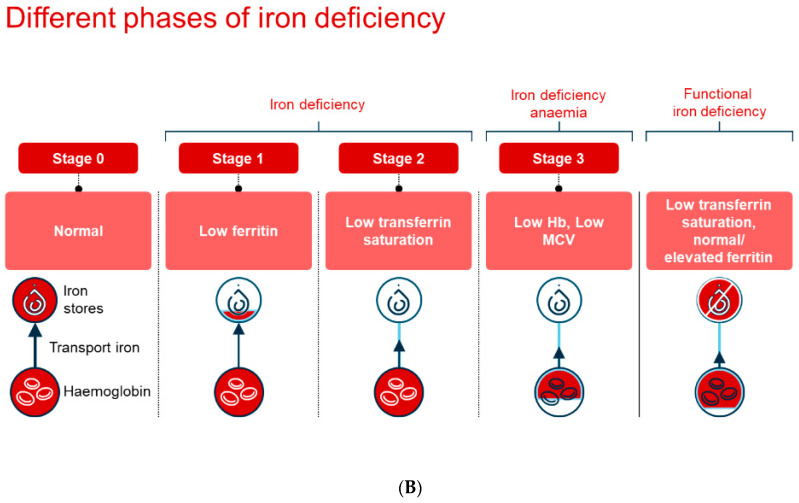
At what stage of iron deficiency do signs and symptoms present?
A. Stage 2
B. Stage 3
C. Stage 4
D. Stage 5
D. Stage 5
Tissues are affected at stage 5 of iron deficiency, resulting in sings and symptoms.
Stage 2 marks early functional iron deficiency and impaired erythropoeisis.
Stage 3 is when microcytosis and hypochromia develop.
What is the first step in the Nutrition Care Process?
A. Nutrition screening
B. Nutrition Assessment
C. Nutrition Diagnosis
D. Goal setting
B. Nutrition Assessment
Sequential steps in the Nutrition Care Process are nutrition assessment, nutrition diagnosis, nutrition intervention, and nutrition monitoring and evaluation.
What is the primary purpose of a nutrition intervention?
A. Alleviating symptoms of a nutrition problem
B. Determining the cause of a person’s nutrition problem
C. Altering or eliminating the etiologies of a nutrition diagnosis
D. Researching potential cures for conditions with nutrition implications
C. Altering or eliminating the etiologies of a nutrition diagnosis
A nutrition intervention is a purposely planned action intended to change a nutrition-related behavior, risk factor, environmental condition, or aspect of health status to resolve or improve the identified nutrition diagnosis or nutrition problem. It is less often directed at alleviating signs and symptoms.
Approximately how many carbohydrat servings are in 48 grapes?
A. 1
B. 2
C. 3
D. 4
C. 3
There are roughly 15 grapes in 1 carbohydrate serving, so 48 grapes would provide 3 carbohydrate servings.
Body mass index (BMI) is a better indicator of obesity than body weight because BMI is
A. the ratio of height to weight
B. the ration of weight to height
C. determined by indirect calorimetry
D. determined by direct calorimetry
B. the ration of weight to height
BMI is calculated using weight(kg)/height(m2). BMI is based on the ratio of a person’s weight to height and has been shown to be a reliable indicator of body fatness.
Resting energy expenditure (REE) is most affected by
A. Body composition.
B. physical activity.
C. time of day.
D. food intake.
A. Body composition.
Resting energy expenditure (REE) is the amount of energy needs to mantain basic body systems and body temperature at rest.
Weight, height, and age are needed to calculate REE.
Think of REE as the energy your body needs just to keep you alive at rest.
A. Body composition — The biggest factor because lean tissue is metabolically active and requires more energy at rest. More lean mass → higher REE.
B. Physical activity — Affects total energy expenditure, but activity isn't part of REE itself.
C. Time of day — REE can vary slightly, but not nearly as much as body composition.
D. Food intake — Eating can increase energy expenditure through the thermic effect of food, but that is separate from baseline REE.
Which of the following is an etiology of overweight?
A. Body mass index of 25-29.9
B. Increased diabetes risk
C. Being in precontemplative stage of change
D. Genetic factors
D. Genetic factors
Etiology is the cause of a condition or disease.
Genetic factors are among the causes of overweight and obesity.
Body mass index of 25-29.9 and increased risk of diabetes may result from overweight but they are not the cause of it.
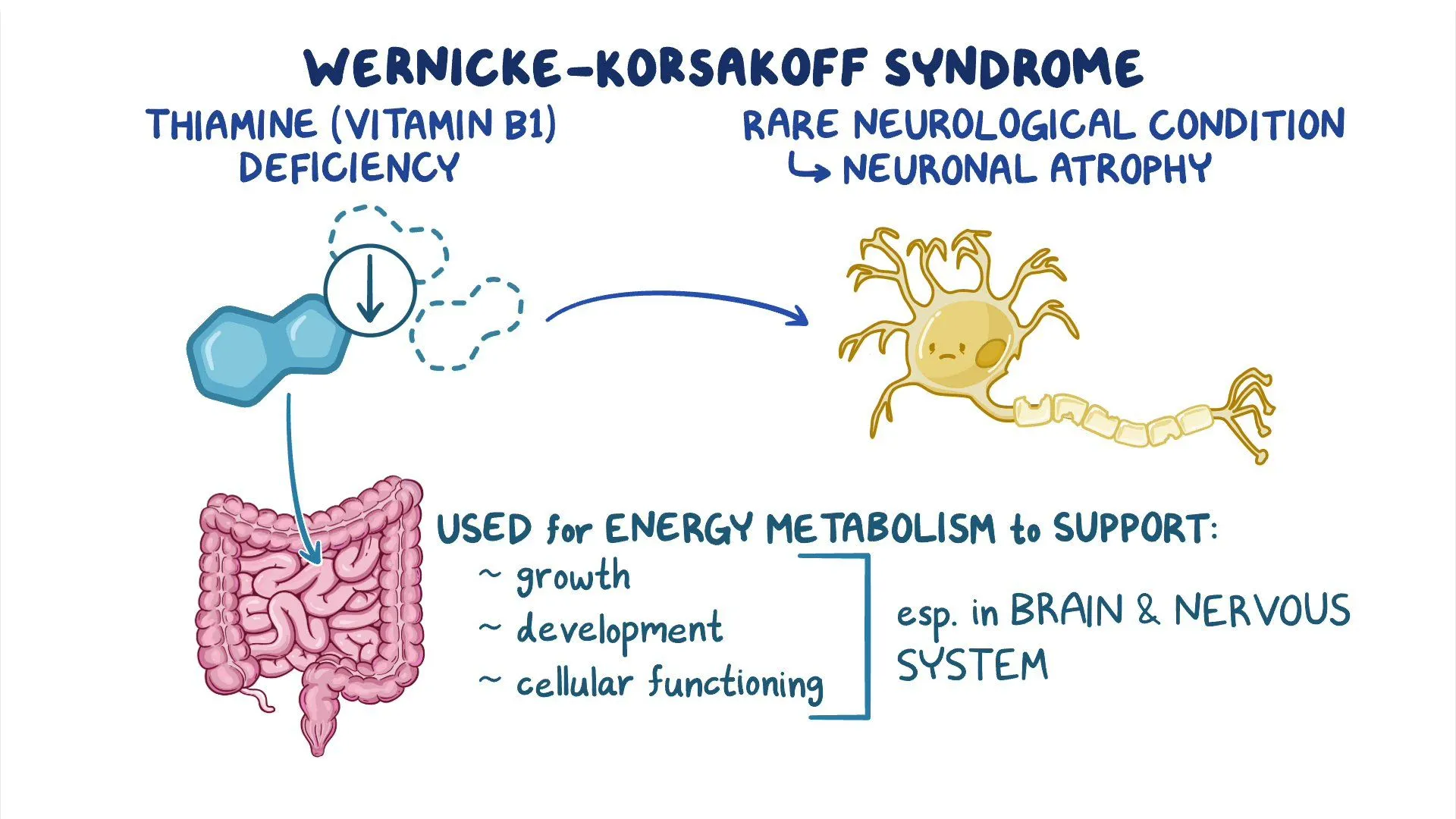
Which of these individuals is most likely to present with Wernicke-Korsakoff syndrome?
A. An infant born prematurely
B. An adult with alcoholism
C. An adult who is postmenopausal
D. A child with a neurological disorder
B. An adult with alcoholism
The abuse of alcohol often leads to a severe form of thiamin deficiency known as Wernicke-Korsakoff syndrome.
What is the term for breastmilk that becomes creamier and higher in calories and nutrients during breastfeed?
A. Foremilk
B. Mature milk
C. Transitional milk
D. Hindmilk
D. Hindmilk
During a breastfeed, the milk that becomes creamier and higher in nutrients and calories is called hindmilk.
Foremilk, which is high in water content and low in calories, is the milk first released during a breastfeed.
Transitional milk refers to milk that is produced within 5 days after delivery and up to 14 days postpartum, when it becomes what is referred to as mature milk.
Based on this statement, determine which stage of chnge a client is in: “I know what i need to do to lose weight, but i just can’t do it”.
A. Precontemplation
B. Contemplation
C. Preparation
D. Action
B. Contemplation
The classic indicator for a patient in the contemplation stage is a “yes, but” statement. The majority of RDN’s clients are in the contemplation stage wgen they first come to their first appointment.
What is used to determine body density by measuring the amount of air displaced?
A. Bod pod machine
B. Dual energy x-ray absorptiometry (DEXA)
C. Magnetic resonance imaging (MRI)
D. Ultrasound
A. Bod pod machine
The bod pod machine uses air displacement plethysmography (ADP) to measure body composition. This machine has been shown to be just as accurate as underwater weighing.
The key distinction:
A. Bod Pod
Uses air displacement to determine body volume.
Then uses body mass + volume to calculate body density.
Think: Bod Pod = air.
B. DEXA
Uses two different X-ray energies to distinguish bone mineral, lean tissue, and fat tissue.
Think: DEXA = X-rays → bone + fat + lean.
C. MRI
Uses magnetic fields and radio waves to create detailed images of tissues and organs.
D. Ultrasound
Uses high-frequency sound waves; can assess things like tissue thickness but doesn't determine body density through air displacement.
Children on strict vegan diets may be deficient in
A. Vitamin B-6
B. Magnesium
C. Vitamin B12
D. Folate
C. Vitamin B12
Vegans do not consume meat, eggs, or dairy, which are high in vitamin B12. Children have periods of rapid growth, so careful planning is needed to prevent vitamin B12 deficiency. It is suggested that children on a vegan diet consume vitamin B12 fortified foods, such as most breakfast cereal, soy beverages and plant-based meat substitutes to avoid deficiency.
Which of the following fish contains a higher level of methyl mercury and therefore should be avoided during pregnancy?
A. Salmon
B. Pollack
C. Swordfish
D. Tilapia
C. Swordfish
Swordfish is a large predatory fish and therefore exposed to more mercury. The US Food and Drug Administration has specifically identified swordfish as being high in mercury.