WEEK 6 NCLEX-Style Practice Questions
 Call Kai
 Learn
 Practice Test
 Spaced Repetition
 Match
 Flashcards
 Knowt Play
1/109

Earn XP
Description and Tags
chat gpt! 🧸 = highlighted lecture information ⭐ = major exam concept 🚨 = NCLEX alert, emergency, or priority intervention
110 Terms
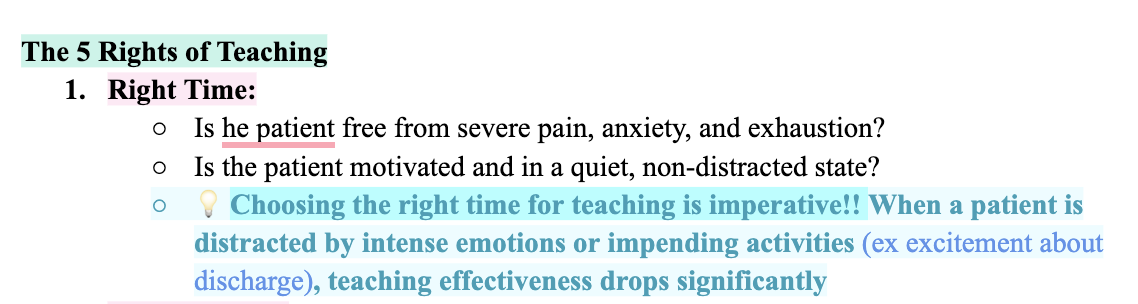
🧸 the nurse plans breastfeeding education for a patient who is experiencing severe incisional pain and anxiety. which action is best?
A. Begin the complete teaching session immediately
B. Wait until the pain and anxiety are controlled
C. Provide written materials without explanation
D. Ask the partner to teach the patient
ANS: B
teaching is more effective when the patient is comfortable, motivated and able to concentrate.
teaching and human milk
🧸 which actions demonstrate the five rights of patient teaching? select all that apply
A. Select a quiet environment
B. Include the family in goal setting
C. Adapt information to the patient’s education level
D. Match the method to the patient’s learning style
E. Provide all available information in one session
ANS: A,B,C,D
effective education requires the right time, context, goal, content, and method while avoiding information overload.

*yellow highlight
🧸 how can a partner most effectively promote breastfeeding success?
A. Encourage the mother to complete all household tasks
B. Provide infant care and household assistance
C. Feed the infant formula after every breastfeeding session
D. Limit the mother’s rest during the daytime
ANS: B
practical partner support allows the mother to rest, conserve energy, and maintain lactation.

teaching and human milk
⭐ what is the most significant benefit of human milk compared with formula?
A. It always provides sufficient vitamin D
B. It contains antibodies, enzymes, and immune factors
C. It remains sterile at room temperature indefinitely
D. It prevents every childhood illness
ANS: B
human milk contains immune components that formula cannot completely reproduce.

teaching and human milk
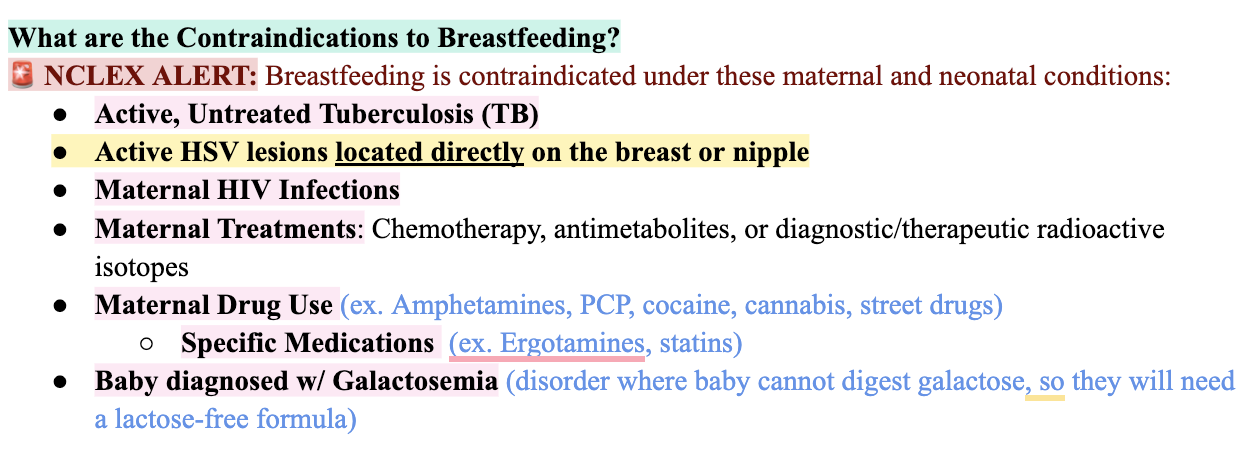
🚨 which conditions contraindicate breastfeeding according to the lecture?
A. Active untreated tuberculosis
B. Active HSV lesions on the breast
C. Maternal HIV infection
D. Maternal chemotherapy
E. Infant galactosemia
ANS: A,B,C,D,E
these conditions may expose the infant to infection, harmful medication, or nutrients the infant cannot metabolize.

teaching and human milk
🚨 a mother has active HSV lesions on one breast but none on the other. which principle is most important?
A. Breastfeed directly from the affected breast
B. Avoid feeding from the breast with active lesions
C. Stop all infant feeding
D. Apply soap directly to the lesions before feeding
ANS: B
direct contact with active HSV lesions can transmit the virus to the infant
DEFINITIONS:
[HSV lesions] - fluid-filled blisters or open sores cause by Herpes Simplex virus.
teaching and human milk
🚨 which newborn requires a specialized lactose- or galactose-free formula instead of human milk?
A. Newborn with physiological jaundice
B. Newborn with galactosemia
C. Newborn with transient tachypnea
D. Newborn with acrocyanosis
ANS: B
an infant with galactosemia cannot properly metabolize galactose.

*yelow highlight
teaching and human milk
🧸 which vitamins require special attention in an exclusively breastfed newborn?
A. Vitamin A
B. Vitamin C
C. Vitamin D
D. Vitamin K
E. Vitamin E
ANS: C,D
vitamin K is administered after birth, and vitamin D supplementation is generally required.

teaching and human milk
⭐ which milk is produced from pregnancy through approximately postpartum day 2?
A. Mature milk
B. Hindmilk
C. Transitional milk
D. Colostrum
ANS: D
colostrum is the first milk and is available immediately after delivery.

stages of milk
🧸 which characteristics describe colostrum?
A. Thick and yellow
B. Produced in small volumes
C. High in protein
D. High in immunoglobulins
E. High in fat and carbohydrates
ANS: A,B,C,D
colostrum is protein- and antibody-rich but lower in fat, carbs, and calories

stages of milk
🧸 how does colostrum assist the newborn’s gastrointestinal transition?
A. It causes urinary retention
B. It acts as a laxative and promotes meconium passage
C. It prevents all stool formation
D. It slows intestinal motility
ANS: B
colostrum encourages stooling and helps eliminate meconium

stages of milk
🧸 when is transitional milk generally produced?
A. Postpartum days 1–2
B. Postpartum days 3–8, possibly through day 12
C. Beginning at six weeks
D. Only after breastfeeding end
ANS: B
transitional milk bridges the change from colostrum to mature milk.

stages of milk
⭐ when does mature milk typically become established?
A. Immediately after delivery
B. Around postpartum day 3
C. Around postpartum day 12
D. After six months
ANS: C
mature mik generally appears near the end of the second postpartum week

stages of milk
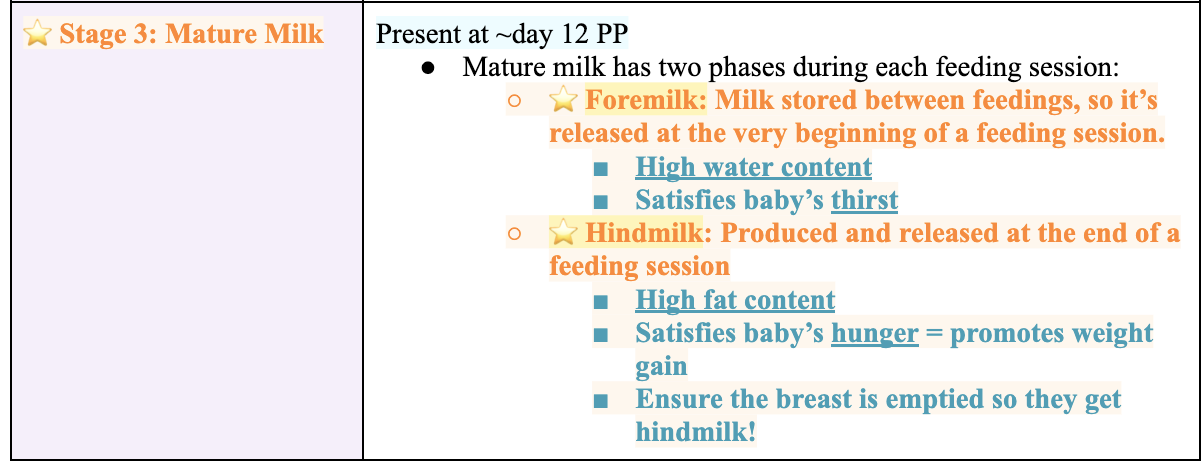
⭐ which statement correctly compares foremilk and hindmilk?
A. Foremilk is higher in fat than hindmilk
B. Foremilk satisfies thirst; hindmilk promotes satiety and weight gain
C. Hindmilk is released before foremilk
D. Both have identical composition throughout feeding
ANS: B
foremilk contains more water, whereas hindmilk contains more fat
stages of milk
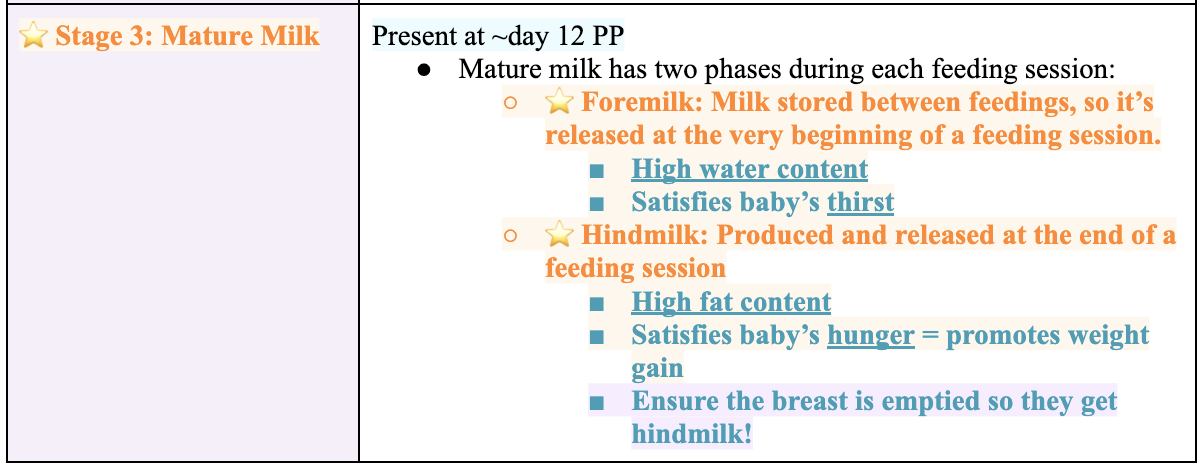
⭐ why should an infant be allowed to adequately empty one breast?
A. To receive the high-fat hindmilk
B. To prevent swallowing
C. To reduce maternal oxytocin
D. To eliminate colostrum production
ANS: A
hindmilk is released later in the feeding and supports satiety and weight gain
stages of milk
⭐ which hormone is responsible for milk production?
A. Progesterone
B. Oxytocin
C. Prolactin
D. Estrogen
ANS: C
prolactin stimulates the mammary glands to produce milk.

breastfeeding physiology and feeding cues
⭐ which hormone produces the mik-ejection or let-down reflex?
A. Oxytocin
B. Estrogen
C. Progesterone
D. Human chorionic gonadotropin
ANS: A
oxytocin contracts the milk-producing structures and moves milk toward the nipple

breastfeeding physiology and feeding cues
🧸 which benefits are associated with skin-to-skin contact? select all that apply
A. Stimulates prolactin
B. Stimulates oxytocin
C. Supports temperature regulation
D. Supports glucose regulation
E. Promotes bonding
ANS: A,B,C,D,E
skin-to-skin contact supports lactation and neonatal physiologic stability

+helps with temperature regulation, glucose reguation, bonding
breastfeeding physiology and feeding cues
🧸 which are early feeding cues?
A. Rooting
B. Lip smacking
C. Hands-to-mouth movements
D. Quiet-alert state
E. Vigorous crying
ANS: A,B,C,D
crying is a late hunger cue and can make latching more difficult.

breastfeeding physiology and feeding cues
⭐what is the best indicator that a newborn is ready to latch?
A. Falling asleep
B. Opening the mouth in response to rooting
C. Persistent crying
D. Turning away from the breast
ANS: B
a wide-open mouth following rooting indicates feeding readiness

breastfeeding physiology and feeding cues
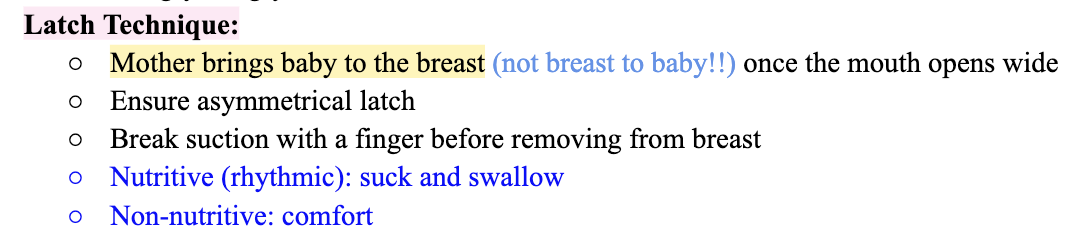
🧸 which action demonstrates correct latching technique?
A. Move the mother’s breast toward the infant
B. Bring the infant to the breast when the mouth opens widely
C. Remove the infant without breaking suction
D. Wait until the infant is crying forcefully
ANS: B
bringing the infant to the breast supports alignment and a deeper latch
breastfeeding physiology and feeding cues
🚨how should the mother remove the infant from the breast?
A. Pull the infant away rapidly
B. Insert a finger to break suction first
C. Press the infant’s nose closed
D. Wait for the infant to cry
ANS: B
breaking the suction prevents nipple trauma

breastfeeding physiology and feeding cues
🧸 which feeding pattern demonstrates nutritive sucking?
A. Random sucking without swallowing
B. Rhythmic sucking with swallowing
C. Sucking only while asleep
D. Continuous crying at the breast
ANS: B
nutritive feeding includes coordinated sucking and swallowing

breastfeeding physiology and feeding cues
⭐ Which components are included in the LATCH assessment?
A. Latch
B. Audible swallowing
C. Type of nipple
D. Comfort
E. Help required
ANS: A,B,C,D,E
LATCH evaluates five areas affecting breastfeeding effectiveness

LATCH Assessment
⭐ which finding provides the strongest evidence that the infant is transferring milk?
A. Maternal thirst
B. Audible swallowing
C. Infant hiccups
D. Flat maternal nipples
ANS: B
swallowing or gulping indicates that milk reaching the infant

LATCH Assessment
🧸 which maternal finding may require use of a breast pump before latching?
A. Everted nipples
B. Flat or inverted nipples
C. Symmetrical breasts
D. Expressed colostrum
ANS: B
pumping may help draw out flat or inverted nipples

LATCH Assessment
🚨 which instruction should the nurse provide regarding nipple cleansing?
A. Wash with alcohol after every feeding
B. Use antibacterial soap on the nipple
C. Wash with water only
D. Scrub the nipple to prevent infection
ANS: C
soap and alcohol remove protective oils and contribute to cracking

LATCH Assessment
🧸 what may be applied to the nipple after feeding to promote healing?
A. Alcohol
B. Expressed breast milk
C. Hydrogen peroxide
D. Powder
ANS: B
expressed milk may moisturize and protect sore nipples

LATCH Assessment
🧸 which breast should be offered first when one nipple is more painful?
A. The more painful breast
B. The less sore breast
C. Neither breast
D. Both breasts simultaneously
ANS: B
the infant genrally sucks most vigorously at the beginning of a feeding

LATCH Assessment
⭐ which interventions help manage breast engorgement? select all that apply
A. Warm compress before feeding
B. Warm shower before feeding
C. Cold compress after feeding
D. Breastfeed or express milk
E. Avoid emptying the breasts
ANS: A,B,C,D
(A,B) warmth promotes let-down, breast-emptying relieves pressure, (C) cold reduces swelling

LATCH Assessment
🧸 which assesment finding is consistent with engorgement?
A. Soft, painless breasts
B. Painful, swollen, hard breasts
C. Purulent nipple drainage
D. One localized painless lump only
ANS: B
engorgement occurs when breasts become excessively full

LATCH Assessment
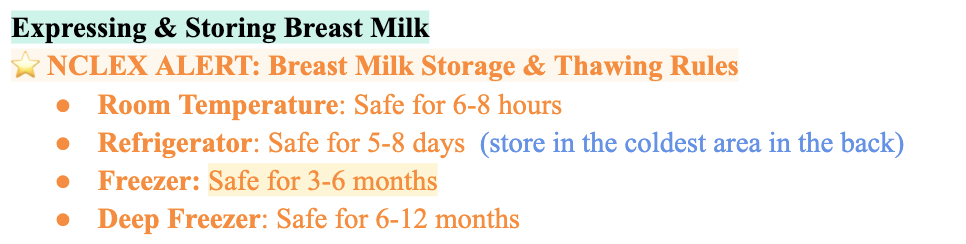
🧸 according to the lecture notes, how long may freshly expressed milk remain at room temperature?
A. 1–2 hours
B. 3–4 hours
C. 6–8 hours
D. 12–14 hours
ANS: C
expressed milk can still be trank by infant at room temperature in a span of 6-8 hours

breast-milk storage
🧸 where should expressed milk be stored in the refrigerator?
A. On the door
B. Near the front edge
C. In the coldest area toward the back
D. Beside warm prepared food
ANS: C
the closer to the refrigerator door, the greater the temperature changes experienced.

breast-milk storage
🧸 according to the lecture, how long may breast milk remain in a standard freezer?
A. 24 hours
B. 1–2 weeks
C. 3–6 months
D. 18 months
ANS: C
breast milk that is stored in the freezer can last for 3-6 months
breast-milk storage
🚨 which method should never be used to warm breast milk?
A. Thawing overnight in the refrigerator
B. Placing the container in warm water
C. Using a microwave
D. Feeding refrigerated milk without warming
ANS: C
a microwave produces hot sports and damages immune components

breast-milk storage
🧸 Which findings may indicate formula intolerance? select all that apply
A. Vomiting
B. Weight loss
C. Diarrhea
D. Colic
E. Six wet diapers daily
ANS: A,B,C,D
poor tolerance may affect feeding, weight, stooling, and comfort

formula feeding
🚨 what complication may result from over-diluting formula?
A. Hypernatremia
B. Water intoxication and hyponatremia
C. Dehydration
D. Renal strain from excessive solute
ANS: B
excess free water lowers serum sodium and may cause cerebral edema or seizures.

formula feeding
🚨 what complication may result from under-diluting formula?
A. Water intoxication
B. Hyponatremia
C. Dehydration and hypernatremia
D. Reduced renal workload
ANS: C
concentrated formula provides inadequate water and excessive solute

formula feeding
⭐ which position is appropriate for bottle-feeding?
A. Flat and supine
B. Semi-upright with the head above the trunk
C. Prone with the head turned
D. Side-lying without support
ANS: B
semi-upright positioning decreases aspiration and otitis-media risk

formula feeding
🧸 why should the bottle be tilted so the nipple remains full of formula?
A. To increase formula concentration
B. To decrease swallowed air
C. To prevent the infant from swallowing
D. To increase feeding time
ANS: B
the nipple of the bottle is aspired to be filled with milk to decrease swallowed air

formula feeding
🚨 what should the parent do with formula remaining after a feeding?
A. Refrigerate it for the next feeding
B. Add it to a fresh bottle
C. Discard it
D. Freeze it
ANS: C

oral bacteria enter the bottle during feeding and multiple in the remaning formula.
formula feeding
🚨 which complications are associated with bottle propping?
A. Choking
B. Tooth decay
C. Otitis media
D. Improved bonding
E. Aspiration risk
ANS: A,B,C,E

formula feeding
🧸 which action helps meet a breastfeeding mother’s increased fluid needs?
A. Keep water at the bedside and drink during feeding
B. Restrict fluids before breastfeeding
C. Drink only caffeinated beverages
D. Avoid fluids during nighttime feeding
ANS: A
during breastfeeding, a mother is more likely to be thirsty and dehydrated. a good way to battle against this is for the nurse to instruct the mom for them to have a glass of water at bedside.

maternal nutrition and newborn discharge
⭐ which fish should a breastfeeding mother avoid because of high mercury levels?
A. Shark
B. Swordfish
C. King mackerel
D. Tilefish
E. Salmon
ANS: A,B,C,D

maternal nutrition and newborn discharge
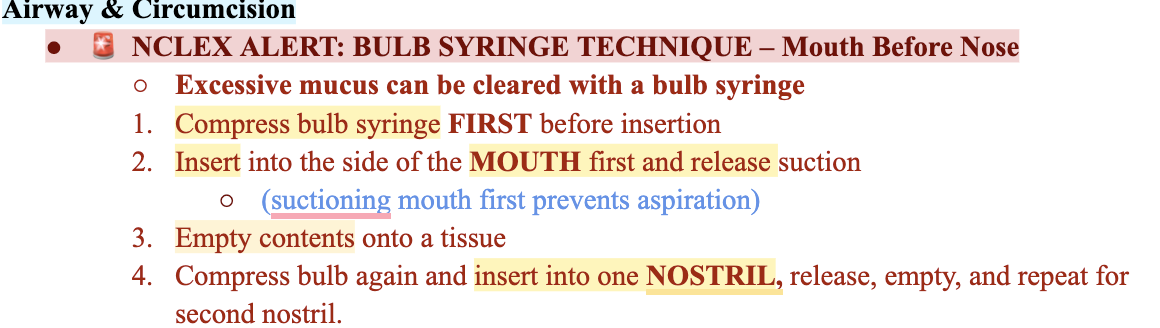
what is the correct sequence of using a bulb syringe?
A. Nose first, then mouth
B. Mouth first, then nose
C. Alternate mouth and nose repeatedly
D. Suction only the nose
ANS: B
clearing the mouth first decreases aspiration risk if nasal suction stimulates inhalation

airway and circumcision
place the bulb-syringe steps in order:
Suction one nostril
Compress the bulb
Insert into the side of the mouth and release
Empty the bulb onto a tissue
ANS: 2 → 3 → 4 → 1
compress the bulb → insert into side of mouth and release bulb → empty contents into tissue → insert to one nostril
airway and circumcision
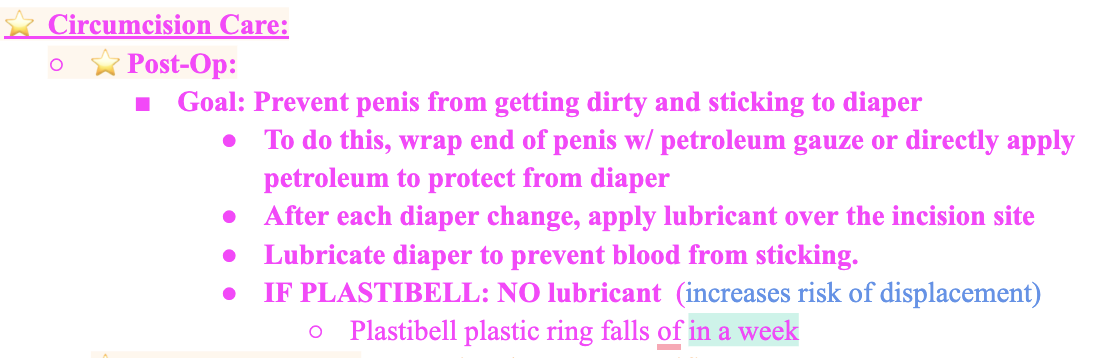
⭐ which intervention prevents a circumcised penis from sticking to the diaper?
A. Apply alcohol
B. Apply petroleum or petroleum gauze
C. Scrub the incision
D. Leave the diaper off continuously
ANS: B

airway and circumcision
🚨 which instruction applies to Plastibell circumcision care?
A. Apply petroleum after every diaper change
B. Do not use lubricant
C. Pull the ring off after 24 hours
D. Cover the ring with tight gauze
ANS: B
lubricant may contribute to displacement of the plastibell

airway and circumcision
🧸 when should the Plastibell ring normally fall off?
A. Within 24 hours
B. In approximately one week
C. After one month
D. After six weeks
ANS: B
airway and circumcision
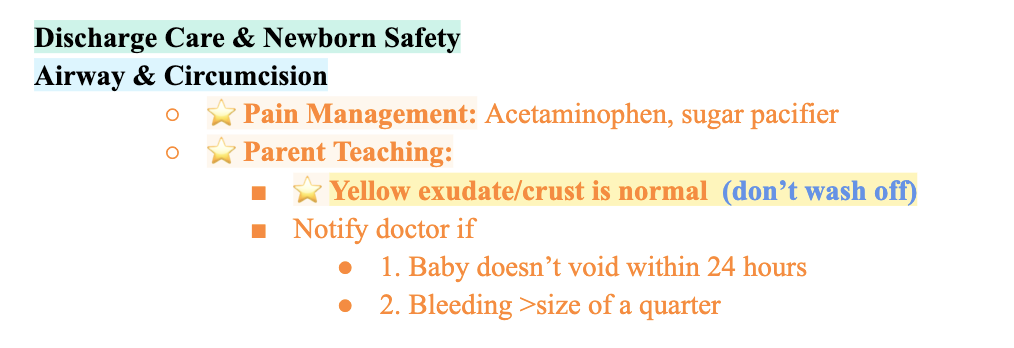
⭐ which finding is expected during normal circumcision healing?
A. Purulent green drainage
B. Yellow crust or exudate
C. Bleeding larger than a quarter
D. No urination for 24 hours
ANS: B
the yellow healing film should not be removed.
airway and circumcision
🚨 which circumcision findings require provider notification? select all that apply
A. No voiding within 24 hours
B. Bleeding larger than a quarter
C. Yellow crust
D. Plastibell falling off in about one week
E. Active continued bleeding
ANS: A,B,E
circumcision findings that needs notification from the provider is if the neonate A. did not void within 24 hours, B. bleeding is larger than a quarter, and if there is E. active and continued bleeding

airway and circumcision
⭐ why is daily bathing with soap discouraged?
A. Soap stimulates excess urine production
B. It removes protective skin lipids and causes dryness
C. It causes excessive vernix production
D. It delays umbilical-cord separation
ANS: B

daily bathing with soap is discoaraged because it removes protective skin lipids and causes dryness.
hygiene and output
🧸 how should the newborn’s face be washed?
A. With alcohol
B. With scented soap
C. With plain water
D. With antibacterial cleanser
ANS: C

always wash a newborn’s face with plain water only.
hygiene and output
⭐ when should the newborn be bathed?
A. Immediately after feeding
B. Before feeding
C. During feeding
D. Only while sleeping
ANS: B
bathing before feeding decreases the chance of vomiting or aspiration

hygiene and output
⭐ Beginning around day 3 or 4, which output is expected? select all that apply
A. Six to eight wet diapers daily
B. Two to three stools daily
C. One wet diaper every two days
D. No stool for one week
E. Regular urine output indicating adequate intake
ANS: A,B,E

hygiene and output
🚨 which elimination findings should be reported?
A. Fewer than six wet diapers daily
B. Runny green stools
C. Constipation
D. Six to eight wet diapers
E. Two stools daily
ANS: A,B,C

tell provider of abnormal elimination if baby has
runny + green stool
less than 6 wet diapers a day
constipated baby
hygiene and output
🧸 which infant meets the “rule of threes” definition of colic?
A. Cries 1 hour daily for 1 week
B. Cries over 3 hours daily, over 3 days weekly, for over 3 weeks
C. Cries only before feedings
D. Cries briefly during diaper changes
ANS: B

colic baby crying routine: 3 hours, 3 days per week, more than 3 weeks
Colic, PURPLE Crying, and Safe Sleep
🚨 what does PURPLE crying describe?
A. Peak of crying
B. Unexpected crying
C. Resists soothing
D. Pain-like facial expression
E. Long-lasting evening crying
ANS: A,B,C,D,E
P eak of cring
U nexpected crying
R esists sooting
P ain-like face
L ong-lasting
E vening
Colic, PURPLE Crying, and Safe Sleep
🚨 a parent states, “I’m so frustrated that I might shake the baby.” what should the nurse teach.
A. Hold the baby more tightly
B. Place the baby supine in the crib and walk away briefly
C. Leave the baby on a couch
D. Shake the baby gently to promote sleep
ANS: B

the caregiver should secure the infant safely, leave for 10-15 minutes, and seek support
Colic, PURPLE Crying, and Safe Sleep
🚨 which sleep environment is safest?
A. Supine in an empty crib
B. Side-lying with a positioner
C. Prone with a loose blanket
D. Supine with pillows and stuffed animals
ANS: A
a loose blanket, stuffed animal, and another position would risk the infant to stop breathing. supine position in an empty crib evades all of the risks of obstructing respiratory breathing of baby

Colic, PURPLE Crying, and Safe Sleep
🧸Which item may decrease the risk of SIDS when offered at sleep time?
A. Loose blanket
B. Clean, dry pacifier
C. Sleep positioner
D. Stuffed animal
ANS: B
a clean, dry pacifier decreases the risk of SIDS when offered at sleep time.

→ this keeps the infant’s mouth open
→ pulls the tongue forward (they can also choke on this)
→ allows them to be easily arouse during sleep
Colic, PURPLE Crying, and Safe Sleep
🚨 when must swaddling be discontinued?
A. When the infant reaches one year
B. When the infant begins trying to roll
C. When the infant starts teething
D. When the infant sleeps through the night
ANS: B

when the baby starts to roll, stop the blanket swaddling. they might be tangled on the blanket, and will then lead to breathing risk
Colic, PURPLE Crying, and Safe Sleep
⭐ which newborn is classified as low birth weight?
A. 3,200 g
B. 2,800 g
C. 2,400 g
D. 4,100 g
ANS: C
an infant is considered to have low birth weight, if they weigh less than 2,500 g (e.g., 2,400 g)

Prematurity and Birth Weight
🧸 which weight defines very low birth weight?
A. Less than 4,000 g
B. Less than 2,500 g
C. Less than 1,500 g
D. Less than 1,000 g only
ANS: C
an infant has very low birth weight if they weight less than 1,500 g

Prematurity and Birth Weight
🧸 which weight defines extremely low birth weight?
A. Less than 3,000 g
B. Less than 2,500 g
C. Less than 1,500 g
D. Less than 1,000 g

ANS: D
an infant with extremely low birth weight is less than 1,000 g
Prematurity and Birth Weight
⭐ which problems are common in preterm infants? select all that apply
A. Respiratory difficulty
B. Temperature instability
C. Feeding difficulty
D. Glucose instability
E. Excessive brown fat
ANS: A,B,C,D
common problems in preterm infants:
A. can’t breathe well
B. can’t stay warm
C. feeding difficulty
D. glucose problem

Prematurity and Birth Weight
🧸 at approximately what gestational age does suck-swallow-breathe coordination mature?
A. 24 weeks
B. 28 weeks
C. 34 weeks
D. 40 weeks
ANS: C
the baby will have a fully developed suck-swallow-breathe mechanism at 34 weeks.

Prematurity and Birth Weight
🚨 what is the highest-priority immediate intervention for a preterm newborn?
A. Begin toilet training
B. Provide a neutral thermal environment
C. Bathe the newborn
D. Delay glucose monitoring
ANS: B
preterm infants have little brown and subcutaneous fat and are highly vulnerable to cold stress

Prematurity and Birth Weight
what blood-glucose target is listed for a preterm newborn?
A. Greater than 20 mg/dL
B. Greater than 30 mg/dL
C. Greater than 40 mg/dL
D. Greater than 150 mg/dL
ANS: C
for a preterm newborn, we want the blood-glucose to be greater than 40 mg/dL

Prematurity and Birth Weight
⭐ what causes respiratory distress syndrome in a premature newborn?
A. Excess surfactant
B. Insufficient surfactant and immature alveoli
C. Excessive milk intake
D. Closure of the ductus arteriosus
ANS: B
the cause of RDS is not enough surfactant and immature alveoli
→ without the needed surfactant, the surface tension of the alveoli increases, which leads to alveoli collapse.

respiratory distress syndrome
⭐ which findings suggest neonatal RDS? select all that apply
A. Tachypnea
B. Expiratory grunting
C. Retractions
D. Nasal flaring
E. Seesaw breathing
ANS: A,B,C,D,E

signs of neonatal RDS are the following:
A. fast breathing
B. grunting when exhaling
C. chest retracts when inhaling
D. nasal flare
E. abdomen rises when the chest collapses during breathing
cyanotic color (bluish color of skin)
respiratory distress syndrome
⭐ why is antenatal betamethasone administered?
A. To close the PDA
B. To accelerate fetal surfactant production
C. To treat neonatal jaundice
D. To increase maternal glucose clearance
ANS: B
antenata betamethasone is given to a patient with Respiratory Distress Syndrome (RDS) to help accelerate surfactant production.
→ since RDS does not have enough surfactant in its alveoli, betamethasone helps with increased production/development of them (lowkey cancer behavior)

respiratory distress syndrome
⭐ how is surfactant replacement administered after birth?
A. Orally
B. Intramuscularly
C. Through an endotracheal tube
D. Rectally
ANS: B
betamethasone is a medication that is administered IM (intramuscularly) to a patient with RDS to be able to help with increasing surfactant production, because this condition consists of immature alveoli and not enough surfactant

respiratory distress syndrome
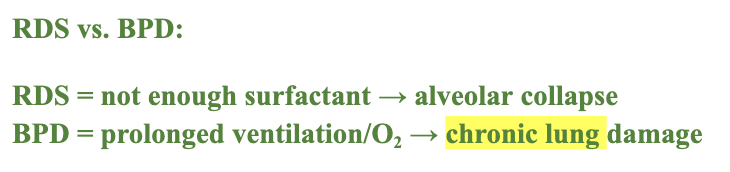
⭐ which statement best differentiates RDS from BPD?
A. RDS is chronic; BPD is acute
B. RDS is surfactant deficiency; BPD is chronic lung injury
C. Both are caused only by infection
D. BPD is present at birth in all cases
ANS: A
Respiratory Dysplasia (RDS) is a condition where there is not enough surfactant inside the lung’s alveoli, meaning that the infant has immature alveoli. this is acute, and can be reated.
Bronchopulmonary Dysplasia (BPD) is known as a chronic condition, because of being under mechanical ventilation for too long from an existing respiratory disease (can be from RDS)
respiratory distress syndrome
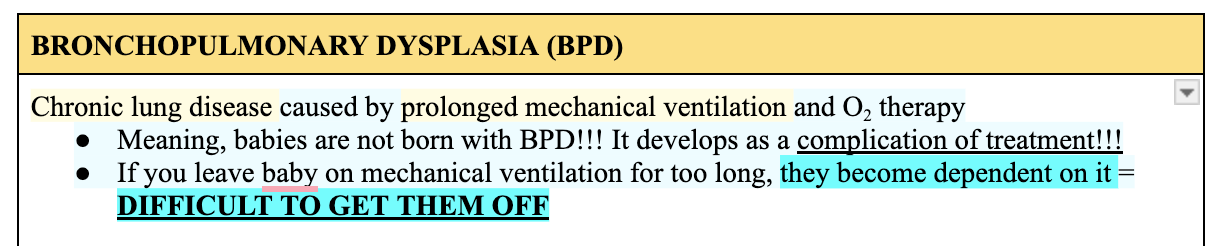
⭐ which finding most strongly suggest BPD?
A. Easy and immediate ventilator weaning
B. Difficulty weaning from oxygen or mechanical ventilation
C. Bilious vomiting
D. Bounding pulses
ANS: B
bronchopulmonary dysplasia
⭐ which interventions are appropriate for BPD?
A. Fluid restriction
B. Daily weights
C. Strict intake and output
D. Gradual ventilator weaning
E. Rapidly increase fluid administration
ANS: A,B,C,D
the appropriate interventions for bronchopulmonary dyysplasia (BPD) are the following:
A. restric fluids
B. daily weights
C. I&O
D. gradually take them off of ventilator

bronchopulmonary dysplasia
⭐ what type of shunt occurs with PDA?
A. Right-to-left
B. Left-to-right
C. Bidirectional only
D. No shunting occurs
ANS: B
for a heart shunt called PDA (Patent Ductus Arteriosus), it is usually left-to-right, which means it gets redirected from the aorta, back to the pulmonary artery
→ (the oxygenated blood, travels back to the lungs, when normally, it’s deoxygenated blood that goes there)

PDA and IVH
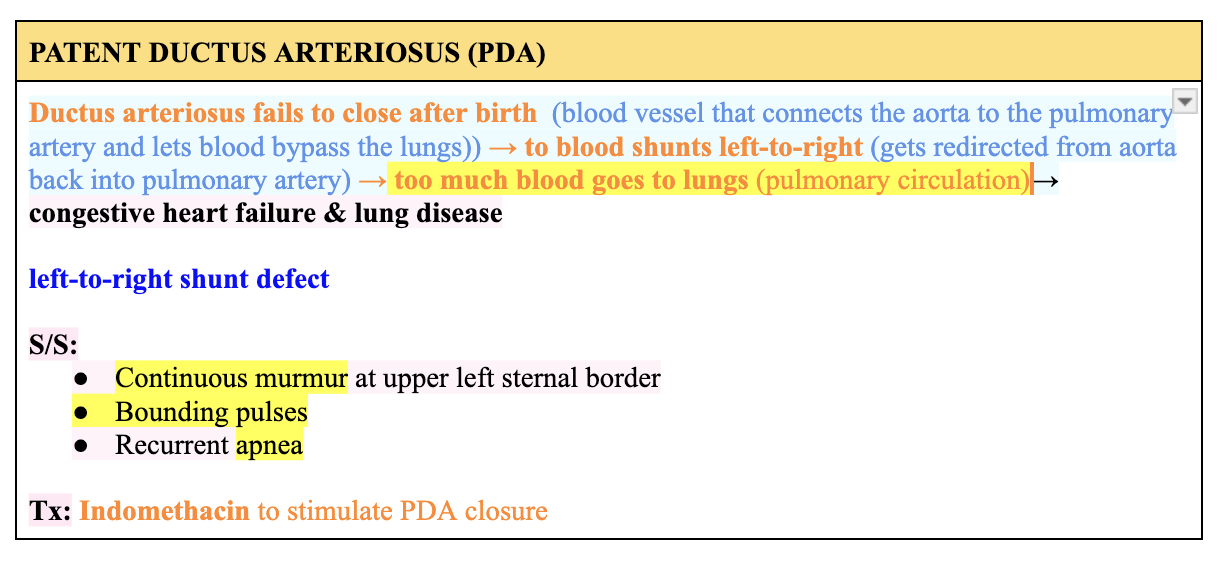
🧸 which findings are associated with PDA? select all that apply
A. Continuous murmur
B. Bounding pulses
C. Recurrent apnea
D. Bilious vomiting
E. Pulmonary overcirculation
ANS: A,B,C,E
symptoms found in Patent Ductus Arteriosus (PDA):
A. continuous hear murmur
B. bounding pulses
C. recurrent apnea
E. lungs have overcirculation of blood
PDA and IVH
🧸 which medication may stimulate PDA closure?
A. Oxytocin
B. Indomethacin
C. Digoxin only
D. Phytonadione
ANS: B
to close an open shunt, specifically the PDA, indomethacin is used.

PDA and IVH
⭐ which finding most strongly suggests intraventricular hemorrhage?
A. Gradual weight gain
B. Sudden deterioration with a bulging fontanel
C. Yellow circumcision crust
D. Six wet diapers daily
ANS: B
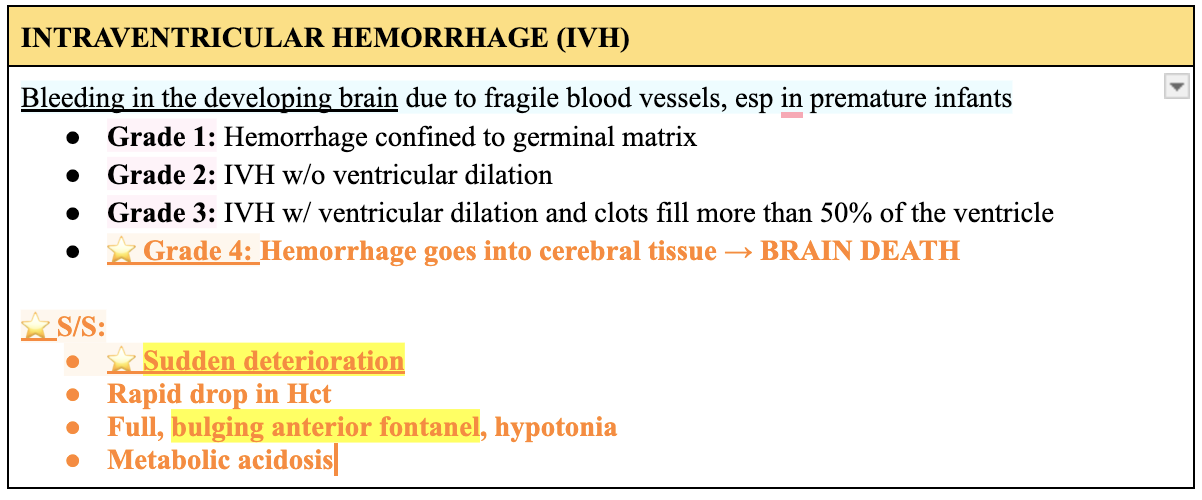
Intraventricular hemorrhage (IVH) is a condition where bleeding in the brain happens due to fragile blood vessels. most occuring in primi babies
a big tell that it is IVH is sudden deterioration + bulging of fontanel
DEFINITIONS:
[fontanel] - is the gap between the hard skulls of the head. this is covered with membranes
fontanel → “soft spot”

PDA and IVH
🚨 which intervention is appropriate for an infant with IVH?
A. Frequent vigorous stimulation
B. Minimal handling with neutral head alignment
C. Rapid IV infusions
D. Bright lights and loud sounds
ANS: B
minimal stimulation helps with preventing sudden changes in intracranial pressure.
PDA and IVH

PDA and IVH
⭐ which findings suggest NEC? select all that apply
A. Bilious green vomiting
B. Abdominal distention
C. Abdominal tenderness
D. Bloody stools
E. Bounding pulses
ANS: A,B,C,D
these are the following assessed traits that shows Necrotizing Entercolitis (NEC):
A. vomit that has bile (green color)
B. abdoen is protruded (distended)
C. abdomen is swollen and painful to touch (tender)
D. stools have blood

NEC and Post-Term Infants
🚨 a premature infant develops bilious vomiting and abdominal distention. what should the nurse do first?
A. Continue feeding
B. Stop feedings and make the infant NPO
C. Place the infant prone after feeding
D. Administer a stool softener
ANS: B
bilious vomiting and abdominal distention are signs of NECROTIZING ENTERCOLITIS. to care for this the nurse most: stop feedings + NPO immediately.
→ this reduces intestinal pressure, perforation risk, and helps with decompressing the gastric tube of its gastric contents and bile

NEC and Post-Term Infants
⭐ which additional intervention are used for NEC? select all that apply:
A. Gastric decompression
B. IV fluids and nutrition
C. Serial abdominal-girth measurements
D. Frequent oral feedings
E. Monitor for bloody stools
ANS: A,B,C,E
additional nursing interventions for a baby with Necrotizing Entercolitis are:
A. decompress gastric area by inserting a gastric tube to suction the contents
B. IV fluids + nutrition since the baby cannot help with keeping itself well fed because of paralyzed GI
C. abdominal-girth measurements just shows how swollen and irritated the bowel is
E. bloody stools

NEC and Post-Term Infants
🧸 which findings are associated with a post-term newborn? select all that apply
A. Gestational age of at least 42 weeks
B. Meconium staining
C. Poor feeding
D. Hypoglycemia
E. Increased brown-fat stores
ANS: A,B,C,D
for a baby that overstayed in the womb (POST-TERM), these are the ff. findings:
A. baby is more than 42 weeks old when born
B. meconium staining during birth because their GI trat is fully developed.
C. poor feeding behavior due to the baby being exhausted, and lethargic from the hypoxia because of placenta insufficiency (nutrition provided isn’t enough anymore)
D. low blood sugar of baby happens because it depletes its own sugar that is reserved in the liver just to survive in the uterus.

NEC and Post-Term Infants
⭐ which findings suggest meconium aspiration syndrome? select all that apply:
A. Meconium-stained amniotic fluid
B. Green or yellow staining of the infant
C. Grunting and retractions
D. Nasal flaring
E. Absence of respiratory symptoms in every case
ANS:
these are the ff. findings found in Meconium Aspiration Syndrome (MAS):
A. neonate poop (meconium)-stained amniotic fluid
B. green/yellow stained-baby
C. grunting and chest retractions which are signs of respiratory distress
D. nasal flaring is also a sign of resp. distress

DEFINITION:
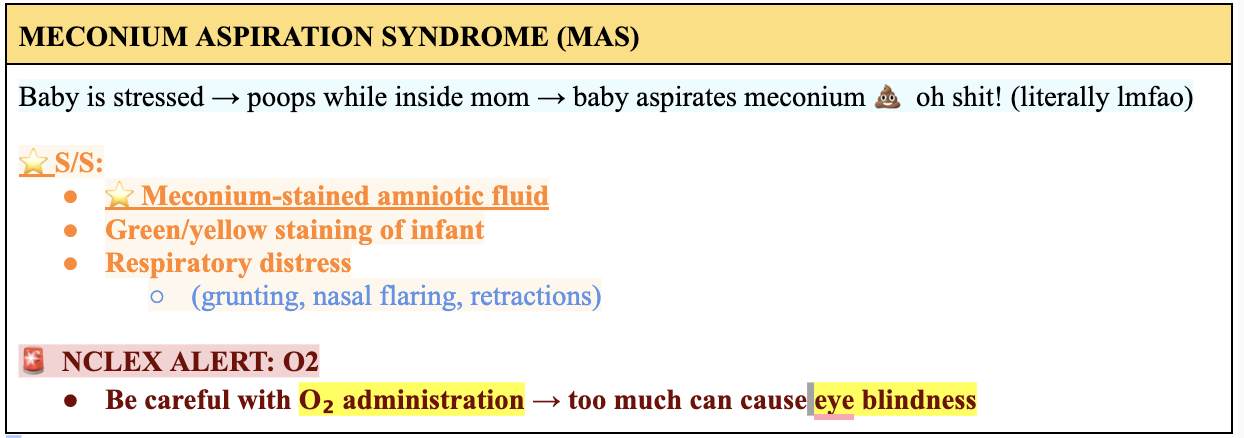
[meconium aspiration syndrome] - the baby is stressed, so it poops inside mom. the baby then chokes (aspirates) on meconium 💩
MAS, PPHN, and Jaundice
🚨 why must oxygen administration be carefully controlled in premature infants?
A. Oxygen causes NEC directly
B. Excessive oxygen may damage the retina
C. Oxygen always closes the airway
D. Oxygen produces galactosemia
ANS:B
when the baby has MAS (Meconium Aspiration Syndrome), they need to be administered oxygen. although it needs to be remembered to control giving oxygen because too much oxygen can damage retina of a premature infant
→ high amounts of oxygen will tighten the immature blood vessels found in the eyes, which stops the growth of the retina, causing eye blindness
MAS, PPHN, and Jaundice
⭐ what causes persistent pulmonary hypertension of the newborn?
A. Pulmonary vessels fail to relax after birth
B. The ductus venosus closes too early
C. The infant produces too much surfactant
D. The pulmonary vessels become excessively dilated
ANS: A
a baby can have Persistent Pulmonary Hypertension of the Newborn (PPHN) syndrome because of the pulmonary blood vessels failing to relax after birth

MAS, PPHN, and Jaundice
⭐ which findings are associted with PPHN?
A. Cyanosis
B. Respiratory distress
C. Hypotension
D. Symptoms within the first 12 hours
E. Hypertension with pink skin only
ANS: A,B,C,D
these are the ff. findings of Persistent Pulmonary Hypertension of the Newborn (PPHN):
A. blue skin / hypoxia
B. breathing probs , retractions, grunting
C. low BP
D. symptoms are seen in the first 12 hrs

MAS, PPHN, and Jaundice
⭐ why may umbilical catheters be used in PPHN?
A. To administer oral feeding
B. Peripheral access may be difficult because of vasoconstriction
C. To increase meconium passage
D. To treat nipple breakdown
ANS: B
umbilical catheters are used for Persisten Pulmonary Hypertension of the Newborn (PPHN) because peripheral access is difficult because of vasoconstriction.

MAS, PPHN, and Jaundice
⭐ when does physiological jaundice appear?
A. Before 6 hours
B. Before 24 hours
C. After the first 24 hours
D. Only after one month
ANS: C
physiological jaundice appears after the first 24 hrs.

DEFINITION:
[physiological jaundice] - is the type of jaundice that is normal
[pathological jaundice] - means that the baby has an underlying disease as to why they are yellow.
MAS, PPHN, and Jaundice
🚨 a newborn develops jaundice at 10 hours of life. what is the nurse’s priority interpretation?
A. Expected physiological jaundice
B. Pathological jaundice requiring urgent evaluation
C. Normal effect of feeding
D. Expected skin variation
ANS: B
if the baby has Jaundice under 24 hours (e.g., 10 hours), the nurse must immeidately know that this is pathological jaundice, which means the baby needs urgent evaluation
→ means that baby has disorder that affects the liver

MAS, PPHN, and Jaundice
⭐ which interventions help treat hyperbilirubinemia?
A. Phototherapy
B. Frequent feedings
C. Promote stooling
D. Keep the infant NPO
E. Reduce all fluid intake
ANS: A,B,C
these are the following interventions for hyperbilirubinemia:
A. phototherapy by using bili lights to convert the bilirubin from fat-soluble to water-soluble
B. frequent feedings to flush the bilirubin out of body
C. promote stooling the “car” that bilirubin uses to exit lmao

MAS, PPHN, and Jaundice
🧸 which newborn is classified as SGA?
A. Weight below the 10th percentile
B. Weight above the 50th percentile
C. Weight above the 90th percentile
D. Weight greater than 4,000 g
ANS:
a newborn that is classified as “Small-for-Gestational-Age” (SGA) would be a weight that is below 10th percentile.

Growth Variations and Other Complications
⭐ which complications are associated with SGA?
A. Hypoglycemia
B. Hypothermia
C. Shoulder dystocia
D. Hyperthermia
E. Excessive fat stores
ANS: A,B
infants who are small for their gestational age (SGA), have the following complications:
A. low blood sugar
B. low temp

Growth Variations and Other Complications
🧸 Which description identified asymmetric IUGR?
A. Entire body is proportionally small
B. Head is spared while the body is thin
C. Birth weight exceeds the 90th percentile
D. Infant weighs more than 4,000 g
ANS: B
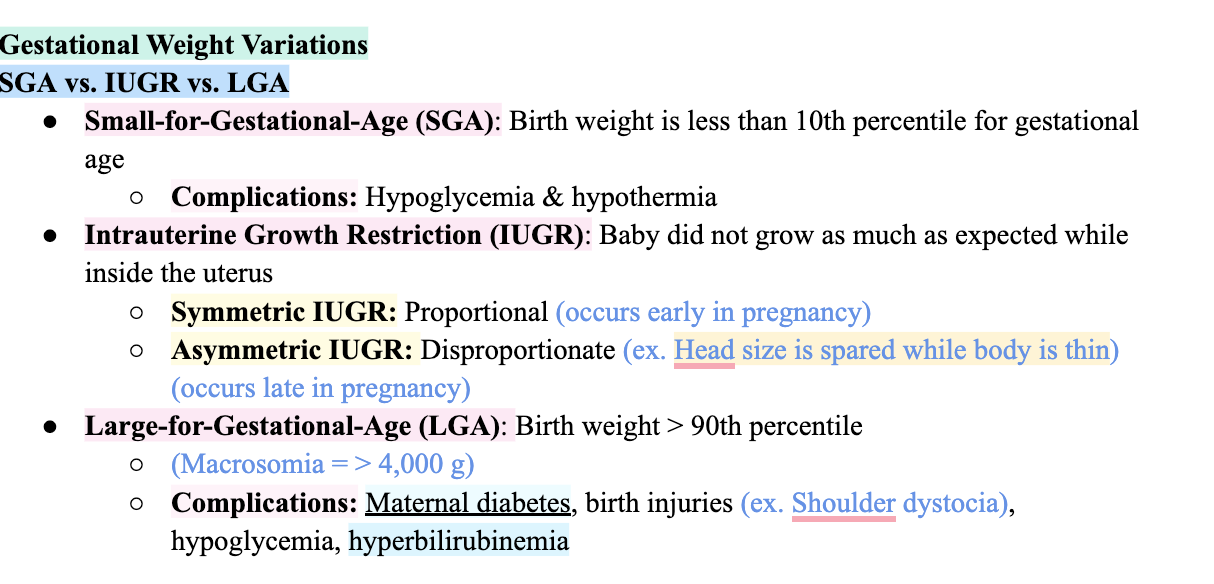
when the baby has Asymmetric Intrauterine Growth Restriction (IUGR), they tend to have a normal head and thin body
Growth Variations and Other Complications
🧸 Which infant is LGA?
A. Below the 10th percentile
B. Between the 10th and 50th percentiles
C. Above the 90th percentile
D. Any infant born at 42 weeks
ANS: C
an infant that is large for gestational age (LGA) would be somebody (C) above the 90th percentile

Growth Variations and Other Complications
⭐ which complications are associated with LGA?
A. Shoulder dystocia
B. Birth trauma
C. Hypoglycemia
D. Hyperbilirubinemia
E. Reduced birth-injury risk
ANS: A,B,C,D
if a neonate is large for gestational age (LGA), these are the ff. complications:
A. shoulder dislocation
B. birth trauma
C. low blood sugar
D. high content of things that make them yellow

Growth Variations and Other Complications
🚨 what causes retinopathy of prematurity?
A. Inadequate vitamin K
B. Abnormal retinal-vessel growth associated with excessive oxygen
C. Insufficient formula dilution
D. Decreased bilirubin
ANS: B

retinopathy of prematurity (ROP) is the abnormal retinal-vessel grwoth associated with excessive oxygen.
Growth Variations and Other Complications
🚨 what oxygen-saturation range is listed inas an infant at risk for ROP?
A. 50%–60%
B. 70%–80%
C. 87%–94%
D. 99%–100%
ANS: C
for infants that have Retinopathy of Prematurity (ROP), the oxygen saturation range that should be given to a child should be 87%-94%

Growth Variations and Other Complications