anatomy study for final
 Call Kai
 Learn
 Practice Test
 Spaced Repetition
 Match
 Flashcards
 Knowt Play
1/64

There's no tags or description
Looks like no tags are added yet.
65 Terms
CN I (1)
olfactory
CN II (2)
optic
CN III (3)
oculomotor
CN IV (4)
trochlear
CN V (5)
trigeminal
CN VI (6)
abducens
CN VII (7)
facial
CN VIII (8)
vestibulochlear
CN IX (9)
glossopharyngeal
CN X (10)
vagus
CN XI (11)
accessory
CN XII (12)
hypoglossal

what is highlighted
z disc

what is highlighted
h zone

what is highlighted
I band
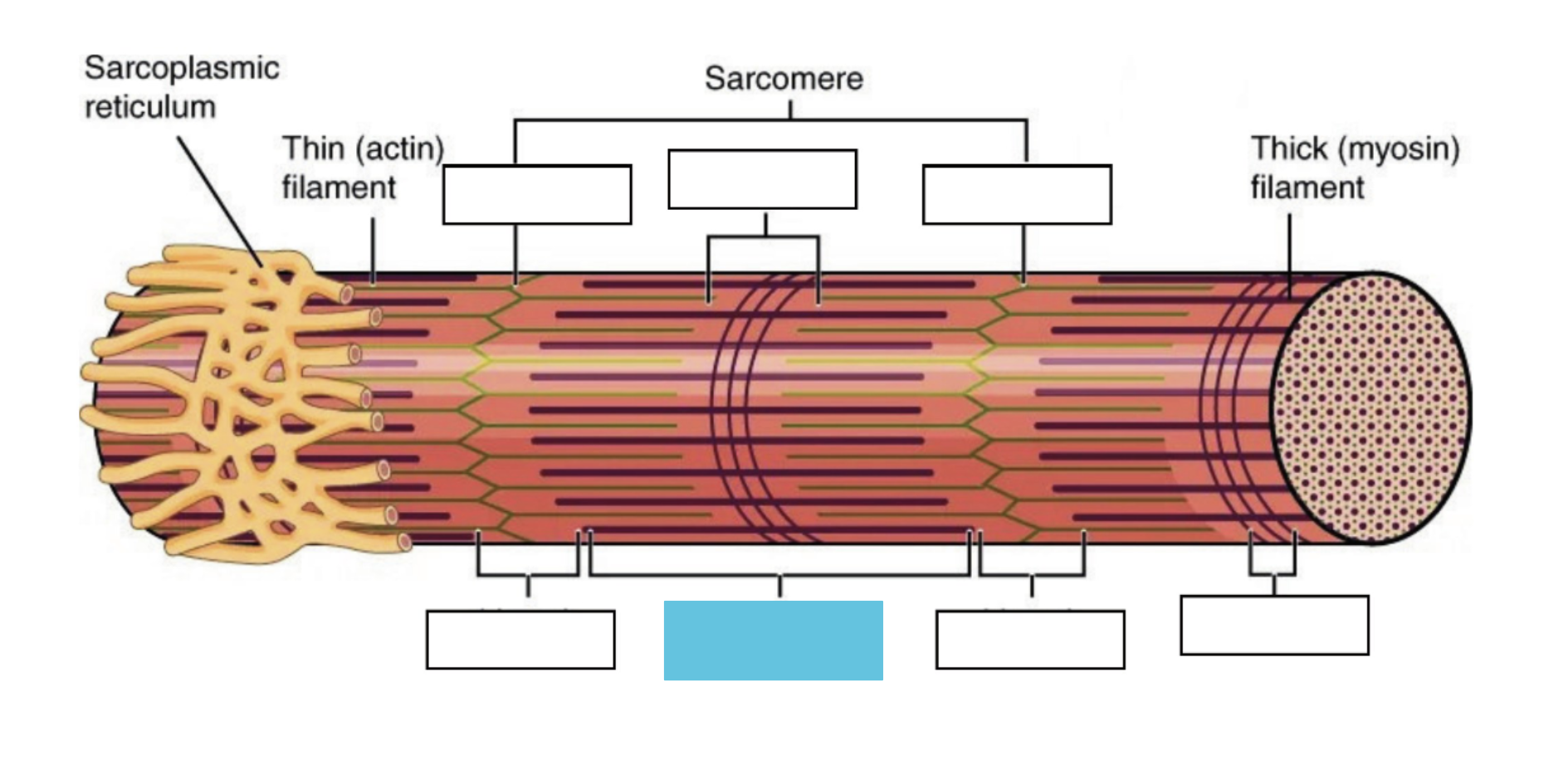
what is highlighted
a band

what is highlighted
m line

what is highlighted
cerebrum

what is highlighted
diencephalon

what is highlighted
cerebellum

what is highlighted
brain stem

red
frontal lobe
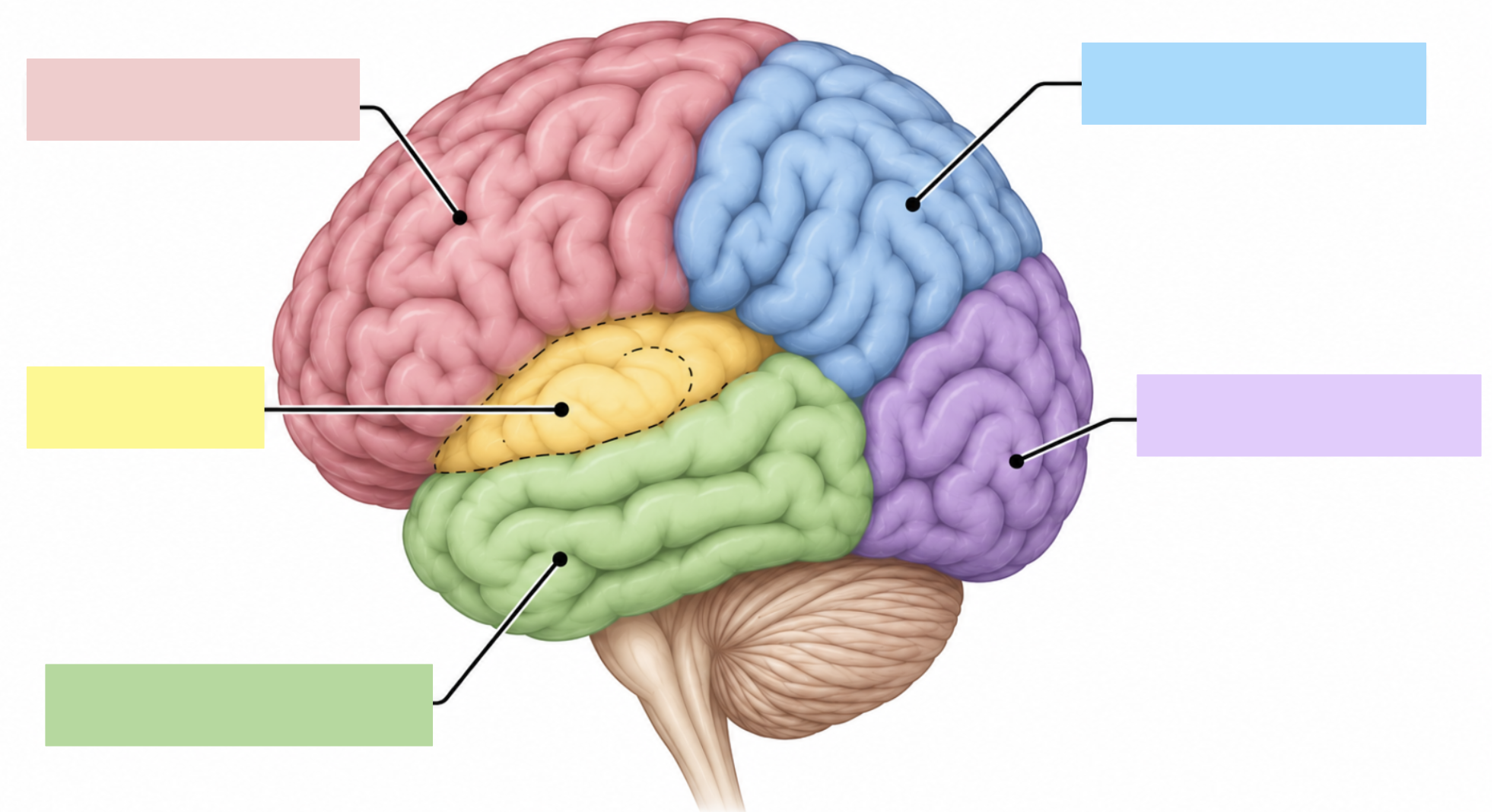
yellow
insula

green
temporal lobe

blue
parietal lobe

purple
occipital lobe
how many cranial nerves
12
how many spinal nerves
31

what is highlighted
axon

what is highlighted
myelin sheath

what is highlighted
nodes of ranvier
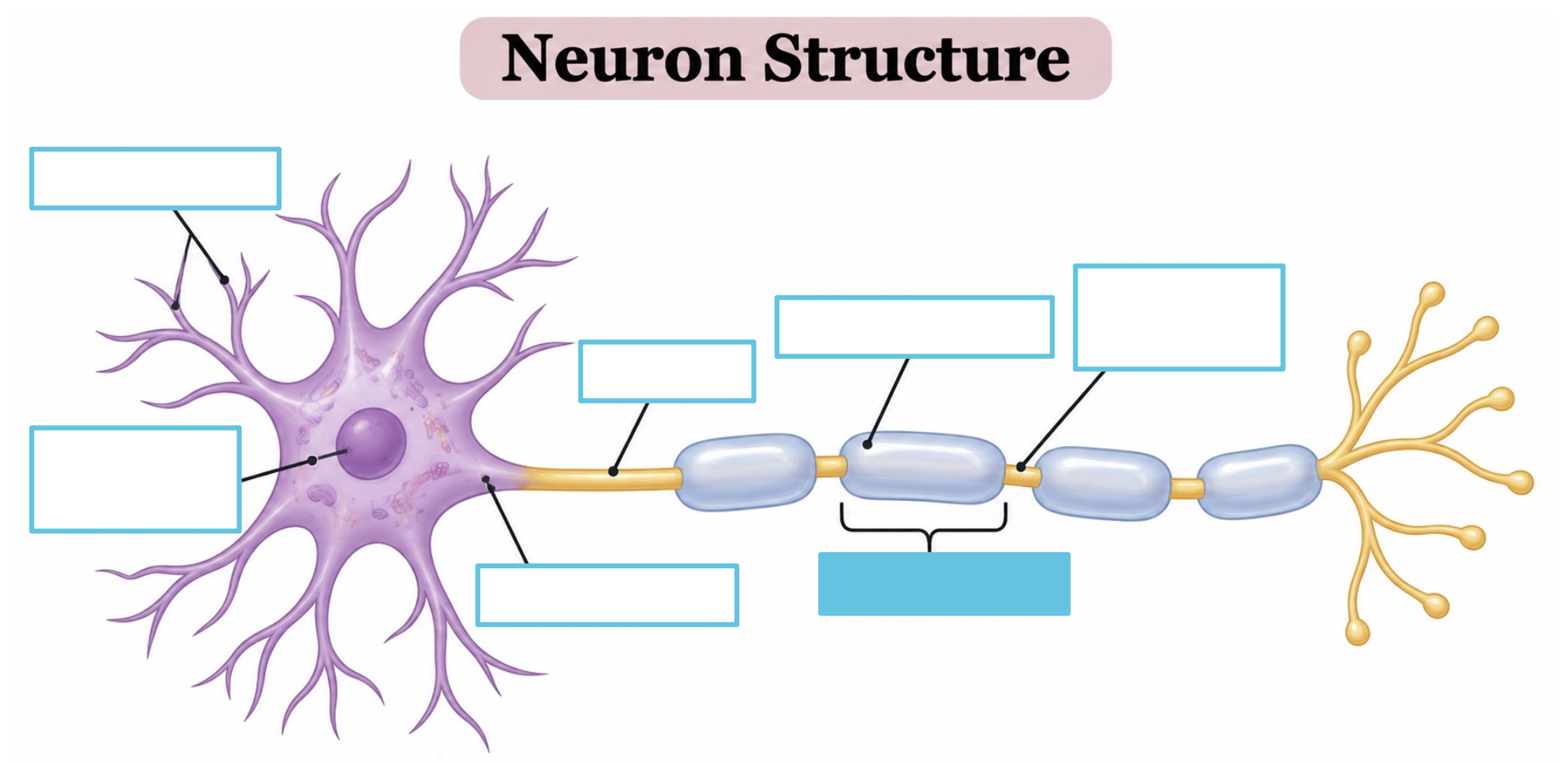
what is highlighted
internodes

what is highlighted
axon hillock
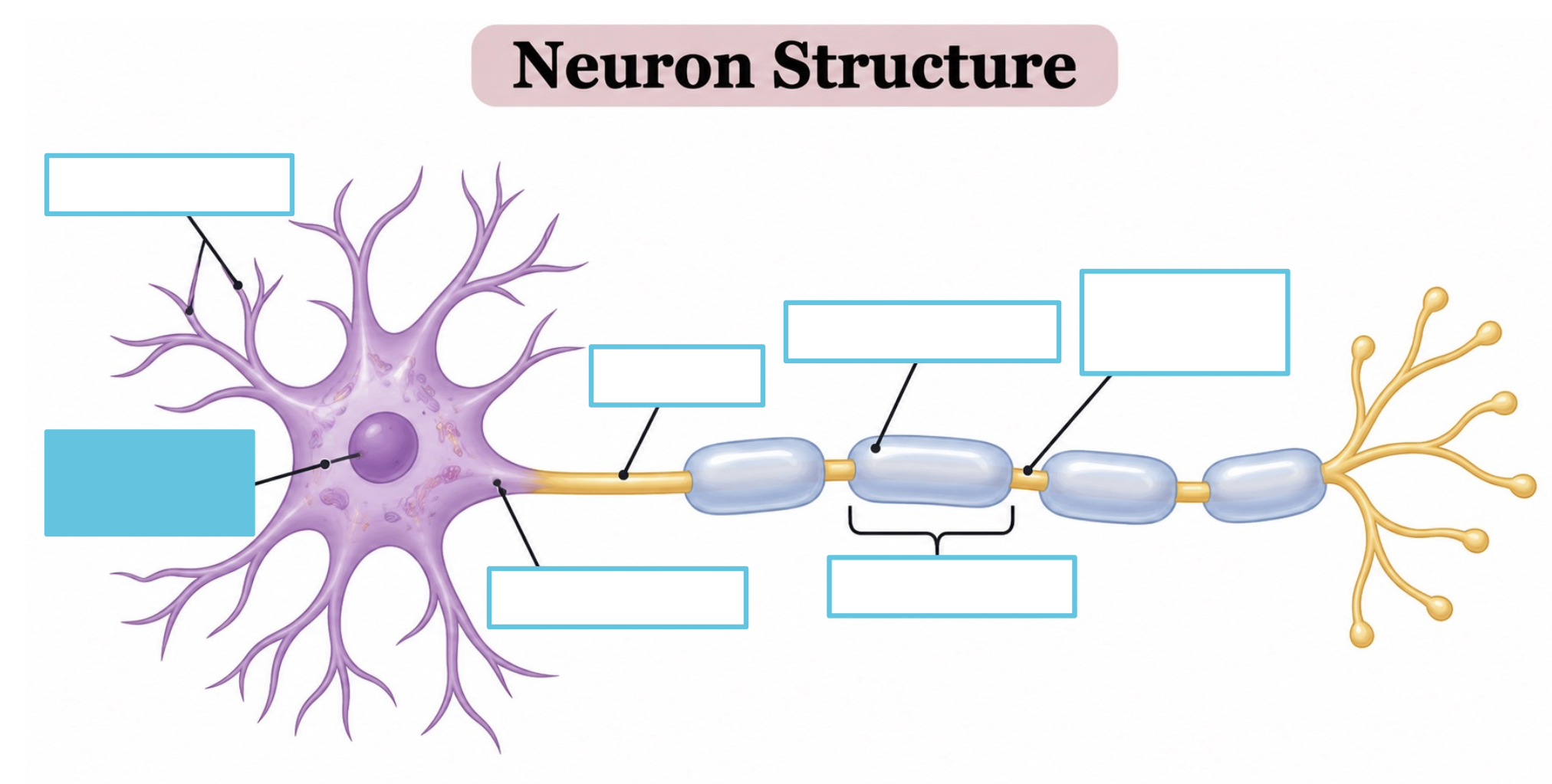
what is highlighted
cell body (soma)

what is highlighted
dendrites
The Five Taste Sensations
sweet, sour, salty, bitter, umami
Types of Papillae
Filiform, Fungiform, Vallate, Foliate
Three Steps of Contraction: Excitation
Step 1 - ACh released → binds Na⁺ channels
Three Steps of Contraction: E–C Coupling
Step 2 - Ca²⁺ floods sarcoplasm → binds troponin
Three Steps of Contraction: Cross-Bridge Cycle
head binds actin → Pᵢ released→ ATP hydrolyzed

What is 1
olfactory (CN I)

What is 2
Oculomotor (CN III)

What is 3
Trochlear (CN IV)

What is 4
Abducens (CN VI)

What is 5
Vestibulocochlear (CN VIII)

What is 6
Hypoglossal (CN XII)

What is 7
Accessory (CN XI)

What is 8
Vagus (CN X)

What is 9
Glossopharyngeal (CN IX)

What is 10
Facial (CN VII)

What is 11
Trigeminal (CN V)
What is 12
optic (CN II)
Tapetum: Function and Location
Behind the retina. Helps animals see better in the dark.

Retina: Function and Location
Behind the iris. Detects light, allows you to see.
Dense Connective Tissue