Cranial Nerves + Half head
 Call Kai
 Learn
 Practice Test
 Spaced Repetition
 Match
 Flashcards
 Knowt Play
1/36

There's no tags or description
Looks like no tags are added yet.
37 Terms

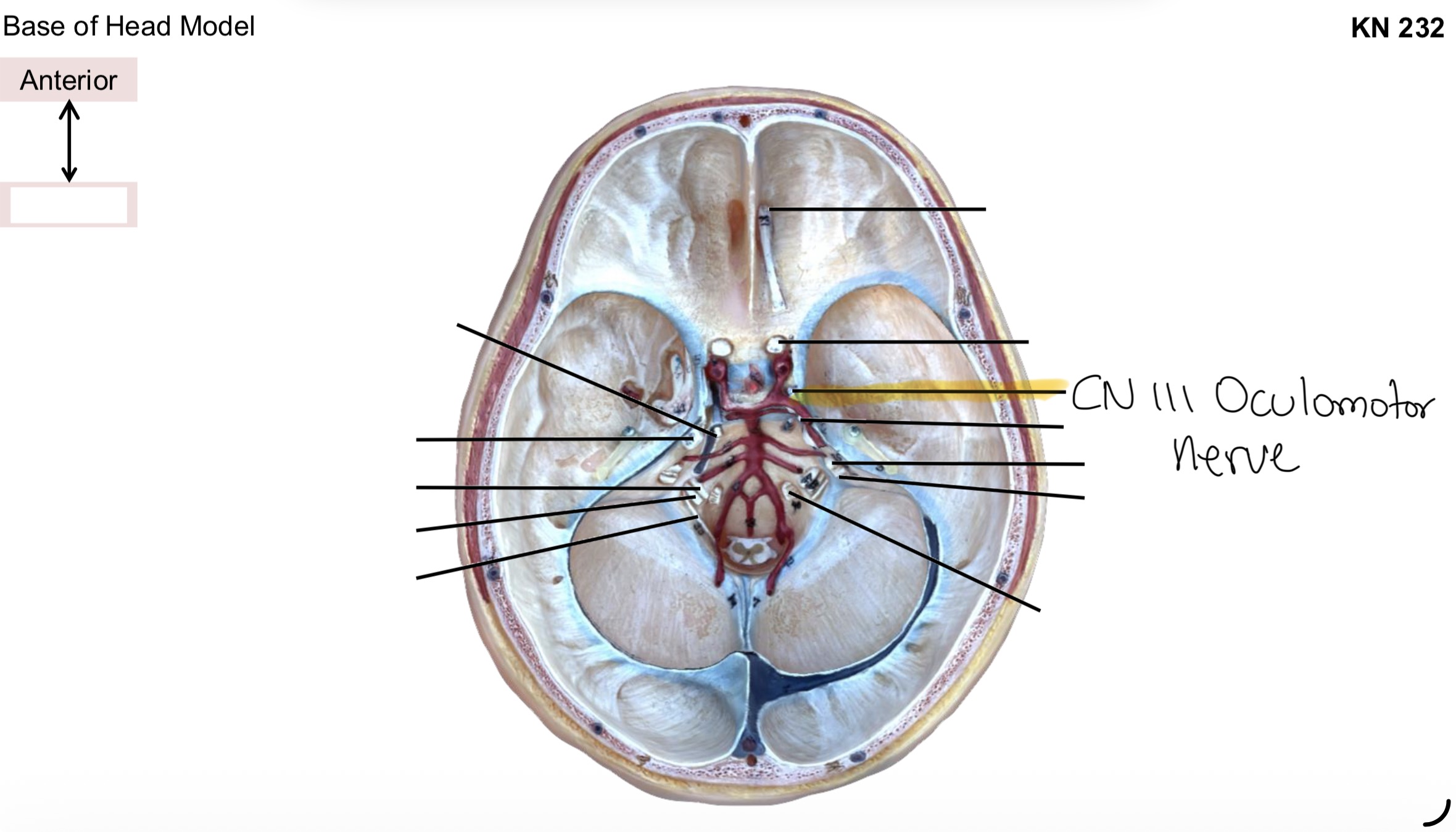
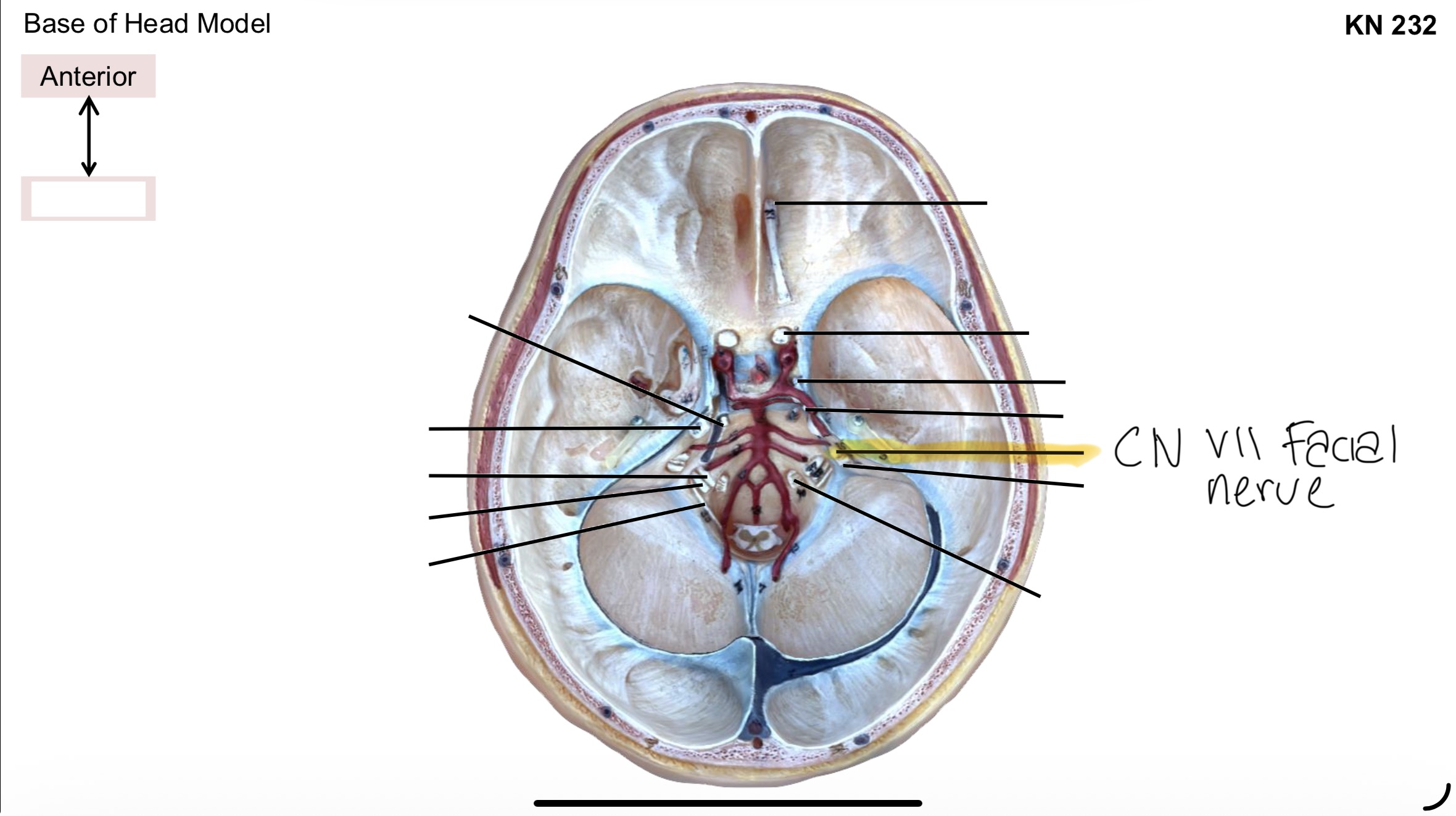
CN I — Olfactory: Smell.


CN II — Optic: Vision.


CN III — Oculomotor: Eye movement, raises eyelid, constricts pupil.


CN IV — Trochlear: Controls superior oblique eye muscle.


CN V — Trigeminal: Facial sensation and chewing.


CN VI — Abducens: Controls lateral rectus eye muscle.

CN VII — Facial: Facial expressions, taste (anterior 2/3 tongue), tears and saliva.


CN VIII — Vestibulocochlear: Hearing and balance.


CN IX — Glossopharyngeal: Taste (posterior 1/3 tongue), swallowing, saliva secretion.


CN X — Vagus: Controls functions of heart, lungs, digestive organs; swallowing and voice.


CN XI — Spinal accessory: Moves head and shoulders (trapezius and sternocleidomastoid).
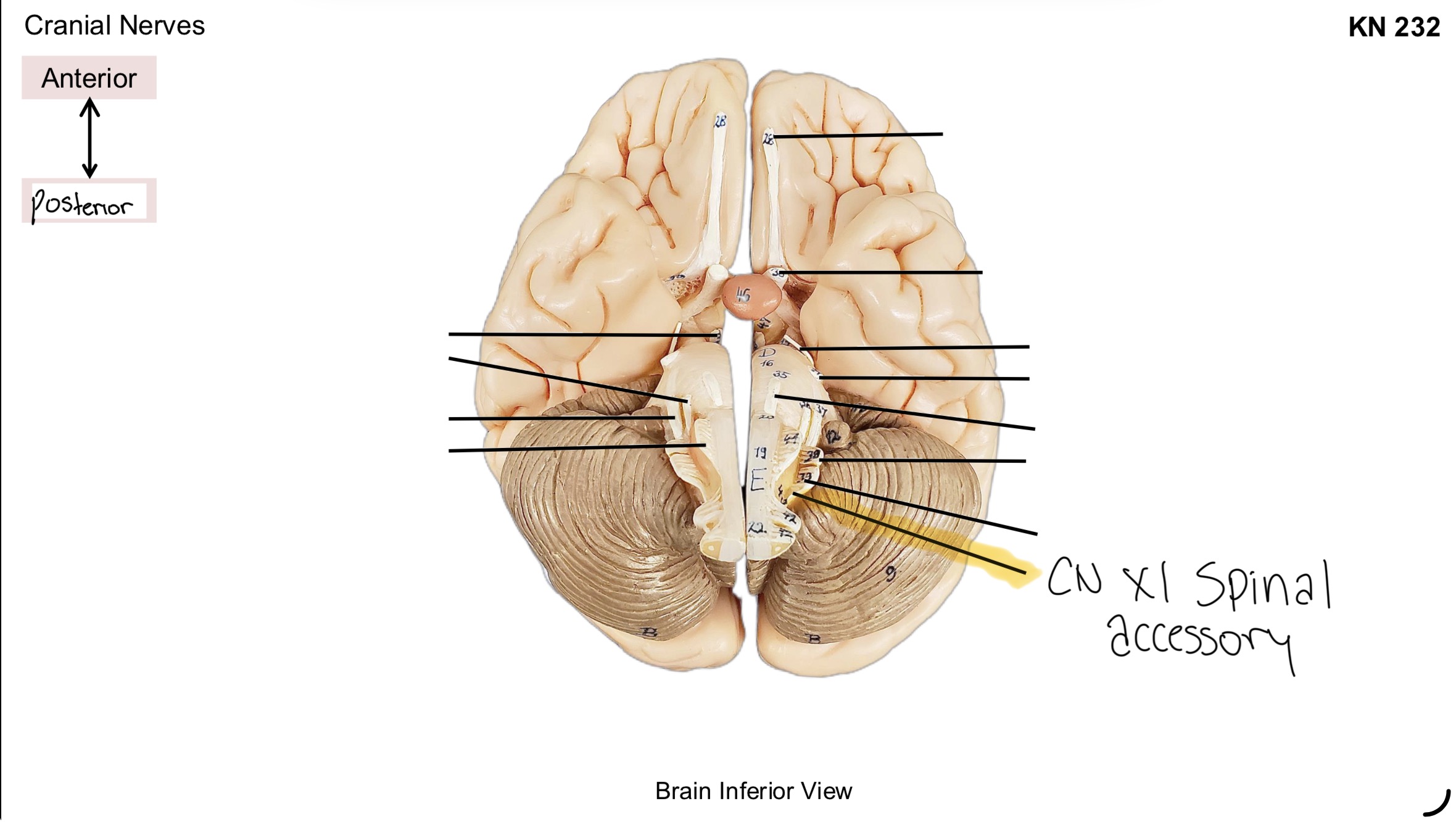

CN XII — Hypoglossal: Tongue movement.






Thalamus: Relays sensory information to cerebral cortex.


Epithalamus: Helps regulate sleep-wake cycles.

Pineal gland: Secretes melatonin; regulates sleep-wake cycle.


Hypothalamus: Maintains homeostasis; regulates hunger, thirst, and temperature.


Pituitary gland: Secretes hormones controlling growth and other body functions.


Midbrain: Controls visual and auditory reflexes.

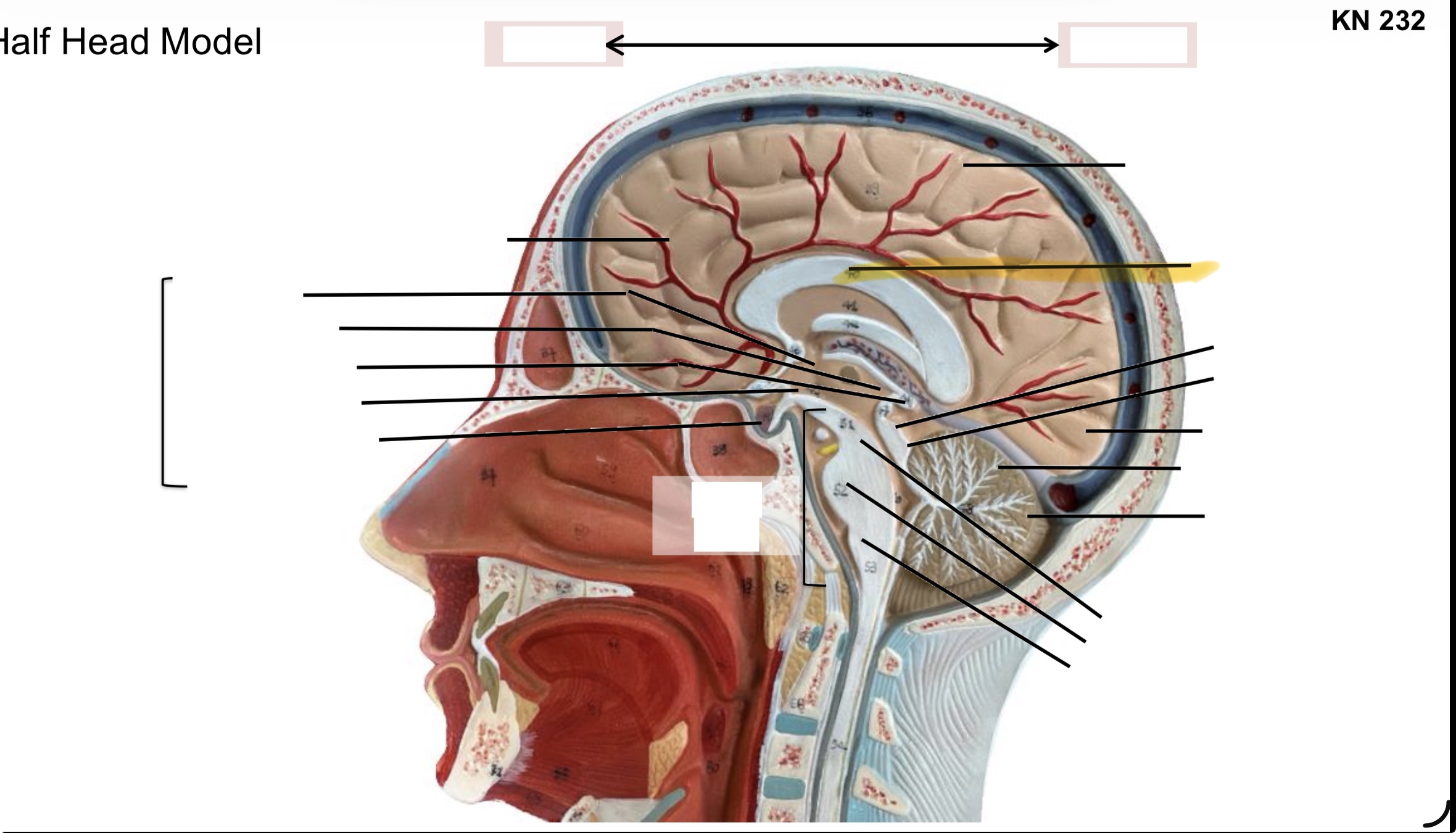
Corpus callosum: Connects left and right cerebral hemispheres.


Superior colliculus: Controls visual reflexes.


Inferior colliculus: Controls auditory reflexes.
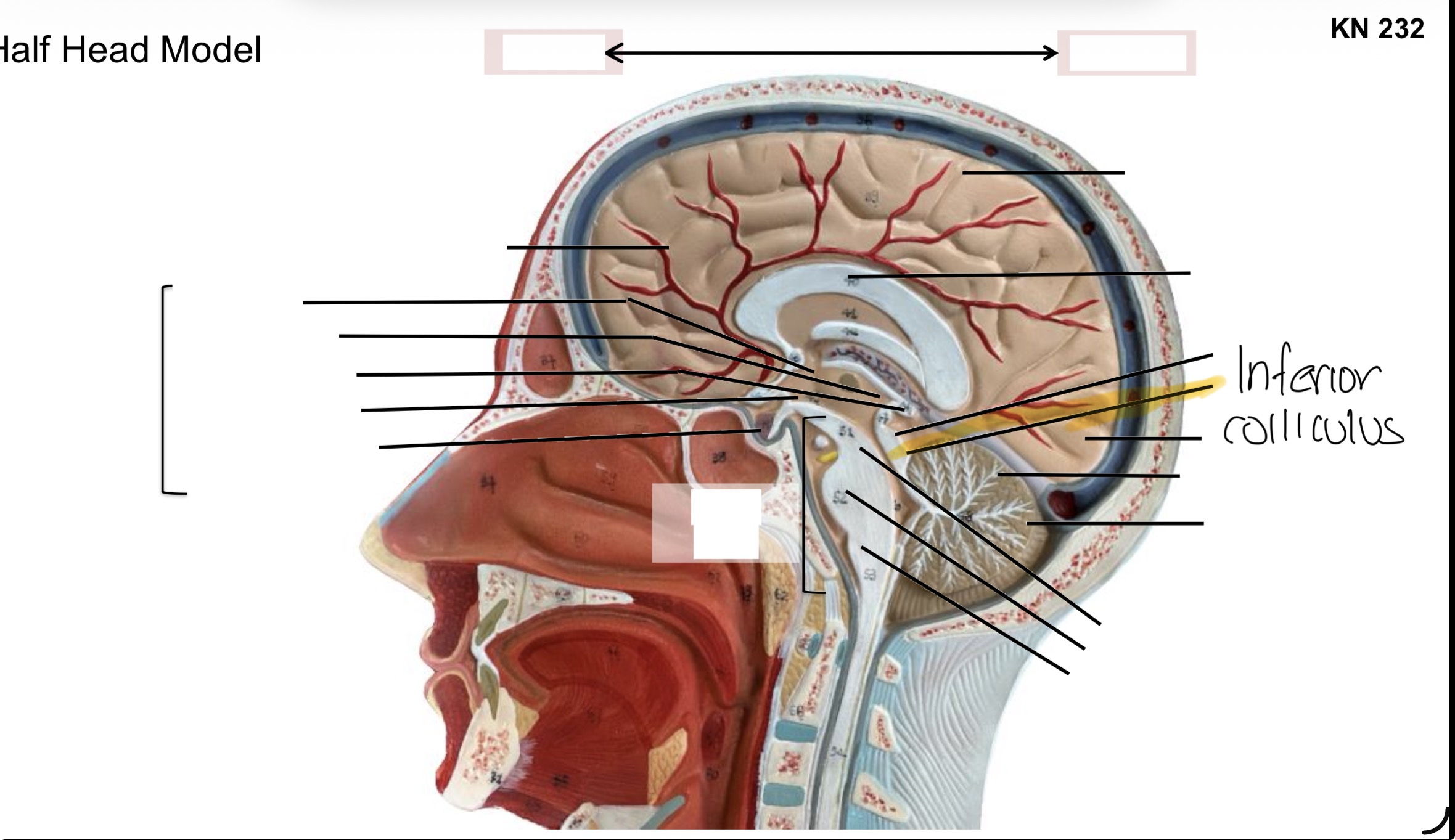

Lateral ventricles: Two CSF-filled cavities in the cerebrum.


Fourth ventricle: Contains CSF; connects to central canal and subarachnoid space.


Third ventricle: CSF-filled cavity in diencephalon.


Cerebral aqueduct: Connects third and fourth ventricles.
